 Sudden Valley Siding
 Decks in South Hill Wear Differently Than Decks Inland
South Hill sits close enough to the water and the tree line that its decks take a different kind of beating than a deck out on the flats. Between the salt-tinged air drifting off the lake and Bellingham Bay, the driving rain that comes sideways off winter storms, and a moss season that can stretch from October well into April, a deck here is doing double duty: holding up your family cookouts and fighting off moisture almost year-round. We've seen plenty of decks in Whatcom County that looked fine from the porch door but had soft framing, rusted fasteners, or a ledger board quietly rotting where it met the house. Replacement isn't just about the boards on top — it's about everything underneath that you can't see until you start pulling things apart.
If you're looking at a deck replacement in South Hill, the goal is a structure that sheds water instead of holding it, resists moss instead of feeding it, and uses hardware that won't corrode in salt-laden air. That's a different spec than what you'd use for a dry-climate deck, and it's worth understanding before you sign off on a bid.
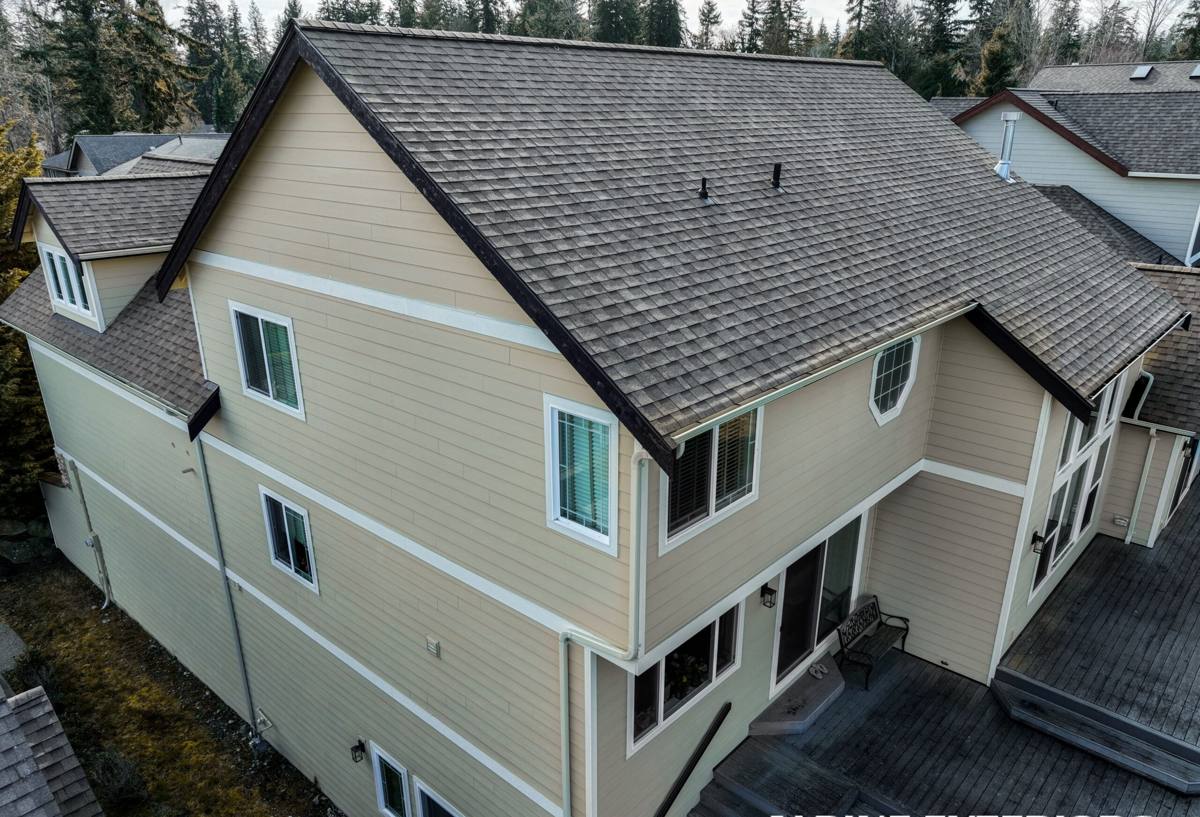
What South Hill's Climate Does to an Aging Deck
Moisture That Doesn't Let Up
Western Washington's rain isn't just frequent — a lot of it comes in at an angle, driven by wind off the water. That means moisture gets into places a straight-down rain never would: under railings, behind fascia boards, into the end grain of joists where they meet a rim board. Once wood stays damp for weeks at a time, rot sets in quietly and spreads before anyone notices a soft spot underfoot.
Moss and Algae Buildup
A long moss season means organic growth gets a real foothold on any deck surface that doesn't drain and dry quickly. Moss holds moisture against the wood surface, and on stairs and low-traffic areas it turns into a slip hazard on top of a maintenance headache. Decking with good drainage gaps and airflow underneath resists this far better than a deck built tight to the ground with poor ventilation.
Salt Air and Metal Fatigue
Being near the lake and not far from the bay means the air here carries more salt than an inland town would. Standard fasteners and connectors corrode faster in that environment. Rusted joist hangers and screws are one of the most common failure points we find when we open up an old deck — the wood around them can look fine while the metal holding it together is already compromised.
Signs Your South Hill Deck Needs Replacing, Not Patching
- Soft or spongy spots in the decking, especially near the house or stair landings
- Visible rot or discoloration at the ledger board where the deck attaches to the home
- Rust staining around fasteners, hangers, or post bases
- Railings that wiggle or posts that feel loose when pushed
- Persistent moss or algae that comes back within weeks of cleaning
- A deck more than 15-20 years old built before current code requirements for ledger attachment and railing loads
- Gaps opening up between deck boards or boards cupping and splitting
A few of these on their own might mean a repair. Several together, especially structural ones like a compromised ledger or rotted joists, usually mean it's more cost-effective and safer to start over than to keep patching a deck that's fighting you every season.
What a Correct Deck Replacement Involves Here
The Ledger and Flashing
The ledger board — where the deck bolts to your house — is the single most important connection on the whole structure, and it's also the point most exposed to water intrusion if it isn't flashed correctly. In a climate that sees as much driving rain as South Hill does, proper flashing (not just caulk) between the ledger and the house siding is non-negotiable. This is also the detail most often done wrong or skipped on older decks, and it's usually the source of hidden rot when we tear one out.
Framing and Fasteners
We frame with lumber rated for ground contact where it touches or sits near soil, and we use corrosion-resistant, code-rated hardware throughout — hangers, hurricane ties, and structural screws suited to a coastal-influenced climate rather than generic hardware store fasteners. In salt air, the difference between standard and coated/stainless hardware shows up in five years, not fifty.
Decking Material
Whether you go with wood or composite, drainage and airflow underneath matter as much as the surface material. Proper board spacing, joist tape on framing members, and grading the ground below to shed water all reduce the moisture load the deck has to deal with over its life.
Railings and Stairs
Loose or undersized railings are a common issue on older decks and a real safety concern on stairs that see moss and wet leaves. We rebuild railings to current code load requirements, not just to match what was there before.
Choosing Materials for a Moss-and-Rain Climate
| Material | How It Handles Local Conditions | Maintenance Reality |
|---|---|---|
| Pressure-treated wood | Good structural value; needs consistent sealing to resist moisture and moss in this climate | Annual cleaning and re-sealing recommended |
| Cedar | Naturally moisture- and insect-resistant, ages gracefully, but still needs periodic finish maintenance | Moderate — cleaning plus occasional oil/stain |
| Composite decking | Resists moisture absorption and moss better than wood surfaces when properly ventilated underneath | Low — periodic washing, no staining |
| Fasteners/hardware | Coated or stainless hardware holds up far better against salt air than standard galvanized | Low once installed correctly |
There's no single "best" material for every budget and every homeowner's priorities — the honest trade-off is upfront cost versus long-term maintenance. What matters most is that whatever material you choose is installed with this climate's moisture and salt exposure in mind, not treated the same as a deck build in a dry region.
Our Process for a South Hill Deck Replacement
- On-site assessment — we inspect the existing deck, ledger connection, framing, and any moisture or rot damage before quoting anything
- Honest scope discussion — we walk you through what's structural versus cosmetic, and what your material and layout options actually cost
- Permitting — deck replacements in Whatcom County typically require a permit; we handle that process so the work is inspected and code-compliant
- Demolition and disposal — full removal of the old deck, checking framing and ledger areas for hidden damage as we go
- Rebuild — proper ledger flashing, corrosion-resistant hardware, correctly spaced framing, and code-compliant railings
- Final walkthrough — we go over the finished deck with you, including basic maintenance guidance suited to our climate
Why Local Experience in South Hill Matters
A crew that's replaced decks around Sudden Valley and South Hill already knows how driving rain moves across a typical lot here, how much moss buildup to expect on a north-facing deck versus a south-facing one, and which fastener and flashing details actually hold up instead of failing in a few winters. That's not something you get from a general contractor passing through once. It shows up in the details — how a ledger gets flashed, how much slope is built into the decking for drainage, and whether the hardware is genuinely rated for this environment or just what came in the standard kit.
It also means fewer surprises during the project. We know what we're likely to find when we pull up old decking in this area, and we price and plan accordingly rather than discovering hidden rot halfway through and re-negotiating the job.
What Affects the Cost of a Deck Replacement
- Size and shape of the deck, including multi-level designs or built-in features
- Decking material chosen (wood versus composite, and grade within each)
- Extent of framing and ledger damage discovered once the old deck is removed
- Railing style and any code upgrades needed for stairs or guard height
- Permit and inspection requirements
- Site access and whether old material removal requires extra labor
Costs vary enough project to project that we don't quote flat prices without seeing the deck in person — a deck with a failing ledger and rotted joists costs more to do right than one that just needs new surface boards and railings. We'll always tell you honestly which situation you're in.
Ready for a Straight Answer on Your Deck?
If your South Hill deck is showing soft spots, persistent moss, loose railings, or is simply old enough to be a question mark, we're happy to take a look and give you a straightforward assessment — no pressure, no upsell. Fill out the form below for a free estimate and we'll walk the deck with you in person.