 Sudden Valley Siding
 Siding That Has to Work Against Salt Air, Not Just Rain
Edgemoor sits close enough to the water that homes here deal with a different mix of weather stress than siding a few miles inland. It isn't just rainfall totals — it's the combination of salt-laden air off Bellingham Bay, wind-driven rain that hits walls at an angle instead of just falling straight down, and long stretches of gray, damp months where surfaces rarely get a chance to fully dry out. That combination is hard on siding in ways that show up slowly: chalky paint, soft trim, swollen seams, and moss creeping up from the bottom courses before anyone notices it's a problem.
We install James Hardie fiber cement siding exclusively, and Edgemoor is exactly the kind of neighborhood where that decision matters most. This page walks through what the local climate actually does to siding, what a correct Hardie installation looks like here, and why the details of the job matter as much as the product itself.
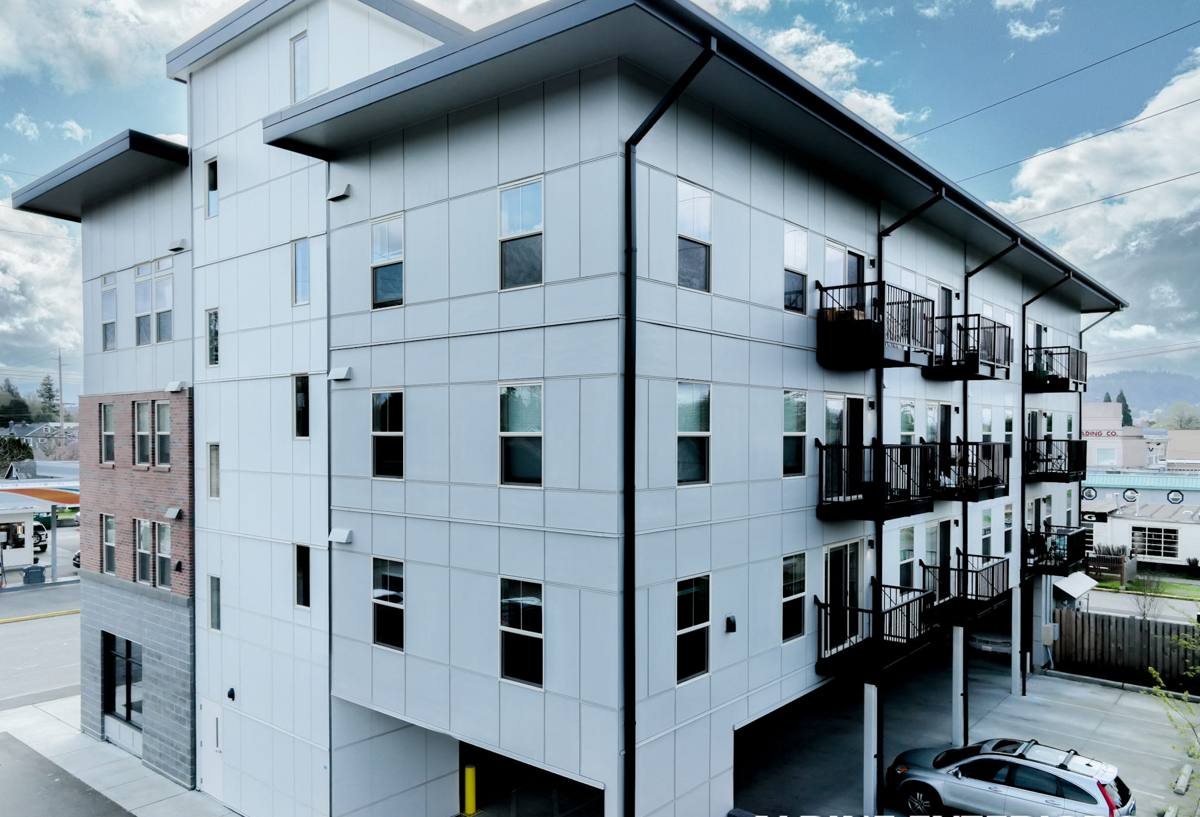
What Salt Air, Wind-Driven Rain, and Moss Season Do to a Wall
Salt Air
Airborne salt is corrosive to fasteners and hardware, and it accelerates the breakdown of paint films and caulking. On wood-based sidings, salt exposure combined with moisture speeds up the cycle of swelling, cracking, and repainting. It doesn't ruin a wall overnight — it just shortens the interval between maintenance calls.
Wind-Driven Rain
Rain that comes in sideways finds every gap a straight-down rain would never reach: lap seams, butt joints, penetrations for hose bibs and vents, and the transitions around windows and trim. Siding systems that rely on tight seams and surface caulking to stay dry are more exposed here than they would be in a calmer inland setting.
Moss Season
Western Whatcom County's long wet season gives moss and algae months to establish themselves on any surface that stays damp — north-facing walls, areas under tree cover, and the lower courses of siding near grade or landscaping beds. Moss holds moisture against the surface underneath it, which is a problem for any siding material that isn't dimensionally stable when wet.
Why James Hardie Holds Up Better in This Environment
James Hardie siding is fiber cement — a mix of cement, sand, and cellulose fiber that is engineered to be dimensionally stable in wet-dry cycling. It doesn't absorb and release moisture the way wood-based products do, so it isn't prone to the swelling, cupping, and paint failure that show up on organic siding materials after a few wet seasons. It's also non-combustible, which matters increasingly for insurance conversations even in a coastal, high-humidity market like this one.
Hardie's ColorPlus factory-applied finish is baked on in a controlled environment, which gives it better fade and adhesion performance than field-applied paint — an advantage in a climate where crews don't get long dry-weather windows to paint in and where any weak point in a paint film becomes an entry point for moisture.
HZ5 Engineering
James Hardie manufactures its products in different formulations for different climate zones. The HZ5 line is engineered for wetter, harsher climates — the Pacific Northwest included — with moisture and freeze-thaw performance suited to exactly the conditions Edgemoor sees most winters. Installing the correct climate-engineered product isn't a marketing detail; it's the difference between siding that's built for this weather and siding that merely tolerates it.
How Hardie Compares to the Alternatives We Don't Install
We get asked why we don't offer vinyl, LP SmartSide, or cedar. Each of those products has legitimate uses elsewhere — our reasoning is specific to what holds up best in a marine, high-moisture environment like Edgemoor's.
| Material | Moisture Behavior | Maintenance in This Climate | Fire Rating |
|---|---|---|---|
| James Hardie fiber cement | Dimensionally stable wet or dry; engineered HZ5 formulation for wet climates | Low — factory finish resists fade and moisture damage | Non-combustible |
| LP SmartSide (engineered wood) | Wood-strand core; sensitive to sustained moisture at cut edges and seams | Moderate — edge sealing and caulk maintenance are important | Combustible |
| Cedar / primed spruce | Natural wood movement; absorbs moisture, prone to cupping and checking | High — regular refinishing, more exposure to rot and moss | Combustible |
| Vinyl | Doesn't rot, but expands/contracts with temperature and can warp or crack with age | Low, but limited repair options and can fade unevenly | Combustible, can deform under heat |
None of these are "bad" products in the abstract. But in an environment with sustained salt exposure, wind-driven rain, and a long moss season, the wood-based and cellulose-core products carry more long-term maintenance risk than we're willing to put our name behind, and vinyl trades that risk for a shorter realistic lifespan and less design flexibility. That's the honest trade-off behind why we standardized on Hardie.
What a Correct Installation Actually Involves
The siding material is only part of the equation — how it's installed determines whether a home actually gets the moisture protection it's paying for. A correct James Hardie installation in a climate like Edgemoor's includes:
- A weather-resistive barrier installed and lapped correctly beneath the siding, not just stapled up as an afterthought
- Rainscreen or proper drainage gap where conditions call for it, so any moisture that gets behind the cladding can drain and dry instead of sitting against the wall sheathing
- Correct flashing at every window, door, and penetration — this is where wind-driven rain finds its way in if it's skipped or rushed
- Proper fastener type, spacing, and depth per Hardie's installation specifications, using corrosion-resistant fasteners appropriate for a salt-air environment
- Correct minimum clearance between the bottom of the siding and grade, decks, or roof lines, to keep splash-back and standing moisture away from the material's edge
- Factory-cut and factory-primed edges kept intact wherever possible, with field-cut edges properly sealed per manufacturer specification
Skipping any one of these doesn't usually cause an immediate failure — it shows up two, five, or ten years later as a moisture problem that's far more expensive to fix than it would have been to install correctly the first time.
Our Process for an Edgemoor Project
1. Assessment and Estimate
We start with a walk-around of the home, looking at current siding condition, moisture exposure on each elevation, trim and flashing condition, and any specific problem areas — north-facing walls, tree cover, low-clearance spots near grade or landscaping.
2. Product and Color Selection
We help homeowners choose the right Hardie product line and ColorPlus finish for the home's exposure and style, including which elevations may benefit from different treatments based on sun and weather exposure.
3. Tear-Off and Sheathing Check
Old siding comes off and the sheathing underneath gets inspected before anything new goes on. This is the point where hidden moisture damage from a previous installation, if any exists, gets caught and addressed — not covered over.
4. Weather Barrier and Flashing
The weather-resistive barrier and all flashing details go in next, following manufacturer specifications rather than shortcuts. This step is where most long-term moisture problems are prevented or created.
5. Installation
Hardie siding, trim, and accessories are installed to manufacturer spec — correct fastener pattern, correct gapping, correct clearances.
6. Final Walkthrough
We walk the finished job with the homeowner, checking seams, trim lines, and caulking before calling it complete.
What Drives Cost on an Edgemoor Job
Every home is different, but a few factors consistently move the price of a siding job up or down. We give firm, written estimates after an in-person assessment — the table below is meant to explain the "why" behind a quote, not to set expectations for a specific number.
| Factor | Why It Affects Cost |
|---|---|
| Tear-off condition | Hidden rot or moisture damage found under old siding adds sheathing repair before new siding can go on |
| Home shape and trim detail | More corners, dormers, and trim transitions mean more cutting, flashing, and labor time |
| Elevation exposure | Walls facing prevailing wind and rain may need additional drainage or flashing detail |
| Product line and finish | Panel vs. lap siding, and standard vs. premium ColorPlus finishes, carry different material costs |
| Access and site conditions | Tree cover, slope, tight lot lines, and staging space affect labor time and equipment needs |
Simple Maintenance Once It's Installed
James Hardie siding is low-maintenance, not zero-maintenance. A little seasonal attention keeps it performing the way it's engineered to:
- Rinse off salt residue and general grime once or twice a year, especially on elevations facing the water
- Keep gutters and downspouts clear so water isn't overflowing directly onto siding or pooling near the base of a wall
- Trim back vegetation and tree branches that keep a section of wall shaded and damp, which is what invites moss and algae growth
- Inspect caulking at trim joints and penetrations every year or two and touch up as needed
- Address any impact damage or cracked caulk promptly rather than letting moisture get a foothold behind the siding
Why It Matters That the Crew Already Works This Area
A crew that regularly works Edgemoor and the greater Sudden Valley and Whatcom County area has already seen how salt exposure, wind direction, and moss season play out on real homes here — which elevations need extra attention, where flashing details tend to get missed on older homes, and what clearance and drainage choices hold up over time in this specific climate. That local pattern recognition is worth more than a generic installation checklist, because it shows up in the decisions made before the first piece of siding ever goes up: how the weather barrier is detailed, where the drainage gap matters most, and which trim details need extra sealing given the direction a wall faces.
If you're weighing a siding replacement or repair in Edgemoor, we're happy to take a look and give you a straightforward, no-pressure estimate — including an honest read on your home's current condition and what it actually needs. Use the form below to get started.