 Sudden Valley Siding
 Why Lake Whatcom Homes Need a Different Approach to Windows
Homes around Lake Whatcom sit in a microclimate that's a little different from the rest of Whatcom County. You're tucked against tree cover and open water, which means more shade, more standing moisture, and slower drying times after a storm rolls through. Add in the marine-influenced air that moves inland off Bellingham Bay, the near-constant chance of driving rain through fall and winter, and a moss season that can run half the year, and you've got conditions that are hard on window frames, seals, and glazing in ways a generic "energy-efficient windows" checklist doesn't fully address.
We install windows for Sudden Valley and the wider Lake Whatcom area regularly, which means we're not guessing at how a product will hold up here — we're watching it hold up (or not) year after year on homes just like yours.
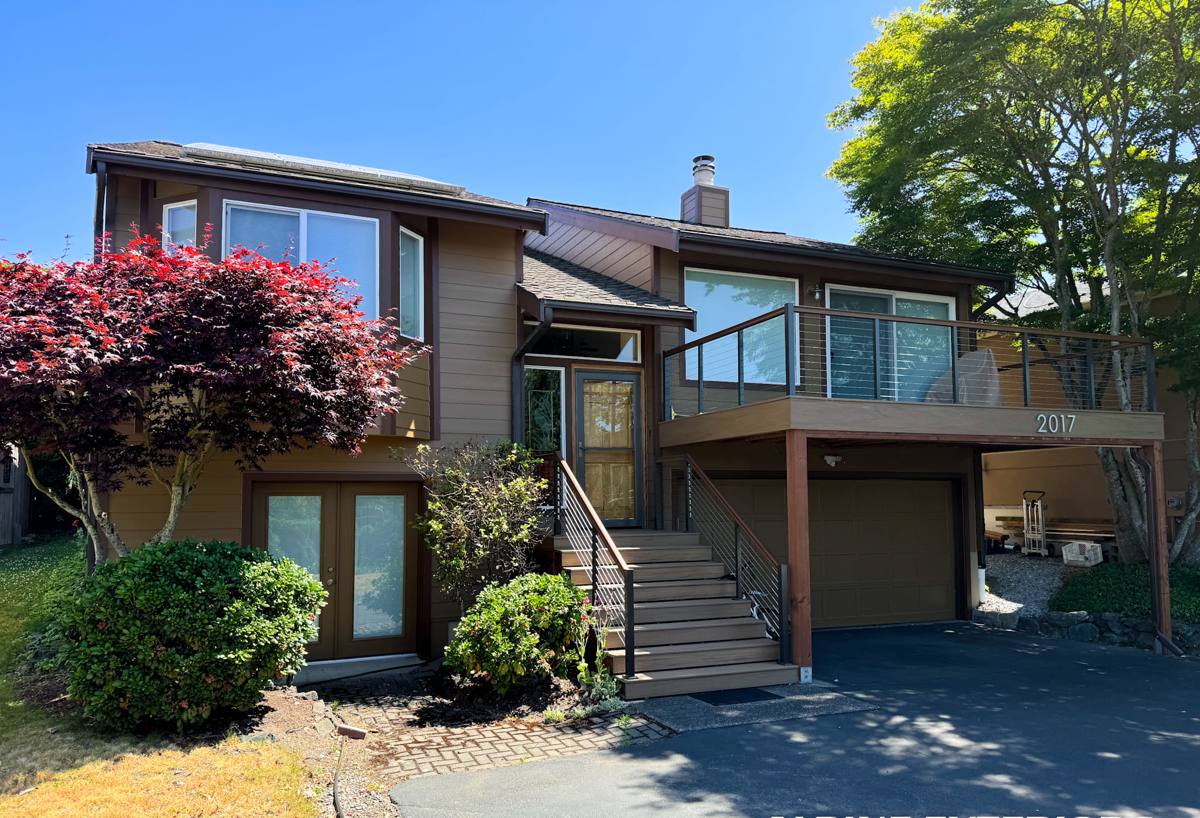
What Our Climate Actually Does to Windows Over Time
It's worth understanding the specific stresses at play, because they shape which products and installation details actually matter for this location.
Moisture Load
Lake-effect humidity and long stretches of overcast, drizzly weather mean window frames and sills rarely get a full dry-out cycle for weeks at a time. Any gap in flashing or sealant becomes a slow, hidden leak path rather than an obvious one.
Driving Rain and Wind-Driven Water
Storms off the water don't just fall straight down — wind pushes rain sideways into wall assemblies and window openings. Windows that aren't properly flashed and integrated with the wall's water-resistive barrier will eventually let water track behind the trim, even if the window unit itself is sound.
Moss, Algae, and Organic Buildup
Shaded, moist conditions are ideal for moss and algae growth on sills, tracks, and exterior trim. Beyond being unsightly, organic growth holds moisture against wood and vinyl surfaces and can clog weep holes that windows rely on to drain.
Salt-Tinged, Corrosive Air
Whatcom County's proximity to Puget Sound and Bellingham Bay means the air carries a mild salt content that travels further inland than people expect. Over years, that air is harder on unprotected metal hardware, fasteners, and lower-grade aluminum components than it is in a purely inland climate.
What "Energy-Efficient" Actually Means Here
"Energy-efficient" gets used loosely in this industry. For a Lake Whatcom home, it should mean a specific, measurable set of properties matched to our climate — not just a sticker on the glass.
- U-Factor: Measures how well the window prevents heat from escaping. Lower is better for our cool, wet winters — this is the number that most directly affects your heating bill.
- Solar Heat Gain Coefficient (SHGC): Measures how much solar heat passes through the glass. In a shaded, tree-covered area like Lake Whatcom, you often have less direct sun exposure than an open lot, which changes the ideal SHGC target compared to a south-facing home in full sun.
- Air Leakage Rating: A tighter seal keeps out both cold drafts and the fine, wind-driven mist that's common here.
- Condensation Resistance: Interior condensation on cold glass is a common complaint in humid, heavily shaded homes — a window's condensation resistance rating tells you how well it manages that.
A window can carry a great efficiency rating on paper and still underperform if it's installed with poor flashing or the wrong sealant for our moisture levels. Product and installation have to be judged together.
Signs Your Current Windows Are Costing You Money
Most homeowners don't replace windows on a schedule — they replace them when the signs add up. Around Lake Whatcom, watch for:
- Fogging or a permanent haze between double-pane glass (a failed seal, meaning the insulating gas has escaped)
- Visible moss, dark staining, or soft spots on wood sills and exterior trim
- Cold drafts near the frame even when the window is fully closed and locked
- Difficulty opening, closing, or locking — often a sign the frame has swelled or shifted from moisture
- Noticeably higher heating costs in winter months compared to similar homes nearby
- Condensation forming on the inside of the glass regularly, not just on unusually cold mornings
What a Correct Installation Involves
The window unit itself is maybe half the job. The other half — the part that determines whether it performs for fifteen years or leaks in three — is the installation detailing.
Flashing and Water Management
Every opening needs proper flashing integrated with the home's existing water-resistive barrier, sloped sill pans to direct any incidental water outward, and correctly lapped house wrap so water is always shedding downward and outward, never trapped behind the window.
Sealant Selection and Placement
Not every sealant is rated for constant damp exposure. We use products chosen for long-term performance in a wet marine climate, applied at the specific points that need a seal — and just as important, left open where the assembly needs to drain and breathe.
Insulation Around the Frame
Gaps around the window frame need to be filled with an appropriate low-expansion insulating material — packed too tight, it can bow the frame; left too loose, it leaves a thermal gap that undermines the window's efficiency rating.
Fastener and Hardware Corrosion Resistance
Given the salt-tinged air in this part of Whatcom County, we specify fasteners and hardware rated for corrosion resistance rather than standard-grade options that can start rusting or staining trim within a few seasons.
Window Materials Compared for This Climate
There's no single "best" window material — each comes with real trade-offs. Here's how the common options actually perform in a damp, shaded, moss-prone environment like Lake Whatcom.
| Material | Moisture Performance | Maintenance | Typical Lifespan |
|---|---|---|---|
| Vinyl | Good — won't rot, resists moisture well | Low; occasional cleaning | 20–30 years |
| Fiberglass | Excellent — very stable in wet, temperature-swinging conditions | Low | 30–40+ years |
| Wood-Clad | Good if maintained; vulnerable if cladding or seals fail | Higher; needs regular inspection and upkeep | 20–30 years with maintenance |
| Aluminum | Poor thermal performance; can corrode without protective coatings | Moderate | 20–30 years |
For most Lake Whatcom homes, we steer customers toward vinyl or fiberglass frames as the honest default — not because wood-clad or aluminum windows are bad products, but because our climate punishes any product whose long-term performance depends on consistent maintenance or a coating that can eventually wear through. If you want a wood-look interior with lower-maintenance exterior performance, that's a conversation worth having up front, since it changes both the product and the price.
How We Handle Your Project
Our process is built around the fact that most of what determines a window's success here happens before and during installation, not after.
- On-site assessment: We look at each opening individually — sun exposure, shading, existing water damage, and how exposed the wall is to wind-driven rain.
- Product recommendation: We match frame material and glass package to that specific opening, not a one-size-fits-all spec for the whole house.
- Removal and inspection: Once the old window is out, we inspect the rough opening and sheathing for hidden moisture damage before anything new goes in.
- Flashing and installation: Sill pans, flashing, and house wrap integration are done to shed water outward, not just "caulk and hope."
- Interior and exterior finish: Trim, insulation, and sealant are completed and inspected for a clean, tight result.
- Walkthrough: We check operation, locks, and seals with you before we consider the job done.
Quick Checklist: What to Ask Before Hiring Anyone for This Job
- Will you inspect and repair any hidden water damage found during removal, and how is that priced?
- What flashing and sill pan method do you use, and is it appropriate for a wet, shaded lot?
- What U-factor, SHGC, and air leakage numbers are you recommending for my specific windows, and why?
- Are fasteners and hardware corrosion-resistant, given the marine-influenced air in this area?
- What's covered under warranty — the glass unit, the frame, and the labor — and for how long?
What Affects the Cost
Every home is different, so we won't quote a number here that doesn't mean anything until we've seen your windows. What we can tell you is which factors actually move the price.
| Factor | Why It Matters |
|---|---|
| Frame material | Fiberglass typically costs more upfront than vinyl but requires less long-term upkeep |
| Glass package | Double vs. triple pane, low-E coatings, and gas fill all affect both price and performance |
| Hidden repairs | Rot or moisture damage found behind old windows adds labor and material cost to fix correctly |
| Opening size and count | Larger openings and full-house replacements have different economies of scale than a few windows |
| Access and site conditions | Steep lots, tree cover, or second-story access around the lake can add labor time |
We'd rather walk your home and give you an honest, itemized estimate than throw out a range that doesn't apply to your situation.
Why a Crew That Already Works Lake Whatcom Matters
A contractor who mostly works drier, more open parts of Whatcom County can still do competent work — but they may not default to the flashing details, sealant choices, and corrosion-resistant hardware that a shaded, damp lake property actually needs. We work in Sudden Valley and around Lake Whatcom regularly enough to know which details matter here specifically: where moss tends to build up first, which exposures take the worst of the driving rain, and how the lake's humidity affects drying time during installation. That local pattern recognition is part of what you're paying for, alongside the window itself.
If your windows are drafty, fogged, hard to operate, or just older than they should be, we're happy to take a look and walk you through honest options for your home. Reach out below for a free, no-pressure estimate.