 Sudden Valley Siding
 Windows Built for What Yew Street Actually Deals With
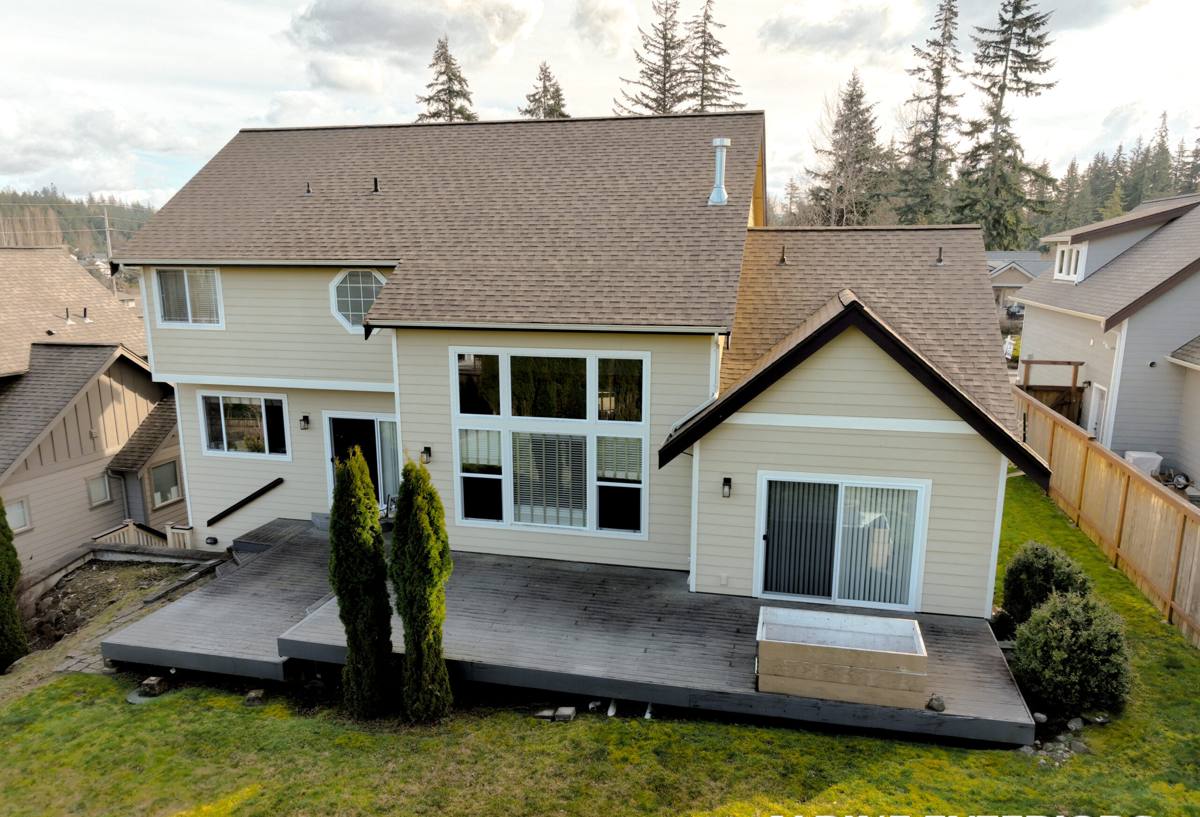
Homes along Yew Street sit inside one of the wetter, greener microclimates in Whatcom County. Between the humidity coming off Lake Whatcom, the tree cover that keeps siding and trim damp longer than it should be, and the wind-driven rain that blows in off the water during fall and winter storms, windows in this part of Sudden Valley work harder than windows almost anywhere else in the region. A window that's rated fine on paper can still underperform here if it isn't installed with this specific exposure in mind.
When we talk about "energy-efficient windows" for a Yew Street home, we mean two things at once: glass and frame performance that actually cuts heat loss and drafts, and a weatherproofing job that keeps water and moisture out of the wall assembly for the long haul. One without the other is a half-finished job, and it's the second half — the flashing, the sealing, the fit — that most often gets rushed by crews who aren't used to this climate.
Salt Air and Coastal Moisture
Whatcom County's proximity to Bellingham Bay and the greater Salish Sea means airborne salt and moisture are a factor even well inland, and Sudden Valley's elevation and tree canopy don't fully shield homes from it. Salt-laden moisture accelerates corrosion on hardware, fasteners, and lower-grade frame components, which is why we pay close attention to what's used for screws, cladding, and weatherstripping, not just the glass.
Driving Rain and Wind Exposure
Storms coming off the lake and through the valley can push rain sideways against west- and south-facing walls for hours at a time. Windows on those exposures need properly pitched sills, correctly lapped flashing, and sealant that's rated for sustained wet exposure — not just a bead of caulk around the trim.
Moss, Shade, and Slow-Drying Wood
The same tree cover that makes Yew Street shady and pleasant in summer also means trim, sills, and siding around older windows can stay damp for days after a storm. That's ideal conditions for moss and mildew, and over years it's a major contributor to rot in wood trim and sash components. Any window replacement here should address what's happening around the opening, not just swap the sash and call it done.
What "Energy-Efficient" Should Actually Mean Here
Two numbers matter most for our climate: U-factor and Solar Heat Gain Coefficient (SHGC). U-factor measures how well a window resists heat loss — lower is better for keeping heat inside during our long, mild-but-damp winters. SHGC measures how much solar heat passes through the glass; in western Washington, where sun is scarce enough of the year, a moderate SHGC is usually the right balance rather than the very low numbers you'd want in a hot, sunny climate.
Glass package, frame material, and installation quality all affect real-world performance more than any single spec sheet number. A window with excellent lab ratings but a poor installation will still leak air and, eventually, water.
Glazing Options Worth Understanding
- Double-pane with Low-E coating and argon fill — the standard baseline for most Whatcom County homes; solid efficiency at a moderate price.
- Triple-pane — noticeably better insulation and sound dampening, worth considering on north- and west-facing walls or busier streets, at a higher upfront cost.
- Low-E coating type — different coatings balance heat retention against solar gain differently; we match the coating to the wall's sun exposure rather than using one spec everywhere on the house.
Signs Your Windows Are Underperforming
Most homeowners don't think about their windows until something's visibly wrong, but by the time you can see the problem, it's often been developing for a while. Watch for:
- Condensation or fogging between the panes (a sign the seal has failed)
- Visible gaps, drafts, or cold spots near the frame when it's windy
- Difficulty opening, closing, or locking — often a sign the frame has shifted or swollen
- Soft or discolored trim and sill wood, or moss growth right at the window edge
- A noticeable jump in heating costs without another clear cause
- Paint or finish peeling on the interior sill, which usually points to moisture getting past the seal
Frame Materials: What Holds Up in This Climate
Frame material matters as much as glass in a wet, humid environment. Here's how the common options compare for a Sudden Valley home:
| Material | Moisture Performance | Maintenance | Typical Cost Position |
|---|---|---|---|
| Vinyl | Good — won't rot, minimal upkeep | Low | Lower to mid |
| Fiberglass | Excellent — very stable in wet/dry cycling | Low | Mid to higher |
| Wood-clad | Depends heavily on cladding integrity and install quality | Higher — needs regular inspection | Higher |
| Aluminum | Prone to condensation without thermal break | Moderate | Varies |
We don't push wood-clad windows on exposed, shaded walls in this climate — not because the product is bad, but because clad wood asks for more diligence around caulking and inspection than most homeowners want to keep up with under this much tree cover and moisture. Vinyl and fiberglass tend to be the lower-maintenance, more forgiving choice for Yew Street's conditions, and we'll tell you honestly which makes sense for your specific walls and budget.
What a Correct Installation Involves
The window product itself is maybe half the job. The other half — often the half that actually determines whether you have problems in five years — is how it's set into the wall.
Flashing and Weatherproofing
Proper installation means flashing tape and pan flashing at the sill, correctly lapped house wrap or building paper above and around the opening, and sealant placed so water is directed out and down, never trapped behind the trim. On rain-exposed walls, we treat this step as non-negotiable — it's the difference between a window that sheds water and one that slowly feeds it into the wall cavity.
Fitting Around Existing Siding and Trim
Many Sudden Valley homes have existing trim, siding, or older wood windows that need careful removal and inspection before the new unit goes in. If we find soft sheathing or rot once the old window is out, we address it before installing the new one — sealing a new window over a compromised opening just hides the problem for a while.
Our Process for Yew Street Projects
- On-site assessment — we look at sun exposure, wind exposure, existing window condition, and trim/sheathing condition for each opening.
- Product recommendation — frame material and glazing package suited to each wall's exposure, not a one-size answer for the whole house.
- Written estimate — clear pricing with no vague allowances.
- Installation — old units removed, openings inspected and repaired as needed, new units flashed and sealed to shed water correctly.
- Walkthrough and cleanup — we go over operation, care, and warranty coverage before we consider the job finished.
What Affects the Cost of a Window Project
| Factor | Why It Matters |
|---|---|
| Number of windows | Per-unit cost typically drops as the project scope grows |
| Frame material | Vinyl is generally the most economical; fiberglass and wood-clad cost more |
| Glazing tier | Triple-pane and specialty coatings add cost but improve performance |
| Condition behind the opening | Rot or sheathing repair adds labor and material beyond the window itself |
| Access and site conditions | Tree-shaded, hard-to-access walls can add setup time |
We give honest, itemized numbers rather than a single vague quote, so you can see exactly what you're paying for and where there's room to adjust scope if budget is a factor.
Why Local Experience on Yew Street Specifically Matters
A crew that already works this part of Sudden Valley knows what the wind does on a west-facing wall in a January storm, how long trim stays wet under the tree canopy after rain, and which frame materials hold up without constant upkeep in this humidity. That's not something you get from a general contractor working a job here for the first time. It also means faster response if you need a warranty check or a question answered after the install, since we're not driving in from across the county.
Keeping Efficient Windows Performing Over Time
Even a well-installed window benefits from basic upkeep in this climate:
- Clear moss and debris from sills and tracks before it holds moisture against the frame
- Check weep holes (the small drainage openings at the bottom of the frame) to make sure they're clear
- Inspect exterior caulk lines once a year and re-seal if you see cracking or gaps
- Watch for condensation between panes — it means the seal has failed and the insulating gas has escaped
- Keep gutters and downspouts functioning so runoff isn't sheeting directly onto window heads
If you're noticing drafts, fogged glass, or moisture issues around your windows, or you're just ready to stop losing heat through old single-pane glass, we're happy to take a look and give you a straightforward, no-pressure estimate for your Yew Street home.