 Sudden Valley Siding
 Fairhaven's Coastal Climate Is Hard on Siding
Fairhaven sits close enough to Bellingham Bay that salt-laden air is part of daily life, and that changes what a home's exterior needs to survive. Add the driving rain that rolls in off the water through fall and winter, plus a moss season in Whatcom County that can stretch eight months or longer under tree cover, and you have three separate stresses working on a home's siding at the same time. A siding job that looks fine on a dry summer afternoon can fail quietly over several winters if it wasn't built for this specific mix of conditions.
Salt Air and Slow Corrosion
Salt air doesn't just affect metal railings and hardware near the water — it settles on siding surfaces, fasteners, and trim, and it accelerates the breakdown of paint films and lower-grade composite materials over time. The damage is gradual, which is exactly why it gets missed. A siding product and fastening system that isn't rated to handle this exposure will show it first at seams, fastener heads, and cut edges.
Driving Rain and Wind-Driven Moisture
Rain in this part of Washington rarely falls straight down. Wind off the water pushes it sideways into wall assemblies, which means siding here has to shed water at laps, corners, and penetrations rather than just cover the wall. Board and batten in particular has more vertical seams than lap siding, so how those seams are built matters more here than it would in a drier climate.
A Long Moss Season
Shaded lots and the region's damp, mild winters give moss and algae a long window to take hold. On siding, that shows up first in the horizontal battens and any spot where a panel doesn't fully drain — it holds a film of moisture that organic growth thrives on. Siding that can't dry out between rain events becomes a magnet for it.
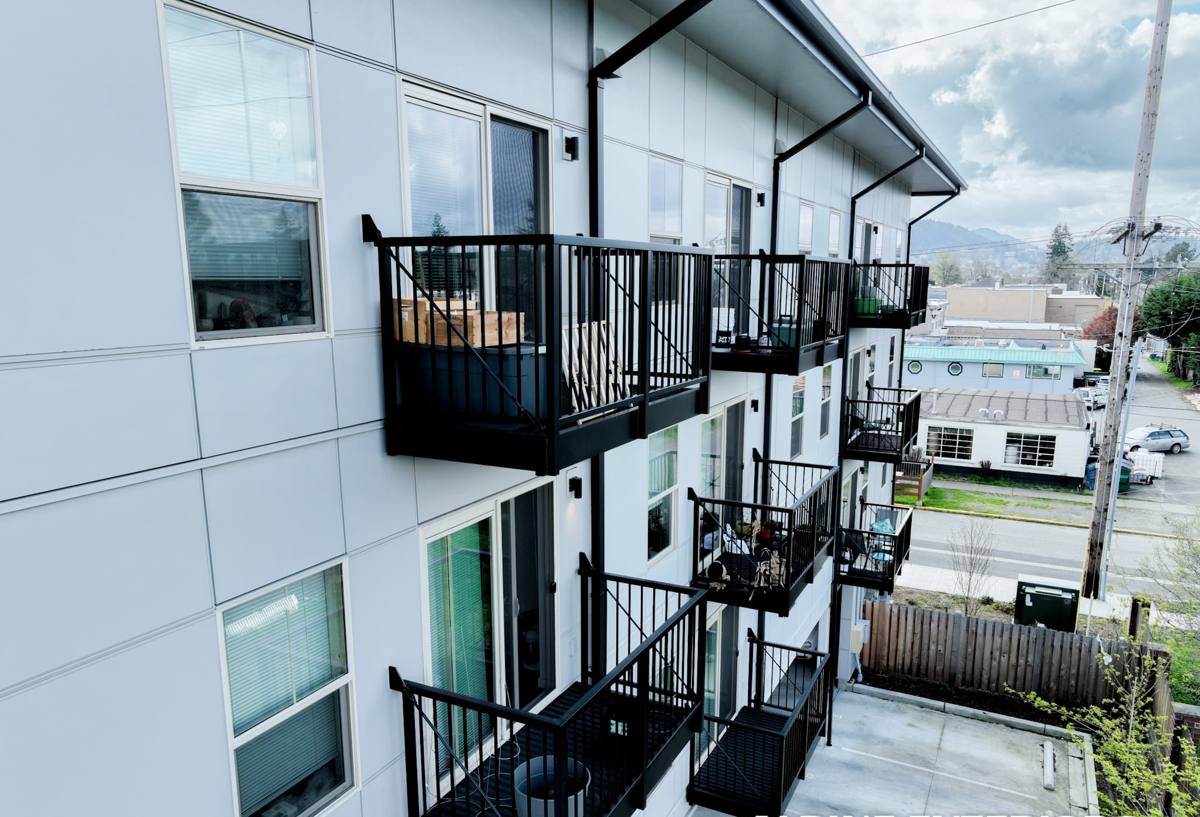
What Board & Batten Siding Is, and Why It Suits This Neighborhood
Board and batten is a vertical siding profile: wide flat panels installed with narrower strips (battens) covering the seams between them. It's one of the oldest siding styles in the Pacific Northwest, originally used because it was a fast, practical way to close up a wall with lumber — and it's stuck around because the strong vertical lines suit craftsman, farmhouse, and coastal-style homes that are common in and around Fairhaven. It reads as substantial and traditional without looking dated, which is part of why it's still one of the most requested looks for homeowners updating an exterior in this area.
The trade-off is that a board and batten wall has more seams and more fastening points than a lap-sided wall of the same size, and each of those details is a potential entry point for wind-driven rain if it isn't built correctly. That makes material choice and installation technique more important here, not less.
Why We Install This Look Only in James Hardie Fiber Cement
We install one siding brand across every job we take on, including board and batten: James Hardie fiber cement. That's a deliberate standard, not a default, and it matters more in a salt-air, high-moisture climate like this one than it would somewhere drier.
HardieZone HZ5 Engineering
James Hardie engineers its siding by climate zone, and the Pacific Northwest falls into the HZ5 category — formulated for regions with significant moisture exposure and freeze-thaw cycling. That's a meaningful difference from a generic siding product built for one national spec; it's a material designed with weather like Fairhaven's in mind.
ColorPlus Factory Finish
Instead of field-applied paint, ColorPlus finishes are baked on in a controlled factory process, which gives the color better adhesion and more consistent resistance to fading and moisture intrusion than most job-site paint jobs achieve. In a salt air environment that degrades painted finishes faster than inland areas, that head start matters over the life of the siding.
Non-Combustible Core
Fiber cement's core is cement, sand, and cellulose fiber — it doesn't feed a fire the way wood-based or foam-based siding products can. That's a genuine safety advantage, and it's one more reason we don't split our installation standards across multiple product lines.
What a Correct Board & Batten Job Involves
Board and batten is unforgiving of shortcuts because of how many vertical seams and fastening points it has. A correct installation is less about the finished look and more about what's happening behind the panels, where nobody will ever see it unless something goes wrong.
Water Management Behind the Panels
Every board and batten wall needs a drainage plane behind the siding — typically a weather-resistant barrier with a rainscreen gap — so that any moisture that does get past the surface can drain and the wall can dry. Fastening panels directly against sheathing with no drainage space is one of the most common shortcuts that causes long-term problems in wet climates.
Batten Spacing and Fastening
Battens need consistent spacing that matches the panel layout, and fasteners have to land in framing, not just sheathing, following the manufacturer's fastening schedule. Over-driven or under-driven nails, or fasteners placed too close to panel edges, create weak points that show up as cracking or loosening years later.
Flashing, Trim, and Transitions
Windows, doors, corners, and the base of the wall are where board and batten siding is most likely to leak if it's built wrong. Proper flashing and correctly lapped house wrap at every one of these transitions is what actually keeps water out — the siding itself is the last line of defense, not the first.
- Weather-resistant barrier installed and lapped correctly, with a rainscreen gap behind the panels
- Panels and battens fastened per manufacturer spec, into framing, with correct nail placement
- Consistent batten layout and spacing across the wall
- Flashing integrated at every window, door, and corner before siding goes on
- Proper clearance at the base of the wall and any grade or deck transitions
- Caulking used only where it belongs — not as a substitute for correct flashing
Comparing Siding Materials for a Board & Batten Look
Board and batten can be built in several materials. Here's how the common options compare for a coastal Whatcom County property.
| Material | Moisture Behavior | Maintenance | Typical Lifespan |
|---|---|---|---|
| James Hardie fiber cement | Engineered for HZ5 wet climates; won't rot | Occasional wash; factory finish resists fading | Multiple decades with correct install |
| Cedar board and batten | Absorbs moisture; needs a working finish to resist rot | Refinishing every few years; more with salt exposure | Shorter without diligent upkeep |
| Primed spruce/wood composite | Vulnerable to swelling and edge deterioration if moisture reaches the core | Regular paint upkeep; edge sealing critical | Shorter in high-moisture, high-UV coastal zones |
| Vinyl board and batten | Won't rot, but seams and fastening are less rigid; can warp with heat or wind | Low, but color isn't factory-baked and can fade | Variable; depends heavily on installation quality |
Our Process for Fairhaven Projects
We run the same disciplined process on every board and batten job, adjusted for the specific house and lot.
Site Assessment
We walk the property, check existing siding and sheathing condition, look at sun and shade exposure that affects moss growth, and note anything specific to the site — grade slope, tree cover, wind exposure — that affects how the wall assembly needs to be built.
Prep and Moisture Check
Old siding comes off, sheathing gets inspected for hidden rot or moisture damage before anything new goes on, and any repairs happen before the new weather-resistant barrier is installed. Skipping this step is how new siding ends up covering an old problem.
Installation
Barrier, rainscreen, flashing, panels, and battens go on in that order, following James Hardie's fastening and clearance specs at every step — not shortcuts adapted from a different siding type.
Final Walkthrough
We review the finished job with the homeowner, check flashing and trim details up close, and make sure everything matches what was scoped before we call it done.
Why a Crew That Already Works This Neighborhood Matters
A siding crew that has already worked properties in and around Fairhaven understands the wind exposure, the shade patterns that drive moss growth, and the general condition of homes in this part of Whatcom County — that's context a crew coming from outside the area doesn't have on day one. It also means fewer surprises during permitting and inspection, because the local requirements and typical construction of homes in this area aren't new to us. That familiarity translates into fewer assumptions and a build that's actually suited to this specific coastal microclimate, not a generic install adapted after the fact.
Living With Board & Batten Siding in a Salt Air, Moss-Prone Climate
Correctly installed James Hardie board and batten is low-maintenance, but "low" isn't "none." A periodic rinse-down helps keep salt residue and organic buildup from accumulating, especially on battens and any shaded sections of wall. Keeping nearby vegetation trimmed back improves airflow and sun exposure, which slows moss growth more than any cleaning product will. Walking the exterior once or twice a year to check caulking at trim and penetrations catches small issues before they become water problems — the earlier a gap or crack gets noticed, the cheaper it is to fix.
If you're planning a siding project in Fairhaven or elsewhere around Sudden Valley, we're happy to take a look at your home and put together a straightforward, no-pressure estimate — just fill out the form below.