 Sudden Valley Siding
 Fairhaven's Climate Puts Real Stress on Siding
Fairhaven sits close enough to Bellingham Bay that salt-laden air is a daily fact of life, not an occasional nuisance. Add the wind-driven rain that comes off the water during fall and winter storms, plus the long stretch of gray, damp months that let moss and algae get a foothold on anything shaded or north-facing, and you have a climate that is genuinely tough on exterior materials. This isn't unique to one street or one block — it's the reality for homes throughout this part of Whatcom County that sit near open water and catch weather from multiple directions.
Siding here has to do three jobs at once: shed water fast enough that it never sits against the wall, resist the slow corrosive effect of salt air on fasteners and finishes, and stay dry enough on the surface that moss and mildew don't get a permanent grip. Materials that perform fine forty miles inland can struggle here. That's the lens we use when we talk to Fairhaven homeowners about siding — not just "what looks good," but "what actually holds up in this exact microclimate."
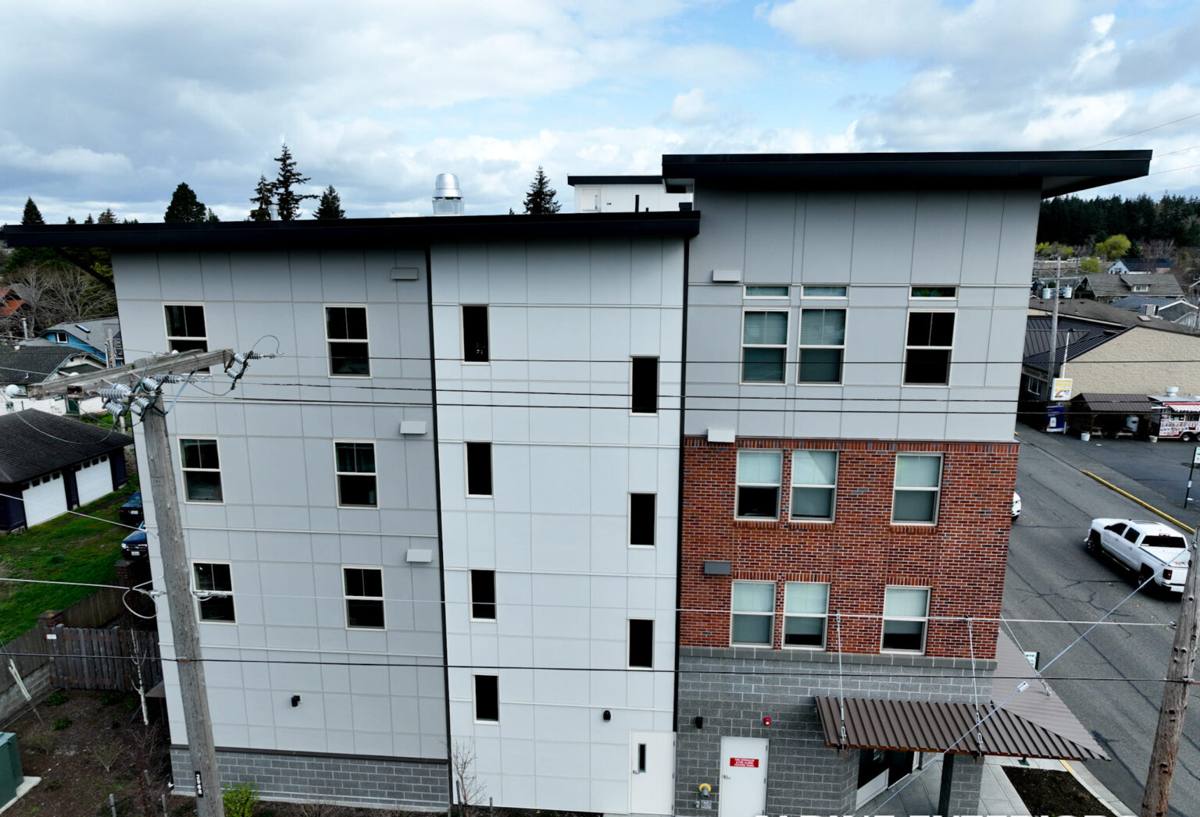
Why We Only Install James Hardie in This Area
We install James Hardie fiber cement siding exclusively, and in a coastal, high-moisture area like Fairhaven that's a deliberate choice, not a default. Fiber cement is non-combustible and dimensionally stable — it doesn't swell, cup, or delaminate the way wood-based products can when they take on repeated moisture cycles. James Hardie's ColorPlus finish is baked on at the factory under controlled conditions, which gives it better adhesion and UV resistance than field-applied paint, and it holds up better against the kind of salt exposure that dulls and chalks lesser finishes over time.
James Hardie also engineers its products by climate zone. For the Pacific Northwest, that means HZ5 formulations designed specifically for regions with significant moisture exposure — different from the HZ10 product built for hot, dry, or termite-prone regions of the country. That distinction matters. Siding manufactured for the wrong climate zone is one of the more common reasons a fiber cement job underperforms, and it's a detail some installers gloss over.
What This Means Day to Day for a Fairhaven Home
In practical terms, correctly specified James Hardie siding on a Fairhaven home should resist moisture intrusion at the seams, keep its color and texture without frequent repainting, and shrug off the freeze-thaw and wet-dry cycling that Whatcom County winters produce. It's also heavy enough and rigid enough to resist the wind loading that comes with storms off the bay, which is a real consideration for homes with more open exposure toward the water.
Signs a Fairhaven Home May Need New Siding
Salt air and constant dampness don't always announce themselves with obvious damage right away. Often the first signs are subtle, and they show up fastest on the sides of a house that face prevailing wind and rain or that stay shaded most of the day.
- Persistent green or black staining that comes back within weeks of being cleaned
- Soft spots, bubbling, or visible warping in wood or engineered wood siding
- Paint that's chalking, peeling, or failing faster than it should between repaints
- Visible gaps opening up at butt joints, corners, or around trim
- A musty smell near exterior walls, especially in closets or rooms on the windward side
- Fasteners that are rusting, bleeding, or backing out of the siding
- Increasing heating bills that suggest moisture-compromised insulation behind the wall
Any one of these on its own isn't necessarily an emergency, but a few together are a strong signal that the current siding is losing its battle with the climate here and that moisture may already be getting past the surface.
What a Correct James Hardie Installation Actually Involves
James Hardie makes a durable product, but its real-world performance depends heavily on installation details that are easy to skip and hard to spot once the job looks finished. In a wet, salt-exposed area like Fairhaven, these details matter more than usual, not less.
| Installation Detail | Why It Matters Here |
|---|---|
| Correct starter strip and clearance at the base | Keeps the bottom edge of the siding from wicking up moisture off the foundation or hardscape |
| Proper flashing at windows, doors, and roof intersections | These are the primary paths water actually takes into a wall assembly during driving rain |
| Correct fastener type, spacing, and depth | Prevents premature rust streaking and keeps panels from working loose in wind |
| Manufacturer-specified gaps and sealant at butt joints | Fiber cement expands and contracts; tight, unsealed joints crack and let water in |
| Back-priming and field-painting cut edges | Factory ColorPlus finish doesn't cover a cut edge unless it's sealed on site |
| Adequate rain-screen or drainage gap behind the siding | Lets any moisture that does get behind the cladding drain and dry instead of sitting against sheathing |
None of this is exotic — it's all published in James Hardie's own installation guidelines. But guidelines only protect a home if they're actually followed, and a rushed or unfamiliar crew is far more likely to skip the steps that don't show up in a drive-by look at the finished wall.
How Our Process Works
1. On-Site Assessment
We walk the exterior with you, note which elevations take the most weather, check existing siding and trim for hidden moisture damage, and look at flashing, ventilation, and drainage around the current wall assembly before we talk about product.
2. Product and Color Selection
We help you choose the right HardiePlank, HardieShingle, or HardiePanel profile and ColorPlus color for the home, factoring in sun exposure, HOA or neighborhood character where relevant, and how the elevation facing the weather should be treated.
3. Prep and Removal
Old siding comes off, the sheathing underneath gets inspected and repaired if needed, and any moisture or rot damage found at this stage gets addressed before anything new goes up — never covered over.
4. Installation to Manufacturer Spec
Flashing, drainage gap, fastening, and joint sealing are done to James Hardie's published specifications, not shortcuts. This is also where cut edges get sealed and where windows, doors, and penetrations get properly integrated with the new siding.
5. Final Walkthrough and Warranty Registration
We walk the finished job with you, cover care and maintenance, and register the installation so the manufacturer's warranty is properly on file in your name.
Cost Factors for a Fairhaven Siding Project
Every home is different, but the same handful of factors drive most of the cost variation we see on jobs in this area.
| Factor | How It Affects the Project |
|---|---|
| Home size and wall complexity | More corners, gables, and dormers mean more cutting, flashing, and labor time |
| Current siding condition | Hidden rot or moisture damage found during tear-off adds repair scope before install can proceed |
| Product profile chosen | Lap siding, shingle-style, and panel systems differ in material and labor cost |
| Trim and accessory work | Fascia, corner boards, and trim replacement alongside siding adds to total scope |
| Access and site conditions | Slopes, tight setbacks, and limited staging area near the water can add labor time |
We give a written, itemized estimate after the on-site assessment rather than a rough number over the phone — it's the only way to price a job that reflects what your specific walls actually need.
Why a Crew That Already Works Fairhaven Matters
Siding installation quality is inconsistent industry-wide, and the gap between a correct job and a shortcut job usually doesn't show up until a few winters have passed. A crew that regularly works this stretch of Whatcom County has already seen how salt air, moss, and driving rain expose weak installation work on other jobs, and applies that experience before problems start rather than after a callback. That includes knowing which elevations in this area typically need extra attention to flashing and drainage, and not treating a coastal job the same as a job twenty miles inland.
Local familiarity also matters for permitting and code requirements specific to Whatcom County, and for straightforward things like being reachable if a question comes up after the job is done — not routed through a call center for a crew that was passing through.
Ready for an Honest Look at Your Siding?
If your Fairhaven home is showing signs of wear, or you just want a straight answer on whether your current siding still has useful life left in it, we're happy to take a look. Fill out the form below for a free, no-pressure estimate — we'll assess the home, answer your questions, and give you a clear picture of what correct James Hardie installation would involve for your specific walls.