 Sudden Valley Siding
 Roofing in Fairhaven Faces a Different Set of Problems
Fairhaven sits close enough to the water that homes here deal with a combination most inland Whatcom County neighborhoods don't: salt-laden air off Bellingham Bay, wind-driven rain that finds its way under poorly sealed edges, and a moss season that can run eight or nine months out of the year in shaded, north-facing sections of a roof. None of these problems are dramatic on their own. Together, over ten or fifteen years, they wear down a roof system faster than the manufacturer's warranty numbers suggest.
A roof replacement in this neighborhood isn't just a strip-and-reroof job. It's an opportunity to correct the specific weaknesses that this climate exposes — usually around ventilation, underlayment quality, and how the roof handles water that doesn't fall straight down but blows sideways into fascia, valleys, and wall-roof intersections.
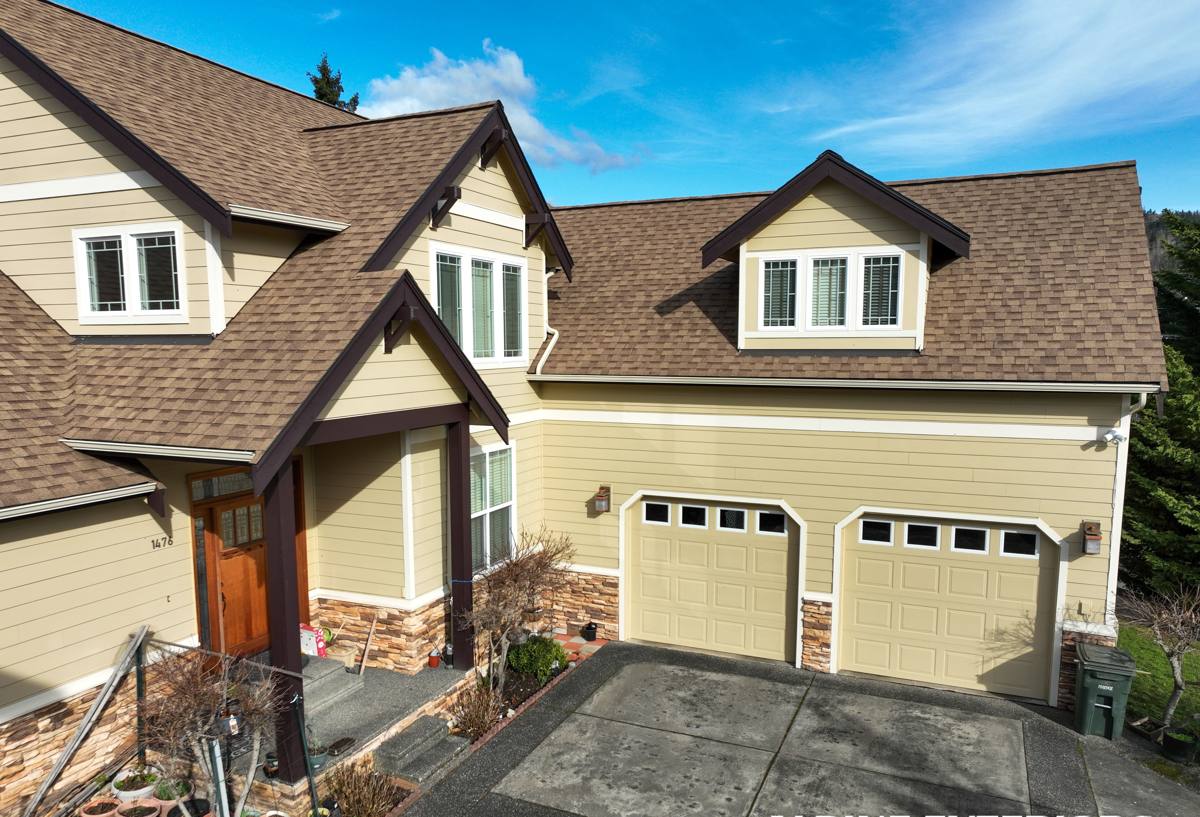
What Salt Air and Coastal Exposure Do to a Roof
Salt in the air isn't just a metal-corrosion issue, though that matters too — exposed fasteners, flashing, and metal drip edge on homes closer to the water corrode faster than the same materials would inland. Salt-laden moisture also accelerates the breakdown of asphalt shingle granules over time and tends to settle into moss and algae growth on shaded roof faces, which holds moisture against the roofing material longer than it should sit there.
Where this shows up first
- Corrosion or pitting on exposed metal flashing, especially around chimneys and vent stacks
- Granule loss on the windward-facing slopes, visible as darker, thinner-looking patches
- Fastener heads that rust before the shingles around them show any wear
- Faster-than-expected algae streaking on north and west-facing slopes
Driving Rain and Wind: The Real Test of a Roof System
Straight-down rain is easy for almost any roof to shed. The problem in Fairhaven is rain that comes in at an angle during winter storms, which pushes water uphill under shingle edges, into open valleys, and against anything with a seam — skylights, chimneys, dormers. A roof that looks fine in dry weather can still be letting water in during a driving southwest wind event, and by the time a stain shows up on a ceiling, the sheathing underneath has often been wet for a while.
This is why the underlayment and flashing details matter more here than the shingle brand itself. A correctly installed roof assumes water will get past the surface layer occasionally and gives it a way to drain back out without reaching the wood deck.
Details that matter more in a coastal, wind-driven climate
- Self-adhering underlayment (ice-and-water shield type membrane) at eaves, valleys, and around all penetrations — not just at the code-minimum locations
- Properly lapped and sealed step flashing where roof meets siding or a chimney, rather than relying on caulk alone
- Drip edge sized and installed so wind-driven rain can't wick back under it
- Starter strips with the correct adhesive strip orientation so the first course resists wind uplift
Moss Season: Managing It Instead of Fighting It Forever
A long moss season is close to unavoidable on shaded roof slopes in this part of Whatcom County. The goal in a replacement isn't to promise a moss-free roof — that's not realistic on a heavily treed, north-facing section — it's to build the roof so moss doesn't cause damage while it's dealt with through normal maintenance.
Moss itself isn't what destroys shingles quickly; it's moss holding moisture against the roofing surface for months at a time, combined with the way moss roots and rhizoids work their way under shingle tabs and lift them slightly, giving wind and rain a way in. Zinc or copper strips near the ridge help slow regrowth on future moss, but they work best when the roof is also designed with proper ventilation so the deck itself dries out between rain events.
What a Correct Roof Replacement Includes
A full tear-off and replacement is more than swapping old shingles for new ones. Done properly for this climate, it includes:
- Full tear-off to bare deck — never a layover — so the sheathing can be inspected for rot or soft spots, which are common under roofs that have had slow leaks for years.
- Deck repair where needed, replacing any delaminated or soft plywood/OSB before anything new goes down.
- Ice-and-water membrane at eaves, valleys, and penetrations, sized for the exposure level of that particular slope.
- Synthetic underlayment across the field of the roof, which handles moisture better over time than older felt products in a persistently damp climate.
- Balanced ventilation — intake at the soffits and exhaust at the ridge — sized to the attic volume, not just whatever vents happen to already be there.
- New flashing at all chimneys, walls, and skylights rather than reusing old flashing, which is one of the most common places old roofs fail first.
- Corrosion-resistant fasteners and metal components appropriate for a coastal-influenced environment.
Choosing Materials: An Honest Comparison
There's no single "best" roofing material for every Fairhaven home — it depends on the roof's exposure, slope, shading, and budget. Here's how the common options actually perform under salt air, wind-driven rain, and heavy moss pressure:
| Material | Salt air / coastal exposure | Wind-driven rain | Moss resistance | Typical lifespan here |
|---|---|---|---|---|
| Architectural asphalt shingle | Good with proper flashing; granule wear over time | Good when installed with full underlayment system | Moderate — needs periodic cleaning | 20-25 years |
| Standing seam metal | Very good with coated/coastal-rated panels | Excellent — few seams for wind to exploit | Good — sheds moisture fast, little for moss to grip | 40-50+ years |
| Basic 3-tab shingle | Fair — thinner profile wears faster | Fair — more prone to wind lift at edges | Moderate | 15-18 years |
| Cedar shake | Requires diligent maintenance near salt air | Good when installed with proper spacing/underlayment | Higher maintenance burden — holds moisture | 25-30 years with upkeep |
We'll walk through which of these makes sense for your specific roof rather than defaulting to one product for every job — a heavily shaded, low-slope section of roof has different needs than a steep, sun-exposed one on the same house.
How Our Process Works
We keep the process straightforward because a roof replacement is disruptive enough without added surprises.
- On-site inspection first. We look at the current roof, the attic ventilation, and any signs of past leaks before quoting anything.
- Written estimate with specifics. What's being torn off, what underlayment and ventilation changes are included, and why — not just a single lump-sum number.
- Deck inspection during tear-off. If we find rot or soft sheathing, we'll show you before replacing it, not bill for it afterward as a surprise.
- Daily site cleanup. Magnetic sweeps for nails and tidy material staging, since most of these projects are on occupied homes.
- Final walkthrough. We go over the completed roof, the ventilation changes made, and basic moss-maintenance expectations before we consider the job done.
Why Local Experience in Fairhaven Matters
A crew that already works this neighborhood knows which slopes tend to hold moss longest, which older homes were built with ventilation that was adequate decades ago but undersized by today's standards, and how much of a factor the bay's wind exposure is on a given lot. That local pattern recognition saves time during the estimate and avoids the trial-and-error of a crew encountering Whatcom County's coastal conditions for the first time on your roof.
We're not guessing at what a driving rain event does to a roof near the water — we've replaced enough of them in this area to know where the weak points typically are before we're even up on the ladder.
Signs It's Time to Replace Rather Than Repair
Repair makes sense for isolated damage. A full replacement is usually the more honest recommendation when several of the following are true at once:
- The roof is approaching or past its expected material lifespan (see the table above)
- Granule loss is widespread rather than isolated to one storm-damaged area
- Moss has been present long enough that shingle tabs are visibly lifted in multiple spots
- There's been more than one attic leak in recent years, even if each was "fixed"
- Flashing is corroded or was never properly step-flashed to begin with
If you're weighing a roof replacement in Fairhaven and want a straight answer about what your roof actually needs — not just a sales pitch — we're happy to come take a look. The estimate is free, there's no pressure attached to it, and you'll get specifics about your roof, not a generic quote. Use the form below to get started.