 Sudden Valley Siding
 Asphalt Shingle Roofing Built for Ferndale's Weather
Ferndale sits close enough to the water and open farmland that roofs here take a different kind of beating than roofs twenty miles inland. Salt-laden air off the coast works into fasteners and flashing over time. Driving rain, often pushed sideways by wind, finds every weak seam at a valley, pipe boot, or step-flashing joint. And the long, wet moss season that defines a Whatcom County winter doesn't just make a roof look dirty — moss holds moisture against the shingle mat and shortens its working life. An asphalt shingle roof installed with all of that in mind will simply outlast one that was installed the same way you'd install it in a dry inland climate.
This page is specifically about asphalt shingle roofing for homes in and around Ferndale. It's not a general roofing overview — it's what we've learned works, and what fails early, on roofs in this particular corner of the county.
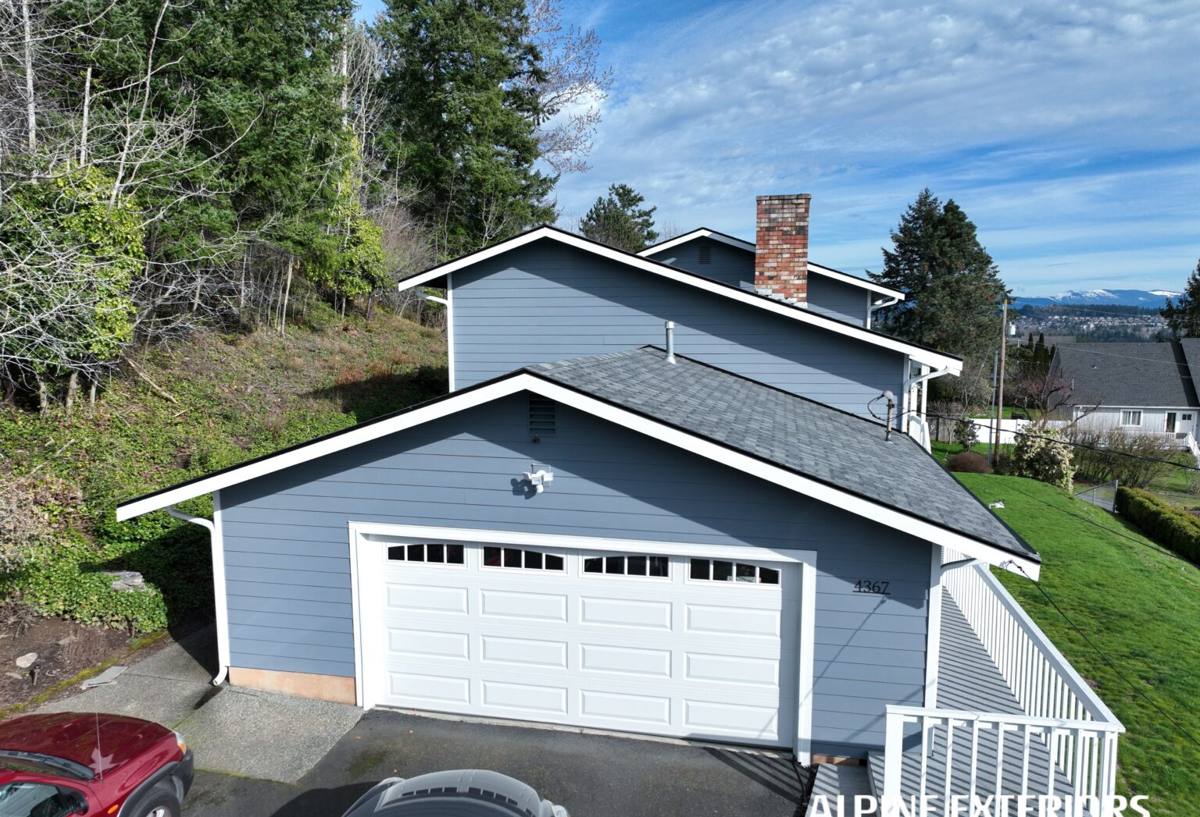
What Ferndale Homes Actually Need From a Shingle Roof
Three local conditions drive almost every roofing decision we make out here:
Salt Air and Corrosion
Metal components — nails, flashing, drip edge, valley metal — are the first things to show wear near the coast. Standard electro-galvanized fasteners can start to bleed rust stains and lose holding power years before they should. We spec corrosion-resistant fasteners and flashing on every coastal-exposure job, not as an upgrade, but as the baseline.
Driving, Wind-Driven Rain
A shingle roof doesn't leak because water sits on it — it leaks when wind forces water sideways and upward under a lapped edge. Valleys, low-slope sections, and anywhere a roof plane meets a wall or chimney are where that failure shows up first. The underlayment and flashing details at those transitions matter more here than the shingle brand on top of them.
A Long Moss Season
Shade, moisture, and mild winter temperatures are exactly what moss wants, and a north-facing or tree-covered slope in Ferndale can stay damp for months at a stretch. Moss lifts shingle edges as it grows, holds water against the granule surface, and accelerates the very wear it's supposed to just be a cosmetic nuisance.
What a Correct Asphalt Shingle Install Involves Here
An asphalt shingle roof is a system, not a single product. Skipping any one layer of that system is where most premature failures start, and it's rarely visible from the ground once the job is finished — which is exactly why it matters who's doing the work.
- Deck inspection and repair — soft, delaminated, or water-stained sheathing gets replaced before anything new goes down, not covered over.
- Ice-and-water shield at eaves and valleys — a self-adhering membrane at the vulnerable transitions, not just felt paper everywhere.
- Synthetic underlayment field coverage — a secondary water barrier that also protects the deck during the tear-off window.
- Corrosion-resistant metal flashing — drip edge, step flashing, and valley metal rated for coastal exposure.
- Proper nailing pattern and fastener count — matched to the shingle manufacturer's wind-rating requirements, not just "enough to hold it down."
- Balanced attic ventilation — intake at the eaves, exhaust at the ridge, sized to the attic volume so moisture doesn't condense under the deck.
That ventilation point deserves its own mention. A shingle roof that traps warm, moist attic air underneath it will rot from the inside regardless of how good the shingles on top are. In a climate as damp as ours, ventilation isn't optional — it's half the reason a roof lasts.
Choosing a Shingle for Coastal Whatcom County Conditions
Not every asphalt shingle line is built the same way, and the differences matter more here than they would in a drier climate. The biggest factor for us is algae resistance — most major manufacturers now embed copper-containing granules specifically to slow the blue-green algae and moss-friendly growth that our climate encourages. A shingle without that protection will streak and host moss growth noticeably faster on a shaded Ferndale roof.
| Shingle Tier | What It's Built For | Trade-Offs to Know |
|---|---|---|
| 3-tab / economy | Budget-driven replacements, flatter profile | Lower wind ratings, shorter warranty terms, less algae-resistant granule coverage on older product lines |
| Architectural / laminate | Most Ferndale homes — the standard we install by default | Layered profile sheds water and debris better, stronger wind ratings, typically the sweet spot for cost versus performance |
| Premium / designer | Steeper or highly visible rooflines, higher-end finish | Heaviest mat and best warranty coverage, but a real cost step up that not every roof needs |
We don't push premium shingles on every job. If a straightforward gable roof doesn't need the heavier profile, we'll say so. Where we won't compromise is on algae-resistant granules and a wind rating matched to actual exposure — those two specs are what determine whether a roof still looks and performs like new after five winters of moss season, or looks tired after two.
Signs a Ferndale Roof Needs Attention
Because so much roof damage here starts hidden under moss or at a flashing joint, it's worth knowing what to actually look for from the ground:
- Dark streaking or green-black growth concentrated on shaded or north-facing slopes
- Moss visibly lifting shingle tabs, especially along ridges and in valleys
- Granules collecting in gutters after a hard rain — a sign the shingle surface is wearing down
- Curling or cupped shingle edges, often starting on the slope that gets the most sun exposure
- Rust staining running down from valley metal, flashing, or exposed fasteners
- Any soft spot, sag, or stain visible on interior ceilings after a wind-driven storm
None of these mean a full replacement is automatically needed — a lot of this is repairable if it's caught early. But left alone through another wet season, small problems at a flashing joint or a moss-lifted tab turn into deck damage that's a much bigger job to fix.
Our Process, Start to Finish
Inspection and Honest Assessment
We start on the roof, not just from photos or a drive-by. That means checking the deck condition where accessible, the state of existing flashing, ventilation setup, and how much of the wear is cosmetic moss versus actual granule and mat degradation.
A Written Scope Before Any Work Starts
You get a clear plan covering tear-off scope, underlayment and flashing details, the specific shingle line, and ventilation work — before we start, not discovered as a surprise mid-project.
Tear-Off and Deck Repair
Old material comes off down to the deck so we can actually see what's underneath. Any damaged sheathing gets replaced, not papered over.
Installation to Manufacturer Wind-Rating Specs
Underlayment, ice-and-water membrane, flashing, and shingles go down in that order, with fastener patterns and overlaps matched to the manufacturer's published requirements for our wind exposure — which is what keeps a warranty valid if it's ever needed.
Cleanup and Walkthrough
Magnetic sweep for stray nails, full site cleanup, and a walkthrough so you know what was done and what to watch for going forward.
Maintenance That Actually Matters in This Climate
A correctly installed asphalt shingle roof still benefits from some basic upkeep in a moss-heavy, wet climate. This isn't a long list — it's the handful of things that genuinely extend a roof's working life here:
- Keep gutters clear so water isn't backing up under the lower courses of shingle
- Have overhanging branches trimmed back to reduce shade and debris buildup on the roof plane
- Address moss growth early, using methods that don't strip granules or force moss off with a pressure washer
- Check attic ventilation isn't blocked by insulation at the eaves — that's a common, invisible cause of premature deck rot
- Have flashing and valleys visually checked after any major windstorm, not just at annual intervals
Cost Factors for a Ferndale Roofing Project
Every roof is different, so we won't quote a number without seeing yours — but these are the factors that actually move the price, in order of how often they matter:
| Factor | Why It Affects Cost |
|---|---|
| Roof size and number of planes | More squares and more valleys or hips mean more material and labor time |
| Deck condition underneath | Rotted or delaminated sheathing found during tear-off adds repair work not visible beforehand |
| Pitch and access | Steeper roofs and difficult access slow the work and affect safety setup |
| Shingle tier selected | Economy, architectural, and premium lines carry different material costs |
| Ventilation upgrades needed | Adding proper intake or exhaust venting where none existed is common on older Ferndale homes |
| Layers of existing roofing | Multiple layers to remove add disposal and labor time versus a single-layer tear-off |
Why It Matters That We Already Work in Ferndale
A roofing crew that already works this area knows which slopes hold moss longest through a given winter, which flashing details fail first on homes built during particular local eras, and how to sequence a tear-off around our actual rain patterns instead of a generic forecast window. That local knowledge shows up in small decisions — where to add an extra course of ice-and-water membrane, when to push a start date back a day rather than tarp a half-finished roof against incoming weather — that a crew unfamiliar with Whatcom County conditions won't think to make.
It also matters for permitting and inspection. Local building departments have their own submission expectations, and a crew that's pulled permits in the area before doesn't lose time relearning the process on your job.
If your Ferndale roof is showing moss, granule loss, or you just want an honest read on what condition it's actually in, we're glad to take a look. The estimate is free, there's no pressure attached to it, and you'll get a straight answer about what your roof needs — whether that's a full replacement or just a repair. Use the form below to get started.