 Sudden Valley Siding
 Why Ferndale Homes Are Hard on Siding
Ferndale sits close enough to the water and open farmland that homes here take a different kind of beating than siding was originally designed for in most manufacturer literature. You've got salt-laden air rolling in off the Strait and bay waters, long stretches of driving rain pushed sideways by wind, and a wet, shaded moss season that can run half the year in the wooded and low-lying lots common throughout this part of Whatcom County. None of these things alone is unusual for the Pacific Northwest. Together, applied year after year, they're exactly the conditions that expose weak siding materials and sloppy installation work.
Salt air is corrosive to exposed metal fasteners and trim, and it accelerates the breakdown of finishes that aren't engineered to resist it. Driving rain doesn't just wet a wall — it drives moisture sideways and upward into laps, seams, and penetrations that would stay dry in a calmer climate. And moss doesn't just grow on roofs; it colonizes north-facing and shaded siding, holding moisture against the wall surface for months at a stretch. A siding product and installation that can't handle all three of these at once is going to show it within a few years, usually as swelling, staining, cupping, or paint failure.
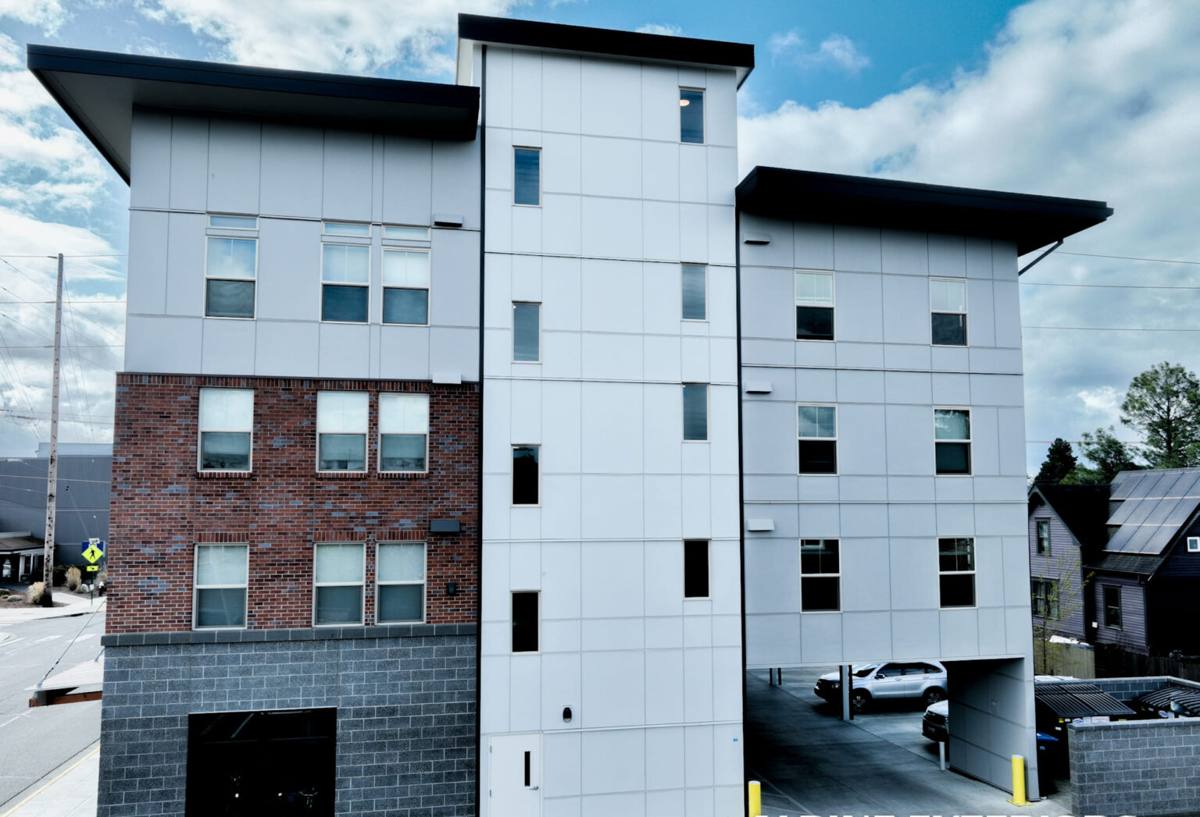
Why We Standardized on James Hardie Fiber Cement
We install James Hardie fiber cement siding exclusively — we don't offer vinyl, LP SmartSide, cedar, primed spruce, or other fiber cement brands. That's not a marketing position, it's a decision based on what holds up under Ferndale's specific conditions.
Fiber cement itself is a mix of cement, sand, and cellulose fibers, which makes it non-combustible and dimensionally stable — it doesn't expand and contract with moisture the way wood-based products do, and it doesn't soften or warp when it stays wet for extended periods, which matters a great deal during a Whatcom County winter. Among fiber cement manufacturers, we specifically use James Hardie because of their HZ5 climate-engineered formulation for wet, moderate-freeze regions like ours, their factory-applied ColorPlus finish, and a warranty structure that's been consistent and transferable when the product is installed to their published specifications. We've seen what happens when cheaper trim boards, unrated fasteners, or gapped installations meet this climate, and we'd rather turn down a job than install something we don't trust to still look right in fifteen years.
What Fiber Cement Won't Do That Wood and Vinyl Sometimes Will
- It won't rot from prolonged moss contact the way untreated wood trim can
- It won't buckle or warp in heat and cold swings the way vinyl panels can
- It won't feed insects looking for a food source in a damp wall assembly
- It holds paint and factory finish far longer than bare wood siding
- It resists denting and impact damage better than vinyl
What a Correct Fiber Cement Job Actually Involves
Fiber cement is only as good as the installation behind it. Most of the siding failures we get called out to inspect in this area aren't material failures — they're installation shortcuts that let water in behind a product that was never designed to handle standing moisture. On a proper Ferndale installation, that means:
- A code-compliant weather-resistive barrier installed shingle-style, lapped correctly at every seam
- Rainscreen or drainage gap furring where wall assembly and exposure call for it, so any moisture that does get behind the siding can drain and dry
- Corrosion-resistant, stainless or hot-dip galvanized fasteners driven to Hardie's specified pattern and depth — not just whatever was on hand
- Proper minimum clearances from grade, roof lines, decks, and horizontal surfaces so splashback and standing water can't wick into the panel edges
- Factory-cut and field-cut edges sealed per Hardie's guidelines, since exposed raw edges are the most common point of moisture intrusion
- Flashing integrated correctly at windows, doors, and any wall penetration — this is where the vast majority of real-world leaks originate, not through the field of the siding itself
- Caulking used only where Hardie specifies it, not as a substitute for proper flashing and lap technique
Skip any one of these steps and you can end up with the same swelling, staining, and paint failure people associate with lower-grade materials — except now it's happening on a product that was supposed to prevent it.
James Hardie Product Lines That Fit This Climate
Hardie makes several plank and panel profiles, and the right choice depends on the home's style and exposure, not just preference. For a coastal-influenced, wet climate like Ferndale's, we generally point homeowners toward the HZ5 zone formulation regardless of which style they choose.
| Product | Typical Use | Why It Fits Ferndale |
|---|---|---|
| HardiePlank lap siding | Traditional horizontal siding, most common residential choice | Widest color and texture range, factory ColorPlus finish resists salt-air fading |
| HardiePanel vertical siding | Board-and-batten and modern facades | Fewer horizontal laps for water to find, works well on gable ends exposed to driving rain |
| HardieTrim boards | Corner boards, window and door trim, fascia | Won't rot from moss contact or trapped moisture the way wood trim does |
| HardieShingle siding | Accent gables, dormers | Shingle-style shadow lines without the maintenance burden of cedar shakes |
ColorPlus finish matters more here than in drier climates — a factory-baked finish resists the chalking and fading that salt air and UV exposure cause in field-applied paint, which means fewer repaint cycles over the life of the siding.
Our Process, Start to Finish
- Free on-site estimate — we walk the exterior, note exposure direction, existing moisture damage, trim condition, and any drainage or grading issues before we quote anything
- Tear-off and inspection — old siding comes off and we inspect the sheathing underneath for rot or hidden moisture damage before covering it back up
- Repair and prep — any compromised sheathing or framing gets addressed before new siding goes on; we don't wrap damage in new material
- Weather barrier and drainage plane — installed and lapped correctly, with rainscreen furring where the wall assembly calls for it
- Flashing at every penetration — windows, doors, hose bibs, vents, and any other wall penetration get proper flashing before siding closes around them
- Hardie installation to manufacturer spec — correct fastener pattern, clearances, and sealed cut edges
- Final walkthrough — we go over the finished job with the homeowner before calling it complete
What Drives the Cost of a Fiber Cement Job
| Factor | Why It Matters |
|---|---|
| Home size and wall complexity | More corners, gables, and cutouts mean more labor and material waste |
| Existing siding removal | Tear-off, disposal, and sheathing repair add time before new siding can start |
| Sheathing or framing damage found underneath | Hidden rot from years of moisture intrusion has to be fixed, not covered |
| Product line and profile | Panel, plank width, and trim selections carry different material costs |
| Trim and accent detail | Board-and-batten accents, shingle gables, and custom trim add labor |
| Access and site conditions | Steep lots, limited access, or extensive landscaping can affect staging and labor time |
We give a firm, itemized quote after the on-site walk-through rather than a rough phone estimate — Whatcom County wall conditions vary too much lot to lot to price accurately over the phone.
Living With Fiber Cement Siding in a Moss-Prone Climate
One advantage homeowners notice quickly is how little fiber cement asks of them compared to wood siding in a shaded, damp lot. It still needs basic upkeep, though, and doing it consistently is what keeps a Hardie installation looking factory-fresh for decades instead of just for the first several years.
- Rinse the siding down once or twice a year with a garden hose to clear pollen, road film, and early moss or algae growth before it takes hold
- Keep gutters clean and downspouts directed away from the wall — clogged gutters are a leading cause of localized staining and moisture streaking on siding below the roofline
- Trim back shrubs and trees that keep siding shaded and damp, since that's exactly the condition moss needs to establish
- Inspect caulking around windows, doors, and trim annually and have any cracked or missing sections redone before wet season
- Repaint on the cycle your finish calls for — ColorPlus finishes go far longer between repaints than field-applied paint, but they're not maintenance-free forever
Why It Matters That We Already Work in This Area
A crew that installs siding across a wide range of climates has to generalize. A crew that works Ferndale and the rest of Whatcom County regularly already knows which walls take the worst of the driving rain, which lots hold onto moss longest, and which detailing choices actually hold up against salt air instead of just looking good on installation day. That local pattern recognition shows up in small decisions — how much drainage gap to build in, where to double up on flashing, which trim details to skip because they'll just trap moisture — that don't show up on a spec sheet but make a real difference ten years down the road.
If you're weighing a siding replacement or new construction project in Ferndale, we're happy to walk your property, point out anything the current siding or wall assembly is already telling you, and give you a straightforward, no-pressure estimate for a correctly installed James Hardie system built for this specific climate.