 Sudden Valley Siding
 Happy Valley Sits in a Tough Spot for Siding
Happy Valley is one of the residential pockets in and around Sudden Valley, and like the rest of Whatcom County it takes weather from two directions at once. Storms roll in off the water carrying salt-laden air, and the surrounding terrain funnels driving rain sideways into exterior walls for days at a stretch. Add the tree cover that gives these neighborhoods their character, and you get a long moss and algae season that starts earlier and lasts longer than most homeowners expect. Siding here isn't just a cosmetic layer — it's the barrier between that weather and the framing, sheathing, and insulation behind it.
We install siding across the broader Sudden Valley area, and Happy Valley homes tend to share a few things in common: mature landscaping that keeps siding shaded and slow to dry, north- and west-facing walls that rarely see direct sun, and roof lines that dump runoff straight onto lower wall sections. None of that is unusual for this part of the county, but it does change what "correct installation" looks like compared to a dry, sunny climate.
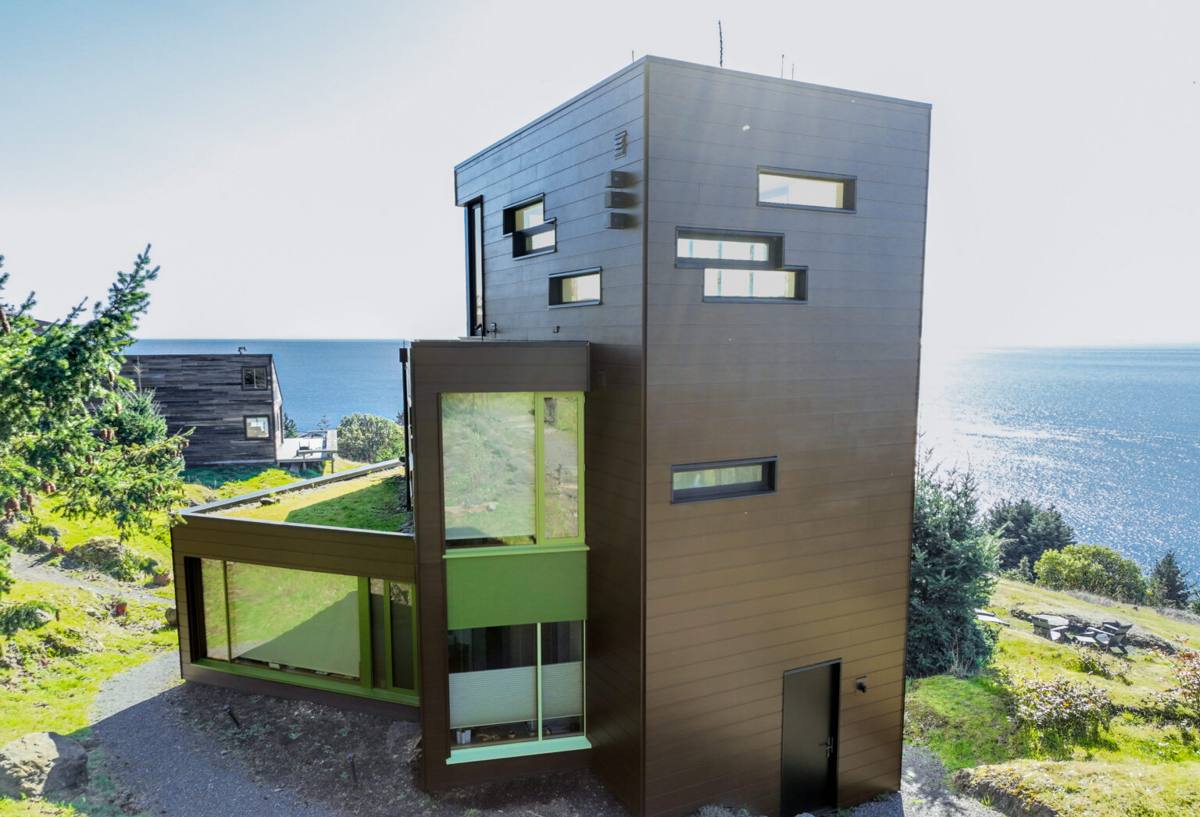
What Salt Air, Rain, and Moss Actually Do to Siding
Each of these three factors attacks siding differently, and a siding system has to hold up to all three at once, year-round.
Salt Air
Airborne salt accelerates corrosion on fasteners, flashing, and any metal trim. It also speeds up the breakdown of lower-grade paints and coatings, which is why factory-applied, baked-on finishes hold color and adhesion far longer than field-applied paint in this environment.
Driving Rain
Wind-driven rain doesn't just hit siding — it gets pushed up and under laps, into seams, and behind poorly sealed penetrations. A siding product that swells, warps, or delaminates when it takes on moisture will fail faster here than in a calmer, drier climate. Drainage behind the siding matters as much as the siding itself.
Moss and Algae
Shade plus moisture equals moss, and moss holds water against a wall surface far longer than open sun ever would. Siding that absorbs moisture or has a porous painted surface gives moss and algae something to grip. A dense, factory-finished fiber cement surface gives it much less to hold onto, and it's easier to rinse clean without damaging the finish.
Why We Only Install James Hardie in This Neighborhood
We've made a standing decision not to install vinyl, LP SmartSide, Cemplank, Allura, primed spruce, or cedar — on this job or any job. It's not that those products can't be installed correctly somewhere; it's that in a climate like Happy Valley's, the trade-offs stack up against homeowners. Vinyl expands and contracts with temperature swings and can crack in impacts common during winter storms. Engineered wood products are more moisture-sensitive at cut edges and seams than fiber cement, which matters when you're dealing with sustained wind-driven rain. Cedar and primed spruce need a maintenance schedule — refinishing, caulking, spot repairs — that most homeowners underestimate until the wood starts showing it.
James Hardie fiber cement is non-combustible, dimensionally stable across our seasonal humidity swings, and comes with a factory-applied ColorPlus finish that's engineered to resist fading and hold up against coastal-adjacent air far longer than a field-painted surface. Hardie's HZ5 product line in particular is built for climates with more moisture exposure, which fits this part of Whatcom County. It's backed by a strong transferable warranty, which matters if you sell the home down the road. We put it on every job because it's the product we're comfortable standing behind in this specific climate.
What a Correct Installation Involves Here
Fiber cement siding is only as good as the installation underneath it. In a high-moisture, high-wind-driven-rain area, a few details matter more than they might elsewhere:
- A properly lapped weather-resistive barrier behind the siding, with all penetrations sealed before panels go up
- Rainscreen or furring strategy where wall orientation and shading call for extra drainage and drying capacity
- Correct fastener spacing and type — stainless or coated fasteners rated for coastal-adjacent exposure
- Flashing at every window, door, and roof-to-wall intersection, installed to shed water outward, not trap it
- Manufacturer-specified clearances between siding and grade, decks, roof lines, and other hard surfaces
- Caulking and sealant only where Hardie's install guide calls for it — not as a substitute for proper flashing
Skipping any one of these doesn't show up on day one. It shows up two, five, or ten years later as trapped moisture, paint failure, or rot in the sheathing behind siding that still looks fine from the curb. That's the real cost of a rushed or generic installation in a climate like this one.
How Our Process Works in Happy Valley
Because we work this area regularly, we already know the general conditions we're walking into before we get on site — but every home still gets its own assessment, not a copy-paste plan.
1. On-Site Walkthrough
We look at existing siding condition, moisture staining, trim and flashing details, roof runoff paths, and how much shade and tree cover each wall gets. That tells us where extra drainage detailing or fastener upgrades are worth building in.
2. Tear-Off and Sheathing Check
Once old siding comes off, we check sheathing and framing for hidden moisture damage — a common find in homes that have gone years without a siding replacement in this climate. Any repairs happen before new siding goes on, not after.
3. Weather Barrier and Flashing
This is the step that determines how the siding performs in a storm, not just how it looks. We install and lap the weather-resistive barrier and flashing to shed water down and out, matching detailing to each wall's actual exposure.
4. Hardie Panel or Lap Installation
Panels or lap siding go up to Hardie's fastener, clearance, and gapping specifications, with attention to the joints and terminations that see the most water in wind-driven rain.
5. Trim, Caulk, and Final Walkthrough
Trim and caulking finish the job at seams and penetrations, and we walk the finished exterior with the homeowner before calling it done.
Cost Factors for a Happy Valley Fiber Cement Job
Every home is different, but these are the variables that most affect price on a fiber cement siding job in this area:
| Factor | Why It Matters Here |
|---|---|
| Existing siding removal | Homes with moisture-damaged sheathing behind old siding need repair before new siding goes on |
| Wall exposure and orientation | Shaded, rain-facing walls may need added drainage detailing (rainscreen/furring) |
| Trim and architectural detail | More corners, windows, and rooflines mean more flashing and cut work |
| Siding profile (lap vs. panel vs. shingle-style) | Labor and material costs vary by Hardie product line chosen |
| Access and site conditions | Mature trees, slopes, and tight lots common in Happy Valley affect staging and labor time |
| ColorPlus vs. field-applied finish | Factory-finished panels cost more upfront but skip a painting phase and hold color longer in salt air |
Maintenance and What to Expect Long-Term
Fiber cement isn't maintenance-free, but it's low-maintenance compared to wood, and it doesn't have the moisture-trapping issues that make vinyl and engineered wood harder to keep ahead of here. A yearly rinse-down to knock back moss and algae buildup, a look at caulked joints for cracking, and prompt attention to any impact damage are really the bulk of it. Because the ColorPlus finish is baked on at the factory rather than painted on site, you're not looking at a repaint cycle every several years the way you would with cedar or primed wood trim.
Homes in shaded, moisture-heavy spots — which describes a lot of Happy Valley — will still show moss growth faster than a home in full sun. That's a function of the environment, not a flaw in the siding, and it's exactly why the density and finish quality of the product you choose matters as much as the installation.
Why Hiring a Crew That Already Works This Area Matters
A contractor who hasn't worked Whatcom County's wetter, shadier neighborhoods can install fiber cement siding that looks correct and still underperforms here, because the generic install spec doesn't account for local wind-driven rain patterns, moss exposure, or the salt air moving through the region. A crew that already works Sudden Valley and Happy Valley has seen what happens to siding here over years, not just what a spec sheet says — which shows up in the drainage detailing, fastener choices, and flashing decisions made before the first panel goes up.
Before hiring anyone for a fiber cement siding job in this area, it's worth checking a few things:
- Are they licensed and insured to work in Washington, and will they show proof without being asked twice?
- Do they install to the manufacturer's written specifications, including fastener type and clearances?
- Will they walk you through the weather barrier and flashing plan before siding goes up, not just after?
- Do they have experience with the drainage and moisture conditions specific to shaded, high-rainfall lots?
- Is the warranty they offer backed by both the manufacturer and their own workmanship guarantee?
If a contractor can't answer those clearly, that's worth noticing before you sign anything.
Get a Straight Answer for Your Home
Every Happy Valley property is a little different — tree cover, wall exposure, and existing siding condition all change what a correct job looks like. If you'd like an honest look at what your home needs and a clear estimate with no pressure to sign on the spot, the form below gets you started.