 Sudden Valley Siding
 Why Geneva Roofs Wear Out Faster Than the Brochure Says
Geneva sits in one of the wetter, greener corners of Whatcom County, and that same setting that makes the area a good place to live is hard on a roof. Homes here deal with a long stretch of the year under low cloud and steady drizzle, punctuated by driving rain events that push water sideways into places a roof was never designed to handle. Add in moisture-laden marine air moving inland off the Sound and the tree cover that shades so many Geneva lots, and you get a climate that's constantly feeding moss, algae, and slow rot rather than the sharp UV damage roofs face in drier parts of the country.
A roof that would coast along for decades in a dry climate can start failing early here if it wasn't installed with this specific weather pattern in mind. That's the gap we see most often on older Geneva homes: a roof that looked fine on installation day but was never set up to shed a long moss season or handle sustained wind-driven rain.
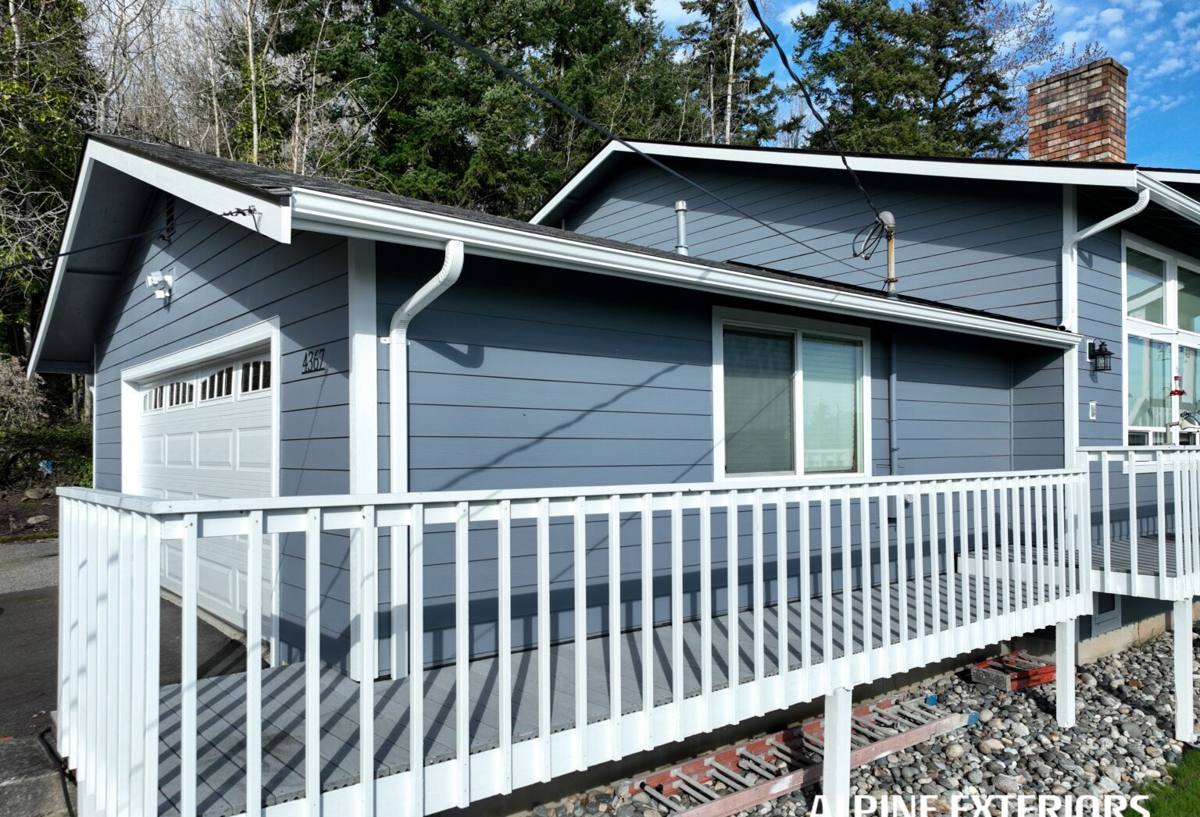
Signs a Geneva Home Needs a New Roof, Not Another Repair
Not every roof problem calls for a full tear-off. But there's a point where patching stops making financial sense and a new roof becomes the honest recommendation. Some of the clearer signals include:
- Granule loss heavy enough that you're finding grit in gutters and downspouts every time it rains
- Shingles that are cupping, curling at the edges, or cracking in multiple areas rather than one isolated spot
- Moss that keeps returning within a season or two of cleaning, especially on north-facing slopes that stay shaded most of the day
- Soft spots in the decking you can feel when walking the roof, which usually means water has already reached the wood
- Staining or streaking on interior ceilings, particularly near valleys, chimneys, or skylights
- A roof that's simply reached the end of its material's realistic service life for this climate, even if it "looks" okay from the ground
If a roof is showing two or three of these at once, that's usually a sign the underlying materials and layers are failing together, not just the surface layer.
What a Correct New Roof Installation Actually Involves
A new roof is more than swapping old shingles for new ones. The parts of the job that don't show from the street are what determine whether the roof performs in a wet, moss-prone climate or turns into a repeat problem.
Tear-Off and Deck Inspection
Old roofing comes off down to the decking so we can actually see what's underneath. This is the point where hidden rot, soft plywood, or old water damage gets found and dealt with — not covered over with a new layer on top, which is a shortcut that hides problems instead of fixing them.
Underlayment
In a climate with this much sustained rain, the underlayment matters almost as much as the shingle itself. A synthetic, water-resistant underlayment gives the roof a real second line of defense if wind-driven rain gets under a shingle edge, which happens more often here than in drier regions.
Flashing
Flashing around chimneys, skylights, vents, and roof-to-wall transitions is where most leaks actually start, not the open field of shingles. New flashing, properly lapped and sealed, is a non-negotiable part of a correct installation — reusing old, bent, or rusted flashing to save time is one of the most common shortcuts that leads to callbacks.
Ventilation
Balanced intake and exhaust ventilation keeps the attic space close to outside temperature and humidity. Without it, moisture gets trapped, which shortens the life of the decking from underneath — a problem that's invisible until it isn't.
Ice and Water Shield in Vulnerable Areas
Valleys, eaves, and areas prone to ice damming get an extra self-adhered membrane layer for added protection against water backing up under the shingles during heavy weather.
Choosing the Right Roofing Material for This Climate
There's no single "best" roofing material — the right choice depends on budget, roof pitch, how much shade the property gets, and how much long-term maintenance the homeowner wants to take on. Here's how the common options compare for a wet, moss-prone, marine-influenced climate like Whatcom County's:
| Material | Moisture & Moss Resistance | Typical Lifespan | Maintenance Level |
|---|---|---|---|
| Architectural asphalt shingle | Good, especially with algae-resistant granules | 25–30 years | Low to moderate — periodic moss removal recommended |
| Standard 3-tab shingle | Fair — thinner profile sheds less efficiently | 15–20 years | Moderate — more prone to moss buildup over time |
| Standing seam metal | Excellent — smooth surface discourages moss growth | 40–50+ years | Low |
| Cedar shake | Requires diligent upkeep in constant moisture | 20–30 years with maintenance | High — regular treatment and moss control needed |
For most Geneva homes, a quality architectural shingle with algae-resistant granules strikes the right balance of cost, appearance, and performance. Metal roofing costs more up front but pays that back in lower maintenance and moss resistance over the decades it stays in service. We'll walk through the honest trade-offs for your specific roof rather than pushing whatever's easiest to install.
Ventilation and Moss: The Half of the Job Homeowners Rarely See
Moss doesn't just sit on a roof looking bad — its root structure works into the shingle surface and holds moisture against it, which accelerates granule loss and shortens the shingle's life. In a climate with a moss season this long, ventilation and shading matter as much as the shingle brand.
A correctly vented attic reduces the temperature and humidity differential that helps moss take hold. Where trees keep a section of roof shaded most of the day, we'll talk through realistic expectations — no roofing material fully stops moss on a roof that never sees direct sun, but the right combination of ventilation, algae-resistant shingles, and a periodic maintenance schedule keeps it manageable instead of destructive.
Our Process, Start to Finish
1. On-Site Inspection
We walk the roof and the attic, not just look at it from the driveway. That's the only way to catch deck damage, ventilation gaps, or flashing issues before they're factored into a proposal.
2. Written Estimate
You get a clear, itemized proposal covering materials, labor, tear-off, disposal, and any deck repair that's likely needed — no vague lump-sum numbers that leave room for surprise add-ons later.
3. Material Selection
We go over shingle or metal options suited to your roof's pitch, sun exposure, and budget, and explain the real trade-offs rather than upselling the most expensive option.
4. Installation
Tear-off, deck inspection and repair, underlayment, flashing, and final material installation, done in a sequence that doesn't leave your home exposed to weather overnight during a multi-day job.
5. Cleanup and Walkthrough
Full magnetic sweep for nails, debris hauled off, and a walkthrough so you understand what was done and what the maintenance schedule should look like going forward.
What a New Roof Typically Costs, and What Moves the Price
Every roof is different, but the factors that drive cost up or down are consistent. Understanding them helps you evaluate any quote you get, from us or anyone else:
| Cost Factor | Why It Matters |
|---|---|
| Roof size and number of facets | More square footage and more valleys/hips mean more material and labor |
| Roof pitch | Steep roofs require more safety setup and take longer to work on |
| Deck condition | Rotten or soft plywood found during tear-off adds repair cost, but skipping it isn't an option |
| Material choice | Standard asphalt, architectural shingle, and metal have different price points and lifespans |
| Number of penetrations | Chimneys, skylights, and vents each need proper flashing, which adds labor |
| Accessibility | Steep driveways, limited staging area, or tree cover can affect setup time |
We'd rather walk your specific roof and give you real numbers than quote a broad range that doesn't mean much for your house.
Why a Crew That Already Works Geneva Makes a Difference
Roofing crews that work all over the state see a wide mix of conditions but don't always build the muscle memory for one particular climate pattern. A crew that regularly works Geneva and the surrounding Sudden Valley area already knows which slopes hold moss longest, which roof styles in this area tend to have ventilation shortfalls, and how the local rain pattern behaves through the year. That local pattern recognition shows up in small decisions — where to add extra underlayment, which vents to prioritize, how to sequence a job around the weather — that add up to a roof that performs better over its full lifespan, not just on installation day.
It also means we're not a stranger showing up if something needs a look years down the road. Being local and staying local is part of how we hold ourselves to the work.
Pre-Project Checklist for Geneva Homeowners
Before you commit to a new roof, it helps to walk through a short checklist:
- Get an on-roof and in-attic inspection, not just a ground-level look
- Ask for a written, itemized estimate rather than a single lump-sum number
- Confirm the underlayment and flashing plan, not just the shingle brand
- Ask how ventilation will be addressed, especially if moss has been a recurring issue
- Check that deck repair, if needed, is included as a clear line item rather than an open-ended allowance
- Confirm cleanup, debris removal, and a magnetic nail sweep are part of the job
- Ask about warranty coverage for both materials and workmanship, and get it in writing
A roof done right the first time costs less over its lifetime than one that needs repeated patchwork because a step got skipped.
If your Geneva home is due for a new roof, or you're just not sure whether repair or replacement makes more sense, we're happy to take a look. Fill out the form below for a free, no-pressure estimate — we'll walk the roof, give you straight answers, and let you decide from there.