 Sudden Valley Siding
 Roof Repair Built for Geneva's Climate
Geneva sits in one of the wetter, greener corners of Whatcom County, tucked among mature conifers along the north shore of Lake Whatcom. That setting is part of what makes the neighborhood beautiful, and part of what makes roofs here age differently than roofs in drier parts of the state. Heavy tree cover means constant shade and organic debris. Long, wet winters mean roofs stay damp for days at a time. And when storms roll through Whatcom County off the Sound, driving rain doesn't just fall straight down — it gets pushed sideways into flashing, vents, and anywhere a roof has even a small weakness.
A roof repair here has to account for all of that. Patching a leak without understanding why moisture is getting in, or replacing a few shingles without addressing the moss and debris causing the damage, just buys a homeowner a few dry months before the same problem comes back. Our approach is built around fixing the actual cause, not just the symptom.
Common Roof Problems We See Around Geneva
Moss and Organic Growth
With so much tree canopy nearby, roofs in Geneva collect needles, leaves, and seed debris in valleys and along eaves almost year-round. That debris holds moisture against the roofing material, and moss takes hold in the shaded, damp spots first — usually the north-facing slopes and areas under overhanging branches. Left alone, moss lifts shingle edges, holds water against the roof deck, and shortens the life of the roofing system well before its rated age.
Leaks at Flashing and Penetrations
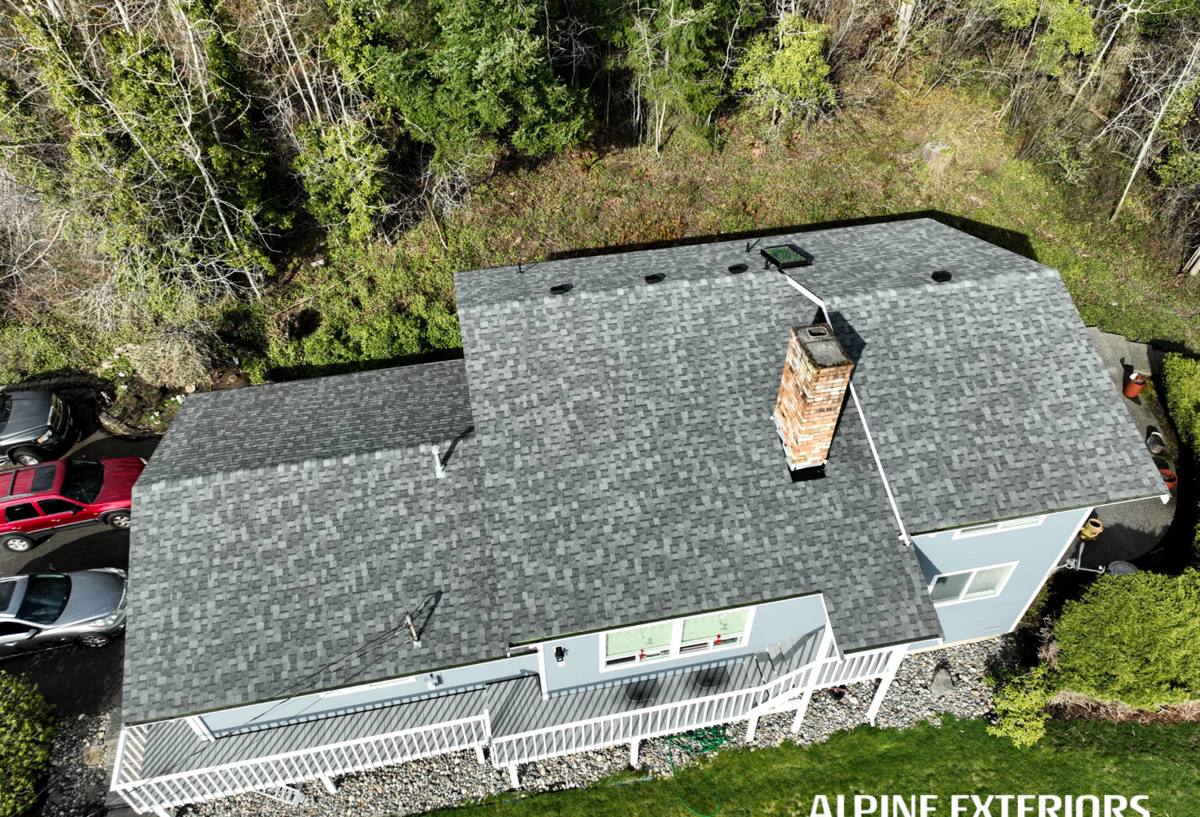
Most roof leaks don't come from the open field of shingles — they come from the details. Flashing around chimneys, skylights, plumbing vents, and roof-to-wall transitions is where driving rain finds its way in, especially during the sideways wind events that come through this part of Whatcom County in the fall and winter. Sealant breaks down, flashing corrodes or shifts, and a small gap becomes a slow, hidden leak.
Storm and Wind Damage
Wind off the lake and through the surrounding trees can lift shingle tabs, crack ridge caps, or drop branches and debris hard enough to damage the roofing surface. These aren't always dramatic — a single lifted shingle or a cracked cap can look minor but leave the roof deck exposed to the next rain event.
Ice Dams and Cold-Weather Backup
Geneva gets cold snaps that Bellingham proper sometimes avoids, being slightly inland and at elevation near the lake. When snow melts unevenly on a roof and refreezes at the eaves, water can back up under shingles and into the attic space. It's less common than moss or flashing issues, but it shows up almost every winter somewhere in the neighborhood.
What a Correct Roof Repair Actually Involves
A repair that lasts starts with figuring out where water is actually entering — which is often several feet away from where the stain or drip shows up inside. We trace the path, not just the symptom.
- Inspect the full roof plane, not just the area around the visible leak or damage
- Check flashing at every penetration, transition, and valley near the affected area
- Confirm the roof deck underneath is dry and sound before closing anything back up
- Match repair materials to the existing roof as closely as possible in type, profile, and color
- Re-seal and re-fasten to manufacturer specifications, not just "close enough"
- Clear moss, debris, and standing-water areas that contributed to the failure
Matching materials matters more than it sounds. A repair done with the wrong shingle profile, an incompatible underlayment, or mismatched metal flashing can create a new weak point right next to the one you just fixed. We keep common profiles and materials on hand for exactly this reason, and when an exact match isn't available, we're upfront about it before starting the work.
Our Roof Repair Process
1. Inspection and Diagnosis
We walk the roof (or use a ladder and camera where conditions call for it) to find the actual source of the problem, check the surrounding area for related wear, and look at attic or interior signs of moisture if the homeowner has noticed them.
2. Written Estimate
We explain what we found, what needs to happen, and what it will cost — in plain terms, before any work starts. If a repair isn't the right call and replacement makes more sense, we say so.
3. The Repair
We complete the work with attention to the details that actually prevent future leaks: proper flashing technique, correct fastening, compatible materials, and a deck check before anything gets closed up.
4. Cleanup and Walkthrough
We clear debris and moss from the work area and surrounding roof where it's contributing to the problem, and walk the homeowner through what was done.
Repair vs. Replacement: How We Decide
Not every roof problem in Geneva needs a full replacement, and not every one should be patched indefinitely. Here's the general framework we use when advising homeowners:
| Situation | Repair Usually Makes Sense | Replacement Usually Makes Sense |
|---|---|---|
| Age of roof | Under roughly 15-18 years, well-maintained | Nearing or past manufacturer's expected lifespan |
| Extent of damage | Isolated to one area (flashing, a section, a valley) | Multiple areas failing or widespread granule loss |
| Deck condition | Solid, dry deck under the damaged area | Soft, rotted, or repeatedly wet decking |
| Moss/debris history | First real issue, roof otherwise sound | Long-term moss damage across multiple slopes |
| Leak history | First occurrence or clear single cause | Recurring leaks in different spots over time |
We'll always give an honest read on which side of that line your roof falls on, along with the reasoning behind it — not just a recommendation.
Moss and Preventive Maintenance for Geneva Homes
Because of the tree cover and consistent moisture around Lake Whatcom, prevention does more for a Geneva roof's lifespan than almost anywhere else in the county. A roof that's kept clear of debris and moss simply doesn't develop the same recurring leak points.
- Clear needles, leaves, and debris from valleys and gutters at least twice a year
- Address moss while it's still light growth, before it lifts shingle edges
- Trim back branches that keep sections of the roof shaded and damp
- Check attic ventilation — poor airflow speeds up moisture damage from the inside
- Have flashing and sealant points checked after major wind or storm events
- Don't ignore small interior stains — they're almost always easier (and cheaper) to fix early
Cost Factors for Roof Repair
Every roof repair is different, but the cost generally comes down to a handful of factors. We don't quote a number without seeing the roof, but this gives a realistic sense of what drives price up or down:
| Factor | Why It Matters |
|---|---|
| Size and location of the damaged area | Larger or harder-to-access areas take more time and material |
| Roof pitch and height | Steeper or taller roofs require more safety setup and labor time |
| Extent of deck damage | Rotted or soft decking under the roofing adds material and labor |
| Material match | Matching existing shingles or metal profile can affect sourcing cost |
| Number of penetrations involved | Each vent, chimney, or skylight flashing point adds detail work |
| Moss/debris removal needed | Heavier buildup requires more cleanup before repair can start |
As a broad range, small, isolated repairs (a section of flashing, a handful of shingles) tend to run in the low hundreds to around a thousand dollars, while more involved repairs — larger damaged areas, deck replacement, multiple penetration points — can run into the low thousands. The only way to know for sure is a look at the actual roof, which is what the estimate is for.
Why a Crew That Knows Geneva Matters
Roofing crews unfamiliar with this part of Whatcom County sometimes underestimate how much moss and moisture management matters here, or don't stock the fasteners and flashing details that hold up against the driving rain and wind this area sees. A crew that's worked roofs around Sudden Valley and the Lake Whatcom shoreline knows which slopes tend to hold moisture, which flashing details fail first in this climate, and how to size a repair so it actually lasts through the next wet season — not just until the next storm.
We also know that a roof problem in this neighborhood is rarely just about the roof. Tree cover, gutter condition, and attic ventilation all play into how long a repair holds up, and we'll flag those connections when we see them instead of treating the roof as an isolated system.
Get a Free Roof Repair Estimate in Geneva
If you're dealing with a leak, storm damage, or a roof that's carrying more moss than it should, we're happy to take a look and give you an honest assessment — repair, monitor, or replace, whichever the roof actually calls for. Use the form below to request a free, no-pressure estimate for your Geneva home.