 Sudden Valley Siding
 Why Geneva Homes Take a Different Kind of Beating
Geneva sits in one of the wetter, greener corners of Whatcom County, tucked among mature trees along the Lake Whatcom shoreline near Sudden Valley. That setting is part of why people love living here — and part of why siding wears differently than it does in a drier, sunnier part of the state. Moisture-laden marine air moves through this part of Washington for much of the year, tree cover keeps sections of many homes shaded and damp longer after a storm, and the long stretch of fall-through-spring rain gives moss and algae a real head start on any surface that stays wet.
None of that means siding is destined to fail. It means siding has to be installed and repaired with those conditions in mind, rather than treated like it's going up in a dry inland climate. A repair that ignores how water actually moves across a Geneva home — where it lingers, where wind-driven rain gets pushed into a joint, where moss will keep coming back no matter how many times it's scraped off — is a repair that will need to be done again in a few years.
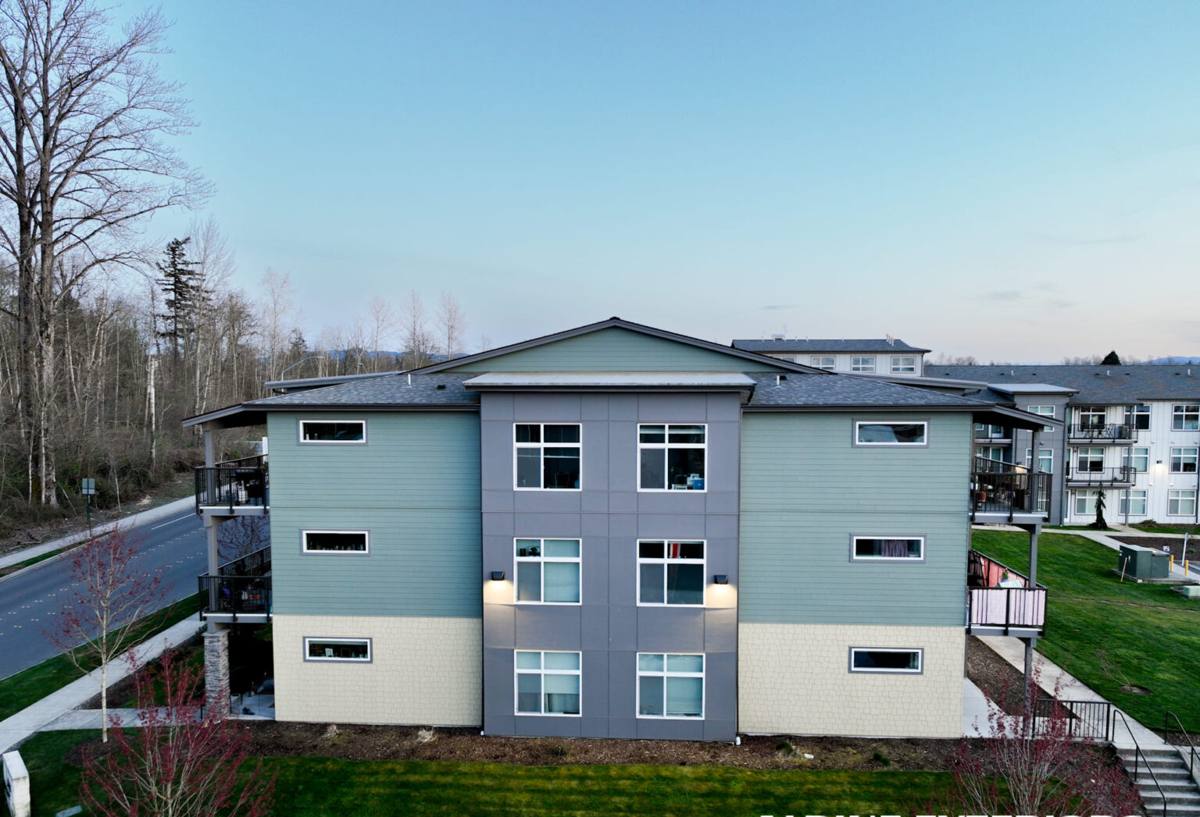
The Siding Problems We Actually See Around Geneva
Every siding repair call is a little different, but in this neighborhood a handful of issues show up far more often than others:
- Moss and algae staining on north-facing walls and anywhere tree canopy blocks direct sun and slows drying time.
- Soft, swollen, or delaminating panels where an older wood-based or engineered wood siding has been absorbing moisture at seams or cut edges for years.
- Failed caulking and open joints around trim, window returns, and butt joints — the small gaps where driving rain gets pushed in by wind rather than falling straight down.
- Paint failure and peeling on wood siding, which is often a symptom of trapped moisture underneath rather than just an aging paint job.
- Damage near grade or low clearance areas, where splash-back, mulch beds, or landscaping keep the bottom courses of siding wetter than the rest of the wall.
A lot of these show up first as cosmetic issues — a dark streak, a bit of bubbling paint — before they become structural ones. Catching them at the cosmetic stage is the difference between a modest repair and pulling siding off to deal with rotten sheathing underneath.
What a Correct Siding Repair Actually Involves
Diagnosing the real cause, not just the symptom
Patching a stained or cracked section of siding without figuring out why it failed is a temporary fix at best. Before we touch a panel, we're looking at what's feeding the problem: is water tracking down from a gutter or roof valley above, is there a caulk joint that opened up, is the panel simply too close to soil or a deck surface to ever dry out properly? A repair that doesn't address the water source will fail again, usually in the same spot.
Matching material, texture, and finish
Mismatched siding repairs are one of the most common complaints homeowners have about past work — a patch that's visibly a different color, texture, or even a slightly different reveal than the original coursing. Getting a clean match means understanding the existing product, sourcing compatible material, and paying attention to how coursing lines up around the repaired section.
Flashing and moisture barrier details
The siding itself is often not where a failure starts — it's the flashing behind it, or a missing/damaged weather-resistive barrier underneath. Any proper repair opens up the area enough to check that the water-resistive barrier is intact and that flashing at windows, doors, and horizontal trim is actually directing water out and away from the wall, not behind it.
Repair vs. Replace: How We Help You Decide
Not every damaged section needs a full re-side, and not every "just patch it" request is the right call either. We look at the scope, the age of the existing siding, and what's happening behind it before recommending one path over the other.
| Factor | Leans toward repair | Leans toward replacement |
|---|---|---|
| Extent of damage | Isolated to one or two sections/elevations | Spread across multiple walls |
| Underlying sheathing | Dry, sound wood underneath | Soft, stained, or rotted sheathing found |
| Age of existing siding | Newer product still under warranty | Original siding is decades old and near end of service life |
| Material match | Compatible product still available | Discontinued profile or color, poor match likely |
| Moss/moisture pattern | Single problem area with an identifiable cause | Recurring, whole-house moisture and moss issues |
When damage is limited and the wall assembly behind it is dry, a targeted repair is the honest recommendation. When we find the same problems repeating across several walls, or sheathing damage that goes beyond the immediate repair area, we'll tell you that plainly rather than patching over something that needs a bigger fix.
Our Process for a Geneva Siding Repair Call
- On-site inspection of the damaged area and a walk of the rest of the exterior, since siding problems in one spot often hint at issues elsewhere on the home.
- Opening up the affected section to check flashing, the weather-resistive barrier, and sheathing condition before deciding on repair scope.
- Straight talk about findings — what caused the damage, what it will take to fix it correctly, and whether repair or a larger scope makes more sense.
- Repair using matched or compatible material, correcting the water path (flashing, caulking, drainage) so the same failure doesn't happen again.
- Final check of the repaired area against surrounding siding for color, texture, and coursing consistency.
Why We Only Install James Hardie Fiber Cement
When a repair does turn into a larger conversation about replacing a wall or section, our recommendation is consistent: James Hardie fiber cement. We made the decision years ago to standardize on one product line rather than offering vinyl, LP SmartSide, or other engineered wood and fiber cement alternatives, because fiber cement holds up to exactly the conditions Geneva throws at siding — sustained damp, moss-friendly shade, and driving, wind-pushed rain.
Fiber cement doesn't absorb and swell the way engineered wood products can at a damaged edge, and it's non-combustible, which matters in a heavily treed setting like this one. Hardie's ColorPlus factory finish is baked on and warranted separately from field-applied paint, and the HZ5 product line is engineered specifically for the kind of freeze-thaw, high-moisture climate found in the Pacific Northwest. When we do repair work on a home with a different existing siding product, we'll still repair it correctly and honestly — but if that home is heading toward a fuller re-side down the road, Hardie is what we'll recommend and what we install ourselves.
Why It Matters That We Already Work in Geneva
Siding repair is a trade where local knowledge shows up in small but real ways: knowing how shaded a particular type of lot gets and for how long, knowing what moss and algae growth actually looks like a season after a "quick clean and paint" job versus a properly addressed moisture problem, and knowing which failure patterns are common in homes of a certain era around Sudden Valley and the Lake Whatcom shoreline. A crew that already works this area isn't guessing at how Whatcom County's wet season will treat a repair — they've seen it play out on homes nearby.
Simple Maintenance That Extends Any Repair's Life
Whatever siding is on your home, a little regular attention goes a long way toward making sure a repair stays a repair and doesn't turn into a bigger project:
- Rinse moss and algae off shaded or north-facing walls before it builds up a heavy layer — a soft wash is far gentler on siding and paint than pressure washing.
- Keep gutters clear so overflow doesn't run down the wall face during heavy rain.
- Trim back tree branches and shrubs that keep a section of wall shaded and slow to dry.
- Check caulking at trim, window returns, and joints annually, and re-caulk before a gap opens up enough to let water behind the siding.
- Keep mulch, soil, and plantings from piling up against the bottom courses of siding.
- Walk the exterior after major wind and rain events and note any new staining, soft spots, or lifted caulking early.
If you're noticing moss, staining, soft spots, or open joints on your Geneva home's siding, we're happy to take a look and give you an honest read on what's going on and what it'll take to fix it. Reach out for a free, no-pressure estimate using the form below.