 Sudden Valley Siding
 Siding Replacement in Geneva: Built for This Specific Climate
Geneva sits in the part of Whatcom County shaped by the Lake Whatcom basin — tree cover, marine-influenced air, and a wet season that runs long even by Pacific Northwest standards. When siding on a Geneva-area home starts to fail, it's rarely one obvious problem. It's usually a slow accumulation: moisture that never fully dries between storms, fasteners that corrode a little faster than they would inland, and moss that takes hold on shaded walls and just stays there. Siding replacement here isn't a cosmetic upgrade — it's the point where a home's exterior either gets rebuilt to actually handle this climate, or gets patched with the same weaknesses baked back in.
We install James Hardie fiber cement exclusively, and everything about how we approach a Geneva siding replacement — the tear-off, the inspection underneath, the flashing details, the product line we spec — is built around what this specific stretch of Whatcom County does to a house year after year.
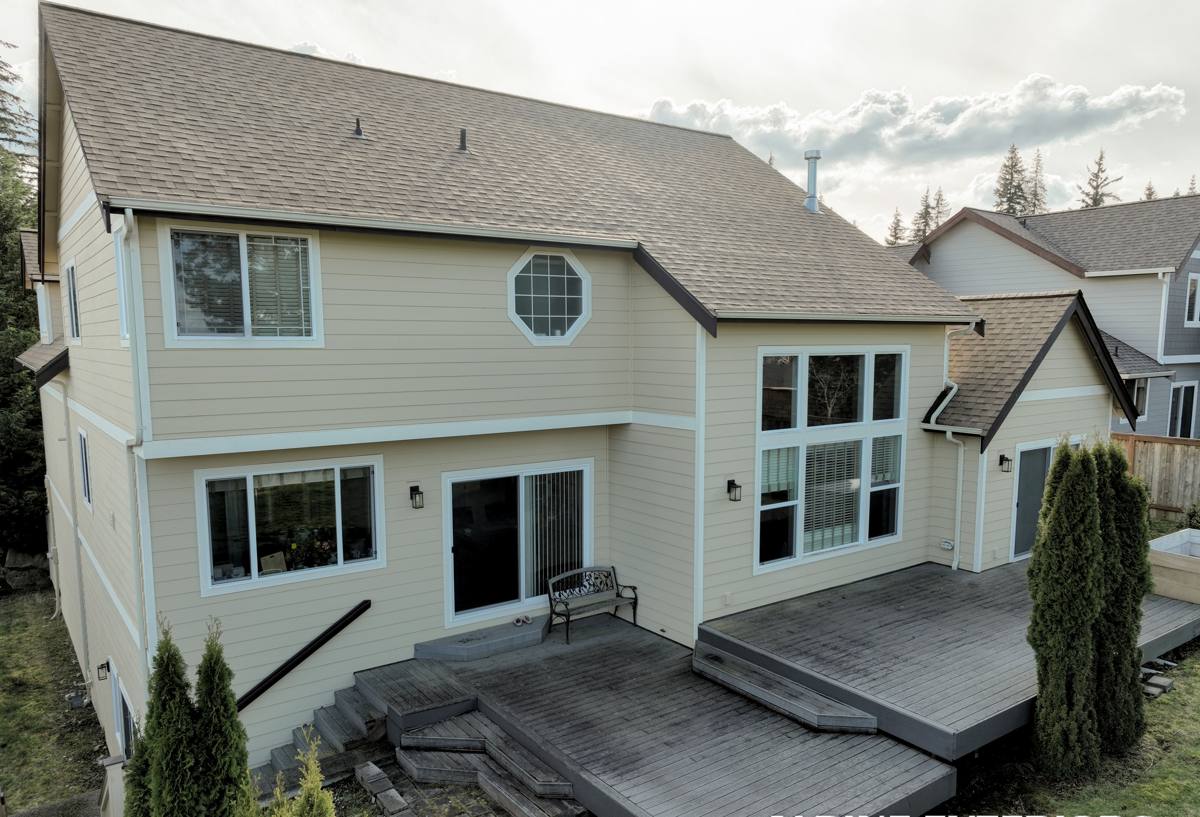
What the Climate Around Geneva Does to Siding
Marine Air and Driving Rain
Air moving through the Lake Whatcom basin carries moisture and salt that accelerate corrosion on exposed fasteners, hinges, and trim hardware faster than a dry inland climate would. Layer on Whatcom County's habit of sustained, wind-driven rain rather than short passing showers, and water gets pushed into any seam, lap joint, or fastener point that wasn't detailed correctly — sometimes for years — before it finally shows up as a stain, a soft spot, or a section of siding that's started to separate from the wall.
A Moss Season That Doesn't Really End
Tree cover around Geneva keeps a lot of wall surface in shade for long stretches of the day, especially on north-facing elevations. Shade plus moisture plus mild temperatures is exactly what moss and mildew need, and once they establish on a porous or wood-based siding surface, they don't go away with a single cleaning — they come back, and each cycle of dampness works a little further into the material. On siding that's already aging or was installed with weak water-management details, that ongoing moisture load is usually what turns a maintenance item into a replacement job.
Why This Means the Margin for Error Is Smaller
None of this makes exterior work impossible around Geneva — it means shortcuts show up faster here than they would somewhere drier and sunnier. Siding that would look fine for fifteen years on a sun-exposed lot elsewhere in the county can start failing in half that time on a shaded, moisture-heavy wall if it wasn't installed with this climate specifically in mind.
Signs a Geneva Home Needs Full Replacement, Not Just Repair
Homeowners often call about one visible problem — a soft board, a stain, a section that's pulling away — and it's worth knowing when that's an isolated repair versus a sign the whole system underneath is compromised. Some warning signs worth taking seriously:
- Siding that feels soft, spongy, or crumbles at the edges when pressed
- Persistent moss or dark staining that returns quickly after cleaning
- Visible cupping, warping, or gaps opening up at seams and laps
- Paint that's peeling, bubbling, or failing across multiple wall sections rather than one spot
- Interior signs — damp drywall, musty smell, or staining near exterior walls — that suggest moisture is getting past the siding entirely
- Siding that's original to a home built more than 20-25 years ago, especially wood-based or wood-look products
- Rot or damage discovered at window and door trim, which often means moisture has been tracking behind the siding for some time
One or two of these in isolation might mean a targeted repair is enough. Several at once, or any sign that moisture has reached the sheathing underneath, usually means replacement is the more honest answer — patching over compromised sheathing just delays a bigger problem.
What a Correct Siding Replacement Involves
A siding replacement is only as good as what happens after the old material comes off and before the new material goes on. On a Geneva-area home, that middle step matters more than usual because of how much moisture the wall assembly has likely already been exposed to.
Tear-Off and Inspection
Removing the old siding is also the only chance to see what's actually happening underneath — sheathing condition, evidence of past moisture intrusion, and whether framing has been affected. On a shaded, moisture-exposed property, this step regularly turns up problems that weren't visible from the outside, and it's important those get addressed before anything new goes back on the wall.
Water Management Behind the Siding
A weather-resistant barrier and correct flashing at every window, door, and penetration are what actually keep water out over the long run — the siding itself is the outer layer of a system, not the whole system. Given how much wind-driven rain this area sees, we pay particular attention to drainage detailing so that any moisture that does get past the outer surface has somewhere to go instead of sitting against the wall.
James Hardie Installation to Spec
Fiber cement only performs the way it's engineered to when it's installed to Hardie's published specifications — correct fastener type and spacing, proper clearance from grade, decks, and roof lines, and properly sealed joints. For Geneva's marine-influenced, shaded conditions, we install Hardie's HZ5 product line, engineered specifically for regions with heavy moisture exposure and freeze-thaw cycling, rather than a standard-climate formulation.
Why We Install Only James Hardie Fiber Cement
We don't install vinyl, LP SmartSide or other engineered wood siding, primed spruce, cedar, or competing fiber cement brands like Cemplank or Allura. That's a standard we hold to on purpose, not a limitation on what we're capable of installing — each of those products can look good on installation day, but the question that matters is how they hold up five, ten, and twenty years into a climate like Geneva's.
Wood-based and wood-look siding absorbs moisture at the fiber level, so sustained damp exposure eventually shows up as swelling, cupping, or delamination at cut edges — particularly on shaded walls that never fully dry out. Vinyl doesn't absorb water, but it expands and contracts noticeably with temperature swings, which over time can open gaps at seams and let wind-driven rain track behind the panel. James Hardie fiber cement is dimensionally stable and non-combustible, and its ColorPlus factory finish is baked on under controlled conditions and backed by its own finish warranty — a meaningful advantage in a climate that's hard on painted and coated surfaces. Combined with a strong transferable warranty when installed to spec, it's the product we're comfortable standing behind on a Geneva replacement.
Siding Options Compared for a Geneva Replacement
| Material | Moisture Behavior Here | Long-Term Consideration |
|---|---|---|
| James Hardie fiber cement | Doesn't absorb or swell; factory finish resists moisture-driven wear | What we install — engineered HZ5 line for this exposure |
| Vinyl siding | Doesn't absorb water but expands/contracts with temperature swings | Seams and J-channels can open over time, letting driving rain behind panels |
| LP SmartSide / engineered wood | Absorbs moisture at cut edges and fastener points | Swelling and edge delamination on shaded, damp walls |
| Cedar / primed spruce | Highly moisture-absorbent; needs an intact paint film to perform | Ongoing repainting and maintenance in a wet, shaded climate |
Cost Factors for a Geneva Siding Replacement
Every home is different, so we don't quote pricing sight unseen — but a few factors consistently move the cost of a replacement in this area:
| Factor | Why It Matters Here |
|---|---|
| Sheathing and framing condition | Moisture damage found during tear-off adds repair scope before new siding can go on |
| Wall complexity and elevation count | More corners, dormers, and trim details mean more flashing and labor |
| Siding profile chosen | Lap siding, panel siding, and shingle-style Hardie products carry different material and labor costs |
| Removal and disposal of old siding | Older wood-based siding with moisture or moss damage takes more care to remove and haul away |
| Trim and accessory scope | Window and door trim, corner boards, and soffit work are often replaced alongside siding for a consistent, well-sealed result |
Our Siding Replacement Process
- On-site assessment: We walk the exterior, look at current siding condition, and check for signs of moisture intrusion before recommending replacement over repair.
- Written scope and estimate: A clear breakdown of the work, materials, and Hardie product line specified for the home's exposure.
- Tear-off and inspection: Old siding comes off, and sheathing and framing are inspected and addressed before anything new is installed.
- Water management installation: Weather-resistant barrier and flashing installed correctly at every window, door, and penetration.
- Hardie installation to manufacturer spec: Correct fastening, clearances, and joint sealing for HZ5 product performance.
- Final walkthrough: We review the finished work with the homeowner before calling the job complete.
Why Hiring a Crew That Already Works Geneva Matters
A siding replacement done right depends on understanding the specific conditions a house is going to face, not just following a generic installation manual. A crew that regularly works properties around Geneva and the Lake Whatcom basin already knows which elevations tend to take the worst of the driving rain, which lots hold shade long enough to need extra attention to drainage detailing, and how quickly moss reestablishes itself if water management isn't handled correctly the first time. That's not something a crew coming from outside the area picks up on a single job — it's the product of doing this work, in this specific climate, over and over.
It also means fewer surprises during the project itself. Material lead times, realistic scheduling around Whatcom County's wet season, and knowing what to expect once old siding comes off a shaded wall all come from familiarity with this specific area, not a generalized approach applied everywhere.
Get a Free, No-Pressure Estimate
If your Geneva-area home is showing signs of siding failure — or you'd simply like an honest read on whether repair or full replacement makes sense — we're happy to take a look. Estimates are free, and there's no pressure to move forward until you're ready.