 Sudden Valley Siding
 Window Installation Built for Geneva's Climate, Not a Generic Job
Geneva homes sit right in the thick of what makes Whatcom County weather hard on windows: salt-tinged marine air drifting in off the Sound, long stretches of driving rain from fall through spring, and a moss season that can stretch nearly half the year on shaded, tree-covered lots. None of that is unique to any one house — it's the baseline every window on every home in this area has to survive, year after year. A window that's rated fine on paper can still fail early here if it's not installed with this climate in mind.
That's the real difference between a window installation that lasts fifteen-plus years and one that starts leaking, fogging, or sticking within a few winters: it's rarely the window itself. It's the flashing, the sealant choice, the sill pan, and the small judgment calls made during the two or three hours it takes to actually set the unit in the wall. We've built our process around the conditions Sudden Valley and Geneva homes actually face, not the generic install most window crews run everywhere from dry inland towns to coastal Washington.
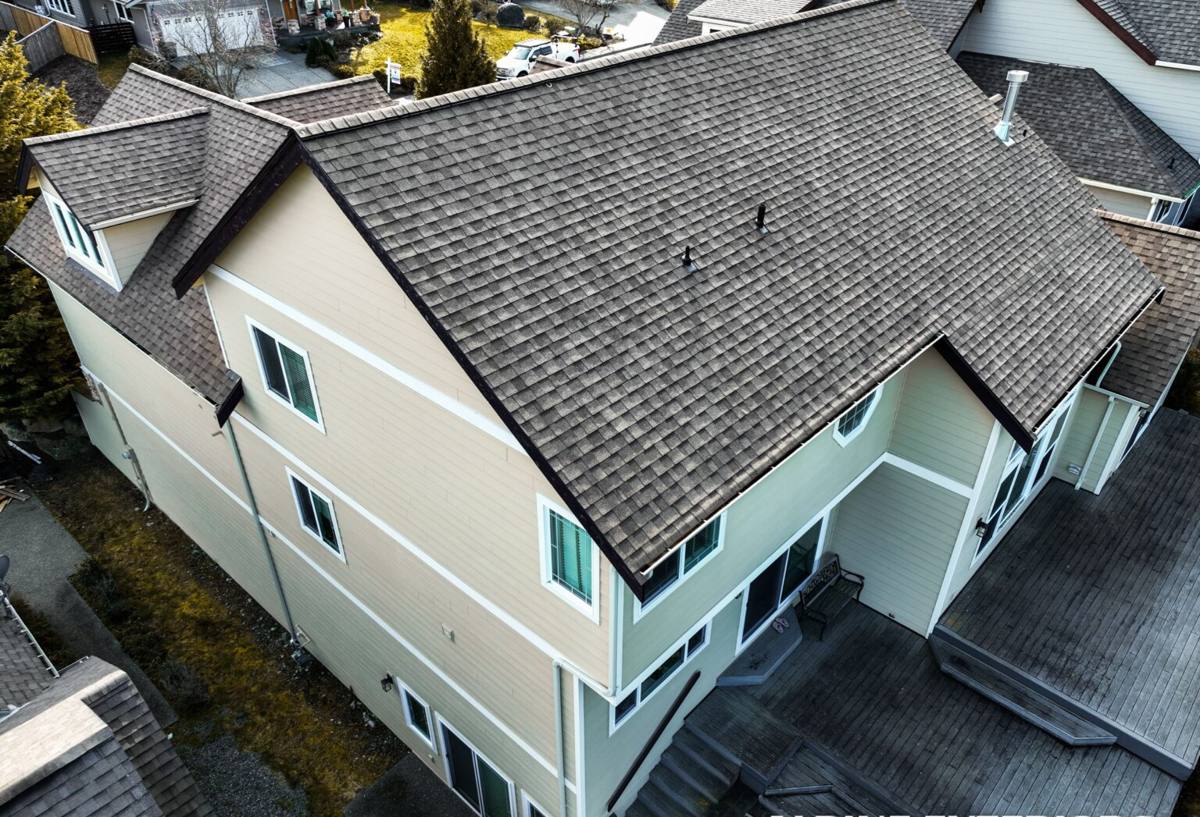
Signs a Geneva Home's Windows Are Past Due
Most homeowners don't think about their windows until something obvious goes wrong. By then, moisture has often already gotten into the wall assembly. Watch for these earlier warning signs:
- Fogging or a cloudy haze between the panes of a double-pane window — the seal has failed and the gas fill is gone
- Visible moss, dark streaking, or soft, spongy wood at the bottom corners of exterior trim or sills
- Noticeable drafts or a cold band of air near the window even when it's fully latched
- Windows that are hard to open, close, or lock — frames can swell or shift as wood absorbs moisture over years
- Paint or caulk that's cracked and pulling away from the frame, especially on the side of the house that catches the most weather
- A musty smell near a window that doesn't go away with cleaning
Any one of these can be minor on its own. Two or three together usually means moisture has been getting past the exterior seal for a while, and it's worth having it looked at before a simple window swap turns into a wall repair.
What a Correct Window Installation Actually Involves
Setting a new window is easy to do badly and easy to make look fine for a year or two while it quietly fails behind the trim. A correct installation in a wet, moss-prone climate like this one includes several steps that don't show up in a sales brochure:
The Parts That Matter Most
- Sill pan flashing — a sloped, watertight pan under the window opening that directs any water that does get past the window itself back outside, instead of into the wall framing
- Proper weather-resistive barrier integration — the house wrap or building paper has to be shingled and taped so water always drains down and over the flashing, never behind it
- Correct fastening and shimming — a window that isn't shimmed square will rack over time, straining the seals and hardware
- Low-expansion foam and backer rod at the right points — not just a bead of caulk around the outside trim, which is a cosmetic fix, not a weatherproofing one
- Interior air sealing — often skipped, but it stops warm, moist indoor air from condensing inside the wall cavity around the window
Skip any one of these and the window can still look perfect from the curb while water works its way into the sheathing and framing underneath. That's the kind of damage that stays hidden until a wall starts to feel soft or a musty smell shows up — usually a few years after the original install, long after the crew that did it has moved on.
Choosing the Right Window for a Damp, Wooded Lot
Geneva's tree cover and lake-area humidity mean windows here deal with more sustained moisture exposure than a comparable home on an open, sunny lot. Frame material matters more than most homeowners expect:
| Frame Material | Moisture Behavior | Maintenance | Typical Fit for Geneva |
|---|---|---|---|
| Vinyl | Won't rot or absorb water; seams need good welds | Low — occasional cleaning | Solid, budget-friendly default for most homes |
| Fiberglass | Dimensionally stable, handles wet/dry cycling well | Low | Strong choice for shaded, high-moisture lots |
| Wood (unclad) | Absorbs moisture, needs paint/finish maintained | High — repaint/reseal every few years | Only for homeowners committed to upkeep |
| Wood-clad (aluminum or vinyl exterior) | Protected exterior, wood interior look | Moderate | Good where interior wood look matters and upkeep is done |
We're honest with Geneva homeowners about this: a bare wood window is a real maintenance commitment in this climate, not a one-time purchase. If the look of wood matters to you, a clad option gets you most of the appearance with far less exposure to the moss and moisture that will eventually find any unprotected wood on a shaded lot.
Glass Package Matters Too
Double-pane with argon fill and a low-E coating is the practical standard for this climate — it manages heat loss through our long gray winters and keeps interior condensation down, which in turn reduces the mildew and window-sill moisture problems that come with humid indoor air meeting a cold pane. Triple-pane is available and does perform better, but the added cost only pencils out for homeowners prioritizing maximum efficiency or sound control, not as a baseline requirement for every window.
Our Window Installation Process
- On-site assessment — we look at the existing window openings, siding condition, and any signs of past water intrusion before quoting anything
- Honest scope discussion — if we find rot or damaged sheathing behind an old window, we tell you before work starts, not after we've opened up the wall
- Removal — old window comes out, opening is inspected and any damaged framing or sheathing is addressed
- Flashing and sill pan installation — done to shed water outward regardless of what the old setup looked like
- Window set, shimmed, and fastened — checked for square and level before anything is sealed
- Air sealing and exterior finishing — insulation at the interior gap, sealant and trim at the exterior
- Final function check — every window is opened, closed, and locked before we consider the job done
- Cleanup — old windows and debris hauled off, work area left clean
Mistakes We Regularly Find Behind Old Installations
When we're called out to replace windows that failed early, a handful of the same problems show up again and again:
- Caulk used as the only weatherproofing, with no flashing or sill pan underneath — caulk is a maintenance item, not a waterproofing system
- New windows set into openings without addressing rot that was already present in the framing
- House wrap taped or lapped backwards, so water gets funneled behind it instead of over it
- Windows installed out of square, which strains hardware and seals years before they should fail
- Trim reinstalled tight against the window with no room for the building to move seasonally, cracking paint and opening gaps
None of these mistakes are visible from inside the house, and most aren't visible from outside either — until the damage they cause eventually is.
Maintenance Checklist for Geneva Homeowners
A well-installed window still benefits from basic upkeep, especially with the moss and moisture load this area sees:
- Clear moss and debris from window sills and the trim above windows at least once a year
- Check exterior caulk lines every year or two and re-caulk hairline cracks before they widen
- Wipe condensation off interior glass in winter rather than letting it sit on the sill
- Test that weep holes on vinyl and fiberglass frames are clear and draining, not clogged with moss or dirt
- Watch for soft spots in exterior trim or siding near window corners — catch rot early, before it spreads
- Keep gutters and downspouts clear so runoff isn't sheeting down past window heads
Why It Matters to Hire a Crew That Already Works in Geneva
Sudden Valley's wooded, lake-area lots and the housing stock built up over different decades mean no two Geneva homes have quite the same window openings, siding details, or moisture history. A crew that's already worked on homes in this specific pocket of Whatcom County has seen the common building patterns here, knows what to check for on older construction versus newer builds, and isn't guessing at how the local climate has already affected a given house before we even open up a wall.
There's also a practical side: a local crew can respond faster if something needs a follow-up look, isn't burning half a job's timeline on drive time, and has a reputation in the immediate area to stand behind — not just a service radius on a website.
What Window Installation Typically Costs
Exact pricing depends on window size, frame material, glass package, and how much (if any) rot repair is needed once the old window comes out. As a general guide:
| Cost Factor | Lower End | Higher End |
|---|---|---|
| Frame material | Standard vinyl | Fiberglass or wood-clad |
| Glass package | Double-pane, standard low-E | Triple-pane, upgraded coatings |
| Opening condition | Sound framing, straightforward swap | Rot repair or resized opening needed |
| Number of windows | Per-window pricing decreases with volume | Single window replacements cost more per unit |
We won't quote a number over the phone without seeing the actual openings — too much of the cost depends on what condition the framing is in once the old window is out, and we'd rather give you an accurate number than a low one that changes later.
If your Geneva home has windows showing any of the signs above, or you're simply ready to stop losing heat and dealing with drafts through another Whatcom County winter, we're happy to take a look. Fill out the form below for a free, no-pressure estimate — we'll tell you honestly what we find and what your real options are.