 Sudden Valley Siding
 Board & Batten Siding in Happy Valley: What the Climate Actually Demands
Board and batten has become one of the most requested looks for homes around Sudden Valley, and Happy Valley is no exception. The vertical lines read as clean, modern, and a little more custom than standard lap siding — which is exactly why it shows up so often on remodels and new builds in this part of Whatcom County. But board and batten is not a cosmetic choice you can bolt onto any wall and expect to hold up. It's a siding system, and in this climate, the system has to be built for salt-influenced air off the lake, long stretches of driving rain, and a moss season that can run most of the year in shaded, north-facing areas.
We install board and batten exclusively in James Hardie fiber cement because the product itself, not just the workmanship, has to be able to take what this location throws at it. Vertical siding profiles have more seams and more vertical joints than horizontal lap, which means more places for water to find a way in if the material or the install is wrong. Get it right, though, and board and batten in this neighborhood can look sharp for decades.
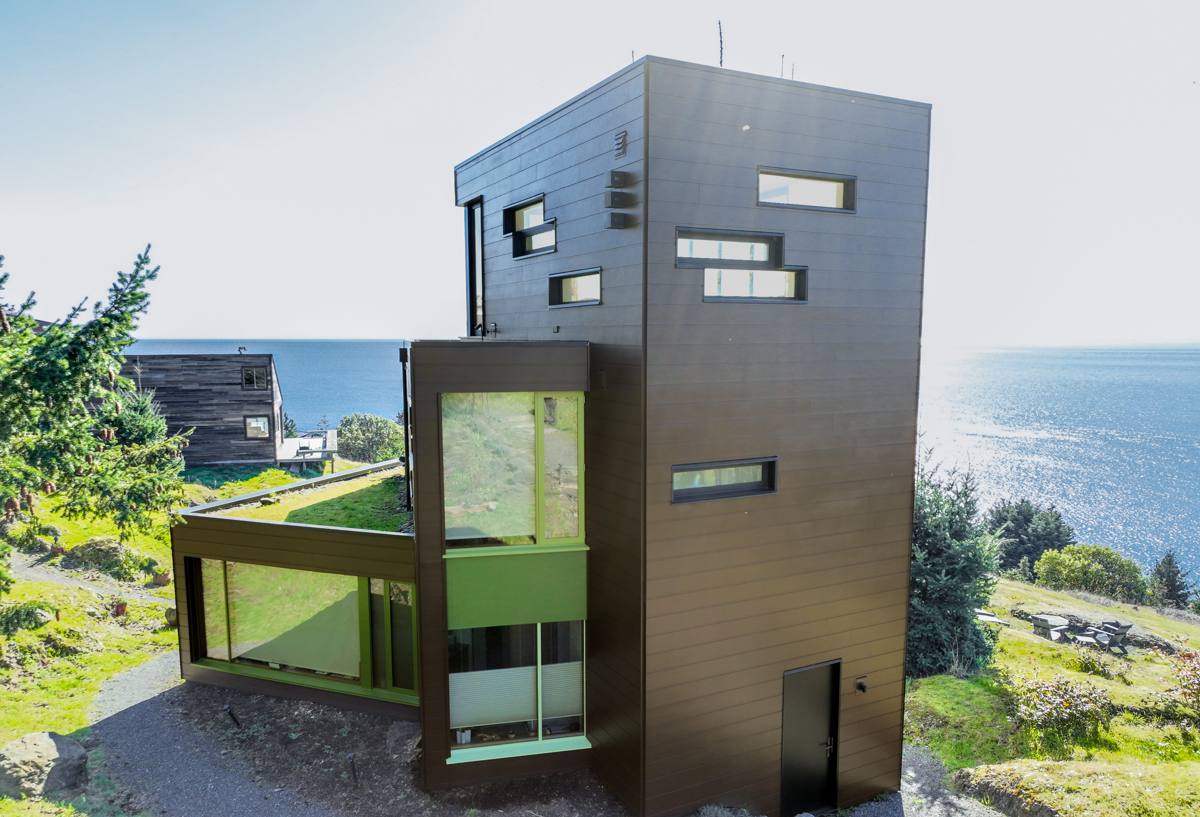
Why Happy Valley's Conditions Are Harder on Vertical Siding
Moisture Load and Batten Joints
Every vertical batten strip creates a seam running top to bottom on the wall. On a standard lap siding job, water sheds horizontally, course over course, and gravity does most of the work. On board and batten, water runs down the face of the wall and has to be kept out of every one of those vertical joints. In a dry climate this is a minor detail. In Happy Valley, with the amount of driving rain that comes off the lake and through the surrounding treeline, it's the single most important part of the install.
Moss and Shade
A lot of Happy Valley lots sit under mature fir and cedar cover, which is great for privacy and terrible for siding that can't handle sustained moisture. Shaded, north- and east-facing walls stay damp longer after rain, and that's exactly where moss and algae take hold first. Untreated or improperly finished wood-look siding in these spots will show green streaking and soft spots years before the sunnier sides of the same house.
Salt-Influenced Air
Homes closer to the lake and the surrounding waterways deal with a mild but constant salt-air exposure. It's not coastal-Pacific level, but over years it accelerates corrosion on fasteners, flashing, and any metal trim that isn't rated for it. It also degrades paint films and unsealed wood fiber faster than an inland home would experience.
What a Correct Board & Batten Job Actually Involves
The finished look of board and batten is simple: flat panels with vertical battens covering the seams. What's underneath that finish is where the job succeeds or fails.
- Weather-resistant barrier (WRB): A continuous, correctly lapped house wrap behind the siding, with every penetration sealed before the first panel goes up.
- Rainscreen or drainage gap: A vertical furring strip or engineered drainage mat between the WRB and the siding so any water that gets past the outer layer can drain and the wall can dry, rather than sitting against the sheathing.
- Panel and batten fastening to spec: James Hardie publishes exact nailing patterns, fastener types, and edge clearances for vertical applications — these aren't optional guidelines, they're what the warranty is conditioned on.
- Flashing at every horizontal transition: Window heads, belt lines, roof-to-wall intersections, and the base of the wall all need proper metal flashing, not just caulk.
- Correct clearance at grade and hardscape: Siding held up off decks, patios, and soil per manufacturer minimums so it isn't sitting in standing moisture.
- Factory-finished color (ColorPlus): A baked-on finish that doesn't rely on field-applied paint to hold up against the moss and moisture cycle here.
Skip any one of these and you don't get a siding failure next month — you get one in three to five years, usually hidden behind the battens where it's expensive to find and expensive to fix.
Why We Only Install James Hardie for This Application
Board and batten is available in several materials — vinyl, engineered wood, primed spruce, cedar — and each one has a real weak point in a climate like this one. Vinyl board and batten can look convincing from the street, but it expands and contracts more than fiber cement, which stresses the batten joints over time and can telegraph waviness on longer wall runs. Wood-based and primed wood products are the ones most vulnerable to the moss and moisture load in shaded Happy Valley lots; even with careful maintenance, sustained dampness against a wood fiber substrate is a losing fight over enough years.
James Hardie fiber cement is non-combustible, dimensionally stable, and doesn't feed moss and algae the way wood-based products can. It's manufactured with HZ5 formulations engineered for the Pacific Northwest's wet, moderate climate specifically — not a generic national product. The ColorPlus factory finish means the color coat is baked on under controlled conditions, which holds up better against the humidity cycle here than a field-applied paint job. That combination is why we standardized on Hardie for every board and batten install we do in this area, including Happy Valley.
Our Process for a Happy Valley Board & Batten Install
- On-site assessment: We walk the home, check existing wall assembly and any moisture or moss patterns already showing, and identify shaded or exposed walls that need extra attention at the drainage plane.
- Tear-off and sheathing check: Old siding comes off and we inspect sheathing for hidden rot before anything new goes up — a common find on older Whatcom County homes with failed housewrap.
- WRB and drainage plane installation: New weather-resistant barrier, taped and lapped correctly, with a rainscreen gap behind the siding.
- Flashing at all penetrations and transitions: Windows, doors, roof lines, and any wall breaks get flashed before panels go on.
- Panel and batten installation to Hardie spec: Correct fastener spacing, panel gaps, and batten placement per manufacturer requirements.
- Final trim, caulking, and walkthrough: We finish trim details and walk the job with you before we call it done.
Why Local Experience Matters for This Specific Job
Board and batten hides its mistakes well — for a while. A rushed installer working off a generic spec sheet from a warmer, drier region can put up a wall that looks identical to a properly built one for the first year or two. The difference shows up later, usually as staining at the batten seams, soft trim boards, or bubbling paint on a shaded wall that never fully dries between rain events. A crew that already works Sudden Valley and the surrounding Whatcom County neighborhoods has already seen which walls in this kind of terrain need the extra flashing detail, which lots hold moisture longest, and where moss takes hold first — and builds for that from the start instead of learning it on your house.
Board & Batten Material Comparison for This Climate
| Material | Moisture/Moss Resistance Here | Dimensional Stability | Finish Longevity |
|---|---|---|---|
| James Hardie Fiber Cement | Strong — non-combustible, doesn't feed moss growth | High — minimal expansion/contraction | ColorPlus factory finish holds up well in wet cycles |
| Vinyl Board & Batten | Moderate — doesn't rot but can trap moisture behind it | Lower — more movement can stress batten joints | Color can fade; not repaintable in most cases |
| Primed Wood/Spruce | Weak in shaded, damp areas — most vulnerable to moss and rot | Moderate — prone to swelling with moisture | Requires ongoing repainting and sealing |
| Cedar | Moderate with diligent maintenance; degrades faster untreated | Moderate — natural material movement | Needs periodic staining/sealing to hold up |
What to Ask Before Hiring for Board & Batten Siding
- Will you install a rainscreen or drainage gap behind the siding, or just wrap and nail?
- What fastener pattern and clearances are you following, and are they the manufacturer's published spec?
- How will you flash the roof-to-wall intersections and window heads specifically?
- Is the product factory-finished, or will it need field paint that I'll have to maintain?
- Have you installed this product on homes with similar shade and moisture exposure nearby?
What This Means for Your Home
Happy Valley homes deal with a specific combination of shade, rain, and moisture cycling that punishes shortcuts on vertical siding faster than it would on a sunnier, drier lot. Board and batten done right — proper drainage plane, correct flashing, a material engineered for this region — is a siding system that can genuinely outlast the alternatives here. Done wrong, it's an expensive redo waiting a few years out.
If you're considering board and batten for a home in Happy Valley, we're happy to come take a look, walk your specific walls, and give you a straightforward estimate — no pressure, no sales script, just what your house actually needs.