 Sudden Valley Siding
 Windows Built for Happy Valley's Wet, Marine Climate
Homes in Happy Valley sit inside one of the wetter, greener pockets of Whatcom County, and the windows on those homes take a beating most manufacturers never test for. The marine air that rolls in off Bellingham Bay and the greater Puget Sound region carries moisture and salt-laden humidity that works its way into wood frames, corrodes hardware, and breaks down seals faster than it would in a dry climate. Add driving rain that comes in sideways during winter storms, tree cover that keeps siding and trim damp for days after a storm passes, and a moss season that can stretch from fall through spring, and you have a set of conditions that punishes anything less than a properly installed, genuinely weather-rated window.
This page is about one thing: energy-efficient window installation and replacement for homes in Happy Valley and the surrounding Sudden Valley area. Not a general overview of every siding or roofing service we offer — just what local homes actually need from their windows, what a correct installation looks like, and how we handle the job from first estimate to final cleanup.
What This Climate Does to an Ordinary Window
Whatcom County's rainfall isn't just frequent, it's persistent — long stretches of low-intensity rain punctuated by wind-driven storms that push water sideways into places a window was never designed to shed it. Over years, that pattern finds every weak point: a flashing detail that was never sealed correctly, a wood sill that was never primed on the end grain, a seal that was rated for a milder climate. Moss and algae also thrive in the shade and moisture found around tree-lined lots, and once organic growth gets established in a sill or a corner joint, it holds moisture against the frame and accelerates rot from the inside out. None of this shows up on day one. It shows up three, five, or ten years later as soft wood, foggy glass, or a window that won't latch tight anymore.
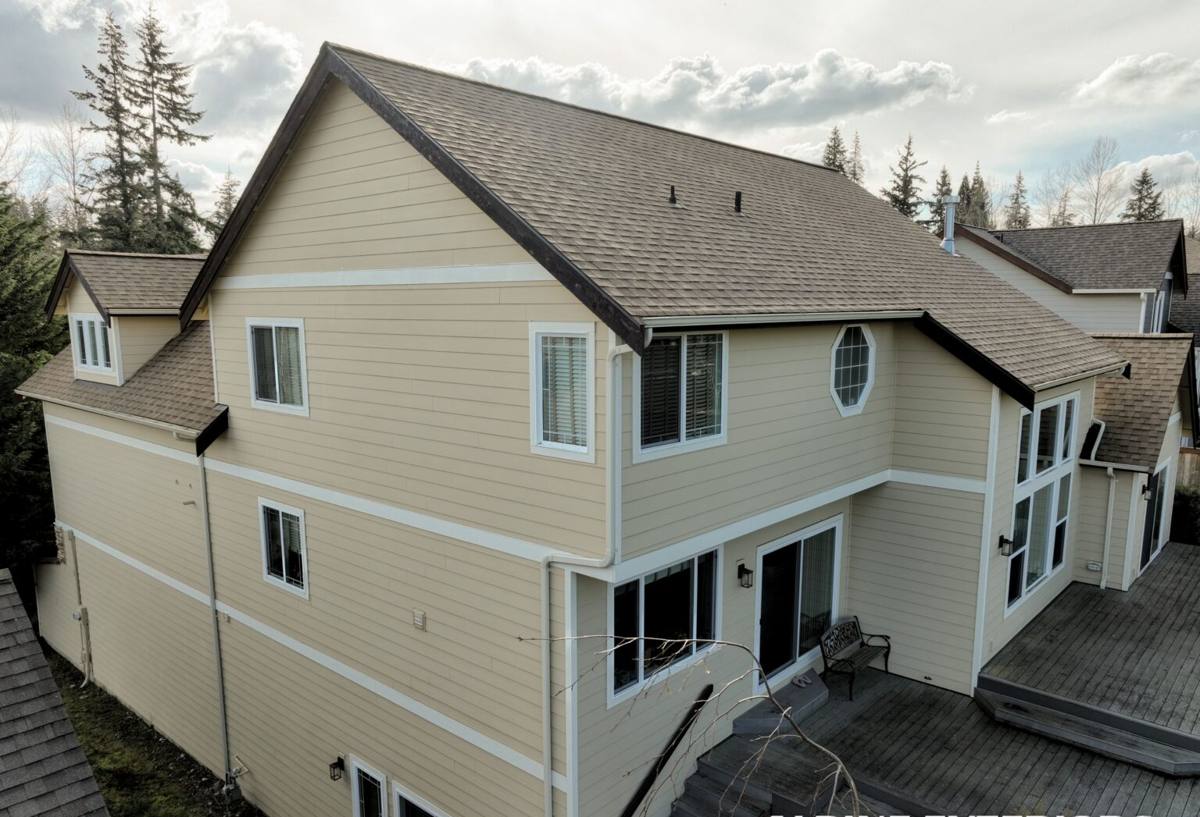
What "Energy-Efficient" Actually Means for a Home Here
Energy-efficient windows get marketed with a lot of numbers, but only a few of them matter for a house in this part of Washington. Two ratings do most of the work:
- U-Factor — how well the window resists heat loss. Lower is better. This is the number that matters most here, since our winters are long, damp, and cool rather than brutally cold — the goal is keeping steady indoor heat in, not fighting extreme swings.
- Solar Heat Gain Coefficient (SHGC) — how much solar heat passes through the glass. In a climate with as many overcast days as ours, a moderate SHGC usually beats an aggressively low one, since you want to capture what sun you get rather than block it.
Just as important as the glass package is the installation itself. A window with excellent ratings on paper will still leak, fog, and underperform if it's set into a rough opening without proper flashing, shimming, and air sealing. We'd rather install a mid-tier window correctly than a premium window poorly — the numbers on the label only mean something once the unit is actually sealed against the weather this area throws at it.
Signs Your Current Windows Are Working Against You
Most homeowners don't replace windows because they woke up thinking about U-factors — they replace them because something is visibly or physically wrong. Here's what we look for, and what you can check yourself:
- Condensation or fog trapped between the panes of a double-pane window — this means the seal has failed and the gas fill is gone for good.
- A cold draft you can feel standing near the window on a windy day, even with it fully latched.
- Wood trim or sills that feel soft, spongy, or show dark staining, especially on the side of the house that takes the most weather.
- Visible moss, algae, or black streaking building up in the corners of the frame or along the bottom sill.
- Windows that are difficult to open, close, or lock — often a sign the frame has swelled, warped, or shifted.
- A noticeable difference in room temperature near the window compared to the rest of the house.
- Rising heating bills without any other explanation, especially in a home with older single-pane or early-generation double-pane units.
Any one of these on its own might just need minor repair. Several of them together, especially on an older home, usually mean it's time to talk about replacement before hidden rot spreads further into the wall framing.
Frame Materials and Glass Packages Compared
There's no single "best" window for every home — it depends on your budget, the age and style of the house, and how much maintenance you want to take on. Here's how the common options stack up for a climate like ours:
| Frame Type | How It Handles Our Climate | Maintenance | Typical Fit |
|---|---|---|---|
| Vinyl | Won't rot, doesn't corrode from salt air, handles moisture well | Low — occasional cleaning | Most homes, best value for performance |
| Fiberglass | Excellent dimensional stability in wet/cold swings, very durable | Low | Homes wanting a longer-term investment |
| Wood | Needs consistent upkeep to resist our rain and moss exposure | High — regular painting/sealing | Historic or character homes where appearance is the priority |
| Wood-Clad | Exterior clad layer protects against weather; interior stays wood | Moderate | Homes wanting a wood interior look without full wood upkeep |
| Aluminum | Prone to condensation and heat loss without a thermal break | Moderate | Rarely our first recommendation for this climate |
For most Happy Valley homes, we lean toward vinyl or fiberglass frames with a double or triple-pane, Low-E, argon-filled glass package. It's the combination that best balances upfront cost against the reality of long-term moisture and moss exposure, without requiring the ongoing maintenance that wood demands in a wet climate.
What a Correct Installation Actually Involves
The window unit itself is only part of the job. Most of the failures we get called out to fix trace back to installation shortcuts, not a bad product. A correct installation includes:
Flashing and Water Management
Every window opening needs a flashing system that directs water down and out, never behind the siding or into the wall cavity. That means properly lapped house wrap, sill pan flashing at the bottom of the opening (the single most commonly skipped step we find on older homes), and head flashing above. Given how much sustained rain this area gets, this is not optional detail work — it's the difference between a window that stays dry for decades and one that rots the wall framing around it within a few years.
Insulation and Air Sealing
The gap between the window frame and the rough opening needs to be filled with a proper low-expansion foam or backer rod and sealant — not stuffed with fiberglass insulation, which does little to stop air movement. Poor air sealing here is a leading cause of the draft complaints we hear about even after a "new" window goes in.
Sizing, Squaring, and Fastening
A window that isn't shimmed level, plumb, and square will bind, leak, or fail to seal properly no matter how good the unit is. We check reveal gaps on all four sides before fastening and confirm the window operates smoothly under its own weight before final trim goes on.
Our Process, Start to Finish
- On-site assessment — we look at existing window condition, framing, siding type, and any signs of moisture damage before recommending anything.
- Honest recommendation — we walk through frame material and glass package options based on your home, your budget, and how the house is exposed to weather and shade.
- Written estimate — clear scope, materials, and timeline, with no pressure to decide on the spot.
- Removal and inspection — old units come out carefully so we can check the rough opening and framing underneath for hidden rot or moisture before anything new goes in.
- Installation — proper flashing, air sealing, shimming, and fastening as outlined above.
- Trim and finish work — interior and exterior trim restored to match the home.
- Final walkthrough — every window opened, closed, and locked in front of you, with cleanup completed before we leave.
What Affects the Cost of a Window Project
We don't publish flat pricing because every home and every opening is different, but these are the factors that actually move the number:
| Factor | Why It Matters |
|---|---|
| Insert vs. full-frame replacement | Full-frame costs more but is often necessary when there's rot or the original frame is compromised |
| Frame material | Vinyl is typically the most budget-friendly; fiberglass and wood-clad cost more upfront |
| Glass package | Double vs. triple-pane, and coating/gas-fill options, affect both cost and long-term energy performance |
| Number and size of openings | Larger units and specialty shapes (bays, arches) take more labor and custom sizing |
| Hidden damage | Rot found in the framing once old windows are removed can add repair scope not visible during the estimate |
| Access and site conditions | Second-story windows, tight lots, and tree-covered access can affect labor time |
We flag likely cost drivers during the initial assessment so you're not surprised later, and if we find hidden rot once a window is out, we stop and talk to you before doing any additional repair.
Why a Crew That Already Works Happy Valley Matters
Window installation done right requires understanding the specific weather a home is built to handle, and that's different in Happy Valley than it is on the dry side of the state. We know how far moss and algae growth can creep into a frame before it becomes a structural problem, how much driving rain a west or south-facing wall takes in a typical Whatcom County winter, and which framing details tend to fail first on the older homes common to this area. That's knowledge that comes from working this specific region, not from a general contracting checklist.
We also understand that Sudden Valley properties often deal with tree cover, sloped lots, and community association guidelines that can affect exterior work — practical realities that shape how a project gets scheduled and executed, not just what product gets installed.
If your windows are drafty, foggy, hard to operate, or just old enough that you're wondering whether they're costing you money every month, we're happy to take a look. Reach out using the form below for a free, no-pressure estimate — we'll tell you honestly what your windows need, whether that's a full replacement or something smaller.