 Sudden Valley Siding
 Metal Roofing in Happy Valley: A Climate-First Approach
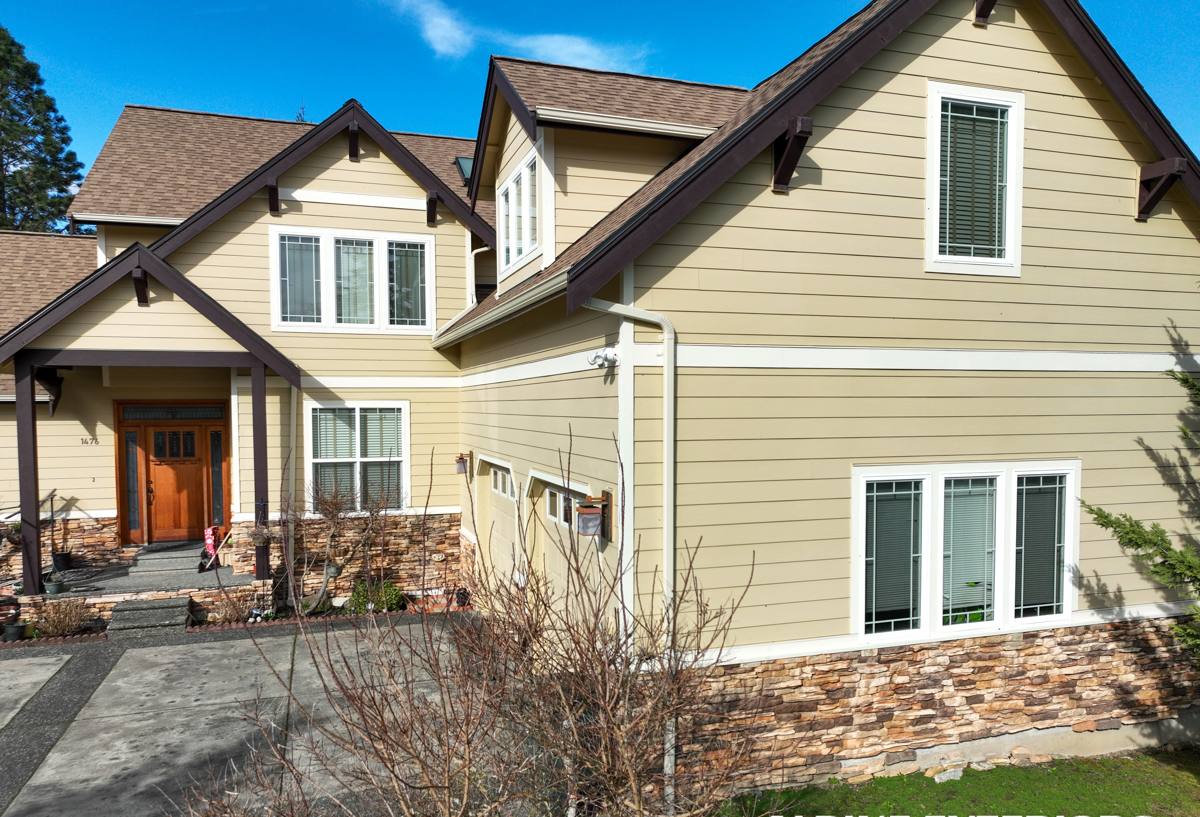
Homes in Happy Valley sit in one of the wetter, mossier corners of Whatcom County, and the roof over your head takes the brunt of it. Salt-tinged air rolling in off the water, months of driving rain, and a moss season that can stretch from fall through spring all work against a roof that isn't detailed correctly. Metal roofing, done right, is one of the strongest answers to that combination — but "done right" is doing a lot of work in that sentence. A metal roof installed with the wrong fasteners, the wrong underlayment, or sloppy flashing will fail faster than a well-built asphalt roof. This page covers what a correct metal roof looks like for a Happy Valley home, what our process involves, and what to actually check before you hire someone to put one on.
What Happy Valley Roofs Are Up Against
Three conditions define roofing performance in this part of Whatcom County, and they interact with each other more than most homeowners realize.
Salt Air and Corrosion
Proximity to marine air means airborne salt settles on exposed metal over time. It's not enough to strip a well-coated panel overnight, but it accelerates corrosion at any point where the protective coating is scratched, cut, or fastened through. Cut edges, exposed screw heads, and dissimilar-metal contact points are where salt exposure actually does damage — which is why panel choice and fastener choice matter more here than in a dry inland climate.
Driving Rain
Rain in this region rarely falls straight down. Wind-driven rain gets pushed sideways and upward under laps, around penetrations, and into any gap a lazy install left behind. A roof here needs to be built to shed water that's actively trying to get pushed backward under the panels, not just water falling from above.
A Long Moss Season
Shade, moisture, and mild temperatures give moss a long growing window on north-facing slopes and anywhere debris collects. Moss holds moisture against roofing material, and on some roof types that moisture retention slowly degrades the surface underneath. Metal roofing changes this equation because moss struggles to get a foothold on a smooth, sloped metal panel the way it does on textured materials — but valleys, low-slope sections, and areas where debris piles up can still grow moss if they're not detailed and maintained properly.
Choosing the Right Metal Panel System
Not all metal roofing is the same product wearing different colors. The two systems homeowners in Happy Valley typically weigh are standing seam and exposed-fastener panels, and the right call depends on budget, roof pitch, and how long you want to go between maintenance checks.
| Feature | Standing Seam | Exposed-Fastener |
|---|---|---|
| Fastener exposure | Concealed clips, no through-panel screws on the field | Screws penetrate the panel face directly |
| Long-term maintenance | Minimal — no exposed gaskets to inspect | Gaskets on exposed screws age and need periodic checking |
| Upfront cost | Higher material and labor cost | Lower material and labor cost |
| Best fit | Long-term ownership, low-slope or high-exposure roof sections | Budget-conscious projects, simpler roof geometry |
| Expansion/contraction handling | Panels float on concealed clips, moves freely | Fixed at each screw, more stress on the panel over time |
Our professional standard is to lean toward standing seam on roof sections with lower pitch or heavy rain exposure, since a concealed-fastener system removes the recurring maintenance item of aging screw gaskets in a wet climate. Exposed-fastener panels aren't a bad product — they're a legitimate, lower-cost option — but they come with a maintenance schedule that a homeowner needs to actually keep up with, and we tell every customer that up front rather than let it become a surprise five years in.
Coating and Gauge
Panel gauge (thickness) and coating type both affect how a roof holds up to salt air over decades. Thicker gauge resists denting and oil-canning; a quality factory-applied coating resists chalking and fade from UV and moisture exposure. We'll walk through the specific gauge and coating options available for your roof during the estimate rather than push a single default — the right combination depends on your roof's exposure and your budget.
What a Correct Metal Roof Installation Actually Involves
The panels get the attention, but most metal roof failures we get called out to inspect trace back to what's underneath and around them, not the panels themselves.
Underlayment
Metal roofing needs a high-temperature, self-adhering or synthetic underlayment rated for the condensation and heat cycling that happens under metal panels. In a climate with this much sustained moisture, underlayment is a second line of defense, not an afterthought.
Flashing and Penetrations
Every valley, chimney, vent pipe, and wall transition is a place where wind-driven rain tries to get in. Flashing needs to be formed and lapped correctly for the direction water actually moves on your roof, not installed from a generic template.
Fastening and Dissimilar Metals
Using the wrong fastener material against a given panel type sets up galvanic corrosion — two dissimilar metals in contact, with moisture present, will corrode faster than either would alone. This is a common shortcut that doesn't show up as a problem until years later, which is exactly why it matters to get it right the first time.
Ventilation
Metal roofs need proper attic or roof-deck ventilation to manage condensation on the underside of the panels. Skipping this step can trap moisture where you can't see it, which defeats a lot of the durability metal roofing is chosen for in the first place.
Our Process, Start to Finish
- On-site evaluation — we walk the roof, check the deck condition, note pitch, penetrations, and any existing moss or moisture damage before quoting anything.
- System recommendation — we go over panel type, gauge, and coating options based on what your roof's exposure actually calls for, with a straightforward explanation of the trade-offs.
- Tear-off or deck prep — old roofing is removed and the deck is inspected and repaired as needed; we don't install a new roof over a compromised deck.
- Underlayment and flashing — the moisture barrier and all flashing details go in before a single panel is installed.
- Panel installation — panels are set, fastened, and sealed to the specifications of the system chosen.
- Final walkthrough — we go over the finished roof with you, including what maintenance (if any) it needs going forward.
Maintenance in a Moss-Prone, Salt-Air Environment
A metal roof is lower-maintenance than most alternatives, but "low-maintenance" isn't "no-maintenance," especially with this region's moss season and salt exposure. A short annual check catches small issues before they become expensive ones.
- Clear debris (needles, leaves, branches) from valleys and low-slope sections where moisture and organic matter can collect
- Check gutters and downspouts for clogs that can back water up under panel edges
- Look for any scratched or exposed panel coating near fasteners, flashing, or foot-traffic areas and have it touched up
- Inspect exposed-fastener gaskets (if that's your panel type) for cracking or wear
- Watch shaded, north-facing slopes for early moss growth and remove it gently before it spreads
- Confirm attic or roof-deck ventilation isn't blocked by insulation or debris
What Drives the Cost of a Metal Roof in Happy Valley
Metal roofing costs more upfront than asphalt in most cases, and the final number on any given home depends on several factors beyond just square footage.
| Cost Factor | Why It Matters |
|---|---|
| Panel system (standing seam vs. exposed-fastener) | Standing seam runs higher in both material and labor |
| Roof pitch and complexity | Steep or cut-up roofs with multiple valleys take more time and material |
| Tear-off vs. new construction | Removing and disposing of an old roof adds labor and dump cost |
| Deck condition | Any rot or damage found during tear-off needs repair before panels go on |
| Coating and gauge selection | Heavier gauge and premium coatings cost more but extend service life |
| Accessory work | Snow guards, custom flashing, and ventilation upgrades add to the total |
We give a written, itemized estimate before any work starts, so you know exactly what you're paying for and why — not a lump-sum number with no explanation behind it.
Why a Crew That Already Works Happy Valley Matters
A roofer who has actually worked on homes in this specific area knows what the local moss patterns look like on north-facing roofs, how far wind-driven rain typically pushes under a poorly lapped flashing detail, and which roof geometries in this neighborhood tend to collect debris in valleys. That's not something you get from a general contractor working from a generic checklist — it comes from having done the work here, in this climate, on roofs like yours. It also means we're not learning on your roof; the flashing and fastening details that matter most in a wet, salt-influenced climate are ones we've already refined on other jobs nearby.
If you're weighing metal roofing for a Happy Valley home, we're happy to take a look and give you a straight answer on what your roof actually needs — no pressure, no upsell. Fill out the form below to get a free estimate.