 Sudden Valley Siding
 Happy Valley's Climate Is Harder on Siding Than It Looks
Homes around Happy Valley and Sudden Valley sit in a stretch of Whatcom County that takes more weather abuse than most homeowners realize. The combination of salt-laden air moving in off the water, long stretches of driving rain, and a moss season that can run most of the year works siding harder than a dry-climate product spec sheet ever accounts for. Wood-based and low-quality composite siding products show this wear first — swelling at seams, delaminating at exposed edges, and hosting moss and algae in shaded, north-facing sections of a house.
Wooded, sloped lots are common in this part of the county, which means a lot of homes here get filtered sun, standing shade, and slow-drying wall sections for large parts of the year. That's exactly the environment where inferior siding fails early, and where the right product and the right installation details matter more than they would on an open, sunny lot in a drier region.
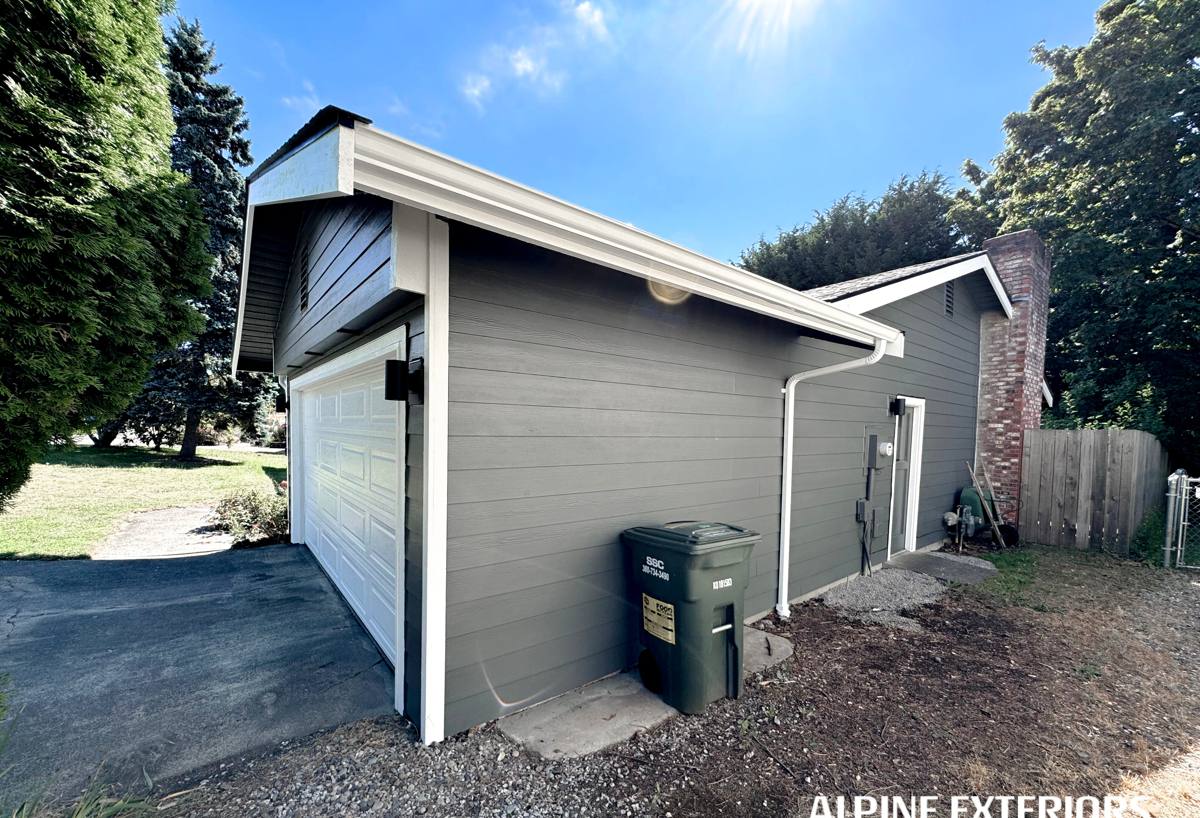
Signs a Happy Valley Home Needs Replacement, Not Repair
Not every siding problem calls for a full tear-off. But when the damage is systemic rather than isolated, patching becomes a short-term fix that costs money now and again later. Here's how we tell the difference on a walk-around inspection.
- Soft or spongy spots when you press on the siding, especially near the bottom courses and around window trim
- Paint that won't hold — repeated peeling or bubbling within a year or two of repainting
- Visible swelling, delamination, or bowing along seams and butt joints
- Persistent moss or dark streaking in the same spots every year, even after cleaning
- Cracking or splitting concentrated on the sun-and-rain-exposed sides of the house
- Soft trim or sheathing discovered once a section of siding is pulled back
If you're seeing two or more of these across multiple walls, that's usually a sign the moisture problem is structural, not cosmetic — and replacement is the honest recommendation, not an upsell.
What a Correct Siding Replacement Actually Involves
Siding replacement is not just swapping old boards for new ones. Done right, it's a full building-envelope job, and this is where a lot of the value — and a lot of the cost differences between quotes — actually lives.
Tear-Off and Inspection
Old siding comes off in full, not patched around. That exposes the sheathing underneath, where we're checking for rot, soft spots, and prior water damage that's been hidden for years. Any compromised sheathing gets addressed before anything new goes up — covering over a wet wall with new siding just delays the same problem.
Water-Resistive Barrier and Flashing
A new weather-resistive barrier goes on correctly lapped, and flashing gets installed at every window, door, and penetration. In a climate with as much driving rain as this one sees, flashing details are the difference between a wall that sheds water and one that slowly collects it behind the cladding for years before anyone notices.
Fastening and Clearances
Manufacturer-specified nailing patterns, correct fastener type, and proper clearance from grade, decks, and roof lines all matter — skipping them is one of the most common ways a siding job fails early, regardless of what product is used.
Why We Only Install James Hardie Fiber Cement
We made a standing decision as a company to install James Hardie fiber cement siding exclusively, and we don't apologize for it or soften it for the sake of winning every job. LP SmartSide, vinyl, Cemplank, Allura, primed spruce, and cedar are all real products with real advocates, and each has situations where it performs reasonably well. But for the moisture load, moss exposure, and salt air that Whatcom County homes near the water deal with, we don't think they hold up as consistently as fiber cement over the long haul, and we're not willing to put our name on installations we're not confident in.
| Material | How It Handles This Climate | Long-Term Maintenance Burden |
|---|---|---|
| Vinyl | Sheds rain but can warp with heat/cold cycling; seams and moisture can trap moss buildup underneath | Low upfront, but cracks and fades over time and is hard to color-match when replaced in sections |
| Cedar | Handsome, but wood absorbs moisture in a wet, shaded climate and needs consistent upkeep to resist rot and moss | High — regular sealing, staining, and moisture monitoring |
| Primed spruce/engineered wood | Vulnerable at cut edges and fastener points if moisture gets past the coating | Moderate to high, and failures can be hidden until advanced |
| James Hardie fiber cement | Non-combustible, engineered for wet Pacific Northwest exposure, resists moss and moisture intrusion when installed to spec | Low — factory ColorPlus finish holds color without repainting on the manufacturer's schedule |
James Hardie's HZ5 product line is engineered specifically for climates like this one — freeze-thaw cycling, sustained moisture, and coastal-influenced air. Paired with the ColorPlus factory finish, you get a color that's baked on rather than field-painted, which matters a lot when the paint job is what typically fails first on lower-grade siding around here. Hardie also backs its products with a strong, transferable warranty — useful if you sell the home before the siding's service life is up.
Our Siding Replacement Process
- On-site walkthrough — we inspect existing siding, trim, and any visible moisture damage, and talk through what we're seeing in plain language
- Written estimate — scope, product line, color, and a clear cost breakdown, no vague allowances
- Full tear-off — old material removed, sheathing inspected and repaired as needed
- Barrier and flashing installation — the step most corner-cutting crews rush
- Hardie siding installation — installed to manufacturer fastening and clearance specifications
- Trim, caulking, and final detailing — the finish work that determines how clean the job looks up close
- Walkthrough and cleanup — we review the finished work with you before calling it done
Choosing a Color and Product Line That Fits the Neighborhood
Happy Valley's mix of home ages and styles means there's no single "right" siding look — but there are practical considerations worth thinking through before you commit to a color. Darker ColorPlus tones show less streaking from moss and organic buildup between cleanings, which matters on shaded, tree-lined lots. Lighter tones read cleaner in open, sunnier exposures but may need more frequent washing to stay looking fresh. We'll walk you through Hardie's plank, shingle, and panel options and help you land on a combination that suits your home's exposure, not just what looks good on a sample board.
Cost Factors to Expect
Every home is different, but the line items that actually move a siding replacement quote up or down are consistent. Understanding them helps you compare estimates apples-to-apples instead of just looking at a bottom-line number.
| Factor | Why It Matters |
|---|---|
| Home size and wall complexity | More corners, gables, and dormers mean more cutting, flashing, and labor time |
| Sheathing condition | Hidden rot found during tear-off adds repair scope — this is common on older homes near the water |
| Siding profile (lap, shingle, panel) | Shingle and detailed profiles take longer to install than standard lap siding |
| Trim and accessory work | Window trim, corner boards, and fascia work are often bundled into a full replacement |
| Access and site conditions | Sloped, wooded lots common in this area can add setup and staging time |
We'll never give you a number over the phone without seeing the house. Broad ranges without a walkthrough tend to be wrong in one direction or the other, and we'd rather give you an accurate figure than a fast one.
Why Hiring a Crew That Already Works Happy Valley Matters
A crew that regularly works Sudden Valley and Happy Valley already understands the local building patterns, the typical moisture exposure by lot orientation, and how homes in this specific pocket of Whatcom County tend to age. That's not a small thing — it means fewer surprises during tear-off, better judgment about where extra flashing attention is warranted, and a realistic sense of timeline given local weather windows. It also means we're not driving in blind and guessing at conditions we've never dealt with before; we've seen how these homes hold up, and how they fail, over time.
Before You Hire: A Homeowner's Checklist
- Ask what happens if rot or damage is found once old siding comes off — is it a change order surprise or a planned contingency?
- Confirm which siding product and specific line is being quoted, not just "fiber cement" or "Hardie" in general
- Ask how flashing and the water-resistive barrier will be installed and inspected
- Get the manufacturer's fastening and clearance specs confirmed in writing or by name
- Ask about warranty coverage — both on materials and on labor/workmanship
- Check that the crew is licensed and insured for exterior work in Washington
If a contractor can't answer these clearly, that's worth noticing before you sign anything.
If your Happy Valley home is showing signs of siding wear — or you just want an honest read on whether repair or replacement makes sense — we're glad to come take a look. Request a free, no-pressure estimate using the form below.