 Sudden Valley Siding
 Why Lake Whatcom Homes Wear Out Siding Faster Than You'd Expect
Homes around Lake Whatcom sit in a pocket of Whatcom County that never really dries out. Tree cover along the shoreline keeps shade on siding for most of the day, marine air drifting in from Bellingham Bay keeps humidity high, and the driving rain that rolls through in fall and winter finds every gap in a wall system that isn't detailed correctly. Add a moss season that can run half the year on north- and east-facing walls, and you have a climate that's genuinely harder on exterior cladding than most of the country deals with.
That combination — shade, moisture, and driving rain — doesn't just make siding look tired. It's the exact set of conditions that causes paint to fail early, wood to soften at the bottom courses, and lower-grade composite products to swell or delaminate at the seams. If you own a home on or near the lake, your siding is working harder than a house in a drier climate, whether or not it looks like it yet.
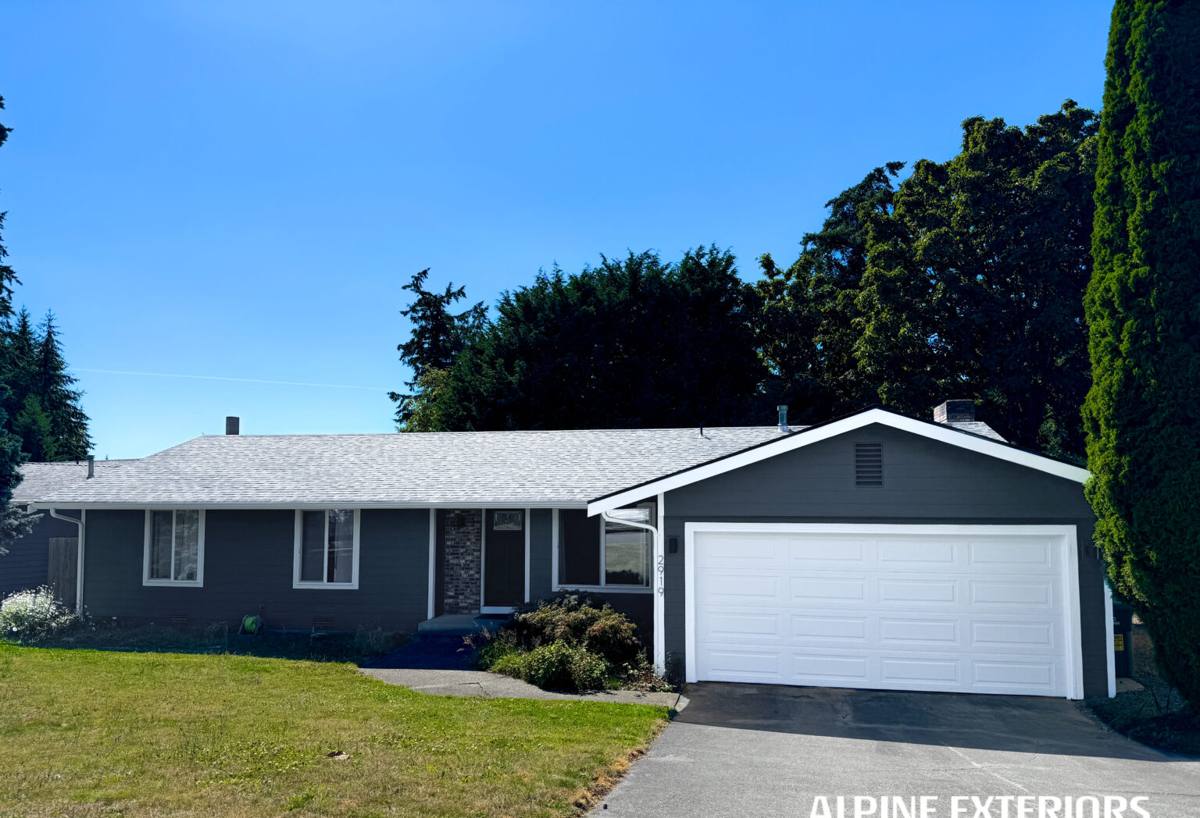
What James Hardie Actually Solves Here
We install James Hardie fiber cement exclusively, and in a climate like this one, the reasons are practical rather than theoretical. Hardie's HZ10 formulation is engineered specifically for climates with high moisture exposure — the kind Whatcom County sees for a good chunk of the year. Fiber cement doesn't absorb water the way wood does, it doesn't expand and contract the way vinyl does in temperature swings, and it doesn't provide the same food source for algae and moss that raw wood or some composite products do.
The ColorPlus factory finish matters just as much as the substrate. It's baked on in a controlled environment rather than field-applied, which means the color coat holds up to UV and moisture cycling far longer than a job-site paint job would. On a shaded, damp lot, that's the difference between repainting every several years and going a long time before the color needs any attention at all.
Non-Combustible Is a Real Consideration Too
Fiber cement doesn't burn. That's not the primary reason most Lake Whatcom homeowners call us, but with wildfire smoke seasons becoming a normal part of Pacific Northwest summers, it's a legitimate piece of the value proposition — one more reason we don't hedge with combustible alternatives.
What a Correct Hardie Installation Involves
Hardie siding performs the way it's supposed to only when it's installed to the manufacturer's specifications — and that's where a lot of the failures we get called to inspect actually originate. This isn't a product where "close enough" holds up over time, especially in a wet climate.
- Proper clearance: siding held at the correct distance from decks, patios, and grade so water can't wick up into the bottom edge
- Correct fastening: nails or screws placed per Hardie's pattern and depth spec, not just "close enough" — over-driven fasteners crack the board and under-driven ones let it work loose
- Flashing at every penetration: windows, doors, hose bibs, light fixtures, and vents all need proper flashing and house wrap integration, not just caulk
- Rain-screen or drainage gap: a ventilated gap behind the siding lets any moisture that does get behind the cladding dry out instead of sitting against the sheathing
- Sealed and painted cut edges: factory finish protects the face of the board, but every field cut exposes raw fiber cement that needs to be sealed before it's closed up
Skip any one of these steps and you can end up with siding that looks fine from the driveway but is trapping moisture behind it. In a shaded, high-humidity spot like Lake Whatcom, that kind of hidden moisture problem shows up as rot in the sheathing long before it shows on the surface.
Moss, Algae, and the North-Wall Problem
Nearly every Lake Whatcom home we've worked on has one or two walls — usually facing north or shaded by mature trees — that stay damp longer than the rest of the house. Those walls are where moss and algae take hold first, and where old caulk and paint fail first too. Part of doing this job right locally is recognizing which elevations need extra attention during install: tighter fastener patterns, careful attention to butt joints, and sometimes a conversation with the homeowner about trimming back branches that are keeping a wall in permanent shade.
Hardie's factory finish resists algae growth better than bare wood or field-painted surfaces, but no siding product is immune to moss taking hold on a shaded, damp wall over enough years. The difference is that a correctly installed Hardie wall sheds that growth with a rinse and doesn't rot underneath it — a wood or lower-grade composite wall in the same spot is much more likely to be hiding damage under that moss.
How Our Process Works for Lake Whatcom Projects
1. On-Site Assessment
We walk the exterior with you, note which elevations are taking the worst weather exposure, check the condition of the existing siding and trim, and look for early signs of moisture intrusion around windows, doors, and the lower wall.
2. Tear-Off and Sheathing Check
Old siding comes off down to the sheathing so we can actually see what's underneath — this is the point where hidden rot or water damage gets found and addressed, not covered over.
3. Weather Barrier and Flashing
House wrap and flashing get installed or repaired before a single piece of Hardie goes up. This step is invisible once the job is done, but it's the part that determines whether the wall stays dry for the next several decades.
4. Installation to Spec
Hardie boards, fastening, and joints go in per manufacturer requirements, with the extra attention noted above on shaded and exposed elevations.
5. Trim, Caulk, and Touch-Up
Cut edges get sealed, factory-matched caulk goes into the joints that need it, and the job gets a final walk-through with you before we consider it done.
Cost Factors for a Lake Whatcom Siding Project
Every home is different, but the same variables tend to move the price up or down on lake-area homes specifically:
| Factor | Why It Matters Here |
|---|---|
| Existing moisture damage | Shaded, damp walls are more likely to need sheathing repair once old siding comes off |
| Number of shaded/north-facing walls | These elevations need tighter detailing and sometimes extra flashing work |
| Home access and terrain | Sloped lots and tree-lined driveways common around the lake can affect staging and disposal logistics |
| Existing siding material | Wood and old composite tear-off generally take longer than a straightforward vinyl removal |
| Trim and architectural detail | Multiple gables, dormers, or accent trim add labor regardless of siding brand |
We give straightforward, itemized estimates rather than a single lump number, so you can see exactly what's driving the cost on your specific home.
Why a Crew That Already Works This Neighborhood Matters
Sudden Valley and the Lake Whatcom area have their own quirks that a contractor unfamiliar with the neighborhood has to learn on your dime: private road access, community guidelines that some crews aren't used to working around, tree-lined lots that make staging and material delivery more involved than a flat in-town job, and the specific moisture patterns that come with being this close to the water and this shaded by mature trees. A crew that's already done several jobs in the area isn't guessing at any of that — we know which elevations need extra flashing attention before we even get on the ladder, and we know how to stage a job on a sloped, tree-covered lot without it turning into a week of logistics problems.
That local familiarity also means fewer surprises mid-project. Hidden rot behind old siding, tricky access for tear-off disposal, or drainage patterns specific to a lakeside lot are all things we've already worked through on other Lake Whatcom homes.
Maintenance After Installation
Correctly installed Hardie siding is low-maintenance, not no-maintenance. In this climate, that means:
- An occasional gentle rinse on shaded walls to keep moss and algae from building up
- A yearly look at caulking around windows, doors, and trim, since caulk is the one component that does age faster than the siding itself
- Keeping vegetation trimmed back from walls so they get some airflow and sun, even on the shadier sides of the house
- Addressing any impact damage (a dropped ladder, a wayward branch) promptly rather than letting a chip sit exposed
Beyond that, ColorPlus-finished Hardie is built to go a long time without repainting, which is a real advantage in a spot where field-applied paint tends to fail early.
What to Check Before You Hire Anyone for This Job
- Ask whether they're a factory-certified James Hardie installer, not just someone who's "installed it before"
- Ask them to walk your specific elevations and point out which ones concern them, before any contract is signed
- Ask how they handle flashing and drainage detailing — a vague answer here is a red flag
- Ask for an itemized estimate, not a single number, so you know what you're actually paying for
- Ask whether they've worked in your specific neighborhood before and what they've learned from it
If you own a home on or near Lake Whatcom and your siding is showing its age — or you're planning ahead before it becomes a problem — we're happy to walk your property and give you a straightforward, no-pressure estimate. Use the form below to get started.