 Sudden Valley Siding
 Decking That Has to Hold Up on Lake Whatcom
A deck on Lake Whatcom doesn't live an easy life. Between the tree cover that shades most lakeside lots, the moisture that rolls off the water most mornings, and the marine air that moves inland across Whatcom County, a deck here is under near-constant low-grade attack. It's rarely one big storm that ruins a deck out here — it's months of damp shade, driving rain that never quite lets the wood dry out between rounds, and a moss season that can run from October well into spring. Composite decking exists specifically to shrug off that kind of slow wear, but only if it's specified and installed correctly for the site it's going on.
We install composite decking for homes around Sudden Valley and along the lake regularly, and the jobs here look a little different from a deck we'd build on an open, sunny lot in town. Slope toward the water, tree drip lines, limited equipment access on narrow lake roads, and the amount of shade a lot gets all change how we frame and detail the deck. This page covers what actually matters for a composite deck built to last on Lake Whatcom — not a generic rundown of composite decking in general.
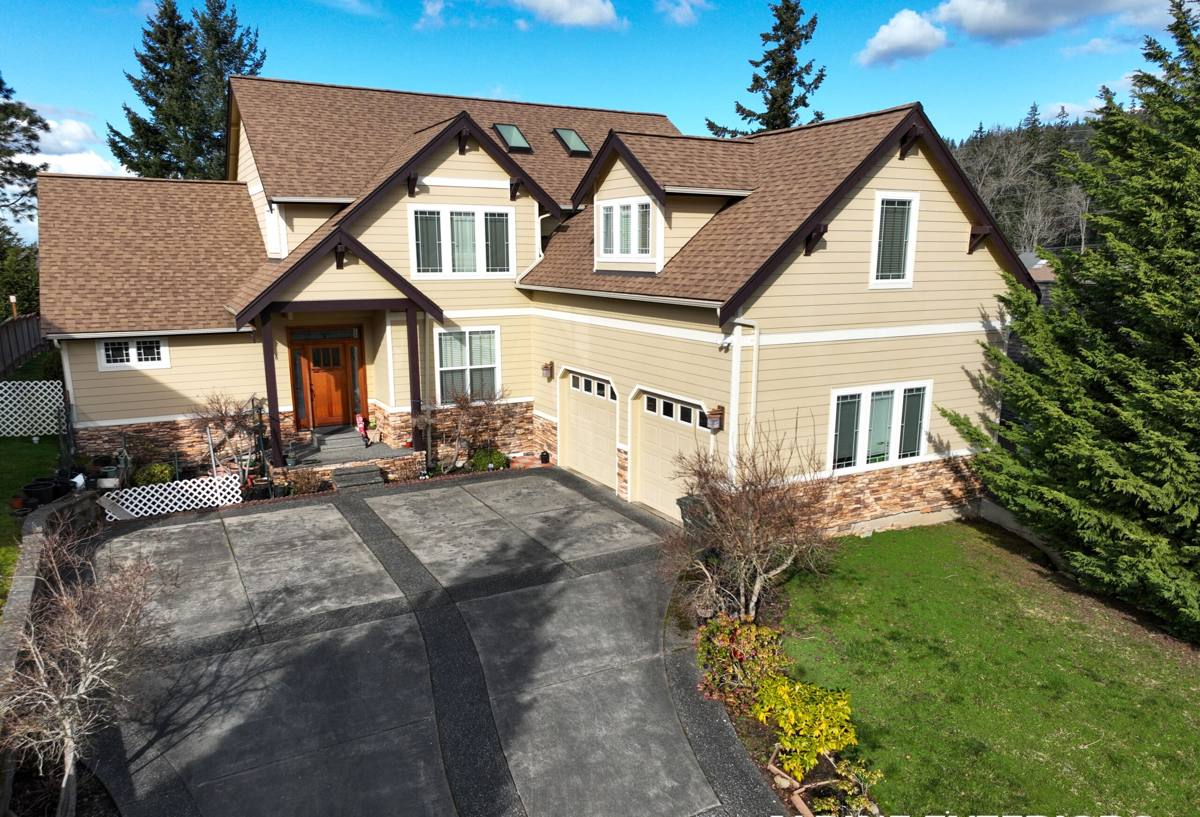
What the Lake Whatcom Climate Does to a Deck
Understanding the failure points here is what separates a deck that looks good for two seasons from one that still looks good in year twelve.
Moss and Algae, Not Just Dirt
Shaded, damp decking grows moss and algae far faster than open, sun-exposed decking. On a natural wood deck, that growth traps moisture against the board and accelerates rot from the top down. On composite, the growth is mostly cosmetic and comes off with regular cleaning — but only if the board's surface and the airflow underneath were designed to let it dry out between rains. A composite deck built tight to the ground with no ventilation will still stay damp longer than it should, which shows up as darker patches and slicker footing even on a "moss-resistant" product.
Driving Rain and Standing Water
Whatcom County gets rain that comes in sideways as often as it comes straight down, which pushes water into places a lot of decks aren't built to handle — under railing posts, around stair stringers, and at the ledger board where the deck meets the house. That last one matters most: a poorly flashed ledger connection is the single most common source of hidden rot we find when we tear out an old deck, composite or wood.
Marine Air and Fasteners
The moist, salt-tinged marine air common across this part of Whatcom County is hard on metal. Fasteners, brackets, and hardware that aren't rated for coastal exposure corrode faster here than they would inland, which is why hardware selection isn't a place to cut corners on a lake property.
Composite vs. Other Decking Materials for This Site
Composite isn't automatically the right call for every deck, but for most Lake Whatcom homes it solves more problems than it creates. Here's how it stacks up against the alternatives homeowners usually ask us about.
| Material | Moisture/Moss Behavior | Maintenance | Typical Lifespan Here |
|---|---|---|---|
| Composite (capped) | Doesn't absorb water or rot; surface growth wipes off | Periodic cleaning, no sealing or staining | 25–30+ years |
| Pressure-treated wood | Absorbs moisture, prone to rot in shaded/damp spots | Annual cleaning, sealing/staining every 1–3 years | 10–15 years before major repair |
| Cedar | Natural rot resistance but still absorbs water; grays and softens in shade | Sealing or oiling every 1–2 years to hold appearance | 15–20 years |
| PVC (uncapped composite) | Sheds water well but can look plasticky and stain differently | Low, but scratches show more | 25+ years |
Capped composite is our default recommendation for lakeside and heavily shaded lots specifically because it doesn't care about the wet-dry cycling that wears out wood. We'll still walk you through wood or cedar honestly if that's the look you want — it's a legitimate choice with a different maintenance commitment, not a wrong one.
What a Correct Composite Deck Installation Actually Involves
Composite boards get most of the marketing attention, but the framing and details underneath them are what determine whether the deck performs for 25 years or needs rework in five.
Substructure and Ventilation
Composite boards need a substructure that keeps them off the ground and lets air move underneath — this matters more here than in a drier climate because shaded, damp ground air needs somewhere to go. We frame joist spacing to the manufacturer's spec for the board profile (this tightens up on diagonal or picture-frame patterns) and keep the deck's underside clear of the kind of debris buildup that traps moisture.
Ledger Flashing
Where the deck attaches to the house, we flash it so water sheds away from the house sheathing, not into it. This is the detail that protects your siding and framing, not just the deck — a bad ledger connection is a slow leak into your house, not just a deck problem.
Fasteners and Hardware
We use corrosion-rated hardware and hidden fastener systems suited to coastal/marine air exposure. Hidden fasteners also mean no exposed screw heads for moss and algae to grip onto, which keeps the surface cleaner longer.
Board Layout and Drainage
On sloped lake lots, we plan board direction and drainage gaps so water actually runs off the deck instead of pooling against the house or collecting at a low corner. Small grading and layout decisions here prevent the standing-water spots that stay slick and mossy the longest.
Railings and Stairs
Railing posts are one of the most common water-entry points on any deck. We through-bolt and flash post connections rather than relying on surface-mounted brackets alone, and we detail stair stringers so end grain isn't sitting in standing water.
Our Process for a Lake Whatcom Deck Project
- On-site assessment: We look at slope, shade, tree cover, existing framing (if replacing an old deck), and how water currently moves across the lot.
- Design and material selection: We talk through board tiers, color, railing style, and layout based on your budget and how the space gets used — entertaining, grilling, lake access, etc.
- Permitting: Deck permits and setback requirements vary by jurisdiction; we handle what's needed for the site.
- Demo and framing: If we're replacing an old deck, we inspect the ledger and posts once the old decking is off — this is when hidden rot, if any, gets found and addressed before new boards go down.
- Installation: Framing, flashing, board installation, railings, and stairs, built to the details above.
- Final walkthrough: We go over cleaning and care specific to your board choice and site conditions before we call it done.
What Affects the Cost of a Composite Deck Here
Every lake property is a little different, so we don't quote off square footage alone. These are the factors that actually move the number:
| Factor | Why It Matters |
|---|---|
| Framing condition | Rotted joists, posts, or a failed ledger on a tear-off add repair cost before new decking goes on |
| Board tier | Composite lines range from value to premium capped products; price and warranty scale together |
| Site access | Narrow lake roads or steep lots can mean more hand-carrying of material and longer labor time |
| Height and stairs | Elevated decks with stairs and full railing systems cost more than a low, ground-level deck |
| Permitting | Setback and structural requirements vary by lot and can add engineering or permit fees |
| Layout complexity | Picture-framing, diagonal boards, or multiple levels add labor and material waste |
Composite decking generally costs more up front than pressure-treated wood and less than the highest-end hardwoods, but the honest comparison is total cost over time — wood's lower material cost comes with recurring sealing and repair costs that composite avoids.
Keeping a Composite Deck Clean Through Moss Season
Composite is low-maintenance, not no-maintenance. In a climate like Whatcom County's, a little seasonal attention keeps a deck looking good instead of just "not rotting."
- Sweep off leaves, needles, and debris regularly, especially under tree cover — trapped organic matter is what feeds moss growth
- Wash the deck surface once or twice a year with a soft-bristle brush, mild soap, and water; avoid pressure-washing directly into board grooves
- Check that drainage gaps between boards and at the deck's edges stay clear so water doesn't pool
- Rinse off pollen and tree sap in spring before it bakes into the surface on the rare sunny stretch
- Inspect railing post bases and stair connections yearly for any sign of movement or water staining at the framing
- Keep gutters and downspouts on the house clear so runoff isn't dumping directly onto the deck or ledger area
Why Work With a Crew That Already Builds on Lake Whatcom
A deck built for a dry, open lot in another part of the county and a deck built for a shaded, sloped Lake Whatcom lot are not the same project, even with identical materials. We already know how the lake-adjacent lots around Sudden Valley drain, where tree cover tends to hold moisture longest, and what access limitations narrow lake roads put on equipment and material delivery. That local familiarity shows up in fewer surprises during framing and a deck that's detailed for the conditions it'll actually sit in — not a generic install.
It also matters when something needs adjusting later. A crew that's still working in the area is easy to reach if a question comes up down the road, rather than a company that installed once and moved on.
If you're weighing composite decking for a home on or near Lake Whatcom, we're happy to take a look at your site and give you a straight answer on what it needs. Reach out for a free, no-pressure estimate — use the form below to get started.