 Sudden Valley Siding
 Why Lake Whatcom Homes Wear Out Windows Differently
Lake Whatcom sits in a pocket of Whatcom County that gets more rain, more humidity, and more shade than homes just a few miles inland. Add the moisture that comes off the lake itself, the salt-tinged air that drifts up from the Puget Sound weather systems moving through, and a moss season that can run from early fall through late spring, and you've got a set of conditions that punishes old or poorly installed windows faster than almost anywhere else in the county. Wood sashes swell and stick. Aluminum frames pit and corrode. Seals that were fine in a drier climate give out early here, and once a seal fails, moisture works its way behind the trim and into the wall cavity before anyone notices a problem.
We're not describing a hypothetical. This is the pattern we see on window after window in this specific area: fogging between panes, soft trim at the sill, and frames that don't sit square anymore because the wood around them has been slowly absorbing moisture for years. Replacing a window here isn't just a cosmetic upgrade — it's addressing a slow-moving moisture problem before it becomes an expensive one.
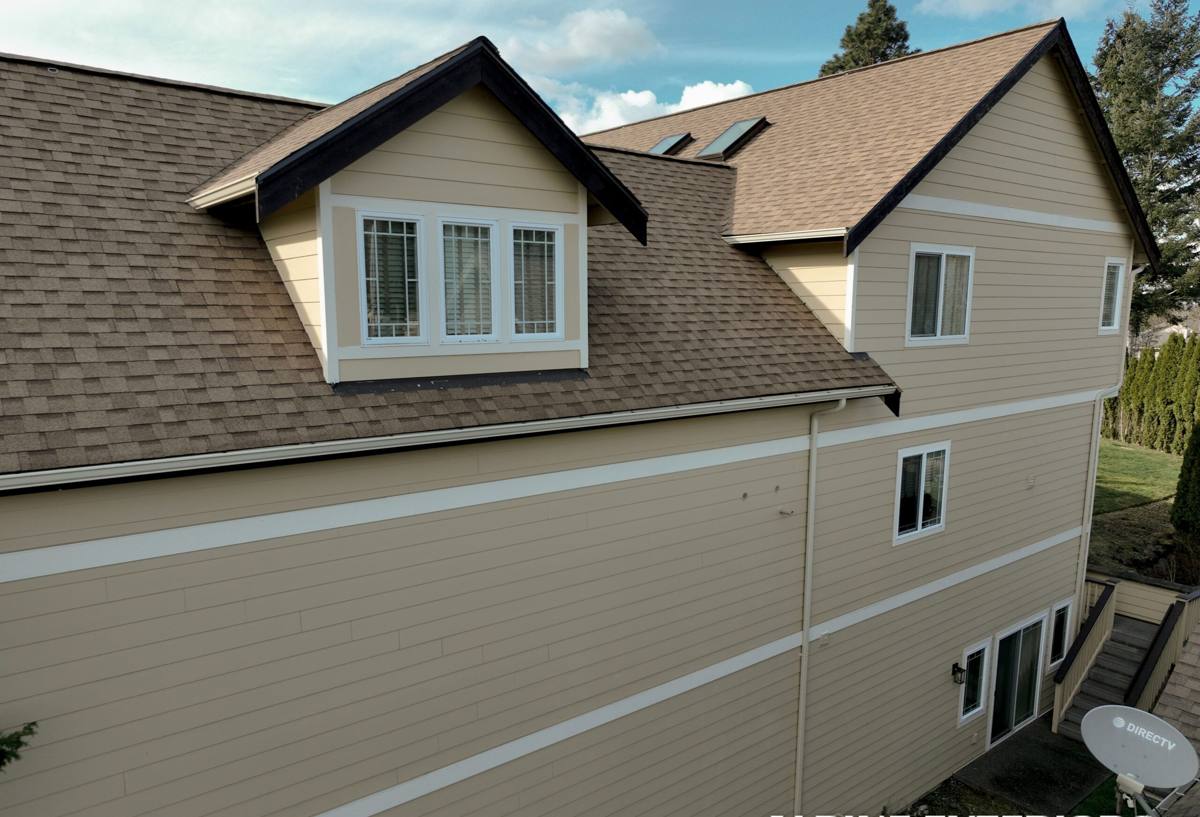
What "Correct" Looks Like for a Window Replacement in This Climate
A window replacement done right in Sudden Valley has to account for more than the window unit itself. The frame, the flashing, the sealant, and the sill all have to work together to keep water moving out and away from the house, not pooling or wicking inward. A few things we treat as non-negotiable on every job:
Flashing and Water Management
Every opening gets properly integrated flashing — not just a bead of caulk around the perimeter. Caulk alone fails within a few years in this kind of weather. Flashing tape and correctly lapped building paper (or house wrap) direct water down and out, the way gravity actually works, instead of relying on a sealant joint to do a flashing detail's job.
Sill Pan Protection
The sill is where most window failures start. We install sill pans on replacement openings so that any water that does get past the glazing or the weep system has somewhere to go besides the framing lumber. This one detail is the difference between a window that lasts 20+ years and one that causes rot damage inside the wall in under ten.
Frame Material Suited to the Site
Not every window product is a good fit for a shaded, moisture-heavy lot near the lake. We steer clients away from bare aluminum frames in this specific setting — they conduct cold, sweat with condensation, and corrode faster near the lake's humidity. Vinyl and fiberglass frames handle the moisture cycle better and don't need repainting. We'll walk through the honest trade-offs for your specific exposure rather than pushing one product line by default.
Our Process for a Lake Whatcom Window Job
- On-site assessment. We look at each opening individually — sun exposure, tree cover, moss and moisture staining, and the condition of the existing trim and sheathing. Lake-facing and shaded elevations often need different treatment than the street-facing side of the same house.
- Honest scoping. If we find soft wood or hidden rot once we open up an opening, we tell you before we proceed, not after the invoice. Some replacements are clean unit swaps; others need sill or framing repair first, and that changes the cost and timeline.
- Removal and prep. Old units come out carefully to avoid unnecessary damage to siding and trim. We inspect the rough opening, dry it out if needed, and repair any compromised framing before anything new goes in.
- Flashing and sill pan installation. This is the step that gets skipped by crews in a hurry. We don't skip it.
- Window installation and sealing. Units are set plumb, level, and square, shimmed correctly, insulated around the frame, and sealed with materials rated for sustained moisture exposure — not a bargain caulk that hardens and cracks within a couple of seasons.
- Interior and exterior trim finish. Trim is reinstalled or replaced to match, and all sealant lines are tooled cleanly so water sheds instead of collecting.
- Final walkthrough. We check operation, sealing, and drainage with you before we consider the job finished.
Signs a Lake Whatcom Home Needs Window Replacement Soon
- Fogging or moisture trapped between panes of double-pane glass — the seal has failed and it won't clear on its own
- Windows that stick, won't stay open, or are hard to lock — often a sign the frame has swelled or warped
- Visible gaps between the frame and the wall, or trim that feels soft when pressed
- Moss or dark staining building up on the sill or lower frame faster than on the rest of the house
- Noticeable draft or a cold spot near the window even when it's fully closed
- Rising energy bills without another clear explanation, especially in homes with original single-pane or early dual-pane units
- Paint or finish that's peeling specifically around the window opening rather than across the whole wall
Comparing Frame Materials for a Shaded, Moisture-Heavy Lot
| Frame Material | How It Handles Local Moisture | Maintenance | Our Take |
|---|---|---|---|
| Vinyl | Won't rot or corrode; performs consistently in humid, shaded conditions | Low — occasional cleaning | Solid, cost-effective default for most Lake Whatcom homes |
| Fiberglass | Very stable in moisture and temperature swings; minimal expansion/contraction | Low | Worth the upgrade cost on lake-facing or heavily shaded elevations |
| Wood (clad exterior) | Good insulating value, but exposed wood needs consistent upkeep in this climate | Higher — refinishing and sealant checks | Fine if you want the interior wood look and are committed to maintenance |
| Bare aluminum | Conducts cold, prone to condensation and pitting near the lake's humidity | Moderate to high | Generally not our recommendation for this specific microclimate |
What Drives the Cost of a Window Replacement Here
Every home and every opening is different, so we won't quote a number without seeing the job, but a few factors consistently move the price up or down for Lake Whatcom and Sudden Valley properties:
| Factor | Why It Matters |
|---|---|
| Frame material and glass package | Fiberglass and upgraded low-E or gas-fill glass cost more up front but hold up better against sustained humidity and cost less to run |
| Condition of the existing opening | Hidden rot or water damage found during removal adds repair scope before the new window can go in |
| Number and size of openings | Larger picture windows and multi-unit combinations take more labor and material than standard single units |
| Access and elevation | Upper-story or hard-to-reach openings on sloped Sudden Valley lots take more setup time |
| Trim and siding match | Matching existing trim profiles or siding cuts around the new opening adds finish work |
As a broad rule of thumb, straightforward single-window replacements tend to run in the low-to-mid thousands per opening, with larger units, full-house projects, or jobs that uncover rot repair landing higher. We'll give you real numbers after we've actually looked at your windows.
Why a Crew That Already Works This Lake Matters
Window replacement isn't a one-size-fits-all trade, and Lake Whatcom isn't a one-size-fits-all site. A crew that mostly works drier, sunnier neighborhoods elsewhere in Whatcom County can still do competent general carpentry, but they may not default to sill pans, may under-spec sealants for sustained moisture, or may not think twice about aluminum frames on a shaded, lake-adjacent lot. None of that shows up as a problem on day one — it shows up two or three winters later as soft trim and a fogged pane.
We work this specific area regularly, which means we already know what the driving rain off the lake does to a west-facing opening, how long moss season really runs here, and which details matter more on a shaded lot than they would three miles away. That's not marketing — it's just what happens when a crew sees the same climate conditions on job after job instead of once in a while.
Maintaining New Windows in a Moss-Season Climate
A correctly installed window still benefits from a little seasonal attention in this environment:
- Clear debris and moss buildup from sills and tracks a couple of times a year, especially after fall leaf drop
- Check that weep holes on vinyl and fiberglass frames stay clear so water can drain out as designed
- Inspect exterior sealant lines annually for cracking or separation, particularly on lake-facing and shaded elevations
- Wipe down tracks and hardware to keep operation smooth through damp winter months
- Watch for any new staining or softness at the sill, which can signal a sealant or flashing issue worth catching early
None of this is heavy maintenance — it's the kind of five-minute check that keeps a properly installed window performing for decades instead of years.
Get a Straightforward, No-Pressure Estimate
If your windows are fogging, sticking, drafty, or just original to a house that's seen one too many wet Whatcom County winters, we're happy to take a look. We'll tell you honestly what we find — whether that's a simple unit swap or something that needs a bit more attention at the sill — and give you a clear estimate with no pressure to sign anything on the spot. Use the form below to request your free estimate.