 Sudden Valley Siding
 Metal Roofing in Barkley: Built for What This Area Actually Throws at a Roof
Homes in the Barkley area sit close enough to the water and the lake basin that roofs here deal with a specific combination of stress: salt-laden air moving in off Bellingham Bay, long stretches of driving rain through fall and winter, and a moss season that can run most of the year in the shaded, tree-heavy lots common throughout Whatcom County. Asphalt shingles handle any one of those conditions reasonably well. All three together, year after year, is where shingle roofs start showing granule loss, moss intrusion under tabs, and premature edge failure well before their rated lifespan. Metal roofing is one of the few systems built to shrug off that combination without constant maintenance.
This page covers metal roofing specifically for Barkley-area homes — what the local climate demands from the system, what a correct installation actually involves, and why a crew that already works this neighborhood catches problems a roofer unfamiliar with the area might miss.
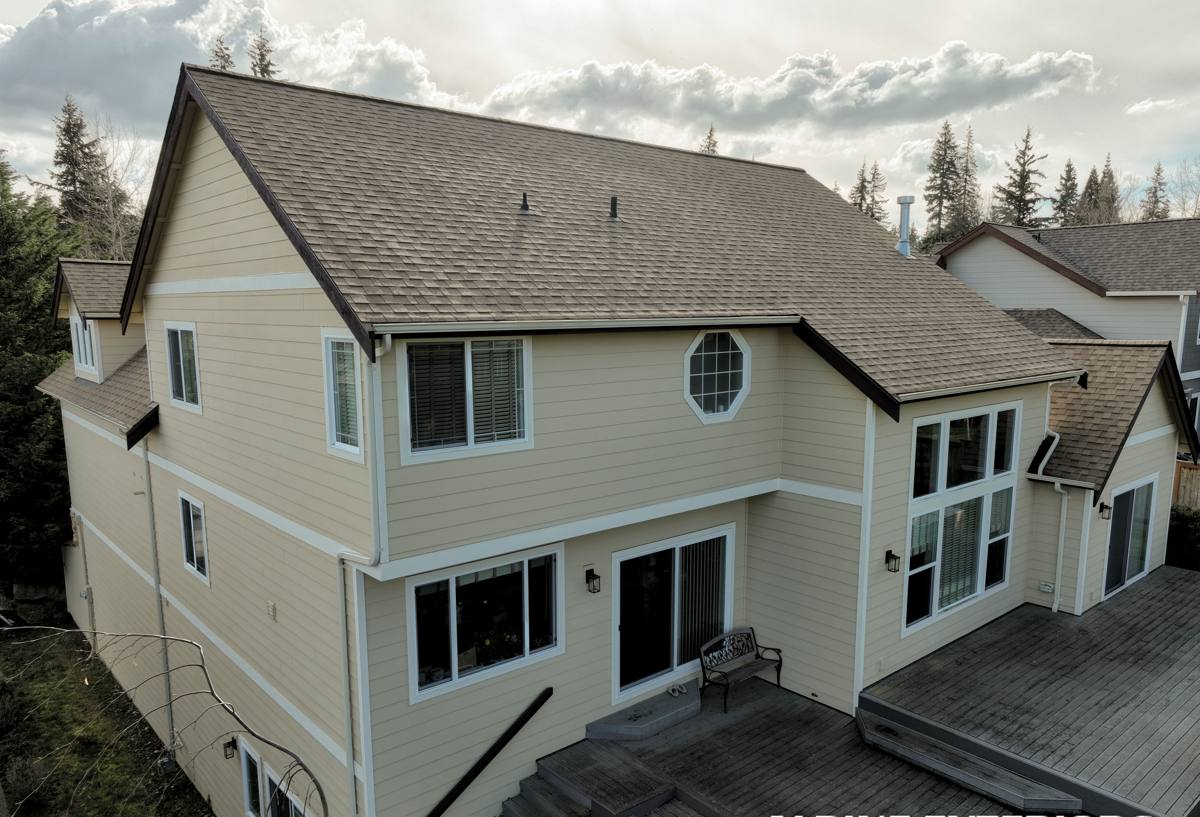
Why Barkley's Climate Is Harder on Roofs Than It Looks
Salt Air and Metal Corrosion
Proximity to salt water accelerates corrosion on any exposed metal — fasteners, flashing, gutters, and the roofing panels themselves if the wrong coating or base metal is used. This isn't a reason to avoid metal roofing; it's a reason to spec the right metal and finish for a coastal Whatcom County property. Bare or thinly coated steel will show rust streaking at cut edges and fastener heads within a few years in this environment. Properly coated steel or aluminum, installed with corrosion-resistant fasteners, does not have that problem.
Driving Rain and Water Intrusion
Wind-driven rain off the water doesn't fall straight down — it pushes sideways under laps, around penetrations, and into any gap in the flashing detail. A roof system that only performs well in calm, vertical rain will leak here eventually. Every seam, panel overlap, and flashing transition on a Barkley roof needs to be built assuming rain will hit it at an angle, not just from above.
Moss, Shade, and Moisture Retention
Many lots in and around Sudden Valley and Barkley carry heavy tree cover, which means roofs stay damp longer after rain and get less direct sun to dry out. That's the exact condition moss needs to establish. On asphalt shingles, moss roots into the granule surface and lifts tabs, creating entry points for water. Metal roofing gives moss nothing to root into — spores can still land and grow on surface grime, but they can't dig into the panel the way they dig into a shingle mat, and normal rinsing keeps growth from taking hold.
What a Correct Metal Roof Needs to Do Here
- Shed wind-driven rain at every lap, seam, and penetration — not just on a calm day
- Resist corrosion from salt-laden air at fasteners, flashing, and cut panel edges
- Stay clear of moss buildup with a surface that doesn't trap organic debris
- Handle valley and eave flashing correctly at every roof transition, chimney, and vent
- Carry a fastening and underlayment system rated for sustained wind-driven moisture, not just occasional showers
- Match the home's structure — panel weight and profile suited to the existing roof deck and framing
Metal Roofing Options for Barkley Homes
Not every metal roofing product is the right fit for every home, and part of doing this job honestly is telling a homeowner which system actually suits their roof, budget, and expectations rather than pushing one product across the board.
| System | Best For | Trade-Offs |
|---|---|---|
| Standing seam steel or aluminum | Homes wanting the strongest water-shedding performance and a clean, modern line | Higher material and labor cost; requires precise seam work to perform correctly |
| Coated steel panel (exposed fastener) | Homeowners balancing budget with real metal roof durability | Exposed fasteners need periodic inspection and eventual re-torquing or replacement over decades |
| Metal shingle / shake profile | Homes where the owner wants a traditional shingle or shake look with metal's durability | More seams and details than standing seam, so installation quality matters even more |
| Aluminum over steel | Properties closest to the water with the highest salt exposure | Aluminum costs more but doesn't rust; steel needs a strong protective coating to hold up in the same conditions |
For most Barkley-area homes, we lean toward coated steel or aluminum standing seam because the sealed seams handle driving rain better than any exposed-fastener system, and the coating resists the salt exposure common this close to the water. Where budget is the deciding factor, a quality coated exposed-fastener panel is still a legitimate option — it just needs a maintenance conversation up front so the homeowner knows what to check over time.
What a Correct Installation Involves
Deck and Structure First
Metal roofing only performs as well as what's underneath it. Before any panel goes down, we check the roof deck for soft spots, rot, or prior water damage — issues that are common on older Whatcom County homes that have taken on moisture over the years. Panels installed over a compromised deck will telegraph problems no matter how good the metal is.
Underlayment Built for Wind-Driven Rain
We install a synthetic or self-adhered underlayment rated to handle wind-driven moisture, with extra protection at eaves, valleys, and any low-slope transitions where water pressure is highest during a storm off the bay.
Flashing Detail Work
Most metal roof failures trace back to flashing, not the panels themselves. Chimneys, skylights, vent penetrations, and wall-to-roof transitions all need custom-fit flashing, not a generic stock piece forced into place. This is the slowest, most detail-heavy part of the job — and the part that determines whether the roof stays dry in a real Whatcom County storm.
Fastening and Panel Layout
Panel layout accounts for prevailing wind and rain direction on the specific home, fastener spacing follows manufacturer wind-load specs rather than a shortcut pattern, and every cut edge gets sealed or capped so bare metal isn't left exposed to salt air.
Our Process for a Barkley Metal Roofing Project
- On-site assessment — we walk the roof, check the deck condition, and look at how the home is exposed to prevailing wind, rain, and tree cover
- System recommendation — we walk through the metal options that actually fit the home and budget, and explain the trade-offs plainly
- Written estimate — clear scope, materials, and timeline before any work starts
- Tear-off and deck repair — old roofing removed, deck inspected and repaired as needed before anything new goes down
- Installation — underlayment, flashing, and panels installed to manufacturer spec and built for this area's weather
- Final walkthrough — we go over the finished roof with the homeowner and cover basic care going forward
Cost Factors for Metal Roofing in This Area
Metal roofing costs more upfront than asphalt shingles, and the honest reason to choose it is total cost over the life of the roof, not the lowest bid today. A few things move the price on a specific Barkley job:
| Factor | Why It Matters |
|---|---|
| Panel system chosen | Standing seam runs higher than exposed-fastener panel due to labor and material |
| Roof complexity | Valleys, dormers, and multiple penetrations add flashing labor |
| Deck condition | Rot or soft decking found during tear-off adds repair cost before install can proceed |
| Metal type | Aluminum costs more than coated steel but skips the corrosion risk entirely |
| Roof access | Steep pitch or difficult site access on hillside Sudden Valley lots can affect labor time |
We give a written, itemized estimate before any work begins so there's no guessing on scope or price once the job is underway.
Why a Crew That Already Works Barkley Makes a Difference
A roofing crew that regularly works the Sudden Valley and Barkley area already knows how prevailing weather moves through this part of Whatcom County, which flashing details tend to fail on the housing stock common here, and how much moss pressure to expect based on tree cover and lot orientation. That local pattern recognition shows up in small decisions — where to add extra underlayment, which valleys need reinforced flashing, how panels should be laid out against the prevailing wind — that a crew unfamiliar with the area might not think to account for. It also means a crew that stands behind the work and can respond quickly if something needs attention after a storm, rather than a company working from out of the area.
Basic Metal Roof Care for This Climate
- Rinse the roof surface periodically to clear organic debris before moss has anything to grow on
- Keep gutters and downspouts clear so water isn't backing up under eave flashing
- Trim back overhanging branches where possible to reduce shade and debris buildup
- After major storms, do a visual check for lifted flashing or displaced debris around penetrations
- Have flashing and seams inspected periodically rather than waiting for a visible leak
If you're weighing a metal roof for a home in the Barkley area, we're glad to take a look and talk through what actually makes sense for your roof and budget — no pressure, no pushy sales pitch, just a straight assessment. Use the form below to request a free estimate.