 Sudden Valley Siding
 Metal Roofing on Lake Whatcom: A Different Set of Problems Than the Rest of the County
Homes around Lake Whatcom sit in a pocket of Whatcom County that takes more weather abuse than people expect. You've got driving rain coming off the lake for months at a stretch, tree cover dense enough to keep roofs shaded and damp long after a storm passes, and marine air drifting in from Bellingham Bay and the Sound that carries enough salt content to matter on unprotected metal. Add a moss season that, realistically, runs most of the year in the shaded lots around Sudden Valley, and you have a roofing environment that punishes shortcuts faster than most of the Pacific Northwest.
Metal roofing can handle all of that better than almost any other material — but only when the system, the coating, and the installation details are matched to this specific climate. A lot of the problems we get called out to fix on metal roofs near the lake aren't failures of the material itself. They're a panel system, fastener, or flashing detail that was fine for a drier climate and never should have gone up here.
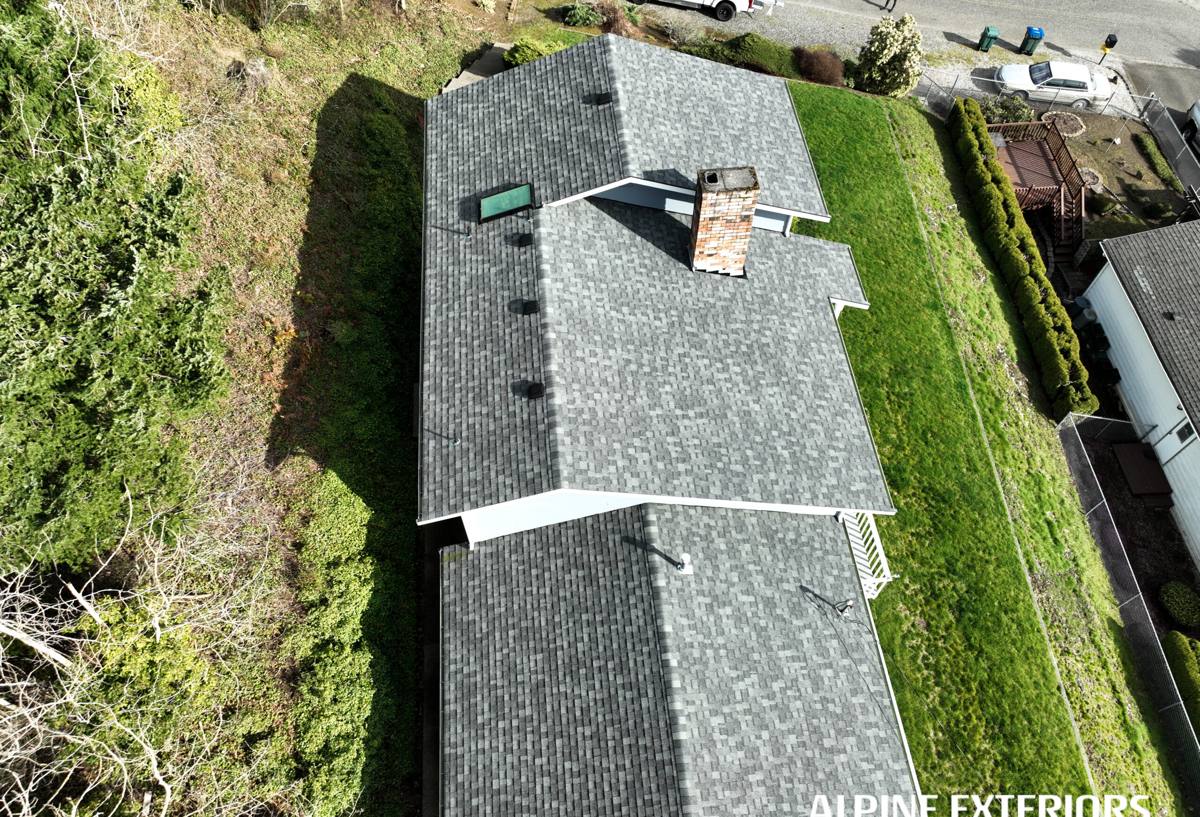
What Rain, Shade, and Moss Actually Do to a Roof Here
It helps to understand the specific mechanisms at work, because they explain almost every decision that follows in this page.
Driving rain and wind-driven moisture
Lake Whatcom sits in a corridor that channels wind and rain differently than open ground. Rain doesn't just fall here — it drives sideways under eaves and into laps and seams that would stay dry on a more sheltered lot. Any roofing detail that depends on gravity alone to shed water is a weak point.
Shade, humidity, and moss
Tree canopy around much of Sudden Valley keeps roof surfaces cooler and damper for longer after rain, which is exactly what moss and algae need to establish. Once moss gets a foothold under panel edges or in fastener heads, it holds moisture against the metal and the underlayment beneath it, which is where slow, hidden damage starts.
Marine air and corrosion
You don't have to be waterfront on saltwater for marine air to matter. The airborne salt content that moves inland from the Bay settles on exposed metal over years, and it will find any coating weak point, cut edge, or bare fastener faster on a roof that isn't finished correctly than most homeowners assume.
Choosing a Metal Roofing System That Actually Fits This Site
Not all metal roofing is the same product wearing a different shape. The panel style and finish you choose changes how the roof handles rain, moss, and salt exposure over its life.
| System | How Water Sheds | Moss & Debris Behavior | Best Fit For |
|---|---|---|---|
| Standing seam (concealed fastener) | Raised interlocking seams shed driving rain well; no exposed fastener penetrations | Smooth panel face sheds debris easily; fewer places for moss to grab | Most Sudden Valley roofs, especially steep or heavily shaded pitches |
| Exposed-fastener corrugated/ribbed panel | Adequate on steeper pitches; fastener gaskets are the weak point over time | Fastener heads and lap seams collect needle litter and moss more readily | Outbuildings, shops, lower-visibility roofs where cost matters more than longevity |
| Stone-coated steel shingle/tile panel | Good water shed; more seams and profile detail than standing seam | Textured surface can hold debris and moisture longer in heavy shade | Homeowners who want a shingle or tile look with metal's durability |
Steel and aluminum both work well here, but they behave differently. Steel is stronger per dollar and takes impact better, but it depends entirely on its coating to resist corrosion — any bare or scratched steel is a rust starting point. Aluminum won't rust because it doesn't contain iron, which makes it a strong option for homes closer to the lake or in heavier shade, though it dents more easily and costs more. We'll walk you through which one makes sense for your specific roof rather than defaulting to one system for every job.
What a Correct Installation Actually Involves
The panel is the visible part. Most of what determines whether a metal roof lasts 20 years or 50 in this climate is underneath it.
Underlayment and moisture barrier
A high-temperature, self-adhered underlayment at eaves, valleys, and penetrations gives you a backup layer when wind-driven rain gets past the panel laps — which it will, eventually, in this weather. Skipping this or using a builder-grade felt is one of the most common shortcuts we see on older re-roofs.
Flashing and seam details
Valleys, chimneys, skylights, and wall transitions are where roofs actually fail. Every one of these needs flashing sized and lapped correctly for driving rain, not just standard shingle-style flashing adapted to metal.
Fasteners and coatings
Fasteners have to match the panel metal to avoid galvanic corrosion — mixing metals at a fastener is a slow but guaranteed failure point near marine air. Cut edges get sealed rather than left bare.
Ventilation
Metal roofs need proper attic and ridge ventilation to manage condensation on the underside of the panel, which matters more in a shaded, humid setting like this than it does on an open, sunny lot.
How We Approach a Metal Roofing Project
- On-site evaluation of the existing roof, decking condition, ventilation, and any moss or moisture damage already present
- Honest recommendation on panel system, gauge, and finish based on your roof's exposure and pitch — not a one-size answer
- Written estimate with the system, underlayment, and flashing details spelled out, not left vague
- Tear-off and deck inspection, repairing any soft or moisture-damaged sheathing before anything new goes down
- Underlayment, flashing, and panel installation to manufacturer spec plus the added detail this climate calls for
- Final walkthrough and cleanup, including magnetic sweep for stray fasteners
Maintenance a Lake Whatcom Metal Roof Actually Needs
Metal roofing is low-maintenance compared to shingles, but "low" isn't "none" in a shaded, moss-prone setting like this. A short annual routine prevents almost everything that shortens a metal roof's life here.
- Clear gutters and valleys of needle litter and debris before fall rains set in
- Rinse moss and algae growth off with a garden hose and soft brush — never a pressure washer, which can drive water under seams and strip coatings
- Trim back overhanging branches that keep sections of roof shaded and damp longer than the rest
- Do a visual check after any major windstorm for lifted panels, loose fasteners, or flashing movement
- Have a professional inspection every few years, especially around valleys and penetrations
What Drives the Cost of a Metal Roof Here
| Factor | Why It Moves the Price |
|---|---|
| Panel system | Standing seam runs higher than exposed-fastener panel due to labor and material |
| Metal type | Aluminum typically costs more than steel but resists corrosion without relying on coating alone |
| Roof complexity | Valleys, dormers, and multiple penetrations add flashing labor regardless of panel choice |
| Deck condition | Moisture-damaged sheathing found during tear-off adds repair cost before panels go on |
| Access | Steep pitches, heavy tree cover, or limited driveway/staging space on a wooded lot add time |
| Existing roof removal | Tear-off and disposal of old roofing adds cost versus install over an existing deck where code allows |
We give a written, itemized estimate so you can see exactly what you're paying for rather than a single lump number.
Why Hiring a Crew That Already Works Lake Whatcom Matters
A roofing crew that's never worked this specific microclimate tends to treat it like any other Whatcom County job — same underlayment, same flashing approach, same maintenance advice they'd give anywhere. That's how you end up with a technically fine roof that still grows moss in year two or shows corrosion at the fasteners in year five.
Sudden Valley is also a private, gated community, and any contractor working here needs to be prepared to coordinate access and scheduling accordingly rather than treating it like a standard job site. A crew that's done work in the neighborhood already knows what that coordination looks like, which cuts down on delays and surprises during the project.
Beyond logistics, familiarity with the lake's specific rain patterns, shade exposure, and moss pressure means fewer guesses and more of the right call made the first time — on panel choice, on where extra flashing detail actually earns its keep, and on what maintenance routine will genuinely keep the roof performing.
Get a Straight Answer for Your Roof
If you're weighing a metal roof for a home on or near Lake Whatcom, we're glad to take a look and give you an honest read on what your specific roof needs — no pressure, no inflated scope. Use the form below to request a free estimate and we'll walk you through the options that actually make sense for your property.