 Sudden Valley Siding
 Why Roofs Around Sunnyland Take More Punishment Than People Expect
Homes in and around Sunnyland sit in a stretch of Whatcom County where the roof rarely gets a break. Weather rolls in off the water with real force, rain doesn't just fall straight down but drives sideways under eaves and into seams, and the tree cover that makes this area attractive also keeps roofs shaded and damp for long stretches of the year. Add in a breath of salt air working its way inland, and you've got a combination that ages an ordinary roof faster than the manufacturer's warranty label would suggest.
None of that is unusual for this part of Washington. But it does mean a roofing decision here isn't just about looks or upfront cost — it's about what will actually hold up season after season without turning into a maintenance project every fall. Metal roofing, installed correctly for this specific climate, is one of the few systems that genuinely earns its keep in a place like Sudden Valley.
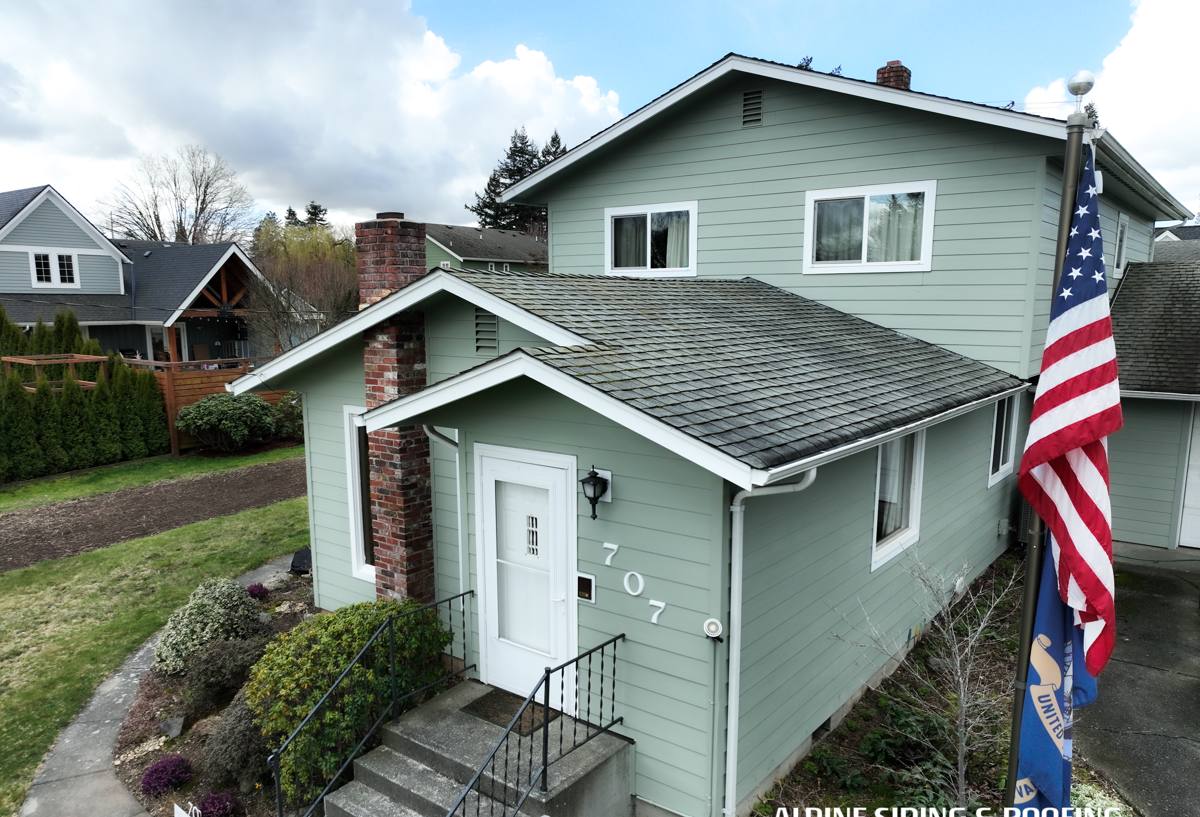
What "Correct" Actually Means for a Metal Roof Here
Metal roofing has a reputation for being nearly maintenance-free, and that's mostly true — but only when the installation accounts for how much water this area sees and how long it sits around. A metal roof that's installed the way it would be in a dry climate will underperform here. The details matter more than the panel itself.
Underlayment and Water Management
Under every metal panel there should be a underlayment system built for sustained wet weather, not just occasional showers. In valleys, eaves, and anywhere water tends to pool or back up, self-adhered ice-and-water membrane belongs under the metal — even though this area doesn't get much ice, the same membrane does the job of sealing around fasteners and stopping wind-driven rain that works its way past the panel laps.
Flashing at Every Transition
Most metal roof failures we're called out to fix aren't failures of the metal itself — they're failures at the flashing. Valleys, chimneys, skylights, wall-to-roof transitions, and vent penetrations are where driving rain gets pushed sideways and finds any gap. Flashing has to be formed to fit the actual roof, not just a generic trim piece bent to a rough angle and caulked into place. Caulk is a backup, not a strategy.
Fastening and Panel Movement
Metal panels expand and contract with temperature swings, and they need to be fastened in a way that allows for that movement without loosening over time or tearing at the fastener holes. This is one of the biggest differences between a rushed installation and one done right — and it's invisible until the roof is a few years old and the fasteners start backing out or the panels start to oil-can and buckle.
Choosing a Metal Roofing System for This Climate
Not all metal roofing is the same, and the right choice depends on the roof's pitch, how visible it is, and how much you want to spend on hardware versus labor.
| System | How It's Attached | Best Suited For | Trade-Offs |
|---|---|---|---|
| Standing Seam | Concealed clips, no exposed fasteners on the panel face | Main roofs, longer-term ownership, homes exposed to driving rain | Higher material and labor cost, requires an experienced installer |
| Exposed Fastener (Corrugated / Ribbed) | Screws driven through the panel into the deck or purlins | Outbuildings, garages, secondary roofs, tighter budgets | Fastener gaskets wear over time and need periodic inspection |
| Stone-Coated Steel | Interlocking panels resembling shingle or tile profiles | Homeowners wanting a traditional look with metal's durability | More installation steps, higher cost than standard panel systems |
For most primary roofs in this area, we lean toward standing seam because it has no exposed fastener heads for driving rain to work against over the years. Exposed-fastener panels are a perfectly reasonable choice for a shop, shed, or secondary structure where upfront cost matters more than a fully concealed fastening system.
Moss, Algae, and a Roof That Doesn't Dry Out
Whatcom County's moss season is long, and shaded roofs — the kind you get surrounded by mature trees — often stay damp well after a storm has cleared everywhere else. Moss and algae don't just look bad; on shingle or wood roofs they hold moisture against the surface and work their way under tabs and shakes over time. Metal roofing doesn't give moss the foothold it needs the way a textured or granulated surface does, and the smooth, hard surface sheds spores and debris far more easily.
That doesn't mean a metal roof needs zero attention. Debris still collects in valleys and against any obstruction, and a roof shaded by overhanging branches will still develop some growth over the years, especially along seams where moisture sits longest. The difference is that on a properly installed metal roof, an occasional gentle rinse and debris clearing keeps things in check — you're not looking at moss treatments, zinc strips, or premature replacement the way you would with some other roofing materials in this climate.
Salt Air and Corrosion: Getting the Metal and Fasteners Right
Being close enough to the water to catch salt-laden air changes what "durable" metal roofing actually means. Bare or poorly coated steel corrodes faster in a marine-influenced climate, and galvanic corrosion — where two dissimilar metals in contact with each other accelerate rusting — is a real risk if fasteners, flashing, and panels aren't matched correctly.
- Panels with a quality factory finish (not a thin field-applied coating) hold up far better against salt exposure over the life of the roof.
- Fasteners should match the panel material, or use appropriate coated/stainless hardware, to avoid galvanic reaction at every screw point.
- Flashing and trim pieces need the same finish and material compatibility as the field panels — mixing metals at transitions is a common shortcut that causes premature corrosion right where it's hardest to catch early.
- Cut edges exposed during installation should be treated or sealed, since raw cut metal is the most vulnerable point on the entire roof.
This is a case where the visible product looks identical at installation whether it's done right or not — the difference only shows up years later, which is exactly why it's worth asking a contractor directly how they handle it rather than assuming.
Our Process for a Metal Roof in Sunnyland
We approach a metal roofing project here the same way regardless of whether it's a full replacement or new construction — the steps don't change, but the details we watch for are shaped by this specific location.
- On-site evaluation. We look at the existing roof deck, ventilation, tree cover, and how water currently moves across the roof and off the property — not just the roof surface itself.
- Tear-off and deck inspection (for replacements). Any soft, rotted, or water-damaged decking gets addressed before a single panel goes down. Installing metal over a compromised deck just hides a bigger problem.
- Underlayment and ice-and-water membrane. Installed at eaves, valleys, and penetrations first, sized for the amount of wind-driven rain this area actually sees.
- Panel installation. Panels are run, aligned, and fastened with attention to expansion and contraction, with concealed fastening used wherever the system allows.
- Flashing and trim. Custom-formed flashing at every valley, wall transition, chimney, and vent — the part of the job that determines whether the roof actually stays dry in a real storm.
- Final walk-through. We check seams, fastener lines, and flashing details together with the homeowner before calling the job finished.
What Metal Roofing Costs — and What Actually Drives the Price
Metal roofing costs more upfront than asphalt shingles, and the honest reason to consider it is the total cost over the life of the roof, not the sticker price on day one. What moves the number for a specific home varies quite a bit.
| Cost Factor | Why It Matters |
|---|---|
| Panel system chosen | Standing seam runs higher than exposed-fastener panels due to material and labor |
| Roof complexity | More valleys, dormers, and penetrations mean more custom flashing and labor time |
| Tear-off vs. new construction | Removing and disposing of an old roof adds cost that new builds skip |
| Deck condition | Rot or water damage found underneath existing roofing adds repair work before installation |
| Access and pitch | Steep or hard-to-access roofs take longer and require more safety setup |
We'd rather walk a homeowner through these factors on their actual roof than quote a number that doesn't hold up once we're up there. A written estimate should break down materials and labor clearly enough that you know what you're paying for.
Why Local Experience in This Area Actually Matters
A roofing crew that regularly works Sudden Valley and the surrounding Whatcom County neighborhoods has already seen how this area's weather behaves on real roofs — which valleys tend to collect debris, how far driving rain pushes under eaves in a bad storm, and where salt air exposure shows up first on a coastal-adjacent home. That's not something you get from a manufacturer's install manual; it comes from doing the work here repeatedly and going back to see how earlier jobs have held up over time.
It also matters for permitting and inspection — a local crew already understands the county's requirements and won't be learning the process on your project. And practically speaking, a contractor based nearby is the one who actually shows up quickly if something needs a look after a storm, rather than a crew that has to travel a long distance to get back out to you.
Signs Your Roof Is a Candidate for a Metal Upgrade
- Shingles are curling, cracking, or losing granules faster than expected for their age
- Moss keeps returning within a season or two of being cleaned off
- You're seeing water stains on interior ceilings after heavy or driving rain
- The roof is shaded most of the day and rarely gets a chance to fully dry out
- You're planning to stay in the home long-term and want to stop budgeting for roof work every decade
- Salt air or coastal proximity has you concerned about corrosion on metal flashing, gutters, or fixtures elsewhere on the house
If two or three of these sound familiar, it's worth having someone take an honest look rather than waiting for a leak to force the decision.
Getting an Honest Look at Your Roof
Every roof in Sunnyland has its own combination of tree cover, exposure, pitch, and age, and that's what actually determines whether metal roofing makes sense and what it should cost. We're happy to walk your roof, explain what we see in plain terms, and put together a written estimate with no pressure to sign anything on the spot. Use the form below to request a free estimate.