 Sudden Valley Siding
 Roofing Built for Acme's Climate, Not a Catalog Photo
Acme sits in a part of Whatcom County where the roof over your head works harder than most homeowners realize. Between the marine-influenced air moving in off the water, long stretches of driving rain through fall and winter, and a moss season that can run most of the year in shaded, tree-covered lots, a roof here is under near-constant low-grade attack. A new roof installation isn't just about picking shingles you like the look of. It's about choosing a system, and installing it correctly, so it can actually stand up to what this area throws at it year after year.
This page covers what a correct new roof installation looks like specifically for homes in and around Acme, what local conditions demand from the materials and the workmanship, and how we approach the job from first look to final walkthrough.
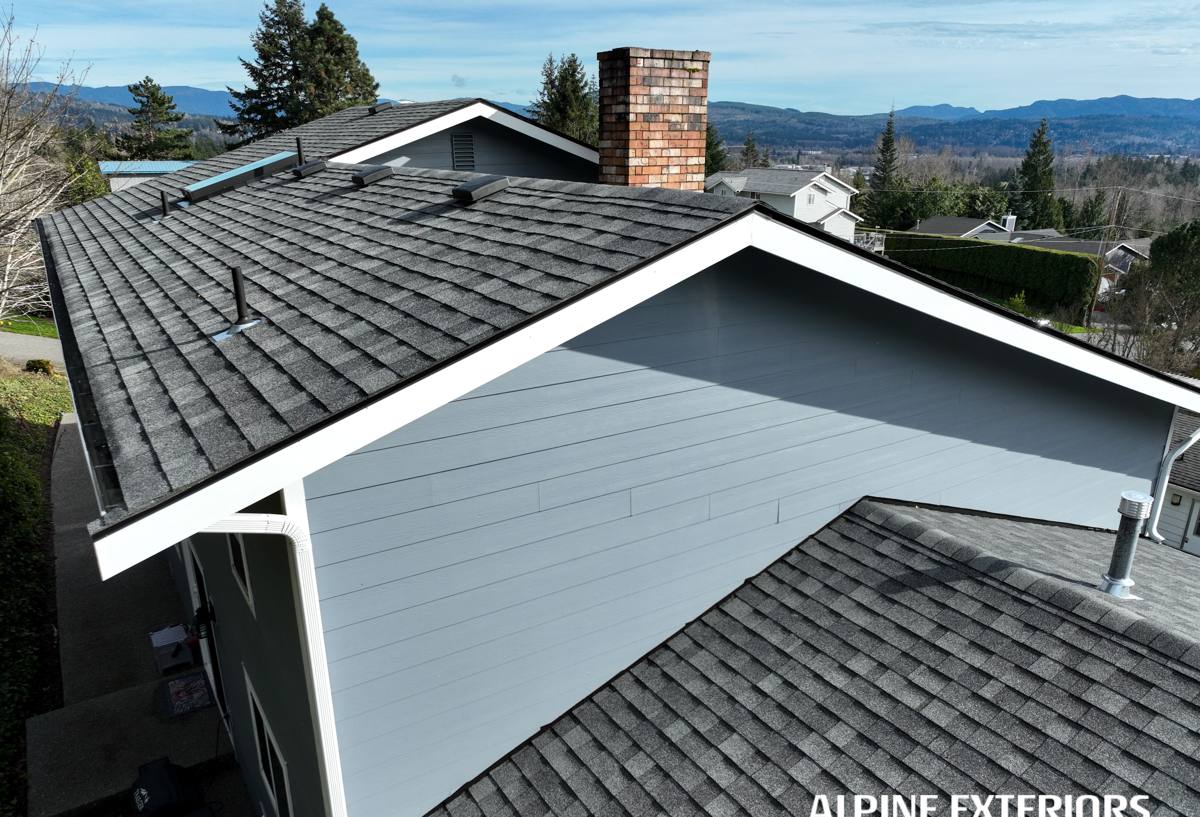
What Acme's Climate Actually Does to a Roof
Salt Air and Moisture
Homes in this part of Whatcom County get regular exposure to moist, salt-influenced air moving in from the Strait of Georgia and Puget Sound region. Over time, that moisture accelerates corrosion on unprotected metal fasteners, flashing, and vents. It also means roofing materials spend more of the year damp than dry, which matters for how a roof drains, breathes, and ages.
Driving Rain
Rain here rarely falls straight down. Wind-driven rain pushes water sideways and upward under the natural gaps in shingles, tile laps, and flashing edges if those details aren't installed correctly. A roof that would hold up fine in a drier, calmer climate can leak within a few seasons here if the underlayment, flashing, and ventilation aren't done right.
Moss and Organic Growth
Shaded lots, tree cover, and long damp stretches make Acme prime territory for moss, algae, and lichen growth on roofing surfaces. Moss isn't just cosmetic. It holds moisture against the roof surface, works its way under shingle edges as it grows, and can lift materials over time, giving water a path underneath. A roof designed with moss resistance and proper airflow in mind will age much better than one that wasn't.
What a Correct New Roof Installation Involves
A new roof is more than removing old material and nailing down new shingles. Done right, it's a system of layers and details that all have to work together.
- Tear-off and deck inspection: Old roofing is fully removed so the deck underneath can be checked for rot, soft spots, or water damage that's been hidden for years.
- Deck repair: Any damaged sheathing gets replaced before anything new goes down. Installing new roofing over a compromised deck just hides a problem, it doesn't fix it.
- Ice and water shield at vulnerable areas: Eaves, valleys, and areas prone to wind-driven rain get a self-adhering waterproof membrane, not just standard felt.
- Synthetic underlayment: A full layer across the deck adds a second line of defense against moisture that gets past the primary roofing material.
- Flashing at every penetration: Chimneys, skylights, vents, and wall intersections are common leak points if flashing is reused, undersized, or poorly sealed. New flashing, properly integrated with the underlayment, is standard on our installs.
- Balanced attic ventilation: Intake at the eaves and exhaust at the ridge keep air moving through the attic, which controls moisture buildup and helps prevent the freeze-thaw and rot issues that come with a stagnant attic space.
- Final roofing material installation: Whatever the chosen material, correct nailing patterns, exposure, and overlap are what actually make it perform.
Choosing the Right Roofing Material for Acme Homes
There's no single "best" roofing material for every home. The right choice depends on your roof's pitch, how much shade and moss pressure the site has, your budget, and how long you want the system to last. Here's how the common options stack up for a climate like this one.
| Material | Moss/Moisture Resistance | Wind-Driven Rain Performance | Typical Lifespan | Maintenance Notes |
|---|---|---|---|---|
| Architectural asphalt shingles | Good with proper underlayment and periodic cleaning | Very good when installed with full underlayment and correct flashing | 25-30 years | Benefits from occasional moss treatment on shaded roofs |
| Standing seam metal | Excellent; sheds moisture and resists moss growth | Excellent; interlocking seams handle driving rain well | 40-50+ years | Low maintenance; higher upfront cost |
| Composite/synthetic shingles | Good; many products are moss and algae resistant by design | Very good with proper installation | 30-50 years depending on product | Moderate cost, minimal upkeep |
| Cedar shake | Requires more attention; organic material is more susceptible to moisture and moss over time | Good when properly maintained and ventilated | 20-30 years with maintenance | Higher maintenance burden in a damp climate |
We'll walk you through the honest trade-offs for your specific roof, not just push whatever has the best margin. If a material needs more upkeep than you want to commit to given how much shade or moss pressure your lot has, we'll say so upfront.
Ventilation and Moisture Control: The Part Homeowners Miss
A lot of roof problems in this climate don't start with the shingles at all, they start with what's happening underneath them. Attics that can't breathe properly trap moisture from everyday household activity, which condenses on the underside of the deck and can lead to rot, mold, and premature failure of the roofing material from below. In an area with as much ambient humidity as Whatcom County sees for large parts of the year, getting intake and exhaust ventilation right isn't optional. We size and balance ventilation as part of every new roof install, not as an upsell.
Our Process: How We Handle a New Roof Install in Acme
- On-site assessment: We inspect your current roof, deck condition, ventilation, and any problem areas like valleys, chimneys, or shaded sections prone to moss.
- Honest material recommendation: Based on your roof's exposure, pitch, and your budget, we recommend materials that make sense, not the most expensive option by default.
- Clear written estimate: You'll know what's included, what the timeline looks like, and what's being done at every layer of the system before work starts.
- Tear-off and deck check: Full removal of old roofing with an honest report on deck condition before we move forward.
- Full system installation: Waterproofing membrane, underlayment, flashing, ventilation, and final material, installed to manufacturer specs and built for local conditions.
- Final walkthrough: We go over the completed roof with you, answer questions, and make sure you understand your new warranty coverage.
Why Local Experience in Acme Matters
A crew that regularly works homes in Acme and the surrounding Sudden Valley area already understands which roof orientations get hit hardest by wind-driven rain, which lots hold onto moss longer because of tree cover and shade, and how salt-influenced air affects metal components over time. That's not something you learn from a manual, it's something you learn by seeing how roofs in this specific area actually age and fail. That local pattern recognition shows up in the details, like where we add extra waterproofing membrane or how we spec ventilation, that a crew unfamiliar with the area might skip.
Signs Your Roof May Need Full Replacement, Not Just a Repair
- Shingles that are curling, cracking, or losing significant granule coverage across large sections of the roof
- Heavy, persistent moss growth that keeps returning shortly after cleaning
- Visible sagging in the roofline or soft spots when walked on
- Daylight visible through the roof deck from inside the attic
- Water stains on interior ceilings, especially ones that appear or worsen after wind-driven rain events
- A roof that's approaching or past the expected lifespan of its material
- Frequent, recurring repairs in the same areas year after year
If you're only seeing one or two of these and they're localized, a repair may still make sense. Once several of these show up together, replacement is usually the more cost-effective path over a repair-and-patch cycle.
What Affects the Cost of a New Roof
Every roof is different, and a real number only comes from an on-site look. In general, cost is driven by the roof's size and complexity (valleys, dormers, multiple pitches), the material you choose, the current condition of the deck underneath, and access difficulty on the property. A straightforward asphalt shingle replacement on a simple roofline will run less than a complex roof with steep pitches or a premium material like standing seam metal. We'll give you a clear, itemized estimate so you know exactly what you're paying for and why, with no vague allowances that turn into surprise charges later.
If your roof in Acme is showing its age, or you just want an honest read on where it stands, we're happy to take a look. Fill out the form below for a free, no-pressure estimate, we'll walk the roof, talk through your options, and give you a straight answer on what it needs.