 Sudden Valley Siding
 Roof Repair in Ferndale: A Different Set of Problems Than Inland Homes
Ferndale sits close enough to Bellingham Bay and the Strait of Georgia that homes here deal with a roofing environment that's noticeably harder on materials than what you'd see ten or fifteen miles inland. Salt-laden air moves in off the water and settles on roof surfaces, fasteners, and flashing. Add Whatcom County's long stretch of wet months and the moss and algae growth that comes with it, and you've got a roof that ages differently than one in a drier, calmer climate. Roof repair here isn't just patching a leak — it's understanding why that leak happened in this specific environment and fixing the actual cause, not just the symptom.
We work on homes throughout the Ferndale area regularly, and the failure patterns repeat: corroded fasteners before the shingles themselves are worn out, moss lifting shingle edges and trapping moisture underneath, and flashing that's failed at a valley or chimney long before the field of the roof needed attention. Good repair work in this area starts with recognizing those patterns instead of treating every roof problem the same way.
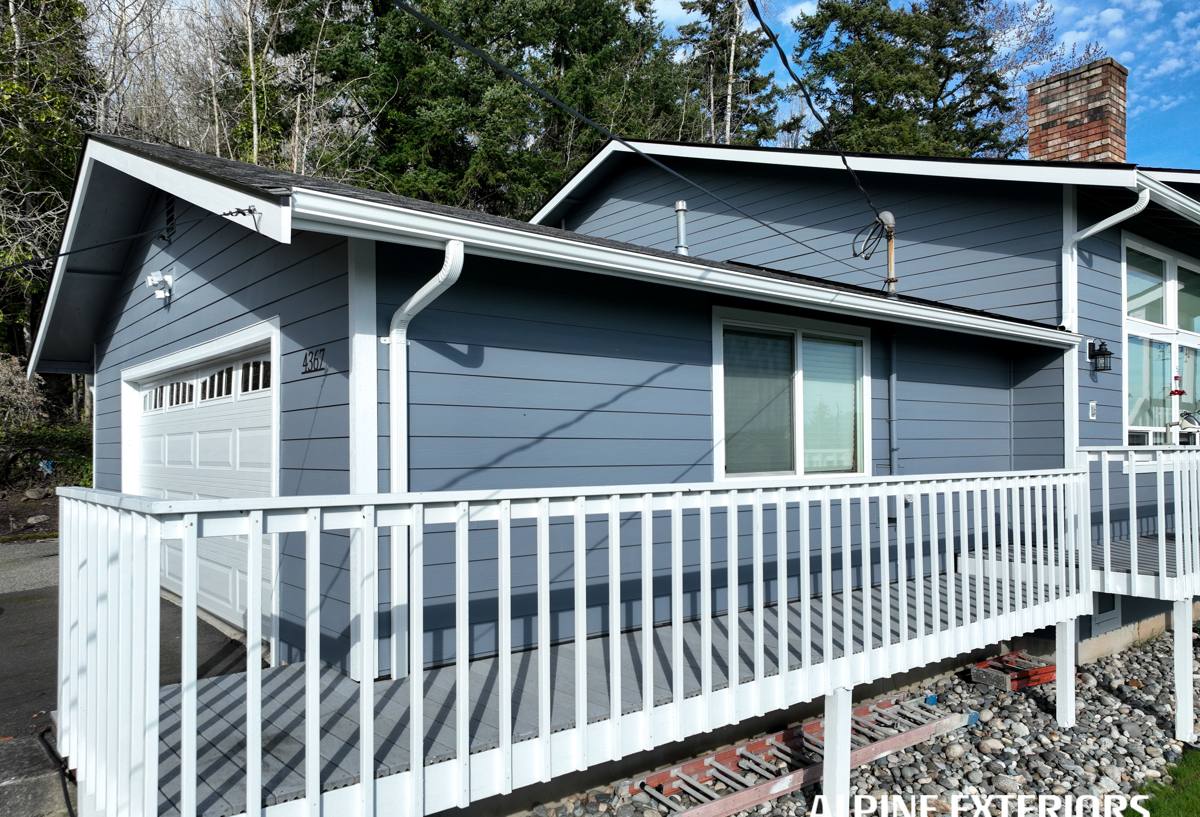
Why Salt Air and Driving Rain Change the Repair Calculus
Salt air is corrosive to exposed metal — nail heads, flashing seams, gutter fasteners, and any exposed screws on vents or pipe boots. On a roof that's otherwise sound, corroded fasteners are often the actual point of failure: a nail that's lost its grip lets a shingle lift, and once a shingle lifts, wind-driven rain gets underneath it. Because storms here frequently bring rain sideways rather than straight down, water finds its way into laps and seams that would stay dry in calmer weather. That's why we pay close attention to fastener condition and flashing laps during any repair, not just the shingles that are visibly damaged.
This is also why a roof that "looks fine" from the ground can still have an active leak. Wind-driven rain works its way in at edges, valleys, and penetrations — places that aren't always visible without getting on the roof and checking them directly.
Signs Your Ferndale Roof Needs Repair Now, Not Later
Most roof damage doesn't announce itself with a dramatic leak on day one. It shows up gradually, and catching it early is usually the difference between a repair bill and a replacement bill.
- Water stains on ceilings or in the attic, especially near a chimney, skylight, or where two roof planes meet
- Granules collecting in gutters or at the base of downspouts
- Shingles that look curled, cupped, or lifted at the edges
- Visible moss buildup, particularly on the north-facing or shaded slopes
- Rusted or visibly corroded flashing around vents, chimneys, or valleys
- Soft or spongy spots when walking the roof (a sign of decking damage underneath)
- Daylight visible through the roof deck from inside the attic
Any one of these on its own doesn't necessarily mean a full replacement. But left alone through another wet season, a small flashing failure or a patch of trapped moss can turn into decking rot, which is a much more expensive problem.
What a Correct Roof Repair Actually Involves
A repair that's done right addresses the cause of the leak, not just the spot where water is showing up inside the house. Water often travels along the underside of the decking before it drips through the ceiling, so the visible stain and the actual point of entry can be several feet apart. That means a proper repair starts with tracing the path, not patching the ceiling stain's location.
Common repair scopes we handle
Depending on what we find, a repair might involve replacing a section of damaged shingles and the underlayment beneath them, re-flashing a valley or chimney where the metal has failed, resealing or replacing pipe boots (a common failure point since the rubber collar degrades faster than the shingles around it), or replacing sections of rotted decking before new roofing goes back down. We won't put new shingles over decking that's compromised — that just hides a structural problem under a cosmetic fix.
Matching materials on an existing roof
Shingle color and profile change over the years, so an exact match on an older roof isn't always possible. We'll talk through realistic options before starting — sometimes that means pulling shingles from a less visible slope to patch a visible one, or accepting a slight color difference on a repair that will weather in over a season or two.
Moss and the Long Wet Season
Whatcom County's wet season runs long, and shaded or north-facing roof slopes in Ferndale rarely get enough sun and airflow to dry out fully between rain events. That's the environment moss needs to take hold. Once established, moss does more than look bad — its root structure works into the shingle surface and lifts tabs slightly at the edges, which is exactly the gap that wind-driven rain needs to get underneath the shingle.
Removing moss correctly means physically clearing it without scraping the shingle granules off in the process, then addressing why it grew there in the first place — usually overhanging branches blocking sun and airflow, or a slope that just doesn't drain and dry quickly. Zinc or copper control strips near the ridge can help slow regrowth on slopes that are chronically prone to it, but they're a maintenance tool, not a substitute for keeping the roof clear and the surrounding trees trimmed back.
Repair Versus Replacement: How We Help You Decide
Not every roof problem in Ferndale needs a full replacement, and not every roof is a good candidate for another round of patch repairs. The honest answer depends on the roof's age, how much of it is affected, and what condition the decking is in underneath.
| Factor | Favors Repair | Favors Replacement |
|---|---|---|
| Roof age | Under 15 years, or well-maintained architectural shingles | Approaching or past the material's expected lifespan |
| Extent of damage | Isolated to one slope, valley, or penetration | Widespread granule loss, curling, or moss across multiple slopes |
| Decking condition | Solid, no soft spots found on inspection | Soft or rotted decking found in more than a small area |
| Flashing condition | Isolated corrosion at one valley or chimney | Flashing failing broadly across the roof |
| History | First repair on this roof | Repeated repairs to the same areas over a few years |
We'll always tell you when a repair is the right call, even if a replacement would be the bigger job for us. A roof that's fundamentally sound doesn't need to be torn off early.
Our Roof Repair Process
We start with a full inspection, not just a look at the spot you're worried about. That includes checking the attic if accessible, since attic moisture and staining tell us a lot about how long a leak has been active and where it's traveling. From there:
- We walk the whole roof, not just the reported problem area, since one visible issue often points to a second one nearby
- We identify the actual entry point, which may be different from where the leak shows up inside
- We give you a clear, written explanation of what we found and what it will take to fix it — repair or replacement, with reasoning either way
- We do the work, including any decking replacement, flashing, or moss removal the repair calls for
- We check the surrounding areas for early-stage problems worth flagging, even if they're not part of today's repair
We're not going to recommend a full roof replacement for a problem a targeted repair can solve, and we'll tell you plainly when a repair is a short-term fix versus a lasting one.
What to Ask Before Hiring a Roof Repair Contractor
Roof repair draws a lot of door-knockers, especially after a windstorm, and Ferndale homeowners aren't immune to that. A few questions before you sign anything will save you headaches later.
- Are you licensed and insured to work in Washington, and can you provide proof?
- Will you inspect the whole roof, or only the specific spot I called about?
- What's your plan if you find rotted decking once you open up the area?
- Do you warranty the repair labor, separate from the manufacturer's material warranty?
- Can you explain, in plain terms, why this leak happened — not just where?
A contractor who can't answer the decking question, or who wants to start work without ever getting on the roof, is worth being cautious about.
Why Local Experience with Ferndale Roofs Matters
A crew that already works in Ferndale and the surrounding Whatcom County communities has seen how salt air, coastal wind, and the region's moss season actually play out on real roofs here, season after season. That's different from general roofing knowledge — it's the difference between guessing at a cause and recognizing a pattern we've dealt with many times before. It also means we're realistic about timing: scheduling repairs around the wettest stretches of the year isn't always possible, but knowing the local weather patterns helps us plan the work to minimize exposure while a roof is opened up.
Keeping a Repaired Roof in Good Shape
After a repair, a little seasonal attention goes a long way in this climate. Keep gutters clear so water isn't backing up under the roof edge, trim back branches that shade a slope and keep it damp, and have the roof looked at after any major windstorm. Catching a lifted shingle or a loosened fastener early is a five-minute fix. Left through a wet winter, it's a much bigger one.
If you're dealing with a leak, visible moss, or you just want an honest read on where your roof stands, we're happy to take a look. Use the form below to request a free, no-pressure estimate — we'll tell you straight whether you need a repair, and what that involves.