 Sudden Valley Siding
 Roof Repair Built for South Hill's Weather
South Hill sits up on elevated ground with a mix of mature tree cover and open exposure toward the water, and that combination puts a roof through more than most homeowners realize. Salt-laden air off the water accelerates corrosion on fasteners, flashing, and any exposed metal. Driving rain, pushed sideways by wind coming off the higher ground, finds its way into laps and seams that would stay dry on a more sheltered lot. And a long, damp moss season across Whatcom County keeps roof surfaces wet longer than they'd stay in a drier climate, which speeds up granule loss, wood rot, and the slow failure of aging flashing. A roof repair here has to account for all three at once, not just patch the spot where water showed up inside the house.
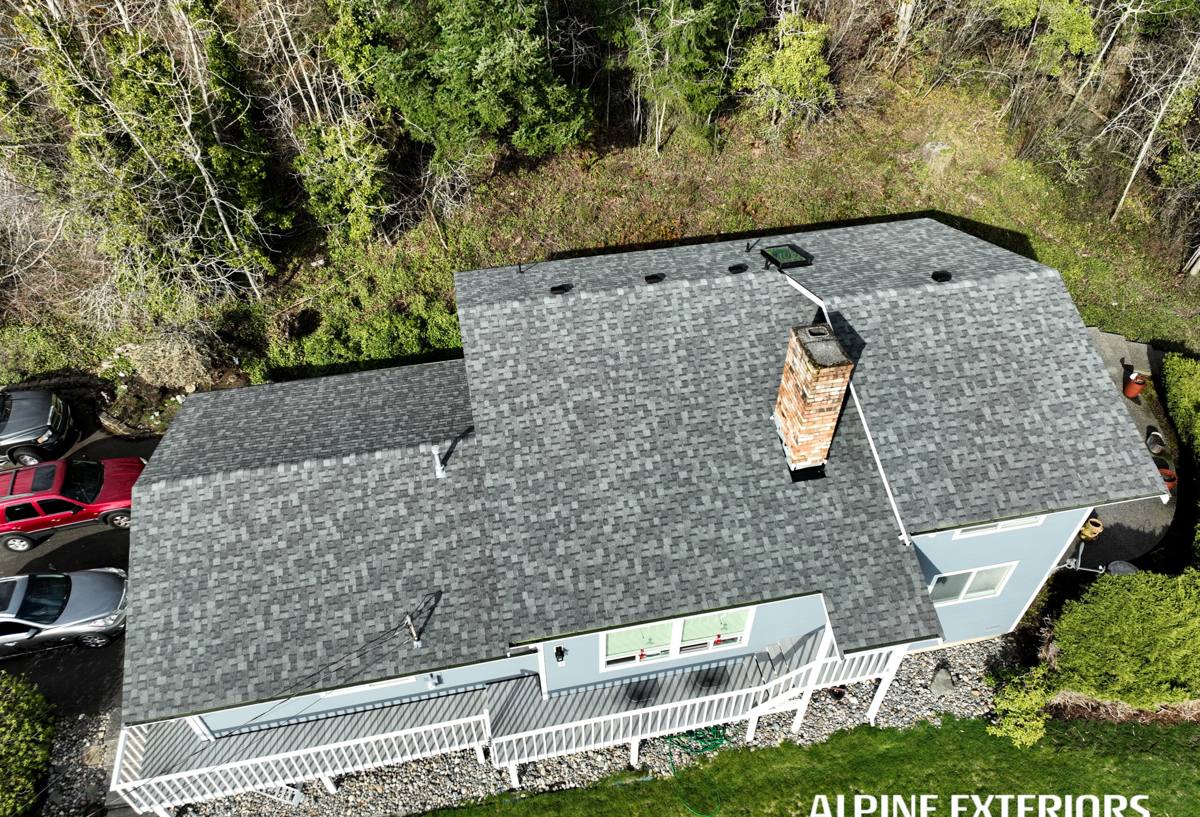
We work on roofs throughout South Hill regularly, and the patterns repeat from house to house: moss establishing itself on shaded, north-facing slopes; corrosion showing up first at nail heads and flashing edges; and leaks that trace back to a flashing detail rather than the shingles themselves. Understanding those patterns before we ever get on the roof is what separates a repair that lasts from one that reopens the same problem in a year or two.
Common Roof Problems We See in South Hill
Moss and Algae Buildup
Moss doesn't just sit on top of a roof looking bad. Its root structure lifts shingle edges and holds moisture directly against the roofing material, which is exactly the wrong combination in a climate that already stays damp for long stretches. Left alone through a full moss season, that trapped moisture works its way under shingle tabs and starts degrading the underlayment beneath them, turning what could have been a simple cleaning into a repair.
Flashing Failures
Flashing around chimneys, skylights, vent pipes, and roof-to-wall transitions is where we find the majority of active leaks. Metal flashing exposed to salt air corrodes faster than it would further inland, and once a seam opens up, wind-driven rain has no trouble finding it. Flashing failures are also easy to misdiagnose from inside the house, since water can travel along framing before it shows up as a stain, sometimes several feet from where it actually entered.
Wind-Driven Rain Intrusion
South Hill's elevation and orientation mean some roof planes take rain almost horizontally during a storm, rather than the straight-down rainfall a lower, more sheltered lot might see. Underlayment and flashing details that would hold up fine in calmer conditions can fail under that kind of lateral pressure if they weren't installed with it in mind.
Granule Loss and Aging Shingles
Asphalt shingles lose their protective granules over time, faster in a climate with this much sustained moisture and UV cycling. Granule loss in gutters or at the base of downspouts is usually a sign the shingles are past the point where a targeted repair will hold for long, even if there's no active leak yet.
What a Correct Roof Repair Actually Involves
A repair that's done right starts with figuring out the actual source of the problem, not just the spot where symptoms appeared. That means getting on the roof, checking flashing at every penetration and transition, examining the underlayment condition where shingles have been lifted, and tracing water staining back to its real entry point rather than assuming it's directly above the interior damage. Patching over a visible gap without finding the root cause is the single most common reason a "fixed" roof leaks again the next season.
Matching Materials to What's Already There
Repairs need to tie into the existing roof system cleanly. That means matching shingle profile and, where possible, color and weathering so the repair doesn't stand out or create a mismatched water path, using flashing metal that won't set up galvanic corrosion against what's already installed, and confirming the underlayment condition around the repair area is sound enough to support new work rather than just covering a problem that's already spreading underneath.
Ventilation Matters as Much as the Repair Itself
A roof deck that can't breathe stays damp longer after every rain, which feeds moss growth and accelerates rot from the inside out. Part of a proper repair is checking that existing ventilation is doing its job, since a perfectly good shingle repair won't mean much if the deck underneath is staying wet because of a ventilation problem that was never addressed.
Repair or Replace? How We Make the Call
Not every roof problem calls for a repair, and not every roof problem calls for full replacement. We walk homeowners through the honest tradeoffs rather than defaulting to whichever job is bigger.
| Factor | Favors Repair | Favors Replacement |
|---|---|---|
| Age of roof | Well within expected lifespan for the material | Near or past typical service life for the shingle type |
| Extent of damage | Isolated to one area, flashing point, or penetration | Spread across multiple slopes or repeated failures in different spots |
| Granule condition | Granules intact; loss limited to the damaged section | Widespread granule loss across most of the roof |
| Underlayment/deck condition | Sound, dry, no rot found during inspection | Soft spots, rot, or saturated underlayment in multiple areas |
| History of leaks | First occurrence, clear single cause | Recurring leaks in different locations over time |
Whatcom County's long wet season means a roof that's borderline can tip toward needing replacement faster than the same roof would in a drier region, simply because there's less of a dry window each year for a marginal roof to catch up. We'll tell you plainly which category your roof falls into and why, rather than steering the conversation toward the bigger job by default.
Our Roof Repair Process
- Inspection: We walk the roof, check flashing at every penetration, and look at attic or interior signs where accessible to trace leaks to their actual source.
- Diagnosis and options: We explain what we found in plain terms, including whether a repair is the right call or whether it's time to start planning for replacement.
- Written scope and estimate: Before any work starts, you get a clear description of what's being repaired, the materials involved, and the cost.
- The repair itself: Removing and replacing damaged shingles, correcting or replacing failed flashing, addressing any exposed or degraded underlayment, and confirming ventilation is functioning correctly around the repair area.
- Cleanup and final check: Debris removal and a final walk of the repaired area to confirm everything is sealed and tied in correctly.
Materials We Use and Why
For repair work, we match to what's already on the roof wherever the existing material is sound, since mismatched shingle profiles or incompatible flashing metals can create their own water problems down the line. When flashing needs replacing, we use metal suited to a salt-air environment rather than a lower grade that will simply corrode again in a few seasons. We use synthetic underlayment over older felt products in most repair situations, since synthetic underlayment resists the sustained moisture exposure common in this climate better and holds up longer if it's ever exposed during a repair. None of this is about pushing a premium product line — it's about not putting cheaper materials into a climate that will find their weak points quickly.
Why a Local Crew Matters for a South Hill Roof
A roofing crew that already works South Hill regularly has seen how the elevation, tree cover, and exposure to the water change roof performance from one property to the next, sometimes within the same block. That familiarity shows up in practical ways: knowing which roof orientations tend to hold moss longest, recognizing salt-air corrosion patterns on flashing before they become active leaks, and understanding how wind-driven rain behaves on this terrain during a real storm rather than in ideal conditions. A crew unfamiliar with the area is troubleshooting these factors for the first time on your roof. A crew that already works here is applying lessons learned from dozens of similar jobs.
A Homeowner's Checklist Before Hiring for a Roof Repair
- Ask what they believe is actually causing the leak, not just where it's showing up inside
- Confirm they'll inspect flashing at all penetrations, not just the immediately visible damage
- Get a written scope of work and estimate before anything starts
- Ask directly whether they think repair or replacement is the better long-term call, and why
- Check that they carry proper licensing and insurance for roofing work in Washington
- Ask how they'll match materials to what's already on your roof
Keeping a Repaired Roof in Good Shape
A good repair buys time, but it doesn't stop the climate. Keeping gutters and downspouts clear so water isn't backing up under shingle edges, having moss treated or removed before it re-establishes on shaded slopes, and getting a roof looked at after any major windstorm are the simplest ways to protect a repair and get the full remaining life out of the rest of the roof. Whatcom County's moss season runs long enough that a roof left unchecked for a year or two can develop new problems even after a solid repair, so a periodic look at flashing and shingle condition is worth more than it costs.
If you're dealing with a leak, visible moss buildup, or damaged flashing on a South Hill roof, we're happy to take a look and give you a straight answer on what it needs. The form below gets you a free, no-pressure estimate, with no obligation to move forward.