 Sudden Valley Siding
 Roofing Built for Where Columbia Homes Actually Sit
Homes in the Columbia area of Sudden Valley face a specific combination of weather that most roofing crews never have to think hard about: salt-laden air moving in off the water, long stretches of driving rain through fall and winter, and a moss season in the tree-shaded lots that can run for half the year or more. None of that is unusual for Whatcom County. What matters is whether a roof was actually built to handle it, or just installed the same way it would be anywhere else in the state.
A roof replacement in this area isn't just about swapping old shingles for new ones. It's about getting the underlayment, flashing, ventilation, and material choice right for a roof that's going to sit under wet, salty, shaded conditions for the next 20-30 years. Get any one of those wrong and you're looking at premature granule loss, trapped moisture, or moss working its way under the shingle line within a few seasons.
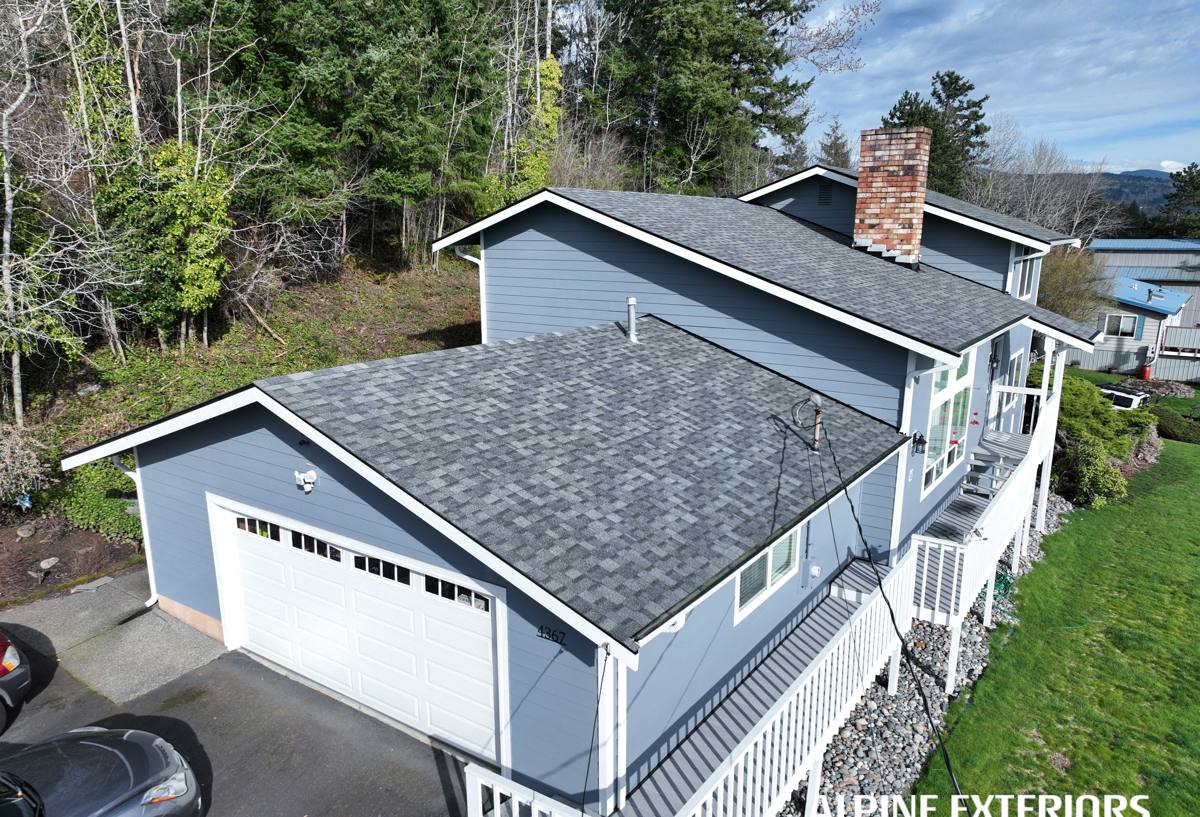
Signs a Columbia Home's Roof Is Ready for Replacement
Roofs rarely fail all at once. In this climate, the warning signs tend to show up gradually — a little more moss each year, a soft spot near a valley, a slow rise in how often you're checking the attic after a storm. Worth a serious look if you're seeing any of the following:
- Shingles that are cupping, curling at the edges, or missing granules in patches
- Moss or algae streaking that keeps coming back within months of cleaning
- Dark staining or a musty smell in the attic, especially near the ridge or valleys
- Flashing around chimneys, skylights, or roof-wall intersections that's rusted, lifted, or gapped
- Granules collecting in gutters or at the base of downspouts
- A roof that's 20+ years old, even if it "looks fine" from the ground
- Daylight visible through the roof deck from inside the attic
Any one of these on its own might just mean a repair. Several together, or a roof already past its expected service life, usually means replacement is the more honest recommendation — and the more cost-effective one over the next decade.
What a Correct Roof Replacement Actually Involves
Tear-Off and Deck Inspection
We don't install new roofing over old. A full tear-off lets us see the actual condition of the roof deck — something you can't judge from the ground or even from the attic in every spot. Soft, delaminated, or water-stained decking gets replaced before anything new goes down. Skipping this step is how a brand-new roof ends up with problems inside of five years.
Underlayment and Water Protection
Given how much rain this area sees, underlayment isn't a place to cut corners. We use synthetic underlayment across the full roof and self-adhered ice-and-water membrane at the eaves, valleys, and around any roof penetration — the spots where wind-driven rain actually gets pushed under shingles rather than running off them.
Flashing Details
Most roof leaks don't come from the shingle field — they come from flashing that was reused, undersized, or installed without enough attention to detail. Chimneys, skylights, dormers, and wall-to-roof transitions all get new flashing, properly stepped and sealed, not just caulked over the old metal.
Ventilation
Balanced intake and exhaust ventilation matters more here than in drier climates. Without it, moisture from inside the home condenses against the underside of the roof deck, and the whole assembly stays damp longer after every rain — which is exactly what moss and rot need to take hold. We check and correct ventilation as part of every replacement, not as an upsell.
Choosing a Roofing Material for This Climate
There's no single "best" roofing material — there's the right material for your home's exposure, roof pitch, budget, and how much long-term maintenance you're willing to keep up with. Here's how the common options actually compare for a home in the Columbia / Sudden Valley area:
| Material | Moisture & Moss Resistance | Typical Lifespan | Maintenance |
|---|---|---|---|
| Architectural asphalt shingle | Good with proper underlayment and airflow; moss-resistant granule options available | 25-30 years | Low — periodic moss/debris removal |
| Standing seam metal | Excellent — sheds water and moss has little to grip | 40-50+ years | Very low |
| Cedar shake | Attractive but moisture-sensitive; needs consistent upkeep in shaded, damp lots | 20-30 years with maintenance | High — regular treatment and inspection |
| Synthetic composite shake | Good — moisture-stable without the upkeep cedar requires | 30-50 years | Low |
For shaded lots that hold moisture longer, we generally steer homeowners toward architectural asphalt with moss-resistant granules or standing seam metal — not because cedar is a bad product, but because its maintenance demands are a poor match for a heavily treed, damp property unless someone is genuinely committed to keeping up with it. That's a trade-off conversation we're happy to walk through honestly rather than just selling whatever's easiest to install.
Moss, Algae, and Keeping a New Roof Looking New
Moss doesn't just sit on top of shingles — given enough time, it lifts the shingle edges, holds water against the roof surface, and works its way into fastener lines. On shaded lots common in this area, that process starts faster than most homeowners expect. A correctly installed roof fights this on two fronts: materials with algae- and moss-resistant granules or copper/zinc strips near the ridge, and ventilation that keeps the deck drier so moss has less to work with in the first place.
No roof in a climate like this is completely moss-proof, and we won't tell a homeowner otherwise. What a good installation does is buy you years between cleanings instead of months, and make the moss that does show up a surface problem rather than a structural one.
Our Process for a Columbia Roof Replacement
1. On-Site Inspection and Estimate
We walk the roof, check the attic where accessible, and look at drainage, shading, and existing flashing before quoting anything. You get a written estimate with material options explained in plain terms — not just a single number.
2. Material Selection and Permitting
Once you've picked a material, we handle the permitting and scheduling. We'll also flag anything specific to your lot — heavy tree cover, roof pitch, tricky access — that could affect the timeline.
3. Tear-Off and Installation
Old roofing comes off, the deck gets inspected and repaired as needed, and the new system goes on in the sequence that actually protects the home: deck repair, underlayment, ice-and-water membrane at vulnerable areas, flashing, then the roofing material itself.
4. Cleanup and Walkthrough
We run a magnetic sweep for stray nails, clear debris, and walk the finished roof with you so you know what was done and why — including where the moss- and water-management details went in.
Why Hire a Crew That Already Works in Sudden Valley
A roofing crew that already works Columbia and the rest of Sudden Valley isn't guessing at what this climate does to a roof — they've seen it directly, roof after roof, season after season. That shows up in small decisions that matter: how much ice-and-water membrane to use in a shaded valley, which flashing detail actually holds up against driving rain off the water, when a moss-resistant shingle is worth the upgrade and when it isn't. It also means a crew that isn't learning your neighborhood's quirks on your dime.
Local also means accountability. If something needs a follow-up look after the first hard rain of the season, we're not driving in from out of the area to handle it.
What to Ask Before You Hire Anyone
Whoever you choose for a roof replacement in this area, a few questions will tell you a lot about how they actually work:
- Do they inspect and repair the roof deck, or install over whatever's underneath?
- What underlayment and ice-and-water coverage do they use, and where?
- Is flashing replaced or reused, especially around chimneys and skylights?
- Do they check and correct attic ventilation as part of the job?
- Are they licensed and insured for roofing work in Washington, and can they show it?
- What's covered under both the material warranty and their own workmanship warranty?
A contractor who answers these clearly and specifically — not with vague reassurances — is one worth trusting with a roof that has to hold up to this climate for decades.
Get a Straight Answer on Your Roof
If your roof is showing its age, holding onto moss no matter how often you clean it, or you just want an honest read on how much life it has left, we're glad to take a look. Reach out below for a free, no-pressure estimate on roof replacement for your Columbia-area home.