 Sudden Valley Siding
 Roof Replacement in Happy Valley: What This Neighborhood Actually Needs
Happy Valley is one of Bellingham's older established neighborhoods, and like most of Whatcom County, it sits close enough to the water and under enough tree cover that roofs here age differently than they do in drier parts of the country. Salt-tinged air off Bellingham Bay, driving rain that comes in sideways during winter storms, and a moss season that can stretch across most of the year all work on a roof at the same time. None of that means every roof in the neighborhood is in trouble. It does mean that when it's time to replace one, the job needs to be built for this specific climate, not just installed to a generic national spec.
This page is about roof replacement specifically for homes in Happy Valley — what the local conditions do to different roofing materials, what a correct replacement actually involves, and what to look for in a crew before you hand over a deposit.
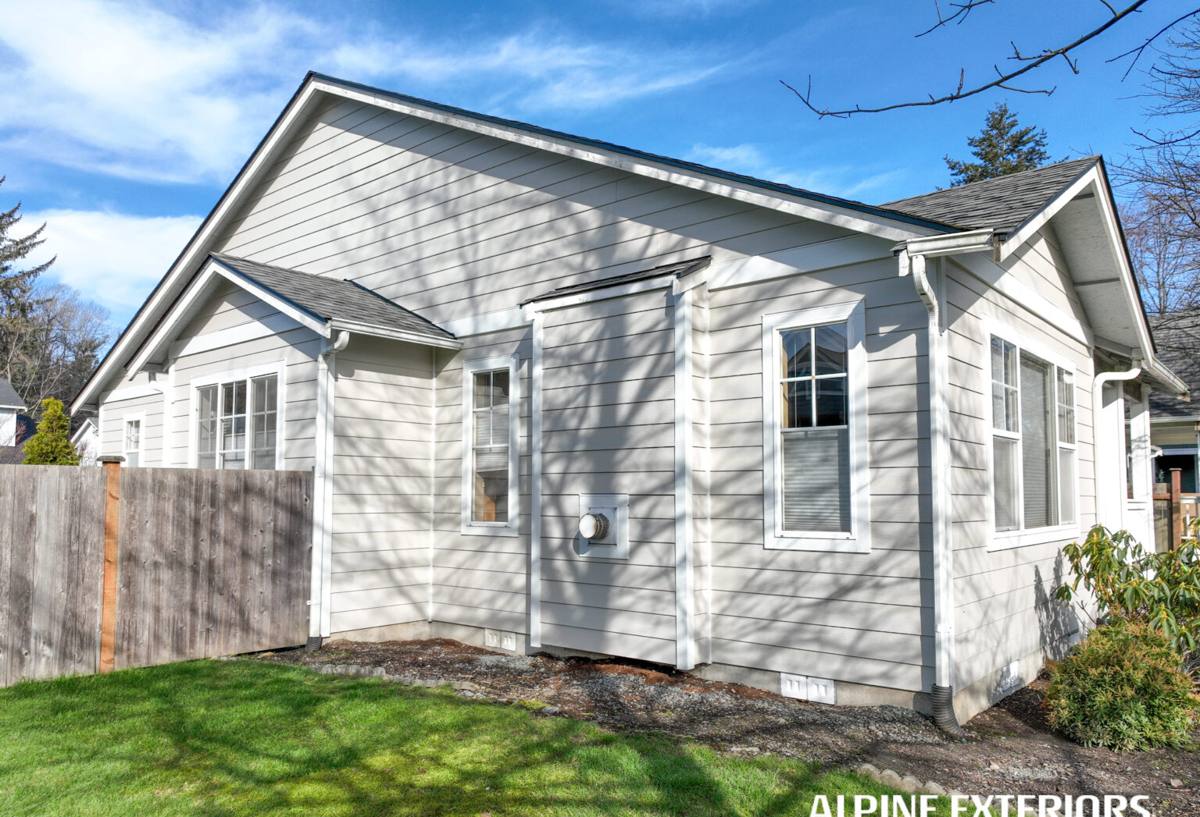
What Happy Valley's Climate Does to a Roof
Salt Air and Bay-Driven Corrosion
Homes in Happy Valley sit close enough to Bellingham Bay that airborne salt is a real factor, even a few blocks inland. Salt-laden air accelerates corrosion on exposed metal — flashing, fasteners, vent boots with metal collars, and gutter hardware all wear faster here than they would on a roof further from salt water. A roof replacement that uses standard-grade fasteners or unprotected flashing metal is setting itself up for premature rust stains and failed seals well before the shingles themselves would otherwise need attention.
Driving Rain and Wind-Driven Moisture
Whatcom County's winter storms don't just drop rain straight down — wind pushes it sideways and up under shingle edges, around chimneys, and along roof-to-wall transitions that would stay dry in a calmer climate. Happy Valley's mix of lot orientations and roof pitches means some homes take that wind-driven rain harder than others, even on the same block. That's exactly the condition that exposes weak flashing details and undersized underlayment, and it's why "it looked fine from the driveway" isn't a reliable way to judge a roof in this neighborhood.
A Long Moss and Algae Season
Shade from mature trees, consistent moisture, and mild temperatures give moss and algae a long growing window across most of Whatcom County, and Happy Valley's tree-lined streets are no exception. Moss holds water against the roofing surface long after a storm has passed, which shortens the working life of asphalt shingles in particular and can work its way under shingle tabs and flashing over time. A roof replacement here needs to account for that reality — both in material choice and in how the roof is detailed to shed water and dry out between wet spells.
Signs a Happy Valley Roof Needs Replacing, Not Just Repair
Most roofs don't fail all at once. They show a pattern of smaller problems first, and the question homeowners usually bring us is whether those problems still add up to a repair or whether it's time to plan for a full replacement.
- Shingles curling at the edges or cupping across large sections, not just one or two spots
- Granule loss heavy enough to leave bald patches, or granules collecting in gutters and downspouts
- Moss that keeps returning to the same valleys or shaded slopes shortly after cleaning
- Rust staining or lifted, caulked-over flashing around chimneys, vents, or skylights
- Soft or spongy spots when walking the roof, or visible sagging along the roofline
- Water staining on interior ceilings near exterior walls after a heavy or wind-driven storm
- A roof that's already at or past the upper end of its material's realistic lifespan in this climate
One or two of these on their own often point to a targeted repair. Several together, especially on an older roof, usually mean patching is just delaying an expense rather than solving it.
What a Correct Roof Replacement Involves
Full Tear-Off and Deck Inspection
We don't install new roofing over old layers. A full tear-off lets us actually see the roof deck — soft spots, rot, or water staining that's been hiding under the old shingles for years often only shows up once they're stripped away. Any damaged decking gets replaced before anything new goes down, because no underlayment or shingle can compensate for a deck that's already compromised.
Underlayment and Ice-and-Water Protection
Given how much wind-driven rain Happy Valley sees in a typical winter, we treat self-adhered ice-and-water membrane at eaves, valleys, and roof penetrations as standard, not optional. Synthetic underlayment across the rest of the deck gives a second line of defense if wind ever pushes water past the shingles themselves — which, in this climate, it eventually will on some part of the roof.
Flashing That Accounts for Salt Air
Every roof-to-wall transition, chimney, skylight, and vent penetration gets flashed with corrosion-resistant materials and properly lapped so water sheds downhill at every layer rather than relying on caulk to make up the difference. Caulk is a maintenance item, not a waterproofing strategy — a roof that depends on sealant to stay dry is a roof that's going to need attention again soon, especially with salt air working on any exposed metal.
Ventilation That Lets the Roof Dry Out
Balanced intake and exhaust ventilation keeps the underside of the roof deck closer to outdoor temperature and humidity, which reduces condensation and helps shingles run their full expected lifespan instead of failing early from trapped moisture. In a shaded, damp neighborhood like Happy Valley, a roof that can't ventilate properly stays wetter longer than it should, and that shows up as premature moss, algae, and shingle deterioration.
Choosing a Roofing Material for Happy Valley's Climate
There's no single "best" roofing material for every home — budget, roof pitch, and how much shade a property gets all factor in. But some materials handle this specific mix of salt air, wind-driven rain, and moss pressure better than others.
| Material | Salt Air / Corrosion Resistance | Moss and Algae Resistance | Realistic Lifespan Here |
|---|---|---|---|
| Architectural (laminate) asphalt shingles | Good with corrosion-resistant fasteners and flashing | Moderate; algae-resistant granule options help | 20-25 years |
| 3-tab asphalt shingles | Adequate, but thinner profile wears faster | Lower; more prone to moss anchoring in shaded areas | 12-18 years |
| Standing seam metal | Very good with coated, corrosion-resistant panels and fasteners | High; smooth surface sheds moss more easily | 35-50 years with proper detailing |
| Composite/synthetic shingle | Good | Moderate to high depending on product | 25-40 years |
These are general ranges, not guarantees. A well-installed roof with correct ventilation and flashing can outperform these numbers, and a poorly detailed one can fail well ahead of them regardless of the material used.
Cost Factors for a Happy Valley Roof Replacement
Every roof is priced individually after an on-site assessment, but the same handful of factors drive most of the variation we see from one Happy Valley project to the next.
- Roof size and the number of planes, valleys, and penetrations to flash
- Roof pitch and accessibility, which affect labor time and safety setup
- Whether the existing deck needs partial or full replacement once it's exposed
- Material choice, from standard architectural shingle to standing seam metal
- How much additional ventilation or flashing correction the existing roof structure needs
We'd rather walk a roof in person and give a real number than quote a range that doesn't mean much until we've actually seen the deck.
Our Roof Replacement Process
- On-site inspection of the existing roof, attic, and ventilation, with particular attention to flashing, moss patterns, and any signs of wind-driven water intrusion
- A clear written scope covering materials, underlayment, flashing details, and ventilation changes — before any contract is signed
- Full tear-off and deck inspection, with any damaged sheathing replaced before new materials go down
- Installation to manufacturer specification, including ice-and-water protection, corrosion-resistant flashing, and balanced ventilation
- A final walkthrough so the homeowner sees exactly what was done and why
Why a Crew That Already Works Happy Valley Matters
A roofer who regularly works this neighborhood already knows the patterns — which streets get the harder wind-driven rain, which lots stay shaded long enough to grow moss faster than average, and how much airborne salt to plan for in flashing and fastener choice this close to the bay. That knowledge shows up in decisions a homeowner never sees directly: which grade of fastener gets used, how flashing gets lapped on a given roof pitch, and how much ventilation a particular attic actually needs. Those are the details that separate a roof that makes it to the top of its expected lifespan from one that starts showing problems years early.
Questions Worth Asking Before You Hire
- Are they licensed and insured to do roofing work in Washington State, and can they show current documentation?
- Do they perform a full tear-off and deck inspection, or do they sometimes install over existing layers?
- What underlayment and ice-and-water protection do they use as standard, not as an upsell?
- How do they handle flashing around chimneys, skylights, and roof-to-wall transitions?
- Can they explain, specifically, how their approach accounts for salt air and moss in this area?
A contractor who answers those questions clearly and specifically, without needing to guess, is usually one who's done real work in conditions like Happy Valley's — not just in roofing generally.
Getting Started
If your roof in Happy Valley is showing wear, or you're just not sure whether it's a repair or a replacement, we're glad to take a look and give you a straight answer. Reach out below for a free, no-pressure estimate.