 Sudden Valley Siding
 Acme's Climate Doesn't Go Easy on Siding
Acme sits in the wooded foothill country of Whatcom County, and that setting cuts both ways. The tree cover that makes these lots beautiful also means less direct sun, more standing shade, and slower drying times after every rain. Add in the long, damp stretch of fall through spring that defines this part of Washington, and you've got a recipe for siding that stays wet longer than it should. Driving rain off approaching storm systems drives moisture sideways into seams and laps. Salt-laden air moving inland off the Sound adds a slow corrosive edge to fasteners and trim. And moss doesn't take a season off here — it gets a running start every fall and doesn't fully stop until late spring.
None of that means siding is doomed. It means siding has to be repaired the right way, with materials and techniques suited to how this region actually behaves, not how a warmer, drier climate would treat the same damage.
What "Siding Repair" Actually Covers
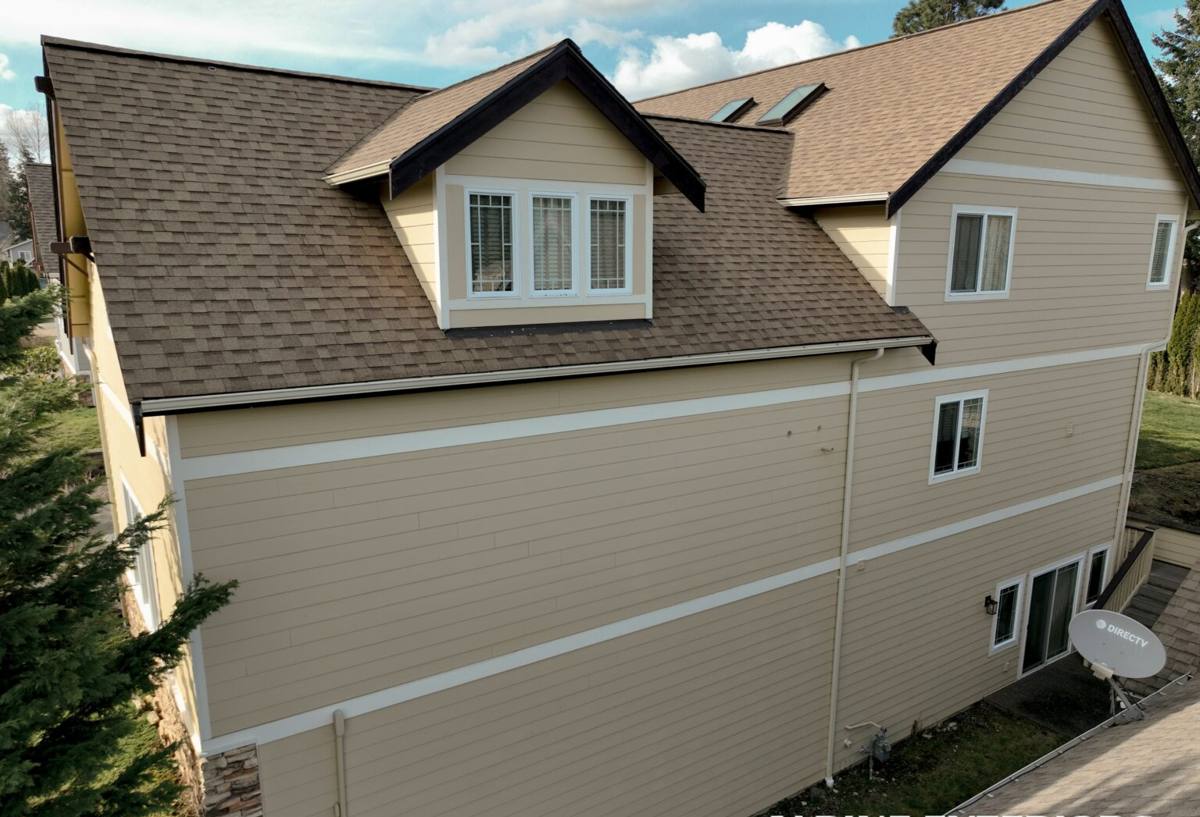
Siding repair is targeted work — fixing specific damaged, failing, or compromised sections of siding without tearing off and replacing the whole exterior. Done correctly, it's not a patch job. It's a diagnosis of why that section failed, a fix that addresses the cause, and a match that blends into the surrounding wall rather than standing out as an obvious repair.
Repair Is Not the Same as Cosmetic Touch-Up
A lot of homeowners think repair means caulk and paint. Real repair means opening up the area enough to check what's underneath — house wrap, flashing, sheathing — because siding damage is frequently a symptom, not the whole problem. If water has been getting behind the siding, painting over the visible crack just hides the issue until it resurfaces as rot.
Common Damage We See on Acme Homes
Moss and Organic Growth Along Shaded Walls
North-facing walls and anything tucked under tree canopy hold moisture the longest. Moss doesn't just sit on the surface — its root structure and the constant dampness underneath it slowly break down paint film and, on older or lower-grade siding, the substrate itself.
Moisture Intrusion at Seams, Corners, and Penetrations
Wherever siding meets a window, door, vent, or utility penetration is where driving rain finds its way in if flashing or caulking has failed. In a wetter climate like ours, these failures show up faster and do more damage than they would in a dry region.
Swelling, Delamination, and Soft Spots
This is most common on wood-based products (cedar, engineered wood siding) that have taken on repeated wetting and drying cycles. Edges swell, paint cracks along the seams, and eventually the board itself softens.
Impact and Storm Damage
Wind-driven debris, ladders, and general wear crack or dislodge individual boards. On its own this is a simple fix — the risk is leaving a cracked or missing piece exposed through a wet season, which turns a small repair into a bigger one.
Fastener and Trim Corrosion
Nails, screws, and trim pieces exposed to persistent moisture and salt-influenced air can corrode faster than inland, drier climates would predict, leading to staining and loose boards even when the siding material itself is sound.
Repair or Replace? How We Make the Call
Not every damaged section needs a full re-side, and not every problem is fixable with a patch. We look at how much of the wall is affected, whether the damage is isolated or a sign of a systemic moisture problem, and how old the existing siding is relative to its expected service life.
| Factor | Leans Toward Repair | Leans Toward Replacement |
|---|---|---|
| Extent of damage | Isolated boards or a single wall section | Widespread across multiple elevations |
| Underlying moisture barrier | Intact, no hidden rot found | Compromised house wrap or sheathing rot |
| Siding material | Still structurally sound, finish holding | Delaminating, chalking, or beyond its service life |
| Age of siding | Well within expected lifespan | Near or past original material's rated life |
| Color/finish match | Close match achievable | Discontinued or badly weathered, mismatch unavoidable |
We'll always tell you honestly which side of that table your situation falls on. There's no benefit to us talking a homeowner into a full replacement when a proper repair will hold up for years — and no benefit to patching something that's structurally failing and will just cost more to fix twice.
How We Approach a Repair
- Inspect beyond the visible damage. We pull back or remove the affected boards to check the house wrap, flashing, and sheathing underneath before deciding on scope.
- Identify the cause, not just the symptom. A cracked board is easy. Knowing why water got behind it — bad flashing, a failed seam, a clogged gutter dumping water onto the wall — is what keeps the repair from repeating in two years.
- Address moisture-barrier issues first. Any compromised wrap or flashing gets corrected before new siding goes back on. Skipping this step is the single most common reason repairs fail early in this climate.
- Match materials and reveal. We match board profile, exposure, and color as closely as the existing siding allows so the repair reads as part of the wall, not a patch.
- Reseal and finish to spec. Correct fastener placement, proper caulking at penetrations, and touch-up finishing that's built to hold color and seal in wet, low-sun conditions.
Why We Repair With James Hardie Fiber Cement, Not a Mixed-Material Patch
When a section of siding needs to come out, what goes back in matters as much as the workmanship. We install James Hardie fiber cement exclusively — we don't carry vinyl, LP SmartSide, Cemplank, Allura, primed spruce, or cedar. That's not a marketing position, it's a standard we hold because of what we've seen hold up in exactly this kind of climate.
Fiber cement doesn't absorb water the way wood-based products do, so it doesn't swell, delaminate, or feed moss root growth the same way. It's non-combustible, which matters as much for insurance and safety as for weather resistance. Hardie's ColorPlus factory finish is baked on and warranted against fading and peeling, which means a repaired section holds its color instead of chalking out ahead of the surrounding wall within a few seasons — a real problem with field-painted repairs. And Hardie's HZ5 product line is specifically engineered for cold, wet, high-moisture climates like ours, not a generic national spec.
When we repair a Hardie wall, we're matching into a product built for this weather. When we repair walls originally sided in something else, we'll tell you plainly what your options are — sometimes that means a full transition to Hardie on the affected wall for the best long-term result, sometimes a like-for-like patch is the more sensible near-term move. We'd rather have that honest conversation than oversell you.
What a Correct Repair Should Include
- Removal of enough surrounding material to inspect house wrap and flashing, not just the damaged board
- Confirmation that fasteners are set to manufacturer spec, not just "close enough"
- Proper drainage plane and rain-screen detailing where original construction lacked it
- Color and profile match assessed honestly, with limitations explained up front
- Correctly sealed penetrations, seams, and trim transitions
- A finished repair that's weather-tight the day we leave, not "good enough until the next dry spell"
Why Hiring a Crew That Already Works in Acme Matters
Repair work in this area rewards local knowledge. Knowing how shaded, tree-covered lots dry out differently than open ones, how Whatcom County's moisture load compares to drier parts of the state, and which failure points show up first on homes exposed to driving rain and long damp stretches — that's the difference between a repair that's cosmetic and one that actually solves the problem. A crew unfamiliar with this climate can do competent work and still miss the moisture-barrier issue underneath, because it's not the first thing they'd check in a drier region.
We treat every repair call in Acme the same way: find out what actually caused the damage, fix that, and put back a material that's suited to keep it from happening again.
Get an Honest Look at Your Siding
If you're seeing cracked boards, soft spots, persistent moss, or staining on your Acme home's siding, it's worth having someone look before the next wet season sets in. We'll give you a straight answer on repair versus replacement, and a free, no-pressure estimate with no obligation — just fill out the form below.