 Sudden Valley Siding
 Siding Repair Built for South Hill's Weather, Not a Generic Climate
South Hill homes take a different kind of beating than a house on the dry side of the state. Whatcom County's wet season isn't just rain — it's weeks of driving, wind-blown rain that hits siding at an angle, finds every gap, and doesn't let up long enough for wood or wood-based siding to fully dry out between storms. Add in salt-laden air off the water and a moss season that can run half the year on shaded, north-facing walls, and you've got a climate that punishes siding repairs done with the wrong materials or the wrong technique.
We repair siding in South Hill regularly enough to know which walls fail first, which details leak, and which repairs actually last through another Whatcom County winter instead of needing a second visit. This page covers what siding repair means for homes in this specific area — what to look for, what a correct repair involves, and why we use James Hardie fiber cement for every patch and panel we install.
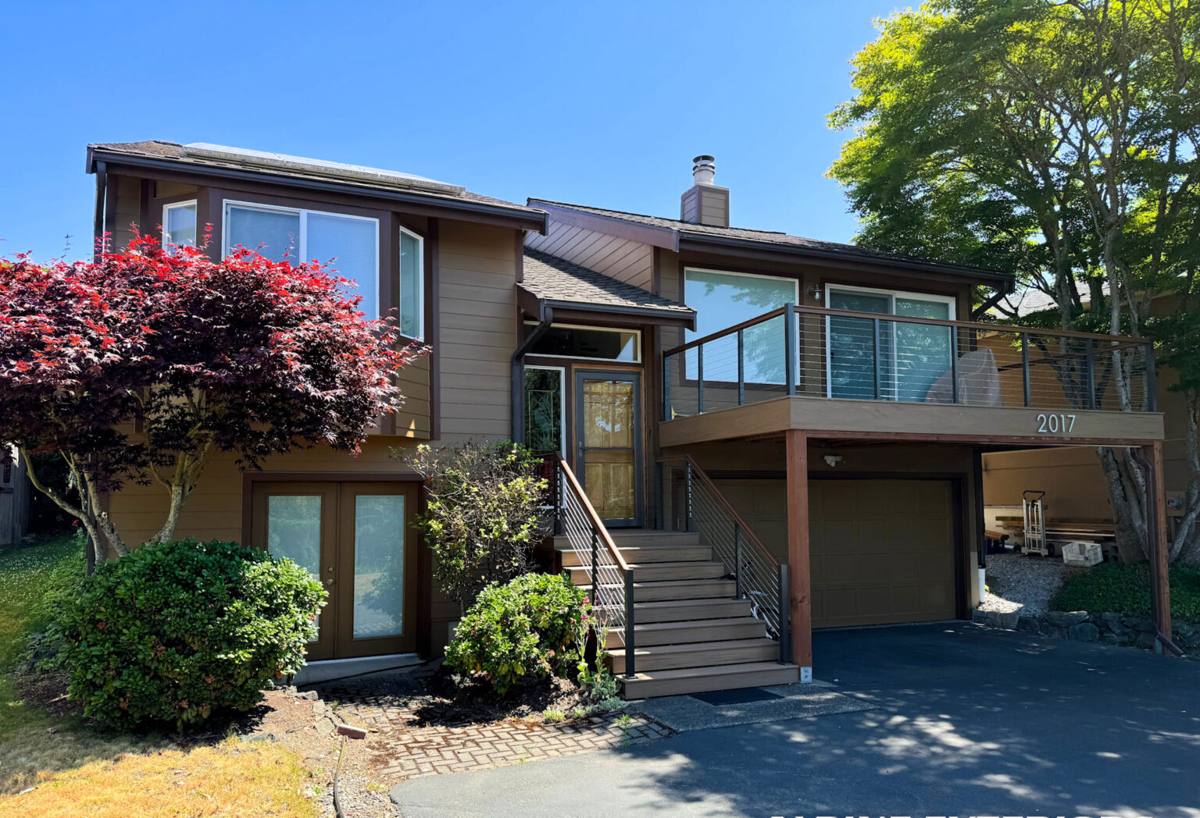
Signs Your South Hill Home Needs Siding Repair
Siding damage rarely announces itself with a hole in the wall. It shows up as small, easy-to-ignore signs first — and by the time it's obvious, moisture has usually been getting behind the siding for a while. Walk your exterior and look for these:
- Soft or spongy spots when you press on the siding, especially near the bottom courses and around window trim
- Paint that's bubbling, peeling, or failing faster on one wall than the others (usually the wall that takes the most weather)
- Visible cracking, splitting, or warping in individual boards or panels
- Dark streaking or green-black growth that keeps coming back within a season or two of cleaning
- Gaps opening up at seams, corners, or where siding meets trim, window frames, or the foundation
- Nail heads popping out or visible fastener rust staining the siding face
- Rising utility bills or noticeably drafty rooms along an exterior wall
Any one of these can be minor on its own. Two or three showing up on the same wall usually means water has already made it past the surface, and that's a repair-timeline situation, not a wait-and-see one.
What's Actually Driving Siding Damage in This Climate
Driving rain and wind-loaded moisture
Most siding systems are designed to shed rain that falls relatively straight down. South Hill's weather doesn't cooperate — wind pushes rain sideways into wall assemblies, and it finds its way behind siding through even small gaps at seams, trim, and penetrations like hose bibs and light fixtures. Once moisture is behind the siding, the problem stops being cosmetic and starts being structural.
Moss and organic growth
Shaded walls, tree cover, and the long damp season common across Whatcom County give moss, algae, and lichen months at a time to establish themselves. Moss doesn't just look bad — it holds moisture against the siding surface far longer than the siding was ever meant to sit wet, which accelerates rot in wood-based products and breaks down paint and caulking faster than a dry climate would.
Salt air and coastal humidity
Homes exposed to salt-carrying air deal with accelerated corrosion on fasteners, flashing, and any exposed metal trim. Corroding nails and staples lose their grip, which is one of the more common — and least visible — causes of siding that's come loose or is rattling in the wind without an obvious crack or hole anywhere on the board.
Freeze-thaw stress
Whatcom County doesn't get brutal winters, but it gets enough freeze-thaw cycling that any water already trapped behind or inside siding material expands and contracts repeatedly. That's what turns a small hairline crack into a wide split over one or two seasons.
Repair vs. Replacement: How We Decide
Not every damaged section needs a full re-side, and not every problem area is worth patching. We look at the extent of the damage, what's underneath it, and how much of the wall is affected before recommending either path.
| Factor | Usually Points to Repair | Usually Points to Replacement |
|---|---|---|
| Extent of damage | Isolated to one or two boards/panels | Spread across multiple walls or elevations |
| Sheathing condition underneath | Dry, solid sheathing once siding is pulled | Soft, delaminating, or rotted sheathing |
| Age of existing siding | Siding is otherwise sound and mid-life | Siding is near or past its expected service life |
| Cause of damage | Isolated impact, one failed fastener run, localized flashing failure | Systemic moisture intrusion, chronic moss/rot pattern |
| Color/material match | Existing ColorPlus finish or material is matchable | Discontinued color or incompatible original material |
When we open up a damaged section and find dry, solid sheathing, a targeted repair is usually the right call — it's faster, less disruptive, and costs a fraction of a full re-side. When we find soft sheathing or damage that's clearly spread beyond the visible symptom, we'll tell you honestly rather than patch over a problem that's going to resurface in a year.
What a Correct Siding Repair Actually Involves
A repair that just covers the damaged spot with new material and calls it done is the reason so many "fixed" walls fail again within a couple of seasons. A correct repair addresses the cause, not just the symptom.
1. Remove damaged material and inspect what's underneath
Damaged boards or panels come off, along with enough surrounding material to see the full extent of the problem. This is where we confirm sheathing condition and check the house wrap or building paper for tears, gaps, or failure at the source of the leak.
2. Fix the water intrusion path, not just the hole
If the damage traces back to a flashing gap, a failed sealant joint, or a penetration that was never properly detailed, that gets corrected before anything new goes back on the wall. Reinstalling siding over an unresolved leak path just buys you the same repair again later.
3. Repair or replace the water-resistive barrier
Any torn or compromised house wrap gets patched or replaced in the repair area, with proper shingle-lap technique so water sheds correctly past the repair, not into it.
4. Install matching material correctly
New siding goes on with correct fastener type, spacing, and penetration depth, proper joint treatment, and factory-recommended clearances at the bottom edge, trim, and adjoining materials. Small installation details — like a board sitting too tight against trim or a fastener driven too deep — are what shorten the life of an otherwise good repair.
5. Match the finish
Where the existing siding is James Hardie with a factory ColorPlus finish, we can typically match the repair section closely using the same product line and color. Field-painted touch-up is sometimes necessary for older installations, and we'll tell you upfront which situation applies to your home.
Our Process, From First Look to Finished Repair
- Free on-site inspection. We walk the affected area, check surrounding walls for related issues, and get eyes on the problem before quoting anything.
- Diagnosis, not guesswork. If we suspect moisture behind the siding, we'll open a small section to confirm sheathing condition rather than quote blind.
- Straight-talk estimate. You get a written scope that explains exactly what's being repaired and why — including whether we think repair or replacement is the smarter long-term move.
- Scheduled around the weather. Given how much of Whatcom County's calendar is wet, we plan repair work for dry windows so new material, flashing, and sealants cure properly before the next rain.
- Repair completed to spec. Damaged material removed, underlying issue fixed, new material installed to manufacturer installation standards.
- Final walkthrough. We show you what was done and what to keep an eye on going forward.
Why We Repair With James Hardie Fiber Cement
We install and repair with James Hardie fiber cement exclusively — we don't install vinyl, LP SmartSide, primed spruce, cedar, or other fiber cement brands. For repair work specifically, that standard matters even more than it does on a full install, because a repair is only as good as its ability to hold up to the same conditions as the surrounding siding for years afterward.
Hardie's HZ5 product line is engineered for wetter, harsher climates like this one, and it's non-combustible, which matters given how much of Whatcom County backs up to trees and brush. The factory-applied ColorPlus finish resists the fading and moisture-driven paint failure that plagues field-painted wood siding in a climate this damp, and it gives us the best shot at a repair that actually blends with the surrounding wall instead of standing out as an obvious patch. Hardie also backs the product with a strong transferable warranty, which carries forward if you sell the home — something that matters more in a market where buyers are increasingly asking about siding condition and material during inspections.
We won't repair a damaged section of vinyl or wood siding by grafting in whatever's on hand just to close the job fast. If your existing siding is a material we don't install, we'll explain your realistic options honestly, including when a full re-side to Hardie makes more long-term sense than continuing to patch a system that's fighting this climate every season.
Why It Matters to Hire a Crew That Already Works South Hill
Siding repair looks straightforward from the ground, but the failure points are specific to how a home is exposed to weather — which wall takes the worst of the wind-driven rain, which corner never dries out under tree cover, which flashing detail tends to fail first on homes built during a particular era in this area. A crew that works South Hill regularly has already seen those patterns repeat across multiple homes, which means less time spent diagnosing and a better shot at catching a related issue before it becomes its own repair call.
Local experience also means realistic scheduling. We know how much of the calendar here is unworkable for exterior repair, and we plan around it instead of rushing a repair into a wet window where new material and sealants won't cure properly — which is one of the most common reasons a "fixed" section fails again within a year.
Keeping Your Siding in Good Shape After the Repair
A correct repair buys you years, but a little upkeep protects that investment — especially against the moss and moisture pressure that's constant in this region.
- Rinse siding annually, and more often on shaded or north-facing walls where moss establishes fastest
- Keep gutters clear so overflow isn't running down the siding face during heavy rain
- Trim back vegetation and tree limbs that keep a wall section shaded and damp longer than the rest of the house
- Recaulk trim joints and penetrations if you notice gaps opening up, before the next wet season starts
- Walk the exterior once or twice a year and press-test any area that looks discolored or uneven
If you're seeing any of the warning signs above, or you just want a second, honest opinion on a repair versus replacement question, we're happy to take a look. Fill out the form below for a free, no-pressure estimate.