 Sudden Valley Siding
 Why Siding Wears Differently in Acme
Acme sits in a part of Whatcom County where tree cover, valley moisture, and long stretches of shade change how a house ages compared to a home out in the open. Marine air off the Pacific pushes inland through the county on a regular basis, and by the time that moisture-laden air reaches wooded, low-lying areas like Acme, it tends to linger. Combine that with driving rain events that come through several times a winter and a moss season that can stretch from October well into spring, and you get siding conditions that punish anything not built to shed water and resist organic growth.
Homes tucked under a tree canopy dry out slower after a storm than homes with full sun exposure. That extra drying time is exactly when moisture does its damage — swelling wood-based products, feeding moss and algae, and working into any seam or fastener hole that wasn't sealed correctly the first time. A siding replacement in Acme isn't just a cosmetic upgrade; it's a chance to correct whatever let moisture in over the years and put a product on the wall that's actually built for this environment.
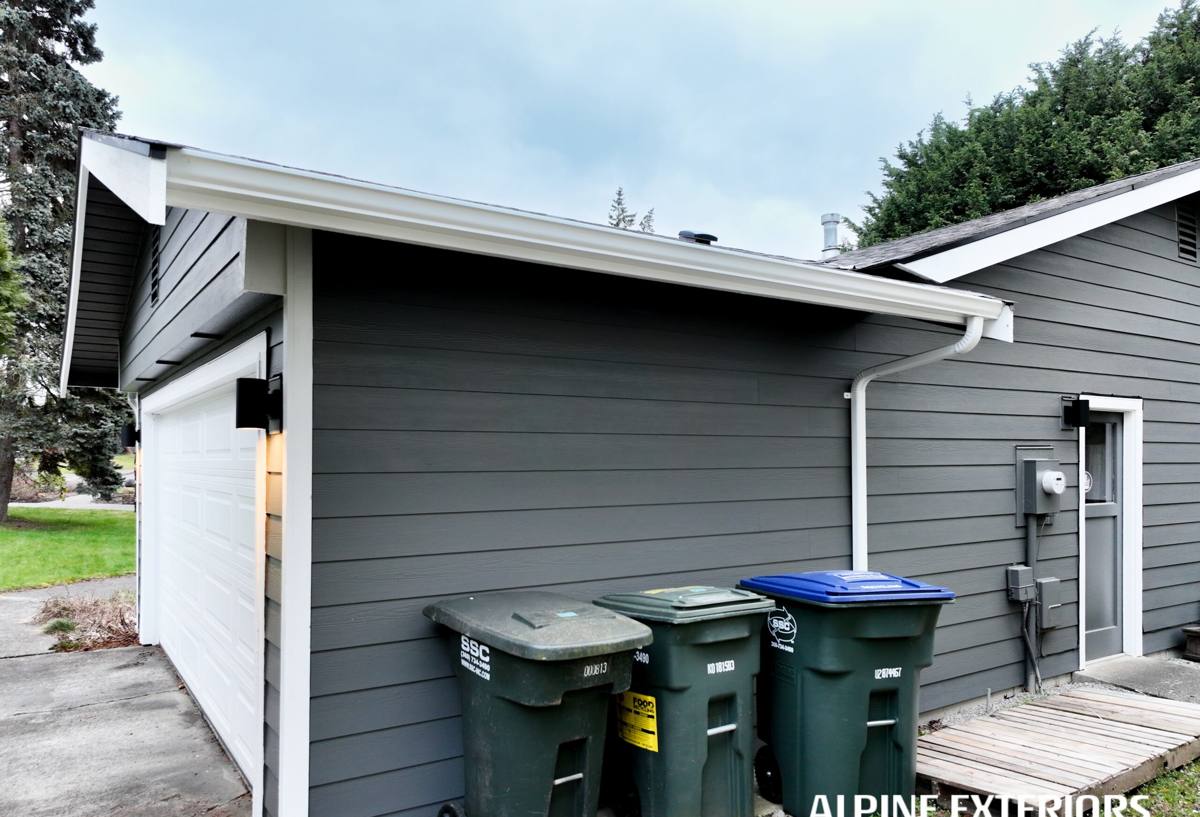
Signs an Acme Home Needs Siding Replacement, Not Just Repair
Not every siding problem means a full tear-off. But there are signs that point past patching toward full replacement:
- Soft or spongy spots when you press on the siding, especially near the bottom courses or around windows
- Persistent moss or algae streaking that comes back within weeks of being cleaned
- Visible warping, cupping, or delamination across multiple boards or panels
- Paint that won't hold — chalking, peeling, or blistering within a couple of years of repainting
- Soft trim or rot at butt joints, corners, and anywhere siding meets a roofline or deck
- Interior signs — musty smell, staining on interior walls near exterior corners, or visible damage when siding is pulled back
If you're only seeing one or two of these in an isolated spot, a repair may be enough. If you're seeing several of these across the house, or the siding is original and past 20-25 years old, replacement is usually the more honest recommendation — and it's cheaper in the long run than repeated patch jobs on a product that's already failing.
What a Correct Siding Replacement Actually Involves
A siding replacement is only as good as what's underneath it. The visible boards get the attention, but the work that actually determines whether a house stays dry for the next 30 years happens in layers most homeowners never see.
Tear-Off and Substrate Inspection
Old siding comes off in full, not just where it looks damaged, because hidden rot or moisture staining on sheathing often extends past the visible problem area. This is the point where a crew finds out what's really going on behind the wall — soft sheathing, missing or torn house wrap, rusted fasteners, or old flashing that was never installed correctly.
Weather-Resistive Barrier and Flashing
A new water-resistive barrier goes on before any new siding, and every penetration — windows, doors, hose bibs, light fixtures — gets flashed and sealed in the correct shingle-lap order so water is directed out and down, never trapped behind the cladding. In a climate that sees as much sustained rain as Whatcom County does, this step matters more than the siding brand itself.
Fastening and Rain-Screen Detailing
Fiber cement siding has specific fastener spacing, embedment depth, and clearance requirements from grade, roof lines, and decks. On shaded, damp lots like many in Acme, we pay close attention to ground clearance and drainage detailing so the bottom courses aren't sitting in a perpetually damp microclimate against the foundation.
Trim, Caulking, and Finish
Corners, trim boards, and joints get sealed with the correct sealants rated for the product, and factory-finished boards are cut and handled in a way that doesn't expose raw, unsealed edges to the weather.
Why We Install Only James Hardie Fiber Cement
We don't install vinyl, LP SmartSide, Cemplank, Allura, primed spruce, or cedar. That's a deliberate standard, not a lack of options. Each of those products has legitimate strengths — vinyl is inexpensive and low-maintenance in mild conditions, engineered wood siding installs quickly and takes paint well, cedar has a natural look many homeowners love. But in a climate with sustained moisture exposure and a long moss season, several of those products carry trade-offs we're not willing to put our name behind: wood-based siding is more vulnerable to moisture intrusion at cut edges and seams if installation isn't precise, vinyl can warp or become brittle over time and doesn't offer the same fire performance, and cedar demands an ongoing maintenance commitment most homeowners underestimate when they choose it.
James Hardie fiber cement is non-combustible, dimensionally stable when wet, and holds its ColorPlus factory finish far longer than field-applied paint on wood products. Hardie also engineers specific product lines — its HZ5 and HZ10 designations — for different climate zones, which means the boards installed on an Acme home are matched to the moisture and freeze-thaw conditions of this region rather than a generic national spec. Backed by a strong transferable warranty and a track record that holds up when installation is done to Hardie's own specifications, it's the product we're willing to stand behind on every job.
Our Process: Working Efficiently on Acme Properties
Wooded and rural lots come with logistics that flat, open subdivisions don't. Limited driveway access, tree cover close to the house, septic systems instead of municipal sewer, and longer distances to dump runs all factor into how a job gets planned and staged. Because we work this area regularly, we plan for that up front rather than discovering it mid-project.
- Site walk and assessment — we inspect the existing siding, sheathing where accessible, trim, and flashing details, and walk the property to plan material staging, dumpster or trailer placement, and tree or landscape protection.
- Written scope and product selection — you get a clear scope of work, the specific Hardie product line and color, and a straightforward cost breakdown before any work starts.
- Tear-off and substrate repair — old siding comes off, damaged sheathing or framing gets repaired or replaced, and we document anything found so there are no surprises added after the fact without your sign-off.
- Weather barrier, flashing, and siding install — installed to manufacturer spec, with particular attention to grade clearance and drainage on shaded or low-lying sections of the property.
- Final walkthrough — we walk the finished job with you, check trim and caulk lines, and go over basic care so the siding performs the way it's designed to.
What Drives the Cost of a Siding Replacement
Every home is different, but the same handful of factors drive most of the cost variation we see on Acme jobs. We give real numbers during a site visit rather than a phone estimate, because access and substrate condition change the math too much to guess from a distance.
| Cost Factor | Why It Matters |
|---|---|
| Home size and wall complexity | More corners, gables, and dormers mean more cutting, flashing, and labor time |
| Substrate condition | Rot or moisture damage found during tear-off adds repair scope before new siding goes up |
| Siding profile and trim package | Lap siding, panel systems, and trim details vary in material and install time |
| Site access | Long driveways, tree-obstructed staging areas, or steep lots slow material handling |
| Existing moisture or moss damage | Extensive organic growth or water staining often points to underlying issues that need addressing, not just covering |
| Trim and detail work around openings | Windows, doors, and roof intersections require careful flashing that adds labor but protects the investment |
Choosing a Crew That Already Works Acme
Hiring locally matters more for siding than most exterior work, because the failure points are almost always in the details — flashing, fastener placement, clearance from grade — not in the product itself. A crew that already works Acme and the surrounding Whatcom County communities has already seen how this climate treats different products and detailing choices over time, and adjusts accordingly instead of applying a one-size-fits-all install.
- Ask whether they're a certified or trained James Hardie installer, not just someone who's ordered the material before
- Ask to see how they handle flashing at windows and roof-wall intersections, not just the finished siding look
- Confirm they carry proper licensing and insurance for work in Washington State
- Ask how they handle unexpected sheathing damage found during tear-off — get this in writing before work starts
- Ask about their experience with wooded or low-access properties similar to yours
- Get a written scope that specifies the exact Hardie product line, not just "fiber cement siding"
Living With Hardie Siding After Installation
Correctly installed fiber cement siding is low-maintenance, but "low-maintenance" doesn't mean "zero-maintenance," especially in a shaded, moisture-prone setting. A yearly rinse to knock down early moss or algae growth before it establishes, a periodic check of caulk lines at trim and penetrations, and prompt attention to any impact damage keep the siding performing at its best for decades. Because ColorPlus finish is factory-applied and baked on, it holds color far longer than a field-painted product, which means less repainting labor over the life of the siding — a real advantage in an area where repainting season is short and unpredictable.
If your Acme home is showing signs of siding wear, or you're planning ahead before a small problem becomes a big one, we're glad to walk the property with you and give you a straight assessment — no pressure, no upsell to a product we wouldn't put on our own homes. Use the form below to request a free estimate.