 Sudden Valley Siding
 Siding Replacement Built for Ferndale's Coastal Climate
Ferndale sits close enough to the Salish Sea and the Nooksack lowlands that homes here take a different kind of weather beating than siding twenty miles inland. You get salt-laden air moving in off the water, long stretches of driving rain that comes in sideways more often than straight down, and a moss season that can run from October through May in a wet year. Any siding replacement in this area has to be chosen and installed with those three things in mind first, not as an afterthought.
We work on homes throughout Sudden Valley and the surrounding Whatcom County communities, and Ferndale jobs come with their own pattern of wear. Homes on the west-facing and north-facing walls tend to show the worst of it: chronic dampness, algae streaking, caulk that's given up, and in older siding, soft spots where moisture finally won. A correct replacement addresses the cause, not just the cosmetic symptom.
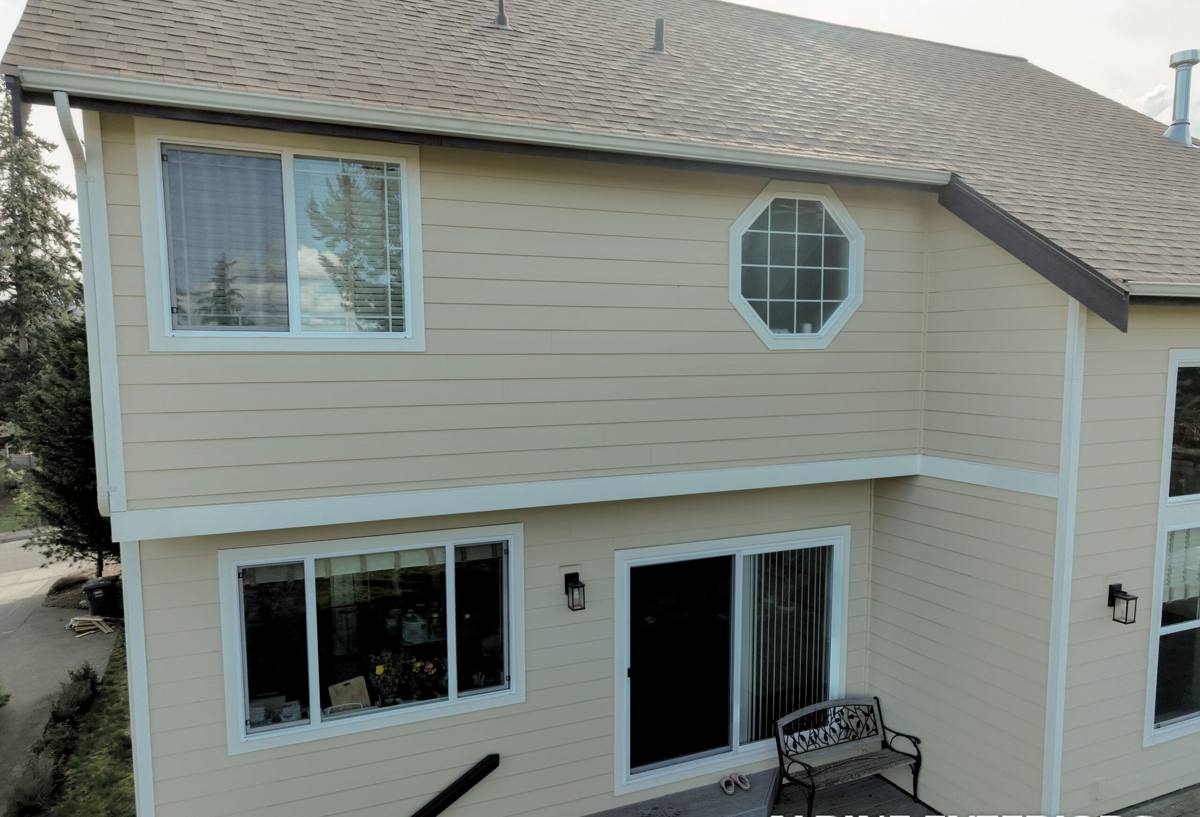
What Whatcom County Weather Does to Siding Over Time
Salt Air and Corrosion
Even a few miles from open water, airborne salt accelerates corrosion on fasteners, flashing, and any metal trim components. It also breaks down some paint and coating systems faster than manufacturers' inland test data would suggest. Siding material and hardware selection both matter more here than they would in a drier, inland Washington town.
Driving Rain and Wind-Driven Moisture
Ferndale's storms frequently come with real wind behind them, which pushes rain up and under laps, trim, and penetrations rather than letting it simply run down the face of the wall. That's a water-management problem as much as a material problem — house wrap, flashing, and lap installation all have to be done correctly or the best siding on the market will still let water in.
Moss, Algae, and Prolonged Dampness
Long wet seasons with limited direct sun on shaded elevations create ideal conditions for moss and algae growth. On absorbent or poorly finished siding, that growth holds moisture against the surface for weeks at a time, which is exactly the condition that rots wood-based products and delaminates poor-quality composites.
Signs a Ferndale Home Needs Siding Replacement, Not a Patch
- Soft or spongy spots when you press on the siding, especially near the bottom courses and around windows
- Persistent moss or algae staining that comes back within weeks of cleaning
- Paint that's blistering, peeling, or chalking heavily on north- or west-facing walls
- Visible gaps, warping, or buckling in panels or lap boards
- Rising heating bills with no other explanation — often a sign of failed insulation or air gaps behind the siding
- Rust streaking from fasteners or trim, a common early warning in coastal-influenced air
- Caulk and trim joints that keep failing no matter how often they're redone
If you're seeing two or more of these, it's usually cheaper long-term to replace the wall system properly than to keep chasing individual repairs.
Why We Only Install James Hardie in Ferndale
We standardized on James Hardie fiber cement for every home we side, and in a climate like Ferndale's the reasoning is straightforward. Hardie's HZ5 product line is engineered specifically for the wetter, harsher climate zones the Pacific Northwest falls into — it's formulated to resist moisture-related damage better than the standard HZ10 line built for milder regions. That's not a marketing detail; it's the specific product decision that matters most for a wall that faces salt air and months of dampness.
Fiber cement itself is non-combustible and doesn't feed on moisture the way wood-based siding does. It won't rot, and it doesn't provide the organic material that moss and algae use to establish themselves the way some wood and engineered-wood products do. The factory-applied ColorPlus finish is baked on under controlled conditions and backed by its own finish warranty, which matters in an area where field-applied paint has to fight salt air and UV on top of normal wear.
We don't install LP SmartSide, vinyl, Cemplank, Allura, primed spruce, or cedar. Each of those has a legitimate place in the market and reasonable people choose them for good reasons — cost, appearance preference, or a specific look a homeowner wants. But we've made a professional decision to put one product on the homes we're responsible for, and in Whatcom County's climate specifically, Hardie's engineered-for-the-region line and factory finish are the difference-makers we're not willing to trade away.
What a Correct Siding Replacement Involves
Tear-Off and Wall Inspection
Old siding comes off down to the sheathing so we can actually see what's underneath. This is the step that catches hidden rot, failed house wrap, or framing damage before it's covered up again — problems that are invisible from the outside but that will keep causing trouble if they're sided over instead of fixed.
Water-Resistive Barrier and Flashing
Given how much wind-driven rain this area sees, the house wrap and flashing details around windows, doors, and penetrations are where a lot of future leaks are prevented or created. Proper lapping, taping, and flashing integration matter as much as the siding itself.
Fastening and Hardware
We use fasteners and trim hardware suited to a coastal-influenced climate rather than whatever is cheapest, since corrosion-resistant hardware is one of the areas where cutting corners shows up years later as rust streaking and loosened boards.
Installation to Manufacturer Spec
James Hardie's warranty is tied to correct installation — proper clearances, fastening patterns, and caulking. An installer who doesn't follow spec can void the coverage a homeowner is counting on, which is part of why experience with this specific product matters as much as general carpentry skill.
Finish and Detail Work
Trim, corners, and joints get finished so water sheds away from the wall rather than pooling or wicking in — the detail work that separates a job that looks good on install day from one that still looks good in year ten.
Our Process for Ferndale Homeowners
- Free on-site estimate — we walk the exterior, look at problem areas, and talk through what's actually going on with your current siding
- Written scope and pricing — a clear breakdown of what's included, so there's no ambiguity about material, labor, and trim work
- Scheduling around weather — we plan tear-off and installation for drier windows where possible, since an open wall shouldn't sit exposed longer than necessary in this climate
- Tear-off and inspection — old siding comes off, sheathing gets checked, and we flag anything unexpected before moving forward
- Barrier, flashing, and installation — done to manufacturer spec so the Hardie warranty stays intact
- Final walkthrough — we go over the finished work with you before calling the job done
Cost Factors for a Ferndale Siding Replacement
Every home is different, but the same variables tend to drive price up or down on jobs in this area:
| Factor | Why It Matters Locally |
|---|---|
| Extent of hidden damage | Long-term moisture exposure common in this climate sometimes means sheathing or framing repair is needed once old siding comes off |
| Home size and wall complexity | More corners, gables, and trim detail means more labor and material |
| Siding profile chosen | Hardie offers lap, shingle, and panel profiles at different price points |
| Trim and accessory scope | Fascia, soffit, and trim replacement alongside siding affects total cost |
| Access and site conditions | Sloped lots, tight setbacks, or landscaping can add labor time |
| Color and finish selection | Factory ColorPlus finishes vs. field-painted options have different upfront costs |
We give real numbers during the on-site estimate rather than a rough phone quote, since so much depends on what's actually happening behind the old siding.
Why Hiring a Crew That Already Works Ferndale Matters
A crew that's replaced siding elsewhere in Washington but hasn't worked this specific coastal-influenced corner of Whatcom County can miss things that matter here — under-flashing details that hold up against wind-driven rain, fastener choices that resist salt air corrosion, and realistic scheduling around a moss season that runs longer than it does even twenty miles inland. Local experience isn't a slogan; it shows up in the small decisions made on-site that a homeowner never sees but will benefit from for the next twenty or thirty years.
We also know what "normal" wear looks like on a Ferndale home versus what's actually a sign of deeper trouble, which matters when we're giving you an honest read on whether repair or full replacement is the right call.
Maintaining Hardie Siding in a Wet, Salt-Influenced Climate
Fiber cement is low-maintenance compared to wood, but "low-maintenance" isn't "no-maintenance," especially here. A rinse-down once or twice a year knocks back the moss and algae that this climate encourages before it gets established. Keeping gutters clear and downspouts directed away from the wall reduces the amount of water siding has to shed in the first place. And checking caulking at trim joints every couple of years catches small failures before they turn into moisture intrusion. None of this is heavy work, but skipping it in a climate this wet shortens the life of any siding, Hardie included.
If your Ferndale home is showing signs of wear from years of salt air, driving rain, and moss, we're happy to take a look. The estimate is free, there's no pressure, and you'll get a straight answer about whether you're looking at repair or replacement.