 Sudden Valley Siding
 South Hill Windows Work Harder Than People Realize
South Hill sits close enough to the water and the surrounding tree cover that its homes take a specific kind of weather beating — one that's different from what you'd deal with on the drier east side of Whatcom County. Salt-tinged air off the lake and nearby marine influence, long stretches of driving rain, and a moss season that can run most of the year all work against window frames, seals, and glazing over time. Windows that were fine ten or fifteen years ago are often the weak point in a South Hill home's energy bill and comfort level today, even if nothing looks obviously broken.
We work on homes in this specific pocket of Sudden Valley regularly, which matters more than it sounds like. A window that performs well in a dry inland climate can underperform here simply because it wasn't detailed for constant moisture exposure. Getting this right is less about buying an expensive window and more about matching the product and the installation to what South Hill actually throws at a house.
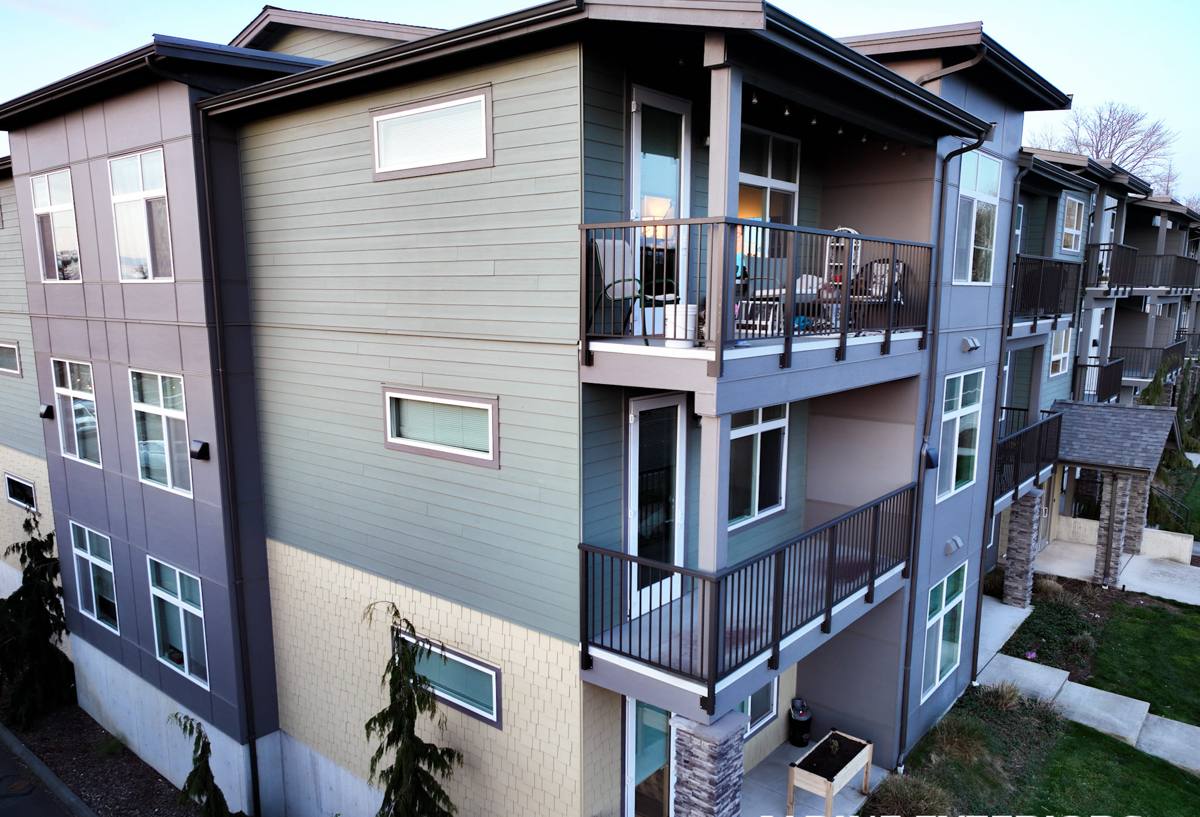
What the Local Climate Actually Does to Windows
Three things drive most of the window problems we see on South Hill homes:
Salt Air and Moisture
Homes closer to the lake and open air get a steady low-level exposure to salt-laden moisture. Over years, this accelerates corrosion on hardware, hinges, and metal components, and it can degrade certain sealants and finishes faster than manufacturers' standard warranty testing accounts for. It's not dramatic — it's slow, cumulative wear that shows up as sticking sashes, pitted hardware, or seals that fail earlier than expected.
Driving, Wind-Driven Rain
Rain here doesn't just fall — it gets pushed sideways against west- and south-facing walls during storms. Windows depend on correct flashing and weatherproofing details, not just a good caulk bead, to keep that kind of rain out. A window that's watertight in a light, vertical rain can still leak under sustained wind-driven conditions if the flashing wasn't installed correctly.
Moss and Prolonged Dampness
Whatcom County's long damp season means anything that stays wet — window sills, bottom frame tracks, the trim around a window — has extended time to grow moss, algae, and mildew rather than drying out between rains. On older wood-frame windows especially, this contributes to rot at the sill and lower corners long before the glass itself fails.
What "Energy-Efficient" Actually Means for This Climate
The term gets used loosely, so it's worth being specific. An energy-efficient window for a South Hill home needs to perform on three fronts at once: thermal performance, air sealing, and moisture management. A window can score well on paper for insulation and still perform poorly here if it's not detailed to shed water and resist the salt-moist air.
U-Factor and Glass Package
U-factor measures how well a window resists heat loss — lower is better, and it's the number most directly tied to your heating bill in a climate with as many cool, wet months as ours. Most well-built replacement windows sold today use double or triple glazing with a low-E coating and an inert gas fill (usually argon) between the panes. For this region, we generally steer homeowners toward glass packages built for cooler, wetter climates rather than ones optimized primarily for hot, dry regions.
Frame Material
Frame choice matters as much as the glass. Vinyl, fiberglass, aluminum, and wood-clad frames all handle moisture and salt air differently, and each comes with real trade-offs rather than one obvious "best" answer — see the comparison below.
Air Sealing
A window with excellent glass but a poor installation will still leak air and, eventually, water. This is the part that's easiest to get wrong and hardest for a homeowner to evaluate just by looking at the finished window — it's almost entirely in the installation detailing, covered further down.
Signs Your South Hill Home's Windows Are Underperforming
You don't need visible cracked glass to have a window problem. Common signs we see on South Hill service calls:
- Condensation forming between the panes (a sign the seal has failed, not a cleaning issue)
- Noticeable draft or cold spot near the window frame on windy days
- Sashes that stick, won't stay open, or are hard to lock — often hardware corrosion or frame swelling
- Visible moss, black mildew streaks, or soft/spongy wood at the sill or lower corners
- Paint or finish peeling on the interior trim near the window, which usually points to trapped moisture
- A noticeably higher heating bill in a room with older windows compared to similar rooms
- Outside noise (traffic, wind, rain) that seems louder through one window than others of a similar size
Any one of these on its own isn't necessarily urgent. Several of them together, especially combined with a window's age, is usually a sign it's time for a real evaluation rather than another round of caulk and paint.
What a Correct Installation Actually Involves
The window itself is maybe half the job. The other half — the part that determines whether it stays watertight through years of South Hill storms — is the installation detailing.
Removal Without Damage
Old windows, especially wood-framed ones with years of moisture exposure, need to come out carefully to avoid damaging the surrounding wall framing and sheathing. This is also the point where hidden rot or past water damage gets discovered — better to find it now than to seal a new window over a problem that's still there.
Flashing and Weatherproofing
This is the step that matters most for wind-driven rain resistance. Proper flashing tape and sill pan details route any water that does get past the window down and out, rather than letting it sit against the framing. This is invisible once the job is done, which is exactly why it's worth asking about — it's the difference between a window that stays dry for twenty years and one that leaks quietly into the wall cavity for five.
Air Sealing and Insulation
The gap between the window frame and the rough opening needs to be sealed and insulated correctly — not overpacked with expanding foam, which can bow the frame and affect operation, and not left with gaps that undercut the window's rated performance.
Trim and Finish
Exterior trim needs to be sealed and finished in a way that sheds water rather than trapping it, particularly at the sill and corners where moss and rot tend to start.
Comparing Window Frame Options for South Hill's Climate
| Frame Material | How It Handles Salt Air & Moisture | Maintenance | General Cost Factor |
|---|---|---|---|
| Vinyl | Doesn't corrode or rot; performs consistently in damp, salty air | Low — occasional cleaning | Lower to mid-range |
| Fiberglass | Very stable dimensionally; excellent resistance to moisture and salt exposure | Low | Mid to higher |
| Aluminum | Won't rot, but is more prone to corrosion and condensation without a good thermal break | Low to moderate | Mid-range |
| Wood-Clad | Attractive, but the clad exterior must be detailed carefully — any breach exposes wood beneath to our long wet season | Higher — needs monitoring at joints and sills | Higher |
We're generally cautious about recommending unclad wood exteriors or products with a lot of exposed, uncladded wood detailing for South Hill homes specifically because of how long moss and dampness linger here. That's not a knock on wood windows as a product — it's about matching material to climate, and this is a climate that punishes anything with an ongoing maintenance requirement people don't stay on top of.
Our Process, Start to Finish
- On-site assessment — we look at your current windows, frame condition, and any signs of past water intrusion before recommending anything.
- Product recommendation — based on your home's exposure (how much wind-driven rain and salt air it actually sees), budget, and how the windows need to look and operate.
- Honest quote — a written estimate that spells out materials and scope, with no pressure to decide on the spot.
- Careful removal — old windows come out without damaging surrounding siding or framing, and we flag anything unexpected we find.
- Flashing, sealing, and installation — the weatherproofing details that actually determine long-term performance.
- Finish and cleanup — trim work, exterior sealing, and a clean job site when we're done.
- Walkthrough — we go over operation and care with you before we consider the job finished.
Why a Crew That Already Works South Hill Matters
A lot of window problems on South Hill homes come from installation work that was done correctly for a different climate. Contractors who don't regularly work this specific area sometimes underestimate how much wind-driven rain and sustained dampness a window here has to handle, and the flashing and sealing details reflect that. We work in Sudden Valley and the surrounding Whatcom County area routinely, so we're not guessing about how a given product or detail holds up here — we've seen it, and we've gone back to homes years later to see what actually lasted.
That local familiarity also means a more accurate first estimate. We know what typical framing and siding conditions look like on homes in this area, which cuts down on surprises once a window comes out.
Caring for New Windows Through Moss Season
Even a well-installed, high-quality window benefits from a little basic upkeep in this climate:
- Rinse sills and tracks periodically to keep moss and organic buildup from taking hold
- Check exterior caulking annually, especially after a hard winter, and touch up any cracked or separated beads
- Keep gutters and downspouts clear so runoff isn't sheeting down across window heads
- Trim back vegetation that keeps a window shaded and damp longer than the rest of the house
- Operate locking hardware occasionally in the off-season so it doesn't seize up from disuse and moisture
None of this is complicated, but it's the kind of low-effort maintenance that meaningfully extends the life of a window investment in a climate that doesn't give surfaces much chance to dry out.
Get a Straight Answer About Your Windows
If you're not sure whether your South Hill home's windows need attention or just a look, we're happy to come take a look and give you an honest read — no pressure, no upsell. Use the form below to request a free estimate, and we'll walk the property with you and talk through what actually makes sense for your home.