 Sudden Valley Siding
 South Hill's Climate Puts Real Demands on Exterior Siding
South Hill sits in the kind of terrain that looks peaceful most of the year and then reminds you exactly why exterior materials matter every time a Pacific storm system rolls through Whatcom County. Between the tree cover, the elevation changes, and the moisture that moves in off the water, homes here deal with a longer wet season than most of the country ever sees. Add in salt-tinged marine air drifting through the region and driving rain that doesn't just fall straight down but gets pushed sideways into wall assemblies, and you have a climate that is genuinely hard on siding.
The most visible symptom is moss. Whatcom County's long, cool, damp stretches from fall through spring give moss and algae months to establish themselves on north-facing and shaded walls, especially where tree canopy blocks sun and airflow. Siding that can't shed water quickly, or that absorbs moisture into its surface, gives moss and mildew exactly the foothold they need. Over years, that combination of standing moisture and biological growth is what separates siding that still looks sharp at year fifteen from siding that's already showing rot, staining, or paint failure.
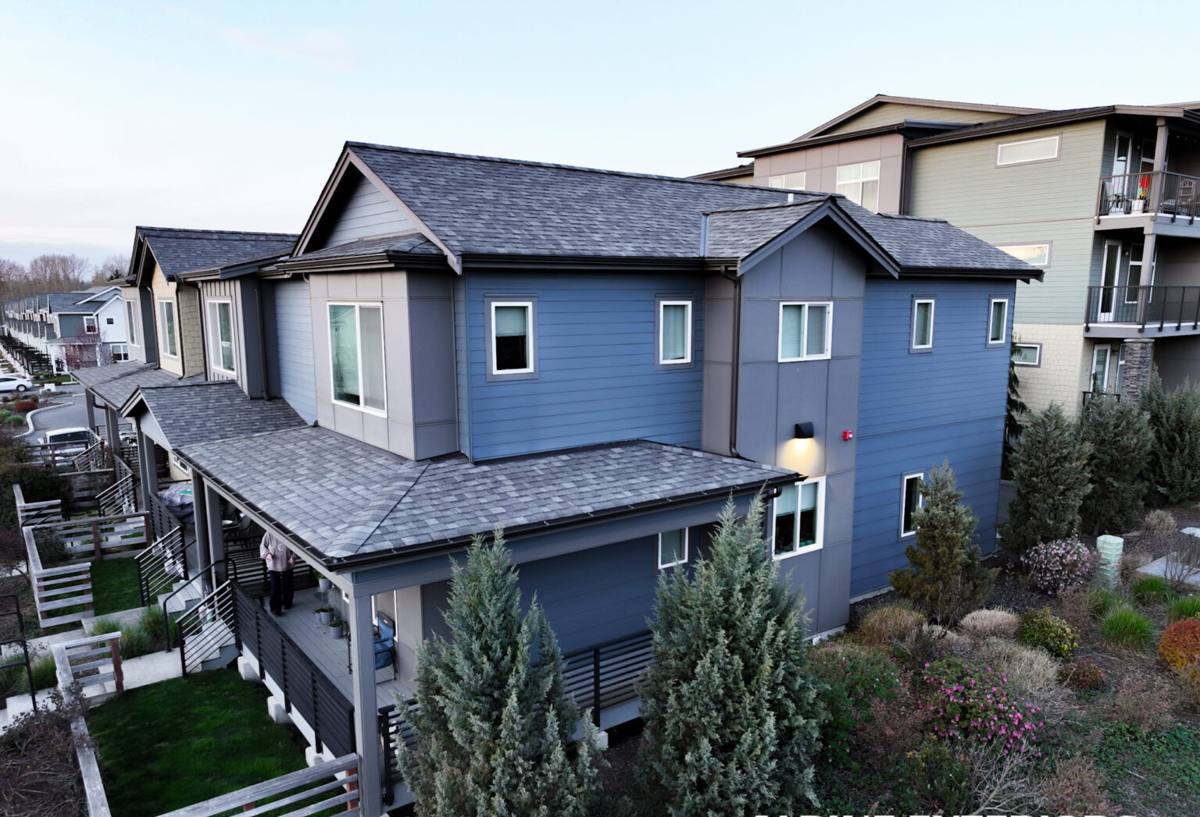
Why James Hardie Fiber Cement Is Built for This Environment
James Hardie siding is made from cement, sand, and cellulose fiber pressed and cured into a dense, stable board. That composition matters here for a simple reason: it does not rot, it does not swell when it gets wet, and it will not feed mold or wood-boring insects the way wood-based products can. In a climate where siding spends a good chunk of the year damp, that's not a marketing point, it's the actual difference between a wall assembly that dries out between storms and one that stays wet long enough to start breaking down.
The factory-applied ColorPlus finish is baked on under controlled conditions rather than brushed or sprayed on site, which gives it better adhesion and UV resistance than field-applied paint. That matters in a region where a poor paint bond shows up fast as peeling and chalking, particularly on walls that take direct driving rain.
HZ10 vs. Standard Climate Formulations
James Hardie engineers its products in different formulations for different climate zones, and the Pacific Northwest falls into the wetter, more moisture-exposed category. The HZ10 formulation is built specifically for regions that see prolonged dampness and higher humidity, with adjustments aimed at resisting moisture-related issues over the long term compared to a formulation meant for a drier climate. For a South Hill home dealing with a genuine moss season, installing the product line actually engineered for that exposure, rather than a generic version, is part of doing the job right.
What a Correct Installation Involves on a South Hill Home
Fiber cement siding performs the way it's supposed to only when it goes on correctly. Hardie's own installation specifications are detailed for a reason, and in a wet climate, skipping steps shows up faster than it would somewhere dry.
Moisture Management Behind the Siding
A weather-resistive barrier goes on the sheathing before any siding, with all penetrations, windows, and doors properly flashed so water is directed out and away rather than trapped behind the cladding. Kick-out flashing where a roofline meets a wall is a small detail that gets missed constantly and causes serious hidden damage over time when it is. In a climate with as much sustained rain as this one, a drainage gap or rainscreen approach behind the siding gives any moisture that does get past the surface a path to dry out instead of sitting against the sheathing.
Fastening and Clearances
Boards need the correct nailing pattern, blind-nailed where the installation allows, with fasteners set to Hardie's specified depth so the board isn't over-driven or left loose. Siding needs proper clearance from grade, typically a minimum of several inches, and clearance from roofs, decks, and patios so water and debris don't sit against the bottom edge of the board. Butt joints need the gap and treatment Hardie specifies, not just tight-butted and caulked, or you're setting up a spot for water to collect.
Finish Work and Sealant
Factory-finished ColorPlus boards need far less field caulking and touch-up than field-painted products, which is a real advantage, but the caulking that is required, at trim joints and penetrations, has to be done with the right sealant and the right joints left open to let the assembly breathe rather than trapping moisture behind a sealed surface.
Our Process for South Hill Projects
We walk every project the same way, whether it's a small section repair or a full re-side.
- On-site assessment of the existing siding, trim, and flashing condition, including a look for any moisture already trapped behind the wall
- Removal of old siding and inspection of the sheathing underneath, addressing any rot or damage found before anything new goes on
- Installation of a weather-resistive barrier and correct flashing at every window, door, and penetration
- Installation of James Hardie boards to manufacturer clearance, fastening, and joint specifications
- Trim, corner, and caulking work finished to spec
- Full site cleanup and a walkthrough so you know exactly what was done and why
James Hardie Compared to Other Siding Materials
Homeowners comparing options deserve a straight answer on trade-offs, not a sales pitch. Here's how the major categories stack up on the factors that actually matter in a climate like this one.
| Material | Moisture Behavior | Maintenance | Typical Lifespan | Fire Resistance |
|---|---|---|---|---|
| James Hardie fiber cement | Does not absorb or swell; resists moss/rot when installed correctly | Occasional wash; factory finish reduces repainting | Decades with correct install and upkeep | Non-combustible |
| Vinyl | Doesn't rot, but can warp or crack in temperature swings; seams can allow water intrusion behind panels | Low, but limited repair options once faded or cracked | Moderate, shorter in harsh climates | Combustible, can melt/deform |
| Cedar / wood | Absorbs moisture; prone to rot and moss growth without diligent, frequent maintenance | High — regular staining, sealing, and inspection required | Shorter without consistent upkeep | Combustible |
| LP SmartSide / engineered wood | Better than raw wood but still wood-based; edge and cut-end sealing is critical in wet climates | Moderate to high, ongoing sealant vigilance | Moderate, dependent on installation quality | Combustible |
This is why we standardized on one product. Vinyl's seams and thermal movement, wood's ongoing maintenance burden in a climate this wet, and engineered wood's sensitivity to cut-edge sealing are all real, manageable trade-offs for some homeowners, but they're not trade-offs we're willing to build a South Hill installation around. Fiber cement's stability and moisture behavior fit this specific climate better than any of the alternatives, and that's the professional standard we hold to.
A Maintenance Checklist for South Hill Homeowners
Even the right siding needs basic upkeep in a climate this wet. A few habits go a long way toward keeping moss and moisture from becoming a problem.
- Rinse siding, especially shaded and north-facing walls, once or twice a year to keep moss and algae from establishing
- Keep gutters and downspouts clear so water is directed away from walls instead of overflowing onto siding
- Trim back vegetation and tree branches that block airflow or hold moisture against the wall
- Check caulking at trim, windows, and joints annually and have any cracked or missing sealant addressed promptly
- Watch for discoloration or soft spots at the base of walls near grade, which can signal a drainage or clearance issue
- Have flashing at roof-wall intersections inspected periodically, since failures there are often hidden until damage is advanced
Why a Local Crew That Already Works South Hill Matters
Installing siding correctly in this climate isn't just about following a spec sheet, it's about knowing how South Hill's specific mix of tree cover, moisture, and exposure plays out on real walls. A crew that already works this area has seen where moss tends to establish first, which wall orientations take the worst of the driving rain, and what drainage details actually hold up here versus on paper. That local familiarity also means we're available for warranty questions or a callback without a long drive, and we understand the permitting and inspection expectations in Whatcom County because we work in it regularly, not occasionally.
If you're weighing a siding replacement or repair on a South Hill home, we're happy to take a look and give you a straight, no-pressure estimate. There's no obligation, just an honest read on what your home needs. You can request one using the form below.