 Sudden Valley Siding
 Metal Roofing Built for South Hill's Conditions
Homes on South Hill sit up where the weather has fewer obstacles to work around. Wind moves across an elevated, more exposed roofline with less tree and terrain buffering than a roof tucked lower in a valley or surrounded by dense cover. Add in the salt-tinged air that moves through this part of Whatcom County, rain that gets driven sideways rather than falling straight down during the wetter months, and a moss season that runs long on shaded or north-facing slopes, and you've got a specific set of stresses that a roof has to be built to handle — not just a generic roof dropped onto a generic house.
Metal roofing holds up well against that combination when it's specified and installed correctly. It doesn't hold up well when it's treated as a simple material swap on top of a roof deck and flashing plan designed for asphalt shingles. This page covers what a correct metal roof install looks like for a South Hill home specifically, what actually drives cost and long-term performance, and how we run the job from first walk-through to final cleanup.
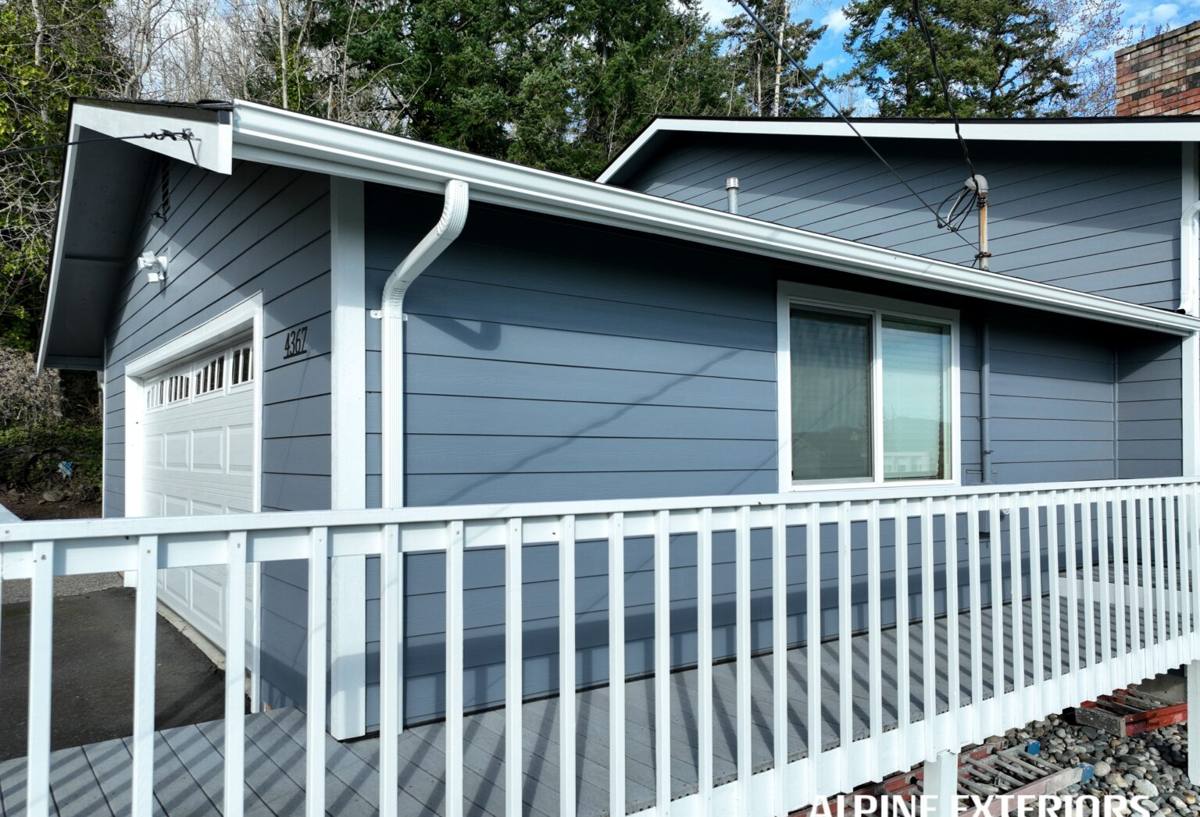
Why Metal Roofing Makes Sense on South Hill's Elevated Lots
Metal roofing has a real, practical fit for the conditions homes up here tend to face. It isn't the right material for every home or every budget, but where it fits, the reasons are concrete rather than cosmetic.
Wind Exposure
A roof plane with fewer trees and structures around it to break the wind takes a more direct hit during storms. Properly fastened metal panels, especially standing seam systems with concealed clips, are rated to resist uplift far better than shingles on the same exposed roof. That matters more on an elevated, open lot than it does on a roof sheltered on all sides.
Moss and Moisture on Shaded Slopes
Whatcom County's damp season gives moss plenty of time to establish itself on any roof surface that holds moisture, and north-facing or tree-shaded planes are the usual offenders. Metal sheds water fast and gives moss spores a much harder surface to take hold on compared to the granular texture of asphalt shingles, which cuts down on the buildup that eventually works its way under shingle edges and into fastener penetrations.
Driving Rain and Long-Term Water Management
When rain is being pushed sideways and forced upward under roofing material rather than simply running off, the seams and laps in the roofing system matter as much as the material itself. A correctly installed metal roof, with the right panel overlap and sealed seams, sheds that kind of wind-driven water more reliably over the long run than a roof surface built from smaller overlapping units with more total seam length.
What a Correct Metal Roof Install Actually Involves
Metal roofing rewards a careful install and punishes a rushed one more than almost any other roofing material. Get the underlying system wrong and the metal itself won't save the roof from leaking.
Deck Inspection and Prep
Before any metal goes down, the deck underneath needs to be sound — no rot, no soft spots, no lingering moisture damage from whatever was on the roof before. Panels are unforgiving of an uneven or compromised substrate; problems that would go unnoticed under shingles tend to telegraph through a metal surface.
Underlayment
Metal roofing needs a high-temperature-rated synthetic or self-adhered underlayment underneath it, not standard felt. Metal panels get hot in direct sun, and underlayment not rated for that heat can degrade prematurely, right at the moment the roof most needs a reliable secondary water barrier against wind-driven rain.
Panel Type, Gauge, and Fastening
Standing seam panels use concealed clips with no exposed fasteners penetrating the panel field, which removes the most common long-term leak point on a metal roof. Exposed-fastener panels cost less upfront but rely on gasketed screws that compress over time and eventually need re-torquing or replacement — a maintenance item worth understanding before choosing this route on a wind-exposed lot. Panel gauge (thickness) affects both wind resistance and how the roof handles foot traffic and impact without denting.
Flashing at Valleys, Eaves, and Penetrations
Metal roof leaks, when they happen, almost always trace back to flashing rather than the panel field itself. Valleys, chimney and vent penetrations, and the eave and rake edges all need flashing details built specifically for metal — proper overlap, correct sealant type, and hardware compatible with the panel finish so dissimilar metals aren't reacting against each other over time.
Ventilation
Balanced intake and exhaust ventilation under a metal roof keeps the underside of the deck dry, which matters just as much on a metal roof as it does under shingles. Trapped moisture doesn't show up as moss on the outside, but it can quietly rot the deck and framing underneath while the metal surface looks fine from the ground.
Comparing Metal Roofing Panel Types for a South Hill Home
| Panel Type | Fastener Style | Fit for South Hill Conditions |
|---|---|---|
| Standing Seam | Concealed clips, no panel-face penetrations | Best wind and water performance for exposed, elevated lots; higher upfront cost |
| Exposed-Fastener Panels | Gasketed screws through the panel face | Lower upfront cost, but fastener seals need periodic inspection and eventual maintenance |
| Stone-Coated Steel | Concealed or exposed depending on system | Shingle-like appearance with metal's durability; heavier system, worth discussing for specific home styles |
For most South Hill homes sitting on open or wind-exposed lots, standing seam is the system we recommend first, specifically because it removes the exposed-fastener maintenance question entirely. Where budget is the deciding factor, exposed-fastener panels can still be a sound choice as long as the homeowner understands the long-term inspection and maintenance that comes with them.
Cost Factors Worth Understanding
Metal roofing bids can vary widely for what looks, on paper, like the same job. Most of that gap comes down to real differences in scope, not padding on one side or the other.
| Factor | What It Affects |
|---|---|
| Panel system (standing seam vs. exposed-fastener) | Upfront cost and long-term maintenance requirements |
| Panel gauge | Wind resistance, dent resistance, and expected lifespan |
| Underlayment grade | Secondary water protection against wind-driven rain |
| Flashing scope | How thoroughly valleys, penetrations, and edges are addressed |
| Paint/coating system | Fade resistance, chalking resistance, and finish warranty length |
| Roof pitch, height, and access | Labor time, staging, and safety requirements on elevated lots |
An itemized estimate that breaks out panel system, underlayment, and flashing scope separately tells you far more than a single bottom-line number. If a bid just says "metal roof installed" without specifying the system, ask for that detail before comparing it against anything else.
How Our Process Works
We run every metal roofing job the same structured way, because a roof this significant on your home deserves a clear process, not guesswork.
- In-person inspection: We get on the roof and into the attic ourselves before quoting anything, so the estimate reflects the actual condition of your home.
- Written, itemized estimate: Panel system, gauge, underlayment, flashing scope, and finish are spelled out individually, not bundled into one vague figure.
- Scheduling around weather: We build realistic flexibility into the timeline, since wet-season delays are a normal part of roofing in this part of Washington.
- Deck prep and repair: Any rot or soft spots found in the tear-off get addressed before a single panel goes on.
- Underlayment, flashing, and panel installation: Each layer goes in to manufacturer specification, with particular attention at valleys, penetrations, and edge details.
- Final walkthrough and cleanup: We review the finished roof with you in person and do a full site sweep before calling the job complete.
Signs a South Hill Roof May Need Attention
Whether the existing roof is metal, shingle, or something older, most roofs give warning signs well before a leak actually shows up inside the house. Catching them early is often the difference between a repair and a full replacement.
- Visible rust streaking or corrosion at fastener heads or flashing seams
- Panels or seams that have lifted, loosened, or show separation after a windstorm
- Moss or dark staining building up on shaded or north-facing roof planes
- Water staining on interior ceilings or in the attic, particularly near valleys or penetrations
- Oil-canning (visible waviness) across large flat panel areas, which can point to installation or substrate issues
- Chalking or noticeable fading of the panel finish well ahead of its expected coating life
If any of that sounds familiar, it's worth getting the roof looked at before the next stretch of heavy weather rather than waiting for water to find its way inside.
Why Hiring a Crew That Already Works South Hill Matters
A crew with real, ongoing experience on South Hill roofs has already worked out how wind behaves differently on an exposed hilltop lot than it does lower in Sudden Valley or down in a more sheltered part of Whatcom County. That's the kind of detail that shows up in dozens of small decisions during a metal roof install — which fastening system makes sense for a given exposure, where extra flashing attention pays off, and how to sequence the job around the area's weather patterns.
It also matters after the crew leaves. A workmanship warranty is only worth as much as the company standing behind it years down the road. A contractor with an established, ongoing presence in this area is one you can actually reach if a question comes up later, rather than a name that's moved on to a different market.
A Practical Checklist Before You Choose a Metal Roofing Contractor
- Does the estimate specify the panel system (standing seam vs. exposed-fastener), not just "metal roof"?
- Is panel gauge and underlayment type written into the bid, not left vague?
- Is flashing work at valleys, penetrations, and edges explicitly scoped out?
- Do they carry current WA contractor licensing, liability insurance, and workers' compensation?
- Can they point to recent, real metal roofing work in or near South Hill and Sudden Valley?
- Does the bid clearly separate the manufacturer's material/finish warranty from the contractor's own workmanship warranty?
Maintenance and What to Expect Long-Term
One advantage of metal roofing on an exposed South Hill lot is how little routine maintenance it needs compared to other materials, but "low-maintenance" isn't the same as "no-maintenance." Fastener seals on exposed-fastener systems benefit from a periodic visual check, especially after severe wind events. Gutters and valleys still need to stay clear of needles and debris so water keeps moving the way the system is designed to move it. And while metal sheds moss far better than shingles, homes with heavy tree cover overhead should still expect occasional debris cleanup on shaded roof planes. None of this is a large time commitment, but setting the right expectation upfront avoids surprises later.
If you'd like an honest, no-pressure look at your South Hill roof and a written estimate you can compare against anything else you've received, we're glad to come take a look. Use the form below to request a free estimate.