 Sudden Valley Siding
 South Hill's Exposure Is Not the Same as a Sheltered Lot
Homes on South Hill sit higher and more exposed than a lot tucked into the trees down closer to the water. That elevation is part of what makes the setting appealing, but it also means more direct contact with wind-driven rain, more sun-to-shade cycling as clouds move through, and more of the moist, salt-tinged marine air that rolls in off the Sound and settles into Whatcom County for much of the year. Siding on an exposed hillside home earns its keep every single season, and it shows the difference between a correct installation and a rushed one much faster than siding on a sheltered lot ever will.
We've installed and repaired siding across Sudden Valley long enough to know that South Hill homes tend to fail in predictable places: north- and west-facing walls that stay damp longest, lower courses near grade that catch splashback, and inside corners where wind pushes rain sideways instead of letting it run straight down. A good installer treats those spots differently than the rest of the wall. A crew that's never worked the neighborhood usually doesn't know to.
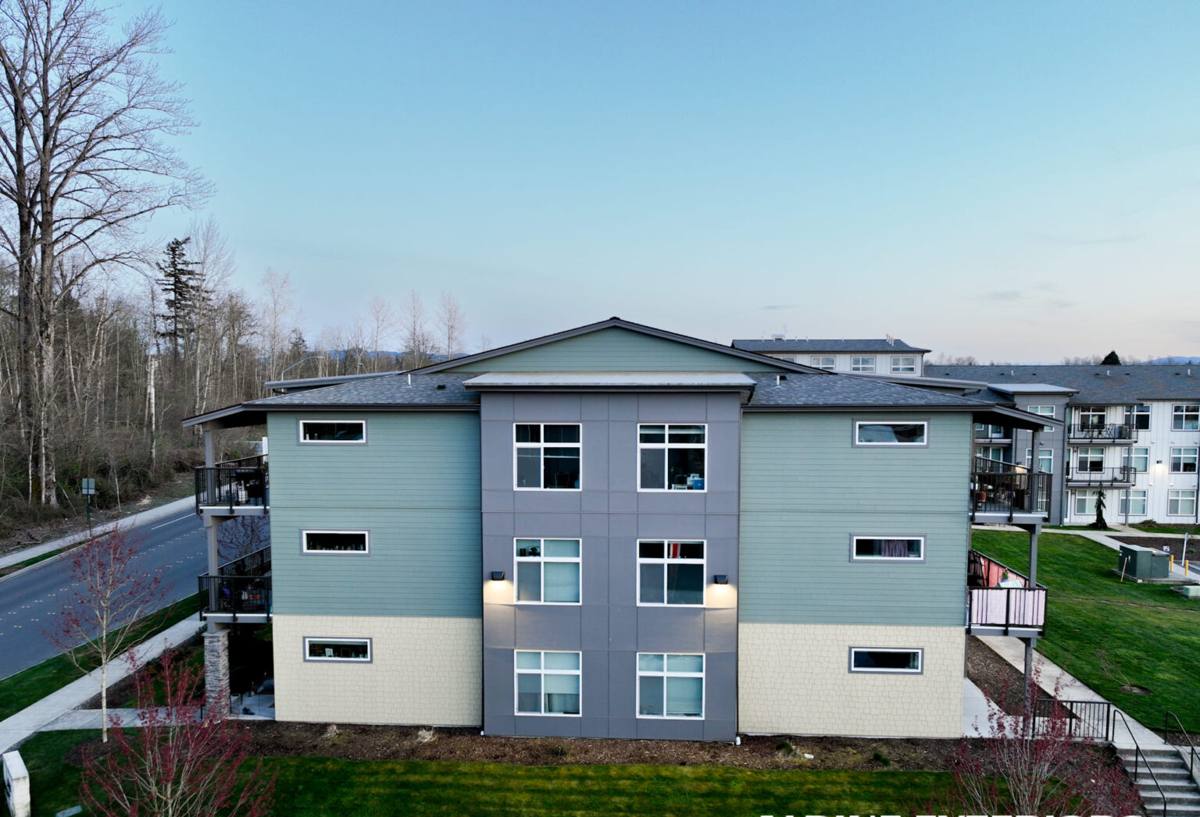
What "Correct" Siding Installation Actually Means Here
Siding installation isn't just cutting boards to length and nailing them to the wall. On a South Hill home, the parts nobody sees after the job is done are the parts that determine whether it lasts fifteen years or fifty. That includes:
- A drainage plane behind the siding — a weather-resistive barrier (and, where the wall assembly calls for it, a rainscreen gap) so any moisture that gets past the cladding has somewhere to go besides your sheathing.
- Proper flashing at every penetration — windows, doors, hose bibs, light fixtures, and deck ledgers all need step flashing, head flashing, or kick-out flashing detailed correctly, not just caulked over.
- Correct fastener pattern and clearance — fiber cement siding has manufacturer-specified nailing zones, and siding installed too close to grade, decks, or roof lines traps moisture against the bottom edge.
- Factory-cut and factory-primed edges wherever possible — every field cut is a place water can wick into the material if it isn't sealed to spec.
- Ventilation behind the cladding — trapped moisture is what turns into rot, mildew, and the black-green streaking that shows up fast on north walls under tree cover.
None of this is unusual or exotic — it's the baseline for a wall assembly that's supposed to hold up in a wet, marine climate. But it only works if every layer is installed in the right order, by someone who isn't skipping steps to save an afternoon.
Moss, Shade, and Siding Longevity
South Hill's tree cover is a mixed blessing. It's part of what makes the setting nice, and it also means more shaded wall area that stays damp longer after a storm passes, which is exactly the environment moss and mildew need to take hold. Moss on siding isn't just cosmetic — sustained moisture against a wall surface, season after season, is what eventually finds its way into seams, fastener holes, and butt joints that weren't sealed correctly. Material choice and detailing both matter here, and it's a big part of why we don't take shortcuts on flashing and joint treatment on shaded elevations.
Material Choice Matters More on an Exposed Hillside Lot
We only install James Hardie fiber cement siding, and on a site like South Hill that's a deliberate choice, not just a brand preference. Fiber cement doesn't absorb water the way wood-based products do, it won't rot, and it's engineered specifically for Pacific Northwest moisture exposure through Hardie's HZ10 product line. Here's how the common options compare on the factors that actually matter for a home in this setting:
| Factor | James Hardie Fiber Cement | Vinyl | Wood / Engineered Wood |
|---|---|---|---|
| Moisture absorption | Very low; won't rot or swell | Doesn't absorb, but seams and J-channels trap water behind it | Absorbs moisture at cut edges and joints; primary failure point |
| Performance under driving rain | Engineered for marine climates (HZ10) | Can warp, crack, or blow off in sustained wind-driven rain | Prone to swelling and cupping with repeated wetting |
| Moss/mildew resistance | Non-organic material; surface can be cleaned without damage | Resistant but can trap moisture against wall behind it | Organic material; more vulnerable to sustained growth |
| Fire resistance | Non-combustible | Combustible; can melt or deform near heat sources | Combustible |
| Finish life | ColorPlus factory finish, warrantied against fade/peel | Color molded in; fades over time, cannot be refinished easily | Field-applied paint; repaint cycle every 5-8 years |
| Typical lifespan when correctly installed | 30-50+ years | 20-30 years | 15-25 years, shorter with poor maintenance |
We're upfront that vinyl and engineered wood products both have real strengths, particularly upfront cost. But on a hillside lot in Sudden Valley that takes the brunt of driving rain and holds shade long after a storm clears, we've seen what those materials cost homeowners in callbacks, repainting, and premature replacement. Fiber cement, installed correctly, is the product we're willing to put our name behind here.
Our Installation Process on a South Hill Job
1. Site and Wall Assessment
Before we quote anything, we walk the exterior and look at sun exposure by elevation, existing moisture damage, roofline and deck intersections, and the condition of the sheathing underneath the current siding. On an older home, this step often tells us more about the scope of the job than the siding itself does.
2. Tear-Off and Sheathing Check
We remove the old siding and inspect the sheathing and framing underneath. Any soft, delaminated, or water-damaged sheathing gets repaired or replaced before anything new goes up — installing new siding over compromised sheathing just hides the problem.
3. Weather-Resistive Barrier and Flashing
We install a new drainage plane and detail flashing at every window, door, and penetration before the first piece of siding goes on. This is the step that determines how the wall handles water for the next several decades, and it's the one that's easiest to rush and hardest to inspect after the fact.
4. Hardie Installation to Manufacturer Spec
Boards, panels, or shingle siding are installed with correct fastener spacing, clearances from grade and roof lines, and factory-sealed cuts, following James Hardie's published installation requirements — which is also what keeps the manufacturer's warranty intact.
5. Trim, Caulking, and Final Detail
Corners, trim boards, and joints are sealed with products rated for the assembly, and we walk the job with the homeowner before calling it finished.
Signs a South Hill Home May Need New Siding
- Persistent moss or dark streaking that returns quickly after cleaning
- Soft spots, bubbling, or visible warping, especially on north- or west-facing walls
- Cracked or missing caulk at joints, corners, and trim
- Paint that's peeling or blistering rather than just fading
- Visible gaps at window and door trim
- A musty smell or drafts near exterior walls, which can point to moisture already behind the siding
- Siding that's original to a home more than 20-25 years old and hasn't been reassessed
Any one of these on its own isn't necessarily an emergency, but several together are worth a professional look before the underlying sheathing is affected.
Why a Crew That Already Works South Hill Is Worth Choosing
Installation quality depends heavily on whether a crew understands the specific conditions of the site, not just the general climate of Whatcom County. A crew that's worked South Hill knows which elevations need extra flashing attention, how tree cover affects drying time on a given wall, and what the wind-driven rain pattern actually does to a hillside home versus a home lower in the valley. That's the kind of judgment that doesn't come from a manufacturer's install guide alone — it comes from having stood on ladders on these specific streets in these specific conditions.
It also means a local crew is easier to reach if a question comes up two years after the job, not just during it.
Maintenance After Installation
James Hardie siding is low-maintenance, not no-maintenance. A rinse-down once or twice a year, particularly on shaded elevations prone to moss, keeps the ColorPlus finish looking right and lets you catch any caulk or trim issues early. Beyond that, correctly installed Hardie siding is designed to go years without needing attention — which is a large part of the appeal for homeowners tired of the repaint cycle that comes with wood siding.
Get a Straight Answer on Your South Hill Home
If you're seeing early signs of wear, dealing with an aging siding job that was never detailed correctly, or just planning ahead for a hillside home that takes more weather than most, we're happy to take a look and give you a straightforward, no-pressure estimate — no upsell, just an honest read on what your home actually needs.