 Sudden Valley Siding
 Why South Hill Homes Ask More of Their Windows
South Hill sits in a part of Whatcom County where weather doesn't take a season off. Homes here deal with damp air coming off the water, wind-driven rain that doesn't just fall but gets pushed sideways into wall assemblies, and long stretches of the year where surfaces barely dry out between storms. Windows are one of the first places that shows up. A window that would hold up fine in a drier climate can start failing here in half the time if it wasn't built, sealed, or installed with this specific environment in mind.
We install and replace windows for homeowners in and around South Hill and greater Sudden Valley, and the patterns we see are consistent: failed seals letting in moisture, frames that have started to soften or discolor, and older single-pane or early double-pane units that were never rated for this kind of sustained exposure. Replacing a window here isn't just a cosmetic upgrade — it's about matching the product and the install to conditions that are genuinely harder on a home than most of the country deals with.
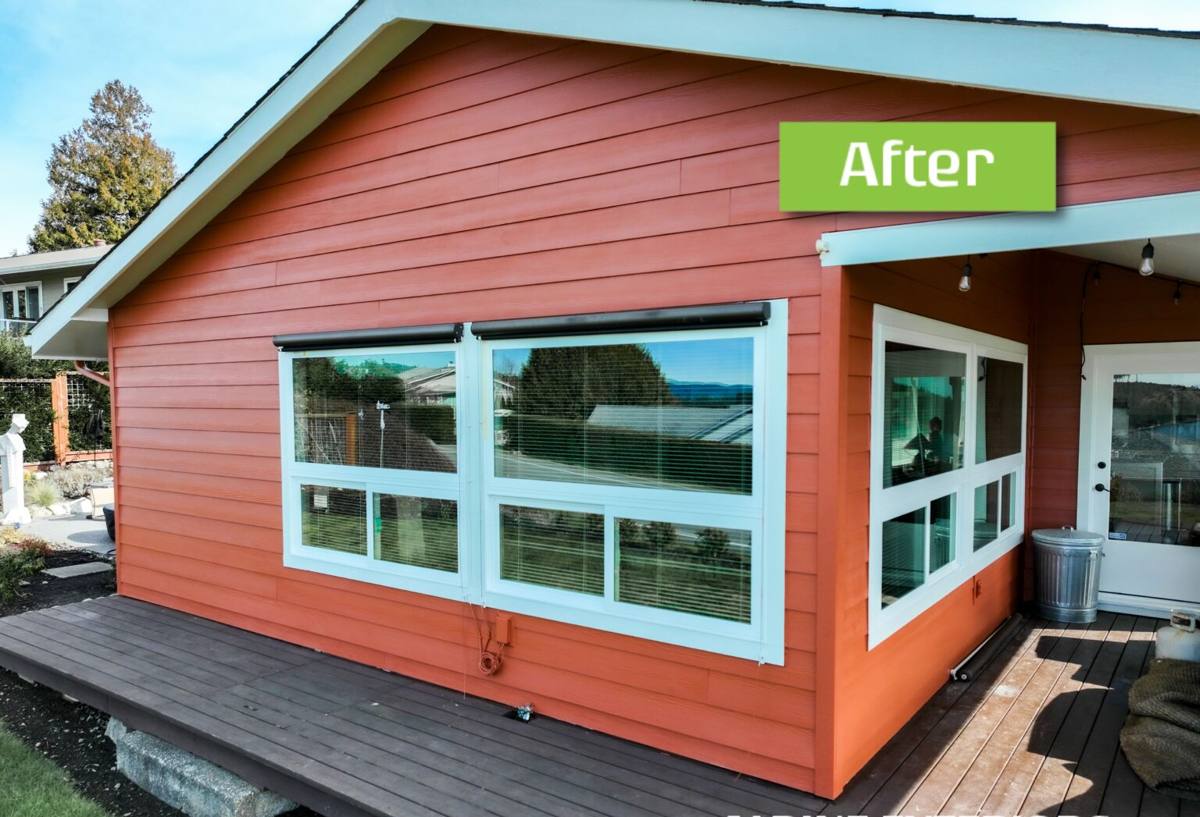
What Salt Air, Driving Rain, and Moss Season Actually Do to a Window
Salt Air
Even at a distance from open saltwater, coastal-influenced air carries fine salt particles that settle on exterior surfaces. Over years, this accelerates corrosion on hardware, hinges, and lesser-grade metal components, and it can degrade certain finishes faster than a manufacturer's warranty assumes. It's a slow process, which is exactly why it gets missed until a window won't latch cleanly or a frame starts pitting.
Driving Rain
Rain that comes in at an angle, pushed by wind off the lake or through the valley, tests a window's flashing and seal in a way that straight-down rain never does. Wind-driven rain finds any gap in the flashing detail, any place where sealant has shrunk or cracked, and any spot where the original install cut a corner. Once water gets behind a window frame, it doesn't just stay at the window — it can travel into the wall cavity and cause damage you won't see until it's already extensive.
Long Moss Season
Western Washington's extended damp season means moisture-loving growth — moss, algae, mildew — gets a long runway on shaded or north-facing exterior surfaces, including window sills, trim, and frames. On wood-framed or wood-clad windows especially, sustained dampness plus organic growth is a slow path to rot. It's rarely dramatic; it's a sill that stays soft a little longer each year until it isn't sound anymore.
Signs It's Time to Replace, Not Just Repair
- Visible fogging or a cloudy haze between panes (failed seal, moisture trapped in the glass unit)
- Frames that feel soft, spongy, or show dark staining at the corners or sill
- Windows that are noticeably harder to open, close, or lock than they used to be
- Drafts or a cold spot near the window even when it's fully closed
- Visible gaps between the frame and siding, or cracked/missing exterior caulk
- Moss or persistent green growth on the sill or lower frame that keeps coming back
- Condensation forming on the inside of the glass regularly, especially in cooler months
What a Correct Window Replacement Job Actually Involves
Swapping in a new window is straightforward. Swapping in a new window correctly, in a climate like this one, is a different job. The window unit itself is maybe half the equation — the other half is everything around it that keeps water out.
The Details That Matter Most Here
A correct install includes proper flashing integration with the existing wall assembly, not just caulk over the gap. It means using a sill pan or equivalent method to direct any water that does get past the exterior back out, rather than letting it pool at the bottom of the frame. It means sealing and insulating the gap between the new window and the rough opening so there's no path for air or moisture to sneak around the unit. And it means finishing with exterior trim and sealant that's actually rated for sustained wet exposure, not a general-purpose product that looks fine on day one and fails by year three.
Skipping any one of these steps doesn't usually show up right away. It shows up two, three, or five winters later as a soft spot in the wall, a stain on the interior trim, or a window that suddenly won't seal the way it used to. That lag is exactly why cutting corners on installation is such a common — and expensive — mistake.
Choosing the Right Window for This Climate
There's no single "best" window material — there's a best fit for the exposure, the home, and the budget. Here's how the common options actually compare for a home dealing with salt air, wind-driven rain, and extended dampness:
| Frame Material | How It Handles This Climate | Maintenance | Typical Trade-Off |
|---|---|---|---|
| Vinyl | Won't rot or corrode; handles moisture and salt air well | Low — occasional cleaning | Fewer color/finish options than wood or fiberglass |
| Fiberglass | Very stable in wet, temperature-swinging conditions; strong seal retention | Low | Higher upfront cost than vinyl |
| Wood (clad exterior) | Good if exterior face is fully clad in vinyl or aluminum; exposed wood struggles long-term in this climate | Moderate to high if any exposed wood | Cladding quality matters more here than almost anywhere else |
| Aluminum | Durable but prone to condensation and heat transfer without a thermal break | Low | Needs a thermal break to perform well in our temperature swings |
For most South Hill homes, we steer people toward vinyl or fiberglass frames specifically because of how consistently they handle sustained damp exposure without the ongoing maintenance that wood-exposed options demand. That's not a knock on wood-look products — it's a maintenance and moisture-behavior call based on what this specific climate does to a window over ten or twenty years.
Glass Packages Worth Considering
Beyond the frame, the glass package affects both comfort and condensation control. In a climate with our humidity and temperature swings, double-pane with a low-E coating is a reasonable baseline, and argon-filled units add a meaningful step up in insulation without a major cost jump. If a room faces prevailing wind and rain — often the west or southwest side of a home here — it's worth discussing impact-resistant or heavier-gauge glass options during your estimate, since that side of the house typically takes the most weather.
Our Process, Start to Finish
- On-site assessment. We look at the actual condition of each window and the wall assembly around it, not just the glass — this is where we catch hidden moisture damage before it becomes a bigger job.
- Honest recommendation. We'll tell you which windows genuinely need replacing now, which can wait, and which just need a repair or reseal. Not every window on a job needs to be new.
- Clear estimate. You get a written scope and price before any work starts, including what's included in flashing, insulation, and trim work — not just the unit cost.
- Proper removal and prep. We check the rough opening and surrounding framing for hidden rot or moisture damage once the old window is out, and address it before anything new goes in.
- Installation to a wet-climate standard. Flashing, sill pan, air sealing, and insulation are done as a full system, not an afterthought.
- Finish and cleanup. Exterior trim, sealant, and site cleanup completed to match the rest of your home's exterior.
Why a Crew That Already Works South Hill Matters
A window replacement crew that mostly works dry-climate jobs will get the basics right and still miss the details that matter here. Knowing to prioritize sill pan flashing on a west-facing window, knowing which sealants actually hold up through a full wet season instead of just looking good at install, and knowing how moss and shade patterns on a specific lot affect a window's long-term exposure — that's knowledge that comes from doing this work repeatedly in Whatcom County conditions, not from a general installation manual.
It also matters for troubleshooting. If a window in this area is failing, there's usually a climate-specific reason — a flashing gap, a shaded sill that never fully dries, a hardware set that wasn't rated for salt air exposure. A crew that's replaced windows across South Hill and Sudden Valley has usually already seen that exact failure pattern on another home nearby, which makes diagnosing and preventing it a lot faster.
What Affects the Cost of a South Hill Window Replacement
| Factor | Why It Matters |
|---|---|
| Frame material | Vinyl is typically the most budget-friendly; fiberglass and clad-wood options cost more upfront |
| Glass package | Low-E coatings, argon fill, and impact-resistant glass each add cost but improve performance |
| Hidden wall or sill damage | Moisture damage found during removal needs to be repaired before the new window goes in |
| Window size and quantity | Larger units and whole-home replacements have different labor and material scaling than single-window swaps |
| Exposure of the specific wall | Wind- and rain-exposed sides sometimes warrant upgraded flashing or glass, which affects price |
Broad ranges vary a lot depending on these factors, which is why we'd rather walk your home and give you real numbers than quote a generic price that doesn't hold up once we see the actual conditions.
Get a Straight Answer for Your Home
If you're noticing drafts, fogged glass, soft spots near a sill, or windows that just don't feel right anymore, it's worth having a local eye on them before it turns into a bigger repair. We offer free, no-pressure estimates for South Hill and Sudden Valley homeowners — you'll get a clear look at what's actually going on with your windows and straight options for fixing it. Fill out the form below to get started.