 Sudden Valley Siding
 Storm Damage Roof Repair Built for Alger's Weather
Homes around Alger and Sudden Valley sit in one of the tougher spots in Whatcom County for a roof to survive. You get wind funneling off the water, driving rain that comes in sideways instead of straight down, and a moss season that runs most of the year. None of that is unusual for this part of Washington, but it means a roof here takes a different kind of beating than a roof forty miles inland, and a repair that doesn't account for that will fail again within a season or two.
This page is specifically about storm damage repair for homes in and around Alger and the greater Sudden Valley area — not a general "we fix roofs" pitch. If a windstorm lifted shingles, rain got behind your flashing, or a branch came down on the roof deck, this is what a correct repair looks like and how we approach it.
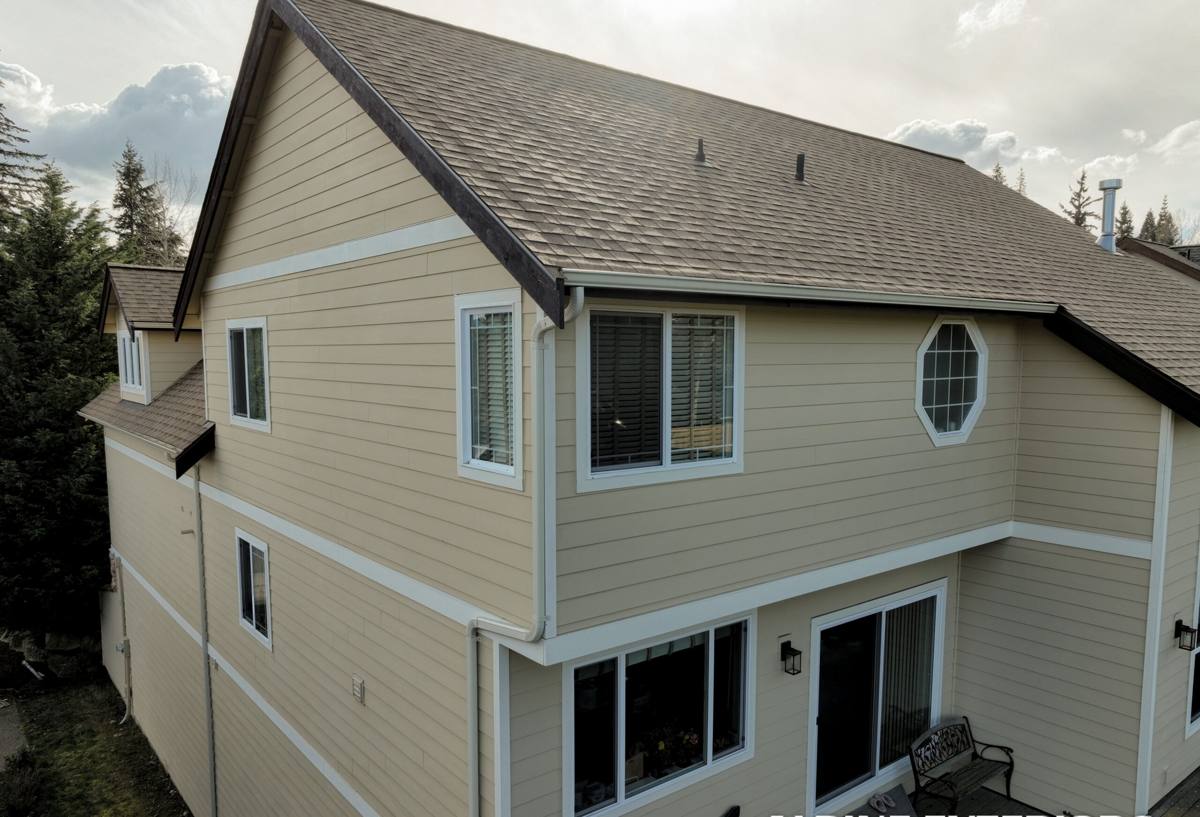
What Local Storms Actually Do to a Roof
Storm damage in this area rarely looks like the dramatic torn-off-the-roof scenario people picture. More often it's quieter and easier to miss, which is exactly why it turns into a bigger problem.
Wind
Gusts off the water and through the tree line don't just rip shingles away — they lift the edges just enough to break the adhesive seal underneath, and then rain gets pushed up under the tab on the next storm. The shingle can look fine from the ground while the seal is already gone.
Driving Rain
When rain comes in at an angle instead of falling straight down, it tests every lap, seam, and flashing point on the roof — places that are never designed to handle water moving sideways. Valleys, chimney flashing, and anywhere two roof planes meet are the usual failure points.
Moss and Standing Moisture
Because the region stays damp for long stretches of the year, moss gets a real foothold on north-facing slopes and shaded sections. Moss holds moisture directly against the shingle surface and works its way under tabs and around fasteners, which softens the roofing material and accelerates rot in the decking underneath it. A storm doesn't have to be severe to finish off a section of roof that moss has already been quietly weakening.
Salt Air
Proximity to the water means metal components — flashing, fasteners, gutter hardware — corrode faster here than they would inland. Corroded flashing is a common hidden cause of leaks that homeowners assume came from a single storm event, when really the storm just exposed a flashing seam that had already been degrading for a while.
Signs You Have Storm Damage Worth Checking
Some damage is obvious. A lot of it isn't. Here's what we tell Alger and Sudden Valley homeowners to look for after any significant wind or rain event:
- Shingles that look curled, cracked, or creased, even if none are missing
- Granules collecting in gutters or at downspout outlets
- Soft or discolored patches on interior ceilings, especially near exterior walls or chimneys
- Daylight visible through the attic roof deck
- Flashing that looks bent, lifted, or separated from the surface it seals against
- Moss buildup that has thickened noticeably since the last inspection
- Gutters pulling away from the fascia or sagging under debris weight
- A musty smell in the attic that wasn't there before
If you see two or more of these after a storm, it's worth getting a look before the next rain event, not after.
What a Correct Storm Damage Repair Involves
A rushed repair after a storm usually means someone climbs up, replaces the shingles that are obviously missing, and calls it done. That approach misses the damage you can't see from the ground, and it's the reason so many "repaired" roofs leak again during the next storm.
Full Inspection Before Any Repair
We look past the immediately visible damage — checking the decking underneath for soft spots, tracing water staining back to its actual entry point (which is often several feet from where the stain shows up inside), and inspecting flashing at every penetration, not just the one near the visible damage.
Matching the Repair to the Cause
A lifted shingle seal, a torn shingle, a cracked flashing seam, and a rotted deck section all need different fixes. Patching over rotted decking with new shingles hides a problem instead of solving it, and it's a shortcut we don't take.
Underlayment and Flashing, Not Just Shingles
In an area with this much wind-driven rain, the underlayment and flashing are doing as much work as the shingles themselves. Any repair that doesn't restore a proper underlayment seal and correctly lapped flashing is going to leak again, even with brand-new shingles on top.
Moss Treatment Where Relevant
If moss contributed to the damage, we address it as part of the repair — clearing growth, treating the affected area, and, where it makes sense, discussing zinc or copper strip installation to slow regrowth on shaded slopes going forward.
Repair vs. Replacement: How We Help You Decide
Not every storm-damaged section needs a full roof replacement, but sometimes a repair is a short-term patch on a roof that's already near the end of its useful life. Here's how we walk homeowners through that decision:
| Factor | Leans Toward Repair | Leans Toward Replacement |
|---|---|---|
| Roof age | Under 12–15 years | Nearing or past manufacturer lifespan |
| Extent of damage | Localized to one section or slope | Multiple areas, or widespread granule loss |
| Decking condition | Solid, no soft spots found | Rot or soft decking found in inspection |
| Moss/moisture history | Minor, treatable growth | Long-term moss damage across large areas |
| Insurance coverage | Partial repair claim approved | Full loss or extensive covered damage |
We'll always give you the honest read on which side of that table your roof falls on — we're not in the business of selling a replacement when a solid repair will genuinely hold up.
Our Process for Storm Damage Repairs
The process is the same whether the damage is minor or significant, because skipping steps is how repairs fail early:
- Inspection and documentation. We assess the full roof, not just the damaged spot, and photograph findings — useful for your records whether or not you're filing an insurance claim.
- Straight explanation of findings. You get a clear picture of what caused the damage, what needs to happen to fix it correctly, and a realistic cost range before any work starts.
- Temporary protection if needed. If there's active exposure, we address that first so the interior of the home isn't at further risk while a full repair is scheduled.
- The actual repair. Deck repair or replacement where needed, proper underlayment and flashing work, correctly matched shingles or roofing material, and moss treatment where it applies.
- Final check. We verify the repair is sealed and weathertight before we consider the job done, not just visually complete.
Why a Crew That Already Works Alger and Sudden Valley Matters
Roofing crews that don't regularly work this stretch of Whatcom County tend to underestimate what the climate does to a roof here. They'll spec materials and repair methods suited to a drier, calmer region, and the repair underperforms as a result.
Working this area regularly means we already know which slopes tend to hold moss longest, which flashing details need extra attention given the wind exposure, and what kind of driving rain a roof here needs to shed without a fight. That local knowledge shows up in the repair itself — not in the sales pitch.
It also matters for response time. Storm damage that's left exposed for days, waiting on a crew from farther away, almost always gets worse. Water finds its way into decking and insulation fast, and what started as a repairable issue can turn into a much larger one.
Preventing Repeat Storm Damage
A good repair should reduce how much the next storm can do to your roof, not just fix what the last one broke. A few things we recommend to Alger and Sudden Valley homeowners after any repair:
- Keep gutters and downspouts clear so water isn't backing up against roof edges during heavy rain
- Trim back branches that overhang the roof — both for wind debris risk and to reduce shaded, moss-prone areas
- Schedule a roof check after any major wind event, even if nothing looks obviously wrong from the ground
- Address moss early in the season rather than waiting until it's thick and established
- Have flashing and seals inspected every couple of years, since salt air corrosion is gradual and easy to miss
Get an Honest Look at Your Roof
If a recent storm has you wondering whether your roof took real damage or just cosmetic wear, it's worth getting a straight answer before the next front rolls through. We offer free, no-pressure estimates for homes in Alger, Sudden Valley, and the surrounding Whatcom County area — use the form below to get started.