 Sudden Valley Siding
 Windows Built for the Sunnyland Stretch of Sudden Valley
Sunnyland homes sit inside one of the wetter pockets of Whatcom County, and the windows on these houses take a beating most homeowners never see until something goes wrong. Long stretches of driving rain, humid marine air moving in off the water, and a moss season that seems to stretch longer every year all work against wood, vinyl, and even the sealants holding a window unit together. A window that was installed correctly ten or fifteen years ago is often fine. A window that was installed in a hurry, with shortcuts on flashing or sealing, tends to show it early — soft trim, fogged glass, drafts you can feel with your hand on a windy day.
We install windows in the Sunnyland area regularly, which matters more than it sounds. Window installation isn't just fitting a unit into a hole in the wall. It's water management. Get the flashing, sealant, and drainage path wrong and you won't see the damage for a year or two — by then it's hidden inside the wall assembly, not just at the window itself.
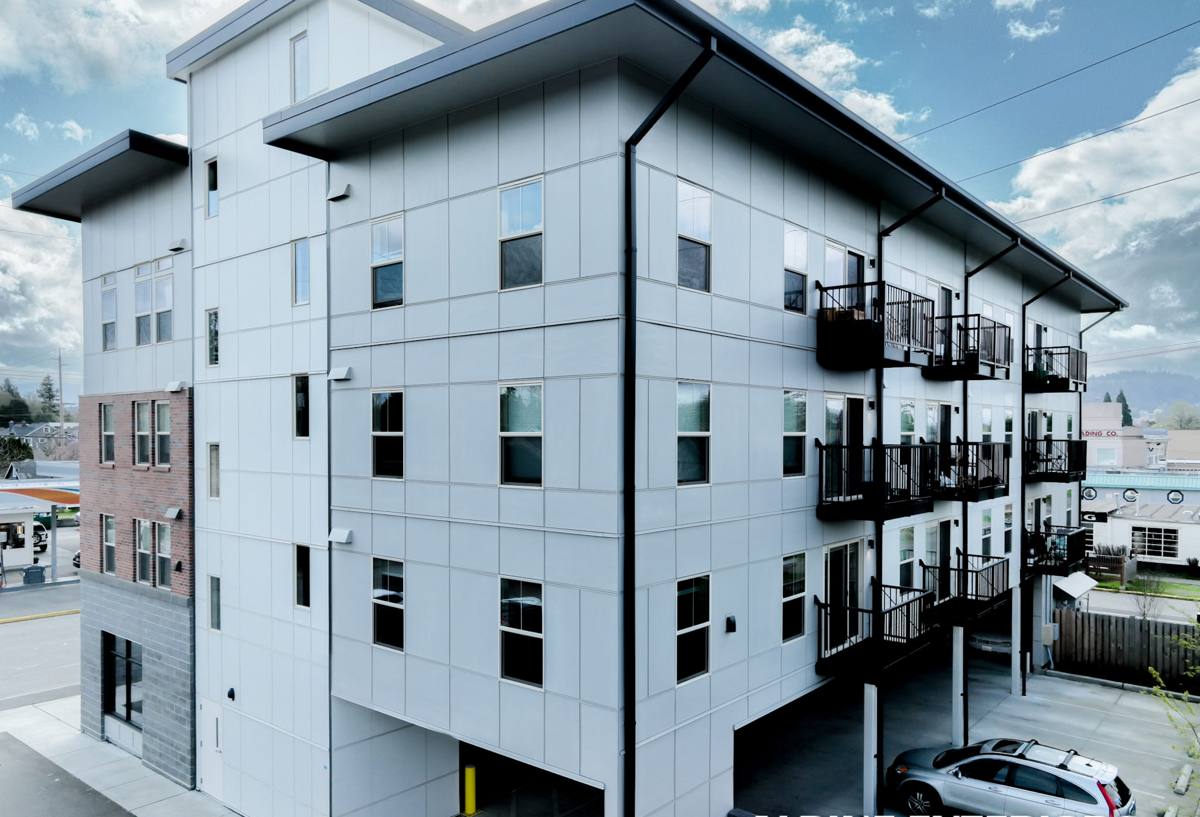
What This Climate Does to Windows Over Time
Whatcom County's marine climate is mild compared to a lot of the country, but mild and gentle aren't the same thing. The combination that matters for windows here is persistence: rain that falls in long, low-intensity events rather than short downpours, humidity that stays elevated for days at a time, and a moss and algae season that can run from fall through spring on shaded or north-facing walls.
- Driving rain pushed by wind finds any gap in flashing or sealant and drives water sideways, not just down — a bigger factor than most homeowners expect.
- Sustained humidity keeps wood-frame windows and wood trim damp longer after each rain event, which is what actually causes rot, not a single storm.
- Moss and algae growth on sills, trim, and nearby siding holds moisture against the window assembly and can work sealant loose over time.
- Salt-influenced air common across this part of Whatcom County accelerates corrosion on lower-grade hardware, hinges, and fasteners.
None of this means windows fail fast here. It means the installation details that get skipped in a drier climate — proper flashing laps, back-dammed sills, correctly bedded nailing fins — actually matter in Sunnyland, because there's no dry season long enough to let a mistake dry out and go unnoticed.
Signs a Sunnyland Home Needs Window Attention
Most window problems announce themselves quietly before they become expensive. Worth checking for:
- Soft, spongy, or discolored wood trim around the window frame, especially at the bottom corners
- Visible daylight or a draft at the frame edge when the window is closed and locked
- Fogging or a permanent haze between the panes of a double-pane window (a sign the seal has failed)
- Paint that bubbles or peels repeatedly in the same spot near a window, even after repainting
- Difficulty opening, closing, or locking a window that used to operate smoothly
- Moss or dark staining building up on the sill or the siding just below the window
Any one of these on its own might just mean routine maintenance. Two or three together, especially soft trim plus a hard-to-operate window, usually point to moisture that's already gotten past the original seal.
What a Correct Window Installation Actually Involves
The window unit itself — vinyl, fiberglass, or wood-clad — is only part of the job. What determines whether it lasts is everything around it.
Removal and inspection
We pull the old window and check the rough opening framing and sheathing before anything new goes in. If there's hidden rot or soft sheathing from a prior installation, that gets addressed first — installing a new window over damaged framing just buries the problem again.
Flashing and water management
Proper flashing directs water down and out and away from the wall assembly, in the correct shingle-lap order so each layer sheds water onto the one below it. This is the single most important step for long-term performance in a wet climate, and it's also the step most likely to get rushed on a low-bid job.
Sealing and insulation
The gap between the window frame and the rough opening gets sealed and insulated correctly — not overfilled with expanding foam, which can bow the frame, and not left with gaps that let air and moisture through.
Sill pan and drainage
A sill pan under the window gives any water that does get past the exterior seal somewhere to go besides straight into the wall. This is a detail that's easy to skip and hard to notice missing until years later.
Final fit and operation check
Every window gets checked for square, level, and smooth operation before we consider the job done — a window that's slightly out of square will bind, wear its hardware faster, and seal poorly over time.
Window Frame Material Comparison for This Climate
| Material | Moisture Performance | Maintenance | Typical Lifespan Here |
|---|---|---|---|
| Vinyl | Excellent — won't rot, low sensitivity to installation gaps | Low — occasional cleaning | 20-30+ years |
| Fiberglass | Excellent — very stable, holds paint well if a color match is needed | Low | 25-35+ years |
| Wood-clad | Good on the exterior, but relies entirely on correct flashing and sealing | Moderate to high — interior wood, exterior cladding seams need monitoring | Varies widely with installation quality |
| Aluminum | Poor thermal performance, prone to condensation in humid climates | Low, but condensation issues are hard to fully solve | Widely used in the past, less suited to this climate today |
We generally steer Sunnyland homeowners toward vinyl or fiberglass for straightforward replacements, simply because they tolerate this climate's persistent moisture without depending on a perfect paint schedule. Wood-clad windows can absolutely work here and many homeowners choose them for appearance, but they demand more attention to the cladding seams and exterior finish over time — that's a maintenance trade-off worth going in with eyes open, not a knock on the product.
Our Process for a Sunnyland Window Installation
- On-site assessment — we look at the existing windows, the wall assembly where visible, and any signs of past water intrusion before quoting anything.
- Straightforward quote — pricing broken out by window, with material options explained rather than a single bundled number.
- Scheduling around weather — we plan installation days around the forecast where possible, since an open wall in the rain is exactly the situation you don't want.
- Removal, inspection, and any needed framing repair — done before the new window goes in, not after.
- Installation with full flashing and sealing detail — the steps outlined above, done the same way whether it's one window or a whole house.
- Walkthrough — every window opened, closed, and locked with you before we consider the job finished.
Why a Crew That Already Works Sunnyland Matters
Window installation quality is mostly invisible once the trim is back on — you're trusting the flashing and sealing detail you can't see. A crew that regularly works this specific area of Sudden Valley has already seen how the local moisture pattern plays out on real houses over multiple seasons: which orientations take the worst weather, where moss tends to build up fastest, and which older installation shortcuts tend to fail first. That's knowledge that comes from doing the work here repeatedly, not from a general product manual.
It also means someone local to call if a question comes up two years after installation — not a phone number for a company that did one job in the neighborhood and moved on.
Cost Factors Worth Understanding Upfront
Window installation pricing varies by project, and we won't quote a number without seeing the job, but the main factors that move the price are consistent:
- Number of windows — per-window cost typically drops somewhat on larger jobs
- Frame material — vinyl is generally the most budget-friendly, fiberglass and wood-clad cost more upfront
- Window size and configuration — large picture windows, bays, or custom shapes cost more than standard double-hung or slider units
- Condition of the existing opening — any hidden rot or framing repair adds cost, but it's cost you want spent now rather than skipped
- Full-frame replacement vs. insert replacement — insert replacement is faster and cheaper but only makes sense when the existing frame and flashing are in good condition
Simple Maintenance That Extends Window Life Here
A correctly installed window in this climate still benefits from basic upkeep:
- Rinse moss and algae off sills and nearby trim before it builds up thick enough to hold moisture
- Check exterior caulking around the frame once a year and touch it up if it's cracked or pulling away
- Keep gutters and downspouts clear so water isn't sheeting down the wall past upper-story windows
- Operate each window a few times a season, even ones you rarely open, so hardware doesn't seize
- Watch for soft trim or paint failure at the same spot after repainting — it usually means water, not just cosmetics
If your Sunnyland home has windows showing any of these warning signs, or you're planning ahead for a replacement, we're happy to take a look and walk you through honest options for your specific house. Reach out for a free, no-pressure estimate using the form below.