 Sudden Valley Siding
 Siding Repair Built for Yew Street's Conditions
Homes along Yew Street sit in one of the more exposed pockets of Sudden Valley, where Lake Whatcom's moisture and the broader Whatcom County weather pattern combine to put real stress on exterior siding. Salt-tinged air moving up from the Puget Sound region, long stretches of driving rain through fall and winter, and a moss season that can run eight months or more all work against whatever is on the outside of a house. Siding repair here isn't a cosmetic fix — it's about stopping water and organic growth before they get past the surface and into the wall assembly.
We've worked on homes throughout this neighborhood and the surrounding Sudden Valley community long enough to know which sides of a house fail first, which details get skipped during original construction, and what a repair actually needs to hold up through another wet season instead of just looking patched.
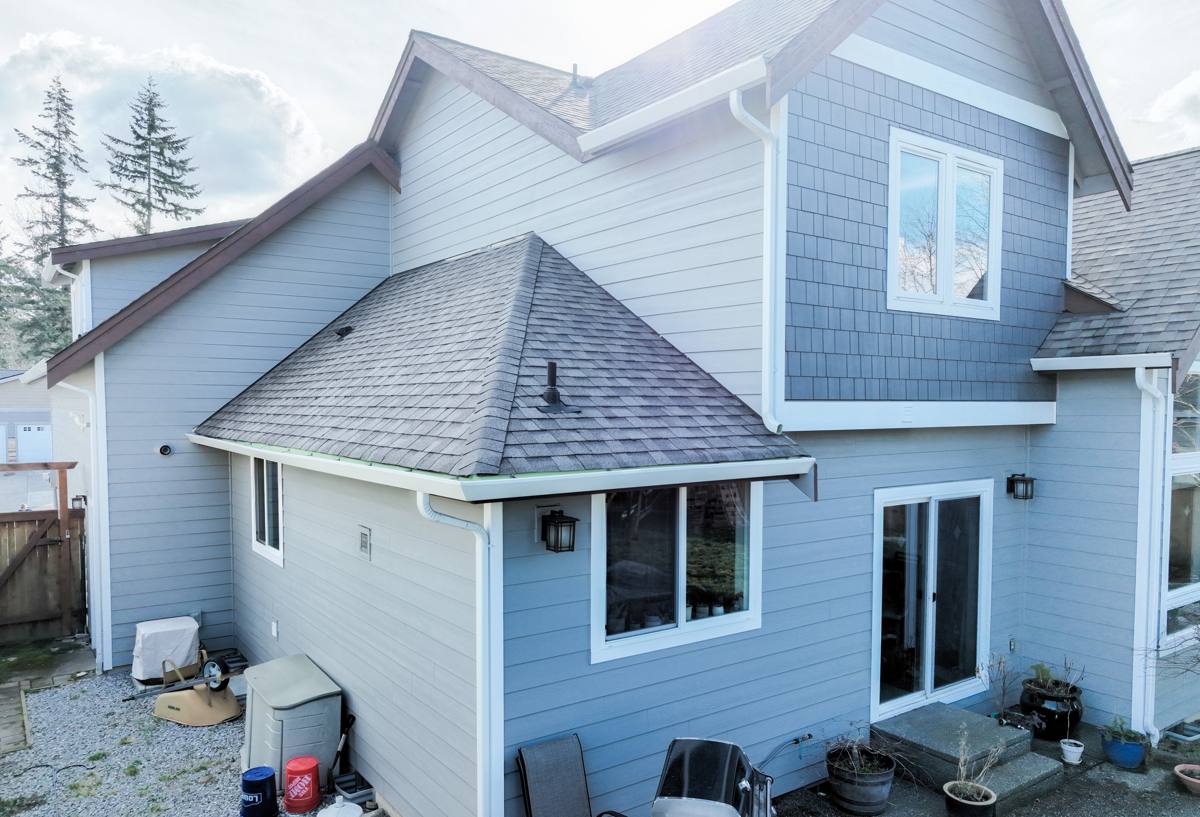
What Yew Street Homes Typically Need Repaired
The damage patterns we see on this street aren't random. They follow the terrain, tree cover, and orientation of each lot.
Moss and Algae Staining at the Base Course
Lower courses of siding, especially on the north and shaded sides of a home, hold moisture longer because sun and wind don't reach them as often. Moss gets a foothold in the gaps between boards or at butt joints, and once established it holds water against the material around the clock. On older wood or engineered wood siding, that constant dampness is often where rot starts.
Swelling, Delamination, and Soft Spots
Homes here that were built or re-sided with wood-based products often show swelling at butt joints, panel edges, or anywhere caulk has failed. Once water gets behind the factory finish, the material can delaminate or turn soft. This is one of the most common repair calls we get in this area, and it almost always traces back to a failed sealant joint or a flashing detail that was never quite right.
Caulk and Sealant Failure Around Penetrations
Windows, hose bibs, vents, and light fixtures are common leak points. Whatcom County's rain volume means a sealant joint that's marginal will get tested constantly, and once it opens up even slightly, water tracks behind the siding rather than running off the surface.
Impact Damage and Cracked Panels
Falling branches are common on tree-lined lots throughout Sudden Valley, and a cracked or punctured panel is an entry point for moisture even if it looks minor from the ground.
Why Salt Air, Rain, and Moss Change the Repair Approach
A siding repair done for a dry-climate house and one done for a Yew Street house should not look the same. Three regional factors change how we approach every job:
- Salt air: Corrosion-prone fasteners and trim metal fail faster here than in inland climates, so we use fasteners and flashing rated for coastal exposure, even though we're not directly on the water.
- Driving rain: Wind-driven rain pushes water sideways into joints and seams that would stay dry in a calmer climate, which means lap joints, corners, and butt joints need to be treated as critical details, not afterthoughts.
- Extended moss season: Moss and algae hold moisture against siding for months at a time. A repair that doesn't address the underlying moisture source — poor drainage, tree overhang, missing kickout flashing — will just grow moss again in the same spot.
This is also why we only repair and replace with James Hardie fiber cement. It's a non-combustible material engineered specifically for wet, humid climates, and it doesn't absorb and swell the way wood-based or wood-fiber composite sidings do. When we patch a section on a Yew Street home, we're not introducing a mismatched material that will age differently than the rest of the house — we're matching Hardie's HZ5 product line, which is engineered for the kind of moisture cycling this region sees every year.
What a Correct Siding Repair Actually Involves
A repair that just covers up a stain or replaces a cracked board without addressing the cause will fail again, usually within a season or two. Here's what we check and do on every repair call in this area:
- Diagnose the water path. We trace the damage back to its source — a failed sealant joint, missing flashing, a clogged gutter dumping water onto a wall, or a grading issue pushing splash-back onto the lower courses.
- Check the water-resistive barrier. If siding has been wet long enough to cause rot, we check whether the house wrap or building paper underneath has also failed. Replacing siding over a compromised barrier just delays the next repair.
- Remove and inspect framing. Any sheathing or framing that's soft or discolored gets addressed before new siding goes back on — this is the step that gets skipped by repair crews trying to move fast.
- Match or upgrade the material. Where possible we match existing Hardie profile and ColorPlus finish; where the original siding is a different product, we talk through replacing the affected section with Hardie so the repair doesn't become a recurring maintenance item.
- Re-flash and re-seal correctly. Proper flashing at penetrations, kickout flashing at roof-to-wall intersections, and correctly gapped, sealed joints — done to manufacturer spec, not just "good enough."
- Address the moss source, not just the stain. If tree cover or shade is driving the moisture problem, we'll flag it, even if the fix (trimming back branches, adjusting drainage) is outside our scope.
Repair vs. Replacement: How We Decide
| Situation | Typical Approach | Why |
|---|---|---|
| Isolated crack or impact damage, framing dry | Spot repair | Underlying structure is sound; targeted fix stops the leak |
| Swelling/soft spots limited to one wall or elevation | Section replacement | Contain the damaged area without disturbing sound siding elsewhere |
| Rot found in sheathing or framing | Repair framing first, then re-side that section | New siding over damaged structure fails again quickly |
| Widespread moss, staining, and softening across multiple elevations | Full re-side discussion | Piecemeal repairs on aging, moisture-compromised siding rarely hold up long-term |
| Original siding is a wood-based or composite product nearing end of life | Replace with Hardie fiber cement | Avoids repeating the same failure mode with the same material |
Why Hiring a Crew That Already Works Yew Street Matters
Siding repair looks straightforward from the street, but the details that matter — correct flashing laps, the right fastener spacing, how to blend a repaired section into existing ColorPlus finish, how much clearance to leave at grade — are learned by doing this work repeatedly in the same conditions. A crew that mostly works drier, less exposed areas can do competent work and still miss something that only shows up under this area's rain volume and moss pressure.
We've built our repair process around what actually fails in this part of Whatcom County. That means we're not guessing at what caused the damage — we've usually seen the same failure pattern on a nearby home already, and we know how to fix it so it stays fixed.
What to Check Before Hiring Anyone for Siding Repair
- Do they diagnose the water source, or just replace the visibly damaged board?
- Will they open up the wall to check sheathing and framing condition, or patch over it?
- Do they carry manufacturer training or certification for the material they're installing?
- Can they explain how their repair addresses this area's rain and moss exposure specifically?
- Do they offer a written scope, not just a verbal quote?
Our Repair Process, Start to Finish
When you call us for a Yew Street repair, here's what to expect:
- On-site inspection: We look at the damaged area and the surrounding siding, roofline, gutters, and grading to understand the full water picture, not just the visible symptom.
- Honest scope and written estimate: We tell you what needs to be fixed, what can wait, and what the range of options looks like — including when a repair is the right call versus when it's time to talk replacement.
- Material match or upgrade: We source matching Hardie profiles and colors where possible, or advise on the closest match if the original line has changed.
- Correct installation to spec: Proper fastening, clearances, flashing, and sealant — installed the way the manufacturer's warranty actually requires, not shortcuts that void it.
- Clean job site: Debris and old material removed and disposed of properly.
Get an Honest Look at What Your Siding Needs
If you're seeing moss buildup, soft spots, staining, or cracked panels on a Yew Street home, it's worth getting an honest opinion before the next wet season sets in. We'll walk the property, tell you what we find, and give you a straightforward estimate with no pressure to do more than what's actually needed — reach out below for a free estimate.