 Sudden Valley Siding
 Alger's Climate Puts Real Stress on Exterior Siding
Alger sits close to Samish Bay, tucked between the water and the forested hills that rise up toward the Chuckanut range. That location gives homes here a specific combination of exposures: salt-laden air moving in off the bay, driving rain that comes off open water with real force behind it, and heavy tree cover on many lots that keeps everything damp long after a storm has passed. Any one of those on its own is manageable. Together, over years, they're what separates siding that holds up from siding that starts failing quietly behind the paint.
Salt Air and Corrosion
Proximity to tidal water means airborne salt settles on every exterior surface, not just the parts facing the bay directly. Salt is corrosive to fasteners, staples, and cheaper trim hardware, and it breaks down some paint and coating systems faster than inland exposure would. Siding materials and installation hardware that aren't rated for coastal-adjacent exposure tend to show pitting, streaking, or fastener failure years before their inland counterparts do.
Driving Rain Off the Water
Open water to the west means wind has a long fetch to build up before it hits a wall assembly, and it usually arrives with rain riding along with it. That wind-driven rain doesn't just wet a surface — it pushes moisture up under laps, into joints, and behind trim that isn't properly flashed or caulked. A siding system that only performs well in calm, straight-down rain isn't the right call for a lot exposed to Samish Bay weather.
A Long Moss Season on Shaded Lots
Many properties in and around Alger sit under fir and cedar canopy, which keeps north and east-facing walls shaded and slow to dry for much of the year. That combination of shade and coastal humidity is exactly what moss needs to establish itself, and once moss gets a foothold on a wall surface it holds moisture against the siding and trim underneath, extending the damage a wet season already does.
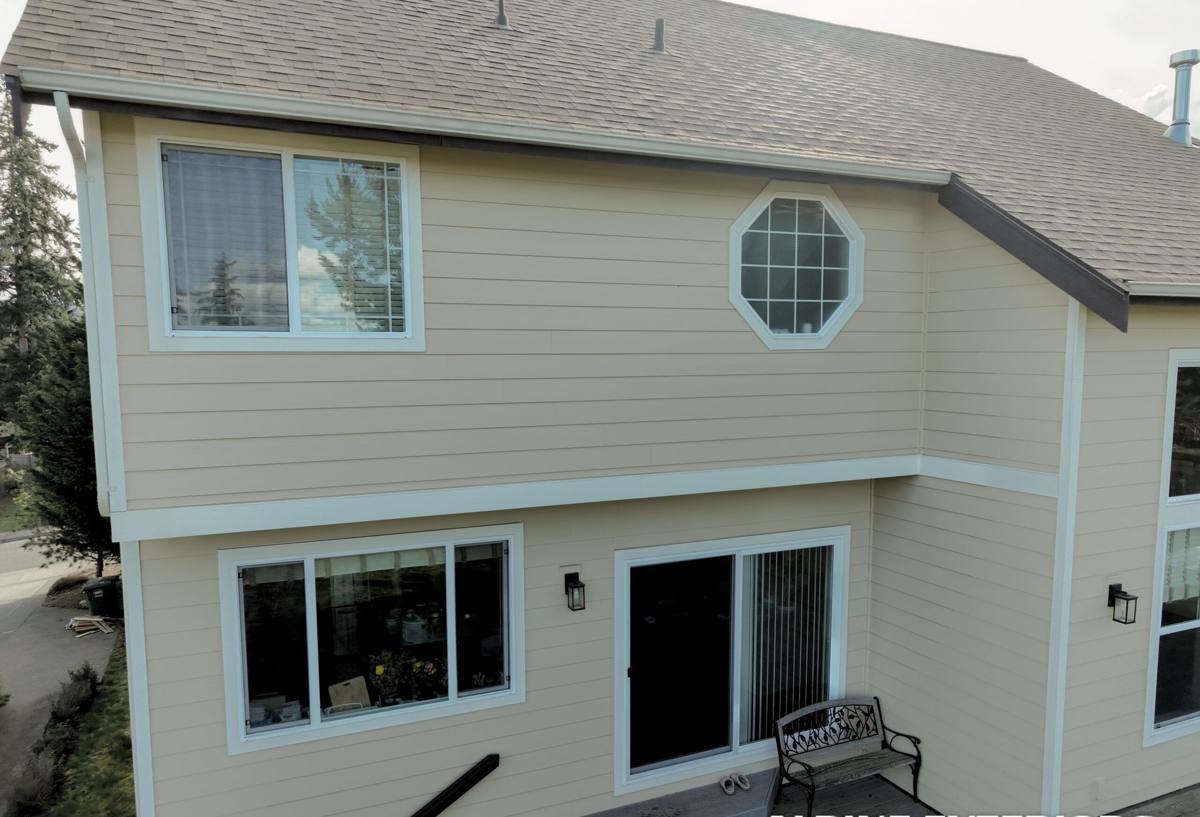
Why We Install Only James Hardie Fiber Cement Here
We don't install vinyl siding, LP SmartSide, Cemplank, Allura, primed spruce, or cedar. That's not a marketing position — it's a professional standard we've settled on after years of exterior work in this specific climate. James Hardie fiber cement is non-combustible, dimensionally stable, and manufactured in HardieZone HZ product lines engineered for regional moisture and temperature conditions rather than a one-size-fits-all national spec. For a lot exposed to salt air, wind-driven rain, and long stretches of shade, that engineering difference shows up in how the siding actually performs a decade or two into ownership, not just on installation day.
The factory-applied ColorPlus finish also matters more here than in a drier climate. It's baked on under controlled conditions rather than field-applied, which gives it better adhesion and UV/moisture resistance than a job-site paint job, and it comes with its own finish warranty separate from the product warranty. Combined with Hardie's transferable product warranty, that gives a homeowner real protection against a climate that's genuinely harder on exteriors than most of the country deals with.
What a Correct Installation Involves in This Climate
Moisture Barrier and Flashing Details
Fiber cement performs as well as its installation, not just its material specs. On a wind-exposed, rain-heavy lot like the ones around Alger, the weather-resistive barrier underneath the siding, the window and door flashing, and the kick-out flashing at roof-to-wall intersections all have to be done correctly and in the right sequence. This is where most siding failures actually originate — not in the board itself, but in water finding a path behind it through a poorly lapped barrier or a missed flashing detail.
Fastening for Coastal Wind Exposure
Fastener spacing and type matter more on a property that takes direct wind off the water. We follow James Hardie's fastening specifications for the exposure category rather than defaulting to a standard inland pattern, and we use fasteners rated to resist the corrosive effect of salt air rather than the cheapest option that happens to hold the board in place on installation day.
Gapping, Caulking, and Joint Treatment
Fiber cement needs proper gaps at butt joints and terminations to allow for expansion and to keep water from tracking sideways into the wall assembly, then correctly caulked with a product rated for the joint width and movement. Skipping or rushing this step is one of the more common ways a fiber cement job underperforms its potential, especially on a home that sees the kind of driving rain Alger gets off the bay.
Working Around Shade and Moss-Prone Faces
On heavily shaded elevations, we pay extra attention to drainage behind the siding and to keeping the bottom starter course and any ground-level trim properly clear of soil and vegetation contact, since those are the spots where trapped moisture and moss get started fastest.
How Fiber Cement Stacks Up Against Other Siding Options Here
Homeowners comparing materials for a coastal, shaded, high-moisture lot like the ones in Alger are usually weighing the same handful of trade-offs. Here's how the common options actually compare under these specific conditions:
| Material | Salt Air Exposure | Driving Rain Behavior | Moss / Shade Performance |
|---|---|---|---|
| James Hardie Fiber Cement | Non-combustible, stable; factory finish resists salt-related coating breakdown | Dense, engineered board resists moisture intrusion when correctly installed and flashed | Doesn't feed mold or rot the way wood-based products can; still needs periodic cleaning |
| Vinyl Siding | Can become brittle and discolor faster under coastal UV and salt exposure | Panels can allow water intrusion behind them at laps in sustained wind-driven rain | Moss and mildew grow on the surface; panels can warp in prolonged damp/heat cycling |
| LP SmartSide (engineered wood) | Wood-based substrate is more vulnerable to moisture wicking at cut edges and salt-assisted breakdown | Requires meticulous edge sealing to resist swelling from driven rain | Organic wood fiber content is more susceptible to moisture damage if the surface seal is compromised |
| Primed Spruce / Cedar | Natural wood is directly vulnerable to salt-accelerated weathering and finish failure | Absorbs moisture readily; needs frequent refinishing to keep water out | Highest maintenance burden in shaded, mossy conditions; refinishing cycle shortens under this climate |
Our Installation Process, Start to Finish
The steps below are the same on every job, but the details we check for shift based on the property's exposure to bay wind, shade, and moisture.
- On-site assessment. We look at wall orientation relative to the bay and prevailing wind, tree canopy and shading patterns, existing moisture or moss damage, and the condition of the sheathing and trim underneath the current siding.
- Tear-off and substrate inspection. Removing the old siding lets us check for hidden rot, compromised sheathing, or prior water intrusion before anything new goes on — problems that are invisible from the outside but common on older coastal-adjacent homes.
- Weather barrier and flashing installation. This is done to manufacturer spec, with extra attention to any wall plane that takes direct wind-driven rain or sits in persistent shade.
- James Hardie installation. Fastening, gapping, and caulking are done to the exposure-specific spec, not a generic default.
- Final walkthrough. We go over the finished job with the homeowner and flag anything — trim, gutters, grading — that could affect how the new siding performs over time.
Why a Crew That Already Works Alger Matters
Exterior work in a coastal, shaded, high-rainfall setting rewards experience with that exact combination of conditions. A crew that mostly works drier, more sheltered neighborhoods doesn't necessarily know to check kick-out flashing at every roof-to-wall intersection facing the bay, or to expect moss regrowth on a north-facing wall within a year if drainage wasn't addressed during install. We've done siding work throughout this part of Whatcom and Skagit County long enough to know which wall orientations near Samish Bay take the worst of the weather, which lots need extra drainage attention because of tree cover, and which installation shortcuts show up as callbacks two or three winters later. That local pattern recognition is worth more than a lower bid from a crew that's never worked this stretch of coastline.
Keeping Your Siding Performing Through Moss Season
Correctly installed James Hardie siding needs far less upkeep than wood or vinyl, but "low-maintenance" isn't "no-maintenance" — especially on a shaded lot near the water. A short annual routine keeps a good installation performing the way it should:
- Rinse siding surfaces (especially shaded, north-facing walls) once a year to keep moss and organic buildup from establishing
- Trim back vegetation and tree limbs that keep siding sections in constant shade or brushing against the wall
- Check and clear gutters before the wet season so overflow isn't running down the siding face
- Inspect caulking at trim, window, and joint lines annually and re-caulk any cracked or separated joints
- Keep soil, mulch, and landscaping from building up against the bottom starter course
- Watch for any soft spots, staining, or discoloration after storms and have them checked before they spread
What Affects the Cost of a Fiber Cement Job in Alger
Every property is different, but the same handful of factors drive most of the cost variation we see on jobs in this area:
| Factor | Why It Matters Here |
|---|---|
| Substrate condition | Homes with existing moisture or rot damage under the old siding need repair work before new siding goes on |
| Wall exposure and elevation count | Walls facing open water or prevailing wind may need additional flashing and detailing work |
| Trim and detail complexity | Gable ends, dormers, and multiple roof-to-wall transitions all add flashing and cut work |
| Siding profile and finish selection | Lap width, texture, and ColorPlus color selection affect material cost |
| Access and site conditions | Sloped, wooded, or tight-access lots common around Alger can affect staging and labor time |
If you're weighing siding options for a home in Alger, we're happy to walk the property, look at what the current siding and trim are telling us, and put together a straightforward estimate — no pressure, no upsell script, just an honest read on what the job actually needs.