 Sudden Valley Siding
 Building New in Alger Means Building for the Weather You Actually Get
If you're framing a new home or a major addition near Alger and Sudden Valley, the window package you choose and how it gets installed will matter more here than it would in a drier climate. This part of Whatcom County sits close enough to Puget Sound and Lake Whatcom that homes deal with salt-tinged air, long stretches of driving rain off the water, and a moss season that can run most of the year on shaded north- and west-facing walls. New-construction windows give you one real advantage over a retrofit: you get to build the water management right into the wall from the start, instead of working around an existing structure later. That's the whole point of doing it correctly the first time.
New-construction windows are different from replacement windows in both design and installation method, and that difference is exactly where a lot of problems get baked into a house if the crew isn't careful. We install new-construction windows in and around Sudden Valley regularly, and this page walks through what a correct job looks like for this specific area and climate.
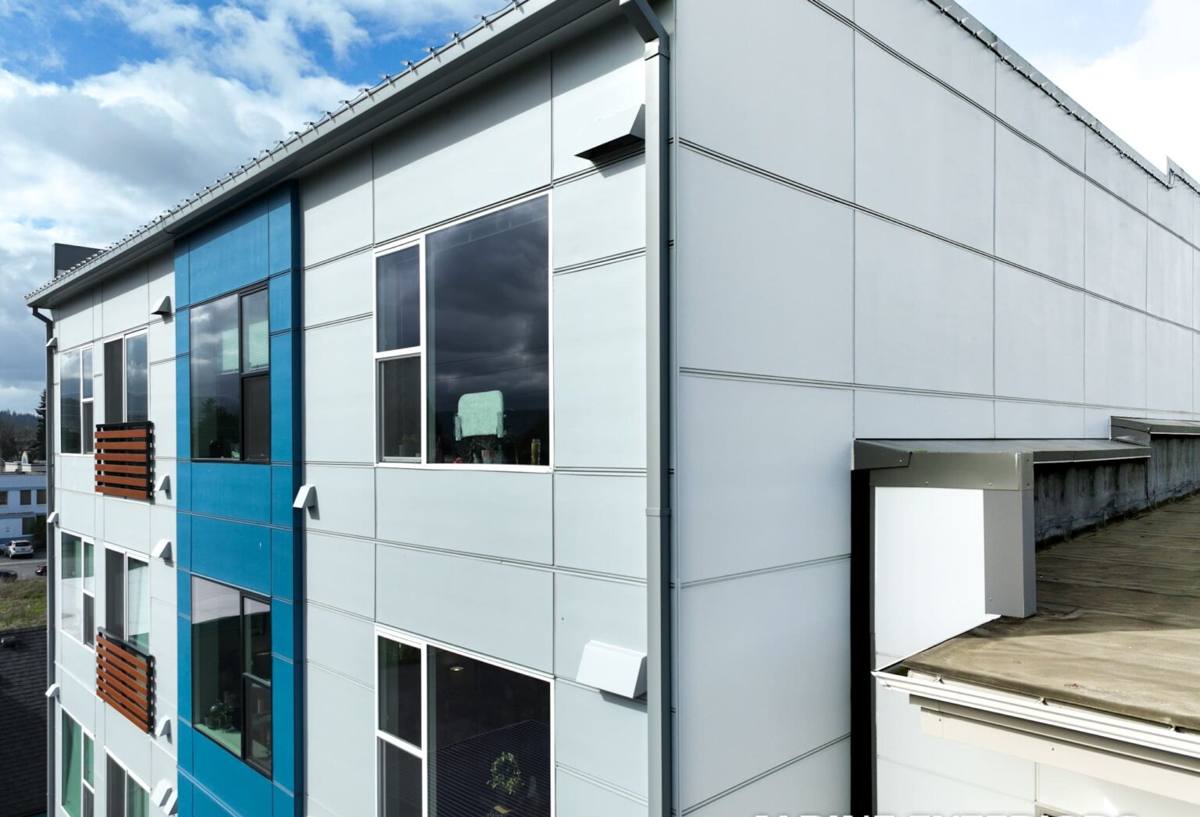
New-Construction vs. Replacement Windows: Why It's Not the Same Job
A new-construction window has a nailing flange (sometimes called a nail fin) built around the frame. That flange gets fastened directly to the wall sheathing before siding goes on, and it's designed to be integrated into the water-resistive barrier (WRB) and flashing system as one continuous drainage plane. A replacement window, by contrast, is built to fit into an existing opening without disturbing the siding around it — it has no flange, and it depends on the old opening already being sound.
On a new build or an addition, you have the sheathing exposed and the WRB not yet closed up, which means the window can be flashed properly in sequence with the wall assembly. That's a real opportunity, but it only pays off if the sequencing is done right. Get the flashing order wrong on a new-construction window and you can create a leak path that's harder to diagnose later than a typical replacement-window leak, because it's hidden behind finished siding and interior trim from day one.
Flange Types You'll Run Into
- Nail-fin flange: The standard for most residential new construction; flat flange nailed to sheathing, then flashed over.
- Flush-fin flange: Sits flush with the exterior sheathing plane, common where a thinner overall wall buildup is wanted.
- Block-frame (no flange): Set into a rough opening and secured through the jambs; more common in masonry or certain commercial applications, less common for typical residential siding walls.
Choosing a Window Line for a Marine, Moss-Prone Climate
There's no single "best" window brand for every house, but there are frame materials and features that hold up better than others when a building sits in a persistently damp, salt-influenced environment. The table below covers the trade-offs we walk homeowners through when specifying windows for a build in this area.
| Frame Material | How It Handles This Climate | Maintenance Burden |
|---|---|---|
| Vinyl | Good moisture resistance, no corrosion risk, competitive cost | Low — occasional cleaning, no painting |
| Fiberglass | Very stable in wet, temperature-swinging conditions; strong long-term dimensional stability | Low — very durable finish, minimal upkeep |
| Wood (clad exterior) | Warm interior look, but exposed wood or poorly maintained cladding is vulnerable to the moss and moisture cycle here | Higher — exterior cladding and any exposed joints need regular inspection |
| Aluminum | Strong and slim sightlines, but standard aluminum conducts cold and can promote condensation without thermal breaks | Moderate — look for thermally broken frames near the water |
We also pay attention to hardware finish and weatherstripping quality, not just frame material. Salt-influenced air can accelerate corrosion on lower-grade hardware over the years, so we favor manufacturers with corrosion-resistant fasteners and hinges on their new-construction lines, and we're upfront with homeowners about which product tiers hold up and which ones are really meant for drier inland markets.
Getting the Installation Right: Flashing, Sealing, and Drainage
The window unit itself is only part of the story. In a climate that gets sustained, wind-driven rain, the flashing and drainage detailing around each opening does as much work as the window. A correct new-construction install follows a shingle-style sequence so water is always directed outward and downward, never trapped behind a layer that can't drain.
Sill Pan First
Every rough opening should get a sloped sill pan flashing before the window ever goes in. This creates a dedicated drainage path at the bottom of the opening so that any water that does get past the window — through a failed seal years down the road, for example — has somewhere to go besides your wall framing.
Integrating with the WRB
The nailing flange has to be woven into the water-resistive barrier in the correct order: sill flashing first, then the window set into the sill pan, then side flashing over the side flanges, then head flashing over the top flange, lapped so each layer sheds water onto the layer below it — never the reverse. This is the step that gets rushed on jobs where the crew is unfamiliar with new-construction sequencing, and it's the step that determines whether the wall stays dry for the next 30 years.
Sealants and Backer Rod
Interior and exterior sealant joints matter, but they're a backup to good flashing, not a substitute for it. We use appropriate backer rod and sealant at interior air-seal points and at select exterior joints per the manufacturer's installation instructions, without over-relying on caulk to do a flashing detail's job.
Our Process From Rough Opening to Final Seal
For a new-construction window job in Alger or elsewhere around Sudden Valley, our process generally runs:
- Review rough opening sizes against manufacturer specs before windows are ordered, to avoid field modifications.
- Install sill pan flashing at each opening.
- Set the window plumb, level, and square, and fasten through the flange per manufacturer spacing.
- Flash sides, then head, integrating each layer with the WRB already on the wall.
- Air-seal and insulate the interior perimeter of the rough opening.
- Apply exterior trim and siding tie-ins so the window reads as a finished, weathertight assembly, not a patched-in unit.
- Final walk-through with the homeowner or builder, including operation check on every unit.
On additions and remodels where new-construction windows are going into a partially existing wall, we adapt this same sequence to tie cleanly into the existing WRB and siding rather than creating a seam where two different water-management systems meet awkwardly.
Mistakes We Watch For on New-Construction Window Jobs
A lot of window callbacks trace back to a handful of avoidable errors. Here's what we specifically check for on every job in this area, given how unforgiving the climate is of a shortcut:
- Flashing layers installed out of order, so upper flashing sits behind lower flashing instead of on top of it
- No sill pan, or a sill pan that isn't sloped to drain outward
- Fasteners driven through the flange at the wrong spacing or angle, distorting the frame
- Gaps left in the WRB integration at the corners of the opening, a common leak entry point
- Over-reliance on caulk at the exterior in place of proper step flashing
- Rough openings cut oversized "to be safe," leaving excessive shim gaps that are hard to insulate and seal correctly
- Interior air sealing skipped because it's not visible once trim goes on
Cost Factors for New-Construction Windows
Every build is different, and we won't quote a number without seeing the plans or the opening sizes, but these are the main variables that move the price on a new-construction window package in this area:
| Factor | Why It Affects Cost |
|---|---|
| Frame material | Fiberglass and higher-tier vinyl or wood-clad units cost more than entry-level vinyl |
| Number and size of openings | Larger units and more openings mean more material and labor per house |
| Glass package | Upgraded low-E coatings, gas fills, or impact-resistant glazing add cost but can be worth it on exposed elevations |
| Wall complexity | Tall walls, scaffolding needs, or unusual framing add labor time |
| Site access | Tighter lots or long carry distances from the driveway to the wall can add time |
Broadly speaking, homeowners in this area should expect new-construction window packages to range from a modest per-opening cost for basic vinyl units up into a considerably higher range for larger fiberglass or upgraded-glass units — the spread is wide enough that a real number only comes from a site visit and a look at your plans.
Why a Crew That Already Works Alger and Sudden Valley Matters
New-construction window installation is a sequencing job as much as a carpentry job — the order you do things in matters more than almost any other part of the building envelope. A crew that regularly works this specific stretch of Whatcom County has already seen how the moss, the driving rain off the water, and the salt-tinged air act on different frame materials and flashing details over years, not just on install day. That local repetition is what lets us make honest recommendations about which window lines and details are worth the upgrade here, instead of applying a generic spec that was written for a drier region.
We also know the practical side of building in this area: typical rough opening tolerances used by local framers, how siding trades in this market like their window trim detailed so the whole envelope ties together cleanly, and what tends to go wrong on additions that tie into older Sudden Valley-area homes with different original construction methods.
Ready to Talk Through Your Window Package?
If you're planning new construction or a major addition in Alger or anywhere around Sudden Valley, we're happy to walk your plans, talk through frame and glass options suited to this climate, and give you a straightforward estimate — no pressure, no sales script. Use the form below to request your free estimate.