 Sudden Valley Siding
 Why Siding Fails Faster in Alger
Homes in and around Alger sit close enough to the water and the tree line that they take on two kinds of weather most siding was never designed for at the same time: salt-laden air moving in off the coast, and long stretches of driving rain that don't let up for days. Add in the deep shade a lot of these lots get from mature conifers, and you get a third problem — a moss and algae season that can run eight or nine months out of the year. Individually, any one of these is manageable. Together, they're what actually shortens the life of a siding system.
Salt air is corrosive to fasteners and metal flashing, and it accelerates the breakdown of paint film on wood and composite products. Driving rain doesn't just fall straight down here — wind pushes it sideways into laps, seams, and butt joints that were only ever detailed for gravity-fed water. And constant moisture plus shade is exactly what moss, lichen, and algae need to take hold. Once organic growth gets a foothold on a wall, it holds moisture against the substrate longer, which is where rot and delamination start.
If your siding is more than 15-20 years old, or you're already seeing soft spots, peeling paint, or dark green-black staining that pressure washing won't fully remove, that's not a cosmetic issue anymore — it's a sign the assembly behind the siding is under stress.
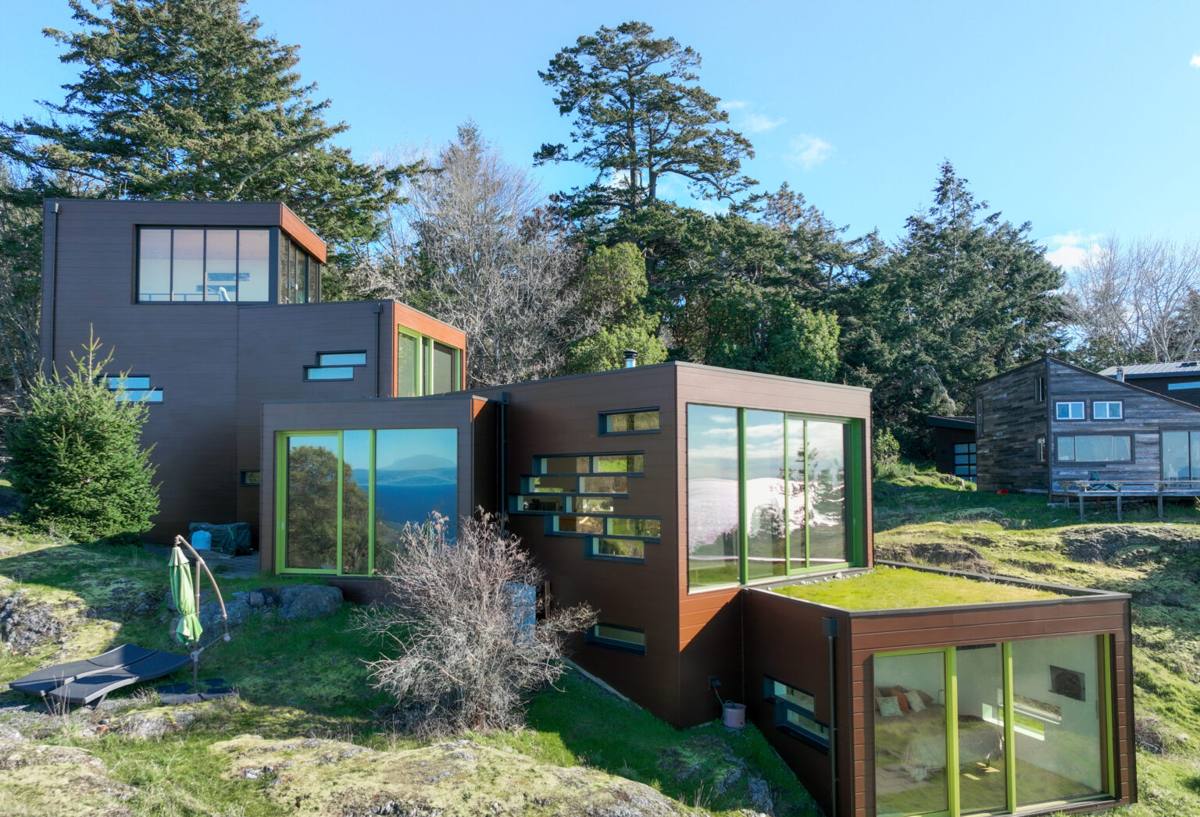
What "Correct" Siding Replacement Actually Means Here
A siding replacement in this climate is not just swapping old boards for new ones. Done right, it's a full envelope job. That means:
- Complete tear-off to bare sheathing so we can actually see what's underneath — not siding installed over siding, which traps moisture
- Inspection and repair of any sheathing damage, rot, or soft framing found once the old siding is off
- A properly lapped weather-resistive barrier, installed shingle-style so water sheds down and out, never behind the barrier
- Correct flashing at every window, door, deck ledger, and roof-to-wall intersection — this is where the vast majority of siding failures actually start
- Fastening pattern and nail placement that match the manufacturer's specification for our wind and moisture exposure, not a generic install
- Proper clearance at grade, decks, and patios so siding isn't wicking up moisture from the ground or hardscape
Skip any one of these steps and the new siding can look great for a year or two while the same underlying moisture problem keeps working on the wall behind it.
Why We Install Only James Hardie Fiber Cement
We don't offer vinyl, LP SmartSide, or the other composite and fiber-cement alternatives on the market. That's a deliberate standard, not a marketing angle, and it's especially relevant in a climate like Alger's:
Vinyl can warp and become brittle with repeated moisture and temperature cycling, and it relies entirely on tight seams and proper overlap to keep wind-driven rain out — seams that are hard to keep watertight over decades of salt exposure. Engineered wood products perform well when kept perfectly sealed, but any breach in that seal — a nail pop, a cracked caulk line, a spot where moss holds water against an edge — lets moisture into a wood-based substrate, and that's the one thing this climate is built to find.
James Hardie fiber cement is cement, sand, and cellulose fiber — it doesn't absorb and swell the way wood-based products can, and it's non-combustible. Hardie's HZ5 product line is engineered specifically for wet, high-humidity climates like ours, with a formulation and finish designed to hold up to sustained moisture exposure rather than just shed the occasional shower. The factory-applied ColorPlus finish is baked on under controlled conditions and backed by its own finish warranty, which matters a lot in an area where field-applied paint has to fight salt air and moss growth from day one.
| Factor | James Hardie Fiber Cement | Vinyl | Engineered Wood Composite |
|---|---|---|---|
| Moisture response | Does not absorb/swell; engineered for wet climates (HZ5) | Doesn't absorb, but relies on seam integrity | Vulnerable if seal is breached |
| Combustibility | Non-combustible | Combustible | Combustible |
| Finish durability | Factory ColorPlus, separately warrantied | Color molded in, can fade/chalk | Field-applied paint, needs maintenance |
| Moss/algae resistance | Cementitious surface resists organic growth better than wood-based | Smooth surface, growth mostly surface-level | Wood-based surface more hospitable to growth |
| Typical lifespan when installed to spec | 30+ years | 20-30 years | 15-25 years |
What We Recommend for Alger Specifically
For homes with heavy shade and constant moisture exposure, we typically point owners toward Hardie's HZ5 zone products with a factory ColorPlus finish rather than primed panels that need field painting. It's a small spec difference up front that pays off in fewer maintenance cycles over the life of the siding.
Our Process, Start to Finish
1. On-Site Assessment
We walk the whole exterior, not just the obviously bad section. Moisture problems in this climate rarely stay contained to one wall — if there's an issue on the north side, we check what's happening at the roof lines, decks, and grade everywhere else too.
2. Scope and Written Estimate
You get a clear breakdown of what's being replaced, what products and trim details are specified, and what happens if we find rot or sheathing damage once the old siding comes off — no vague allowances buried in the fine print.
3. Tear-Off and Substrate Repair
Old siding comes off, sheathing gets inspected, and any damaged framing or sheathing is repaired or replaced before anything new goes up.
4. Weather Barrier and Flashing
This is the step that determines whether the job lasts 10 years or 30. We install the barrier and flashing details to shed water at every penetration and transition, before a single piece of new siding goes on.
5. Installation to Manufacturer Spec
Fastening, spacing, and clearances follow James Hardie's published installation requirements for our exposure — this is also what keeps the manufacturer's warranty valid.
6. Final Walkthrough and Cleanup
We review the finished work with you, confirm trim and caulk details, and clear the site of debris and old material.
Cost Factors for Alger Homes
Every project is different, but the same variables tend to drive price up or down on homes in this area:
| Factor | Why It Matters Here |
|---|---|
| Sheathing/framing condition | Hidden rot from long-term moisture exposure adds repair scope once old siding is off |
| Home height and access | Multi-story walls and steep or wooded lots take longer to stage and scaffold |
| Trim and detail complexity | Corners, window casings, and fascia detail add labor beyond flat wall square footage |
| Product line and finish | HZ5 with factory ColorPlus costs more up front than primed panel, less over time |
| Tear-off volume | Full removal vs. partial re-side affects disposal and labor time |
We'd rather walk your specific home and give you real numbers than throw out a broad range that doesn't mean much either way.
Why It Matters That We Already Work in This Area
A crew that regularly works homes in the Alger area already knows how this climate behaves before they ever get on a ladder. That shows up in practical ways: knowing which wall orientations tend to hold moss and moisture the longest, understanding how wind-driven rain actually moves across a wall in this part of the coast, and having already worked through the flashing and drainage details that hold up against it. It also means fewer surprises with local permitting and inspection expectations, and a crew that isn't learning the region's weather patterns on your project.
Signs It's Time to Replace, Not Just Repair
- Boards that feel soft, spongy, or crumble when pressed
- Paint or finish that keeps failing within a year or two of repainting
- Persistent moss, algae, or black staining that returns quickly after cleaning
- Visible gaps, warping, or buckling at seams and butt joints
- Rising energy bills alongside drafts near exterior walls
- Siding installed over a previous layer, hiding what's underneath
- Rot or staining at the bottom courses near grade, decks, or patios
If you're seeing two or more of these, a full replacement is usually more cost-effective long term than chasing repairs on a system that's already compromised.
If your Alger home is showing any of these signs, or you just want an honest read on where your siding actually stands, we're glad to come take a look. The estimate is free, there's no pressure, and you'll get a straight answer about what your home needs — not just a sales pitch. Fill out the form below to get started.