 Sudden Valley Siding
 Board & Batten Siding in Columbia: Built for the Climate, Not Just the Look
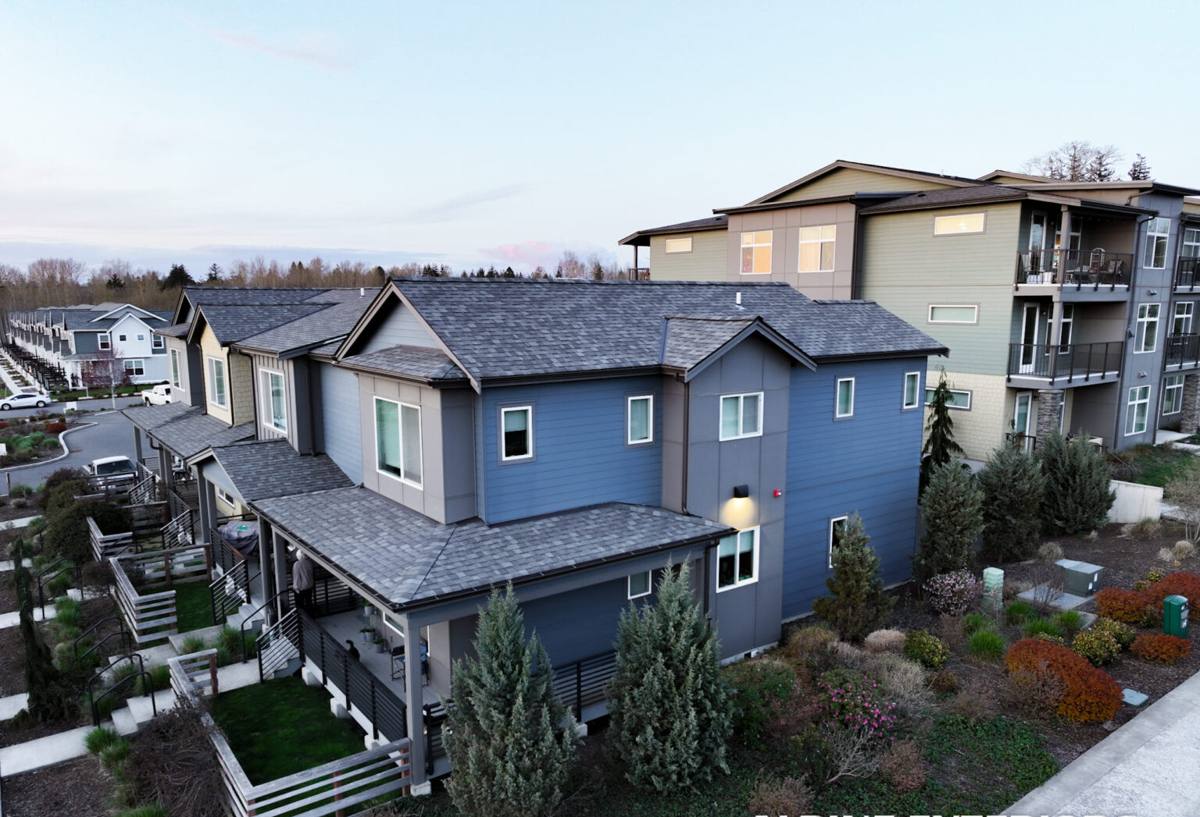
Board and batten has become one of the most requested siding profiles in the Columbia area, and it's easy to see why. The vertical lines and crisp shadow reveals give a home a clean, modern-farmhouse look that works well against the wooded, hillside lots common around Sudden Valley and the rest of Whatcom County. But board and batten is also one of the least forgiving profiles when it's installed wrong. The batten strips create dozens of extra seams and fastening points compared to standard lap siding, and every one of those seams is a place for water to find its way behind the cladding. In a climate that delivers salt-laden air, long stretches of driving rain, and a moss season that can run most of the year, those details aren't cosmetic — they determine whether the siding lasts twenty years or needs rework in five.
This page walks through what board and batten actually needs to hold up in Columbia specifically, what a correct install looks like, and why we only do this work in James Hardie fiber cement rather than the vinyl, LP SmartSide, or cedar versions of the same look.
What Columbia's Climate Does to Vertical Siding
Whatcom County's marine-influenced weather is tougher on exterior materials than it looks from the curb. Homes in and around Columbia deal with a combination of factors that each stress board and batten siding in a different way.
Moisture Behind the Battens
Driving rain doesn't just hit a wall — wind pushes it sideways and up under trim, and vertical board and batten has more vertical seams than any other siding profile for wind-driven water to exploit. If the water-resistive barrier, flashing, and batten fastening aren't done correctly, moisture gets trapped behind the boards where it can't dry out between storms. On a lap-sided wall a small flashing mistake might go unnoticed for years. On a board and batten wall, the same mistake sits directly behind a fastener line that's exposed to weather from three sides.
A Long Moss and Algae Season
The combination of shade, moisture, and mild temperatures around Lake Whatcom and the surrounding tree cover means moss and algae growth is nearly year-round on north-facing and shaded walls. Vertical battens create horizontal ledges at every reveal where organic growth can gain a foothold, especially on walls that don't get much direct sun. Left unaddressed, that growth holds moisture against the siding surface and accelerates wear on the finish.
Salt Air and UV Exposure
Homes closer to the water deal with salt air that speeds up corrosion on fasteners, flashing, and trim hardware, and slowly degrades paint finishes that aren't formulated to resist it. Combined with UV exposure during the drier months, this is a slow, cumulative process — it's rarely the reason a homeowner calls, but it's almost always part of why an older siding job looks tired.
Why We Install James Hardie for Board & Batten — and Nothing Else
We install James Hardie fiber cement exclusively. We don't do vinyl board and batten, LP SmartSide, Cemplank, Allura, or primed cedar boards, and we think homeowners deserve an honest reason why, not just a sales pitch for what we sell.
Vinyl board and batten is affordable and low-maintenance in dry climates, but it's a poor fit for wind-driven rain: it relies on loose-fit panels rather than a sealed, fastened system, and it can warp or fade under sustained UV and temperature swings. LP SmartSide is a wood-strand product with a resin-saturated core — it holds paint well and is easier to cut than fiber cement, but it's still an engineered wood product, and wood-based sidings are more sensitive to sustained moisture exposure than fiber cement over the long run, which matters in a climate that doesn't give siding much time to dry out between rain events. Cedar board and batten looks beautiful when new but demands a maintenance schedule — restaining, sealing, and moss treatment — that most owners underestimate, and it's combustible.
James Hardie fiber cement is non-combustible, dimensionally stable in wet-dry cycling, and available in the HZ5 product line engineered for the Pacific Northwest's moisture-heavy climate zone. The ColorPlus factory finish is baked on under controlled conditions rather than field-painted, which gives it better fade and moisture resistance than a job-site paint job, and it carries a strong transferable warranty on both the substrate and the finish. It's a heavier, denser material to install correctly, which is exactly why installation quality matters as much as the product choice.
What a Correct Board & Batten Installation Involves
Water-Resistive Barrier and Flashing First
Before a single board goes up, the wall needs a continuous water-resistive barrier with properly lapped and taped seams, correctly integrated window and door flashing, and flashing at every horizontal transition — roof lines, decks, and trim bands. This layer is what actually keeps a home dry; the siding is the second line of defense, not the first.
Batten Spacing and Fastening
Battens need consistent spacing for a clean look, but more importantly they need to be fastened into solid framing at the correct depth and pattern specified by the manufacturer. Over-driven or under-driven fasteners are one of the most common board and batten failure points — they either crack the board or leave a gap that water can enter.
Corners, Trim, and Penetrations
Outside corners, window and door trim, and every penetration (vents, hose bibs, light fixtures) need sealed, flashed transitions. On a board and batten wall these details are more visible than on lap siding, so sloppy trim work shows up immediately — both as a water risk and as a cosmetic flaw.
Ventilation Behind the Cladding
A rainscreen gap or properly vented assembly lets any moisture that does get behind the siding dry out instead of sitting against the wall sheathing. This is especially important on shaded, moss-prone walls where drying time is already limited.
Board & Batten vs. Other Siding Profiles for Columbia Homes
| Profile | Look | Moisture Risk in This Climate | Typical Maintenance |
|---|---|---|---|
| Board & Batten (Hardie) | Vertical, modern-farmhouse | Low, if installed with correct WRB, flashing, and fastening | Periodic wash, repaint on ColorPlus cycle |
| Board & Batten (vinyl) | Vertical, budget-friendly | Higher — loose-fit panels, seam exposure to wind-driven rain | Low, but prone to warping and fading |
| Board & Batten (cedar) | Vertical, natural wood | Higher — wood moisture sensitivity, moss growth in shade | High — restain, seal, treat regularly |
| Lap Siding (Hardie) | Horizontal, traditional | Low — fewer vertical seams than board & batten | Periodic wash, repaint on ColorPlus cycle |
Our Process for a Columbia Board & Batten Project
Every project starts with a walk of the home to look at wall orientation, shading, existing moisture damage, and how the current siding and trim are performing. From there:
- On-site assessment and honest scope — including whether any sheathing or framing repair is needed before new siding goes on.
- Written estimate covering material, labor, flashing and trim work, and a realistic timeline.
- Removal of existing siding and inspection of the wall assembly underneath, since this is often the only time hidden moisture damage is visible.
- Water-resistive barrier, flashing, and any needed sheathing repair before the first board goes up.
- Board and batten installation to manufacturer fastening specs, with attention to corners, trim, and penetrations.
- Final walk-through so the homeowner can see the completed work and ask questions before we consider the job done.
Maintenance in a Moss-Prone Climate
Correctly installed James Hardie board and batten is low-maintenance, but "low" doesn't mean "none" in a climate like this. A short annual routine keeps siding performing the way it should:
- Soft-wash shaded and north-facing walls annually to keep moss and algae from establishing a foothold.
- Keep gutters clear so overflow doesn't run down the wall and soak battens repeatedly.
- Trim back vegetation and tree cover that keeps a wall shaded and damp longer than it needs to be.
- Walk the exterior once a year and look at caulk lines around trim and penetrations — recaulk before gaps open up, not after.
- Watch for chalking, fading, or peeling paint as an early sign the finish needs attention, not a reason to wait.
Why a Crew That Already Works in Columbia Matters
Board and batten installation quality depends on getting dozens of small details right — flashing laps, fastener depth, batten spacing, ventilation — and a crew that already works in Columbia and the greater Sudden Valley area has seen how those details actually perform on shaded, tree-covered lots with this exact combination of rain, moss, and salt air. That's different from installing the same product in a drier or less coastal-influenced part of the state. Local experience also means fewer surprises on permitting, typical wall assemblies in the area's housing stock, and what a given lot's sun and shade pattern will mean for long-term moss management.
If you're weighing board and batten siding for a home in Columbia, we're happy to walk the property, look at what's there now, and give you a straight answer on scope and cost — no pressure, no upsell. Reach out for a free estimate using the form below.