 Sudden Valley Siding
 Building Decks for the Edgemoor Area's Lake Whatcom Climate
A deck built in Edgemoor doesn't live the same life as one built on the dry side of the state. Between the salt-tinged air drifting in off the water, the driving rain that comes sideways during winter storms, and a moss season that can stretch for months under tree cover, this part of Whatcom County asks more of a deck than most manufacturers' warranty language accounts for. We build decks for homes in and around Sudden Valley and the Edgemoor area, and the details that matter here are rarely the ones featured in a big-box brochure.
This page focuses on one thing: custom deck construction and replacement for homes in the Edgemoor area, and what it actually takes to get a deck that holds up to this specific climate instead of just looking good for the first summer.
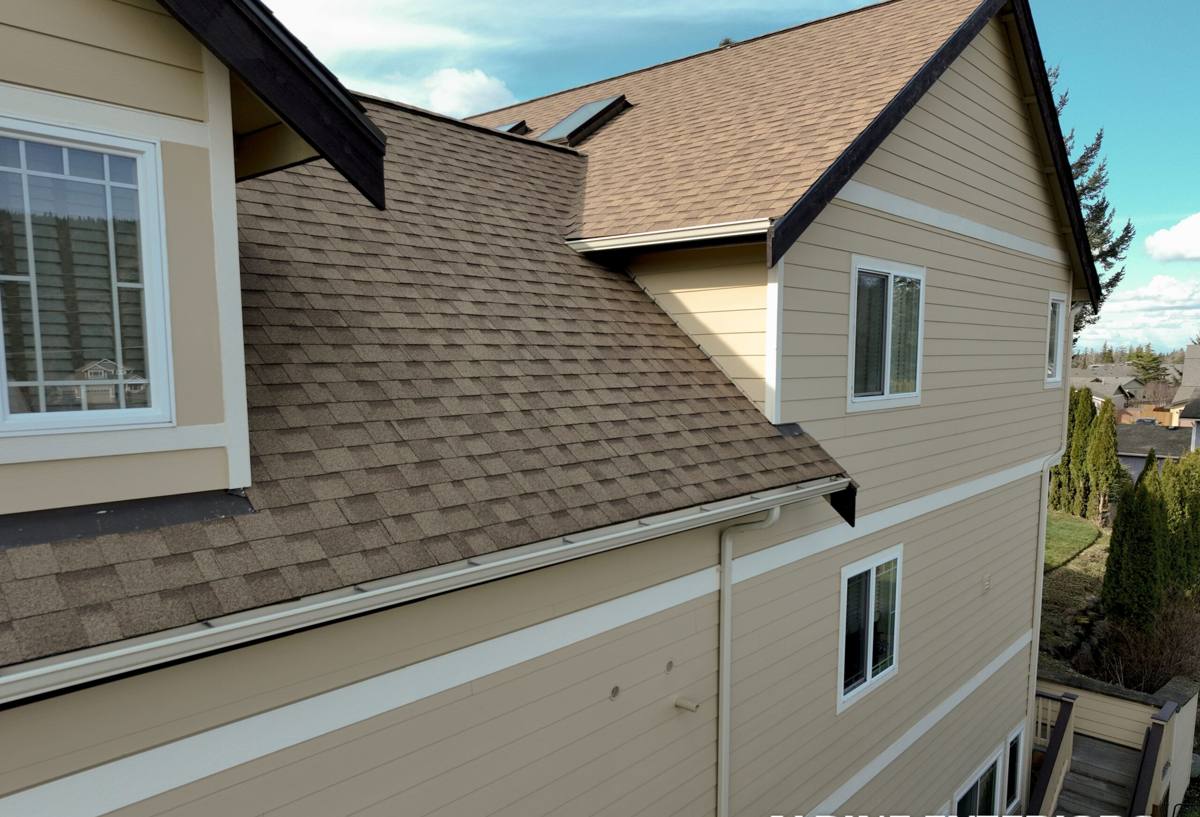
What Salt Air, Rain, and Moss Actually Do to a Deck
Salt-Influenced Air
Properties closer to the water pick up airborne salt that accelerates corrosion on exposed metal — nails, screws, joist hangers, railing brackets. A fastener that's rated fine for an inland deck can start rusting and staining the wood around it within a couple of seasons if it wasn't specified for this environment. This is one of the most common failure points we see on decks that were built cheap or built by someone unfamiliar with local conditions.
Driving Rain
Storms here don't always fall straight down. Wind-driven rain gets pushed sideways into ledger connections, under railing posts, and into any gap where flashing was skipped or installed loosely. Water that gets behind a ledger board or into an unsealed post base doesn't dry out quickly in our climate — it sits, and that's where rot starts, usually hidden until the damage is well established.
Moss and Shade
Mature trees are part of what makes this area attractive, but shade plus moisture is exactly what moss and algae need. On decking boards, moss buildup isn't just a slip hazard — it holds moisture against the wood surface and, on some composite products, can work into surface texture over time. A deck built without airflow underneath, or with board spacing too tight, becomes a moss magnet faster than one designed with drainage and ventilation in mind.
Choosing Decking Material for This Environment
There's no single "best" decking material — there's a best fit for your site, your budget, and how much upkeep you actually want to do. Here's how the common options hold up specifically to salt-influenced air, heavy rain, and moss pressure:
| Material | Moisture & Moss Resistance | Maintenance | Typical Lifespan Here |
|---|---|---|---|
| Pressure-treated wood | Moderate — needs sealing to perform well | Annual cleaning and re-sealing recommended | 15-20 years with upkeep |
| Cedar | Good natural rot resistance, moss still grows on the surface | Periodic cleaning, oil or stain every 2-3 years | 15-25 years with upkeep |
| Composite decking | Very good — won't rot, but surface can grow moss if shaded and damp | Occasional wash-down, no staining or sealing | 25-30+ years, manufacturer-dependent |
| PVC/capped polymer | Excellent — fully moisture-sealed board | Low — occasional wash-down | 25-30+ years, manufacturer-dependent |
Composite and capped polymer boards cost more up front but remove a lot of the maintenance burden that this climate creates for wood. That said, plenty of Edgemoor-area homeowners still choose cedar or treated wood for the look and lower initial cost — that's a legitimate choice as long as the maintenance schedule actually happens. We'll walk through the honest trade-offs for your specific site and how much shade and moisture it gets before recommending anything.
What a Correctly Built Deck Actually Involves
Footings and Framing
Everything starts below the surface. Footings need to be sized and set to local frost and soil conditions, and framing needs to be spec'd for the actual load — furniture, hot tubs, gatherings — not just a minimum code pass. This is where a rushed or underbid job shows up years later as a bouncy, uneven deck.
Ledger Flashing
Where a deck attaches to the house is the single most common source of hidden rot we find on older decks in this area. Proper ledger flashing — installed in the right order relative to the house's water-resistive barrier, not just caulked over — is what keeps driving rain from working its way behind the connection. This detail is invisible once the deck is finished, which is exactly why it's worth asking about before work starts.
Fastener and Hardware Selection
Given the salt-influenced air here, we use fasteners, joist hangers, and structural hardware rated for coastal or marine-grade exposure, not the standard-grade hardware that's fine further inland. It costs a little more. It also means you're not looking at rust streaks and corroding brackets in three years.
Spacing and Airflow
Board spacing and under-deck ventilation directly affect how fast a deck dries out after rain and how much moss pressure it faces in shaded spots. We plan gapping and, where the site allows it, under-deck airflow specifically to fight the moisture and moss conditions common in this area rather than using a one-size-fits-all layout.
How We Approach an Edgemoor-Area Deck Project
- On-site assessment — we look at sun/shade exposure, drainage, soil, and how close the site is to salt-influenced air, since all of that changes material and hardware recommendations.
- Honest material conversation — real trade-offs between wood, composite, and PVC decking for your specific site and budget, not a one-size pitch.
- Written scope and estimate — footing plan, framing spec, flashing details, and hardware grade spelled out before any work begins.
- Permitting — handled as required for your project so the work is inspected and documented, not something you have to sort out after the fact.
- Construction — framing, flashing, decking, and railings built to hold up to this specific climate, not just to pass a minimum inspection.
- Final walkthrough — we go over the finished deck with you, including what maintenance it actually needs and on what schedule.
Keeping a New Deck Ahead of Moss Season
A well-built deck in this area still needs some seasonal attention — the difference is that the attention is manageable instead of a fight against water damage. A practical maintenance rhythm looks like this:
- Sweep leaves and debris off the decking regularly in fall — trapped organic matter is what feeds moss growth
- Rinse or lightly power-wash the surface before moss gets established, especially in shaded corners
- Check railing posts and fastener heads once a year for early rust staining, especially on properties closer to the water
- Re-seal or re-stain wood decking on the schedule the product actually calls for, not "when it looks bad"
- Keep gutters and downspouts near the deck clear so runoff isn't dumping extra water onto or under the structure
- Confirm under-deck drainage and ventilation stay clear of stored items that block airflow
Why a Crew That Already Works This Area Matters
A lot of deck problems we get called to fix didn't come from bad intentions — they came from a crew that builds mostly in a different climate applying the same standard details everywhere. Ledger flashing that would be adequate in a drier region isn't necessarily adequate here. Standard-grade hardware that's fine forty miles inland can start showing rust near the water within a few years. Board spacing that works in full sun turns into a moss problem under mature tree cover.
Working regularly in and around Sudden Valley and the Edgemoor area means we're not guessing at how salt air, driving rain, and moss season interact with a given site — we're building around conditions we see repeatedly. That shows up in the footing depth we spec, the flashing detail at the ledger, the hardware grade we default to, and the maintenance schedule we actually recommend instead of what's printed on a generic warranty card.
Questions Worth Asking Before You Hire
Whoever you have build your deck, these are reasonable questions to ask before signing anything:
- What hardware grade are you using for fasteners and joist hangers, and why?
- How is the ledger board being flashed, and in what order relative to the house's water barrier?
- What's the footing depth and spacing based on for this specific site?
- What maintenance will this deck actually need, and on what schedule?
- Is the estimate written, itemized, and does it include permitting where required?
If a contractor can't answer these clearly, that's worth noting before you commit.
If you're weighing a new deck or a rebuild for a home in the Edgemoor area, we're glad to take a look and give you a straightforward estimate — no pressure, no upsell, just an honest read on what your site needs. Use the form below to get started.