 Sudden Valley Siding
 Why Happy Valley Homes Need Siding Built for This Climate
Happy Valley sits inside the broader Sudden Valley area of Whatcom County, which means homes here deal with the same combination of conditions that wears out siding faster than almost anywhere else in the Lower 48: salt-laden air moving off the water, driving wind-blown rain that hits walls sideways instead of falling straight down, and a moss and algae season that can run most of the year in shaded, north-facing spots. Any one of those factors is manageable. All three at once is what actually breaks down cheaper siding materials over a decade or two.
Salt air accelerates corrosion on fasteners and trim metal. Driving rain finds every gap in flashing and caulking and pushes water sideways into wall assemblies instead of letting gravity carry it down and away. And constant moisture plus shade is exactly what moss, lichen, and algae need to colonize a wall surface. Siding that isn't engineered for this combination — or that isn't installed with these specific stresses in mind — tends to show it first at the bottom courses, around window trim, and on the north and west-facing elevations that get the most wind-driven rain and the least sun to dry back out.
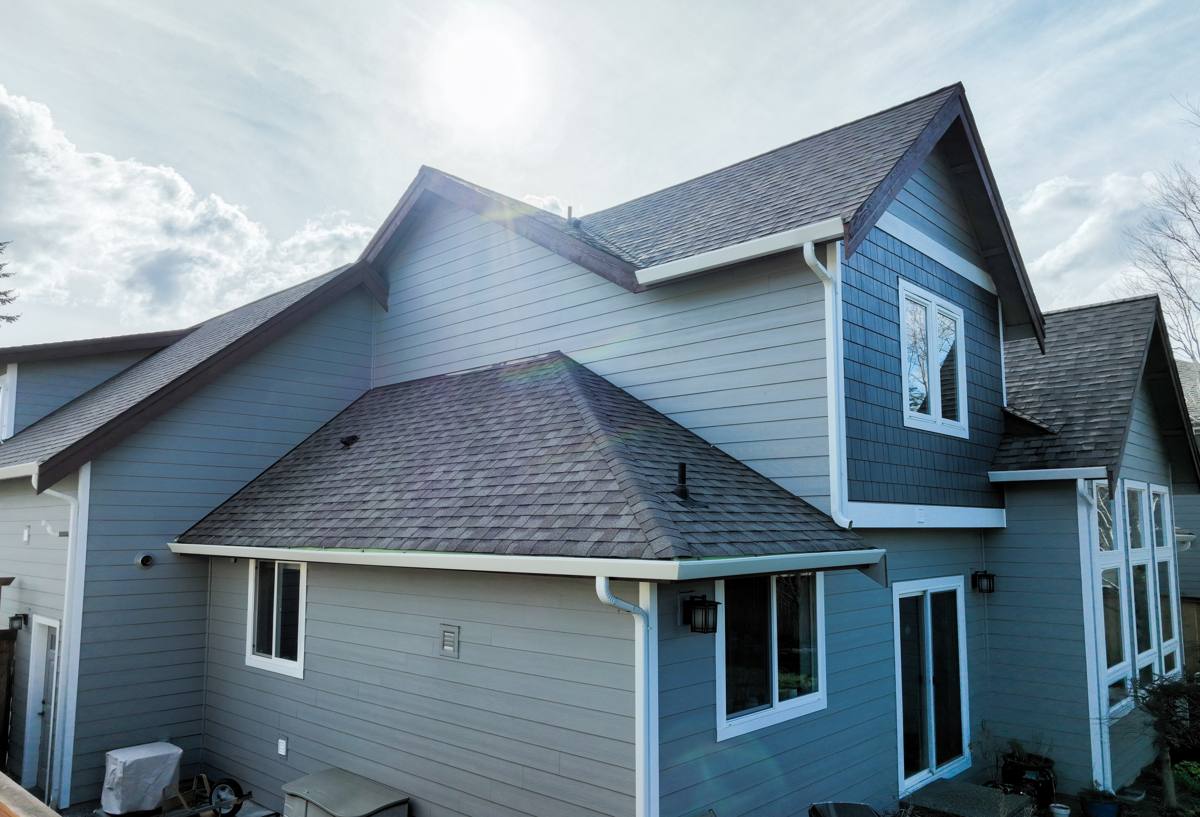
What James Hardie Brings to a Coastal Whatcom County Home
James Hardie fiber cement is a cement, sand, and cellulose fiber composite, not a wood product and not a vinyl product. That matters here for a few concrete reasons. It doesn't rot, it doesn't feed pests, and it doesn't soften or swell the way wood-based sidings can when they stay damp for extended stretches. It's also non-combustible, which is a real consideration for homes near wooded lots and brush. The ColorPlus factory finish is baked on under controlled conditions rather than field-applied, which gives it better resistance to fading and moss staining than a job-site paint job, and it holds up to the freeze-thaw cycles and driving rain that are routine in this part of Washington.
James Hardie also makes climate-specific product engineering — their HZ5 formulation, for example, is built for regions with more moisture cycling and freeze-thaw exposure, which describes Whatcom County accurately. That's a meaningful difference from a generic fiber cement product engineered for a single national spec.
Where Fiber Cement Still Needs a Correct Installation
None of that performance shows up automatically just because the product is on the truck. Fiber cement is only as good as the flashing, gapping, and fastening behind it. A rushed or generic install on a home like this can still trap moisture, and once moisture gets behind any siding material — Hardie included — you're dealing with sheathing and framing problems, not just a cosmetic issue.
What a Correct James Hardie Installation Involves
This is where most of the difference between a siding job that lasts 30-plus years and one that causes problems in year eight actually comes from. Here's what we hold every Happy Valley job to:
- Weather-resistive barrier and drainage plane — a code-compliant house wrap or building paper installed shingle-style so water sheds outward, not into the wall.
- Rainscreen gap where conditions call for it — a small air gap behind the siding lets any moisture that does get past the cladding dry out instead of sitting against the sheathing, which matters more here than in drier parts of the state.
- Flashing at every horizontal intersection — window heads, door heads, deck ledgers, roof-to-wall transitions, and butt joints all get proper metal or self-adhered flashing, not just caulk.
- Correct fastener spacing and type — corrosion-resistant fasteners, driven flush (not overdriven), at the spacing James Hardie's install guide specifies for this product line and exposure.
- Manufacturer-specified clearances — siding held back from grade, roofing, decks, and horizontal surfaces per Hardie's published minimums so wicking moisture doesn't get a foothold at the bottom edge.
- Factory-cut and factory-primed edges wherever possible — field cuts get sealed and touched up with Hardie-approved products so the cut edge doesn't become the weak point.
Every one of those items is a place where a corner can get cut without it being visible for a year or two — which is exactly why they matter more than the brand name on the box.
James Hardie Product Lines and Which Fit Happy Valley Homes
James Hardie makes several distinct product lines, and the right one depends on the home's style, exposure, and existing trim details. Here's how they generally compare for a home in this area:
| Product | Best Use | Notes for This Climate |
|---|---|---|
| HardiePlank lap siding | Most common choice; traditional and modern homes alike | Wide range of exposures and textures; performs well against driving rain when lapped and flashed correctly |
| HardiePanel vertical siding | Modern facades, gables, accent walls | Fewer horizontal seams means fewer potential water entry points on exposed elevations |
| HardieShingle siding | Craftsman or cottage-style homes | More detail and shadow lines, but more seams to flash carefully in a wet climate |
| HardieTrim boards | Corners, window and door casing, fascia | Matches the cladding's moisture resistance; keeps trim from becoming the failure point |
For most Happy Valley properties, a HardiePlank field with HardieTrim accents covers the majority of the home efficiently, with HardiePanel or HardieShingle reserved for gables, dormers, or accent sections where the architecture calls for it.
Moss, Moisture, and the Sudden Valley Microclimate
The tree cover and lake-adjacent humidity around Sudden Valley create shaded, slow-drying wall sections on plenty of homes, especially north and east elevations. Wood-based sidings in that kind of exposure often need moss treatment and repainting on a fairly tight cycle just to keep ahead of staining and softening. Fiber cement doesn't feed moss growth the way wood does, and the factory finish resists staining better than field-applied paint — but it's not moss-proof on its own. Where a wall stays damp and shaded most of the year, moss and algae can still take hold on the surface the same way they would on a roof or a deck.
The practical fix is a mix of correct installation — the rainscreen gap and drainage plane already mentioned — plus routine gentle cleaning on the shadiest elevations, which we'll cover under maintenance below.
Our Process, Start to Finish
- On-site assessment — we walk the exterior, check current siding and trim condition, note problem elevations (usually the ones facing prevailing wind and rain), and look at existing flashing and drainage.
- Written estimate — a clear scope covering product line, colors, trim details, and what's included, with no vague allowances.
- Tear-off and inspection — once old siding comes off, we inspect the sheathing and framing underneath for any moisture damage before anything new goes on. This step catches problems that aren't visible from outside.
- Weather barrier and drainage plane installation — done to code and to James Hardie's published specifications, not shortcuts.
- Flashing at every penetration and transition — before a single course of siding goes up.
- Siding and trim installation — correct fastener type, spacing, and clearances throughout.
- Caulking, touch-up, and final walkthrough — we go over the finished job with the homeowner before calling it done.
Why the Tear-Off Step Matters Most in This Region
In a climate this wet, what's happening behind the old siding is often more important than what the new siding looks like. If moisture has already gotten into the sheathing from years of driving rain or a failed flashing detail, covering it back up with new siding — even good siding — just hides the problem. We flag and address that before moving forward, and we tell the homeowner what we found either way.
Why We Only Install James Hardie
We don't install vinyl, LP SmartSide, or other fiber cement alternatives, and that's a deliberate standard, not a limitation. In a climate with this much sustained moisture exposure, we've found the combination of James Hardie's climate-engineered HZ5 formulation, factory-applied ColorPlus finish, and manufacturer-backed installation specifications gives Happy Valley homeowners the most predictable long-term performance for the investment. Specializing in one system also means our crews aren't relearning install details for a different manufacturer on every job — the flashing, fastening, and clearance details above are second nature, not a checklist we're reading for the first time.
Maintenance Checklist for Happy Valley Homeowners
James Hardie siding is low-maintenance, not zero-maintenance. A little attention keeps it performing for decades:
- Rinse the exterior gently once or twice a year, focusing on shaded north and east walls where moss and algae are most likely to appear.
- Keep gutters clear so overflow doesn't run down the wall face and concentrate moisture at specific siding sections.
- Trim back vegetation and tree limbs that keep a wall section shaded and damp longer than the rest of the house.
- Check caulking at window and door trim annually and have any cracked or missing sections resealed before winter rains set in.
- Watch the bottom courses near grade and decks for any staining or softening, which can signal a clearance or drainage issue worth having looked at.
- Repaint on the interval recommended for your ColorPlus finish, or leave it be if the factory finish is still performing — it's engineered to outlast field-applied paint.
Cost Factors to Expect
Every home is different, but these are the main variables that move the price on a Happy Valley siding job:
| Factor | Why It Matters |
|---|---|
| Home size and wall complexity | More corners, gables, and dormers mean more cutting, flashing, and labor time |
| Current siding condition | Sheathing repair or replacement adds cost but is essential if moisture damage is found |
| Product line mix | Combining HardiePlank field siding with HardieShingle or HardiePanel accents costs more than a single product throughout |
| Trim scope | Full trim replacement with HardieTrim boards versus reusing existing trim where it's still sound |
| Access and site conditions | Slopes, tree cover, and staging access around the home affect labor time |
We give a written, itemized estimate before any work starts so there's no guessing on scope or price.
Why Hiring a Crew That Already Works This Area Matters
A crew that regularly works Sudden Valley and the surrounding Whatcom County communities already knows which elevations on a typical home here take the worst of the wind-driven rain, how shaded lots behave over a wet winter, and what flashing details hold up against this specific mix of salt air and moisture. That's not something a crew unfamiliar with the region picks up on the first job. It shows up in where they put the rainscreen gap, how they detail the bottom of the wall near grade, and which elevations they flag for extra attention before the first course of siding ever goes up.
If you're weighing a siding replacement or repair for a Happy Valley home, we're glad to come out, take a look at your specific exposure and existing siding condition, and walk you through what a correct James Hardie installation would involve for your house — no pressure, no obligation. Use the form below to request a free estimate.