 Sudden Valley Siding
 Why Fairhaven Siding Wears Differently
Homes in and around Fairhaven deal with a specific combination of stressors that inland Whatcom County properties don't see as often. Proximity to the water means a steady dose of salt-laden air working against fasteners, trim, and any exposed wood. Add in the driving, wind-pushed rain that comes through this part of Washington for much of the year, and siding here has to shed water horizontally, not just vertically. Then there's moss season — long stretches of damp, low-light conditions that let moss and algae take hold on north-facing walls, under eaves, and anywhere airflow is limited.
None of this means siding is doomed to fail. It means siding repair in this area has to account for conditions that a generic "patch it and move on" approach doesn't. When we're called out to a Fairhaven property, we're not just looking at the damaged board — we're looking at why that board failed in the first place, because the same cause will hit the next board if it's not addressed.
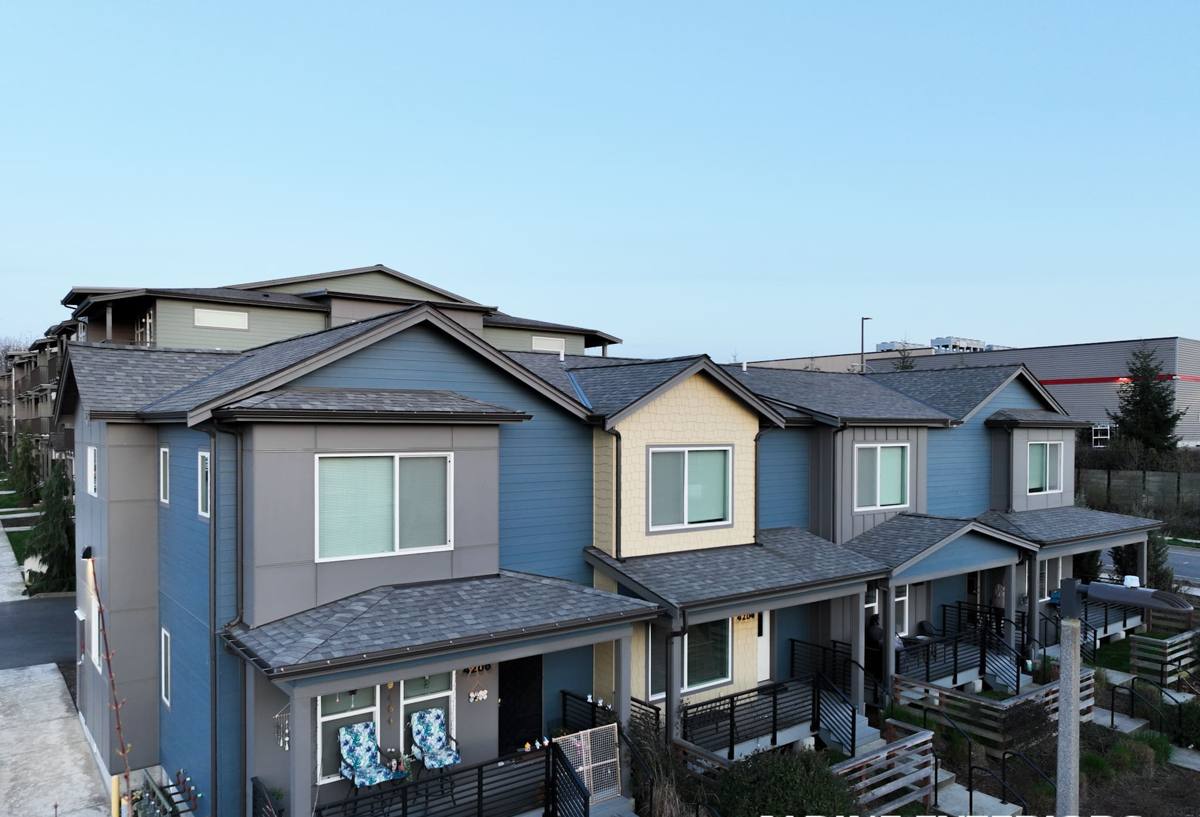
Signs Your Siding Needs Repair — Not a Full Replacement
Most siding problems we see in this area are localized. Catching them early is what keeps a repair a repair, instead of turning into a full re-side.
Common early warning signs
- Soft, spongy, or discolored spots on individual boards, especially near ground level or under windows
- Visible gaps or separation at seams and corners where caulking has failed
- Persistent moss or dark streaking on the same section of wall every season
- Cracked or chipped panels near downspouts, hose bibs, or roof-to-wall transitions
- Paint or finish that's peeling or bubbling in one localized area rather than across the whole home
If damage is confined to a handful of boards or a single wall section, targeted repair is almost always the right call — cheaper, faster, and less disruptive than replacing siding that's still doing its job everywhere else.
When it's more than a repair
If moisture has tracked behind the siding and into the wall sheathing, or if multiple walls show the same failure pattern, that usually points to a systemic issue — often failed house wrap, poor flashing, or an installation that was never properly detailed for driving rain. In those cases, we'll tell you honestly if repair is just going to mask a bigger problem, rather than sell you a patch that won't hold.
What a Correct Siding Repair Actually Involves
A repair that's just cosmetic — cutting out a damaged section and screwing in a new piece — is exactly how the same failure comes back in a year or two. A repair done right addresses what's behind the siding, not just what's visible.
The steps that matter
- Remove damaged material carefully to expose the underlying house wrap or building paper without tearing more than necessary.
- Inspect the water-resistive barrier for tears, gaps, or staining that indicates moisture has already been getting through.
- Check flashing at penetrations — windows, doors, hose bibs, light fixtures — since these are the most common entry points for wind-driven rain in this climate.
- Repair or replace the barrier and flashing before any new siding goes back on. This step gets skipped more often than it should, and it's the difference between a lasting repair and a temporary one.
- Match the replacement material in profile, reveal, and finish so the repair is structurally sound and doesn't stand out.
- Re-caulk and seal properly at seams and joints, using sealants rated for the movement and moisture exposure this area sees.
Skipping the barrier and flashing inspection is the single biggest reason siding repairs fail early — the new board looks fine from the curb while the same moisture path keeps working behind it.
Repair vs. Replacement: How We Help You Decide
| Factor | Favors Repair | Favors Replacement |
|---|---|---|
| Extent of damage | One wall or a few isolated boards | Multiple walls, widespread staining or softness |
| Age of existing siding | Under 15-20 years, otherwise sound | At or beyond expected service life |
| Underlying barrier condition | Intact, no signs of chronic moisture | Torn, missing, or repeatedly compromised |
| Material match | Compatible replacement material available | Discontinued profile or mismatched original material |
| Cause of failure | Isolated impact damage or a single flashing gap | Systemic installation issue (missing barrier, wrong fasteners) |
We walk every property with these factors in mind and give you a straight answer — not the answer that happens to be more profitable for us.
Why We Repair With James Hardie Fiber Cement — And Only That
We install and repair exclusively with James Hardie fiber cement siding. That's a deliberate standard, not a limitation we work around. When we're patching or extending existing Hardie siding, matching material to material means the repair performs the same way the surrounding siding does — same moisture behavior, same expansion characteristics, same factory-baked ColorPlus finish that won't visibly age differently than the boards around it.
We don't install or patch with vinyl, LP SmartSide, Cemplank, Allura, or primed wood species like cedar or spruce. Each of those products has legitimate uses, but they come with trade-offs — moisture sensitivity, field-finish maintenance, or installation tolerances — that don't hold up as well against the salt air and sustained wet weather this area gets. Fiber cement's non-combustible, dimensionally stable composition is why it's what we stand behind, and why patch work on a Hardie-sided home stays within the same material system rather than introducing a product that will age or move differently right next to it.
If your existing siding isn't Hardie
We'll still assess the damage and give you an honest read on your options, including whether a full re-side to fiber cement makes more sense than continuing to patch a product that's showing its age. We won't pressure you either way — that's a decision that depends on your budget, your timeline, and how much life is left in what's currently on the house.
Our Process for Fairhaven Repair Jobs
Because we already work regularly in this area, we're familiar with how salt exposure and moss patterns typically show up depending on a home's orientation and how sheltered it is from prevailing wind and rain.
What to expect
- An on-site walk-through where we inspect not just the damaged area, but adjacent sections and common failure points (corners, penetrations, ground-level trim)
- A clear explanation of what caused the damage — not just what it looks like
- A written scope covering material, barrier and flashing work, and finish matching
- A straightforward timeline, since most localized repairs are a short job compared to a full re-side
- Cleanup that accounts for moss and debris removal in the repaired area, so the fix isn't undone by the same growth that contributed to the original problem
Ongoing Maintenance to Protect the Repair
A good repair extends the life of your siding, but a few habits keep moss, moisture, and salt exposure from creating the next round of damage.
- Rinse siding periodically, especially north-facing and shaded walls where moss establishes fastest
- Keep gutters clear so overflow doesn't run directly down siding surfaces
- Trim back vegetation and tree cover that keeps walls shaded and slow to dry
- Check caulking at trim and penetrations annually, before the wet season sets in
- Address small soft spots or gaps as soon as you notice them — waiting through another wet season is what turns a small repair into a larger one
Why Local Experience Matters for This Kind of Repair
Siding repair looks straightforward from a distance, but doing it correctly in this specific stretch of Whatcom County means understanding how salt air accelerates fastener corrosion, how driving rain finds gaps that wouldn't matter in a drier climate, and how long moss season really runs here compared to other parts of the state. A crew that already works in and around Sudden Valley and Fairhaven isn't guessing at these conditions — they've seen how the same failure patterns show up across homes with similar exposure, and they know which shortcuts don't hold up out here.
That local familiarity shows up in small decisions during a repair: which sealant actually stays flexible through our wet winters, where flashing details need extra attention on a west-facing wall, and how much clearance to leave for airflow to keep moss from immediately reclaiming a repaired section.
If you've noticed damaged, soft, or moss-covered siding on your Fairhaven-area home, we're glad to take a look and give you a straightforward assessment — repair or replacement, whichever actually makes sense for your property. Reach out for a free, no-pressure estimate using the form below.