 Sudden Valley Siding
 Fiber Cement Siding Built for South Hill's Weather
South Hill sits in a part of Whatcom County where the exterior of a house works hard for its living. Homes here deal with a long wet season, a marine air pattern that keeps humidity high even between storms, and enough tree cover in places that moss and algae get a real foothold on north- and west-facing walls. Add driving rain that comes in sideways during winter fronts, and you have a climate that finds every weak seam, every under-caulked joint, and every piece of siding that wasn't rated for sustained moisture exposure. We install fiber cement siding on South Hill homes because it is one of the few exterior claddings engineered to shrug off that combination year after year without curling, rotting, or feeding the mold and mildew that thrive in this kind of weather.
This page is specifically about fiber cement siding work in the South Hill area — not a general overview of siding options. If you live in this neighborhood and are looking at your siding wondering whether it will make it through another wet season, this is written for you.
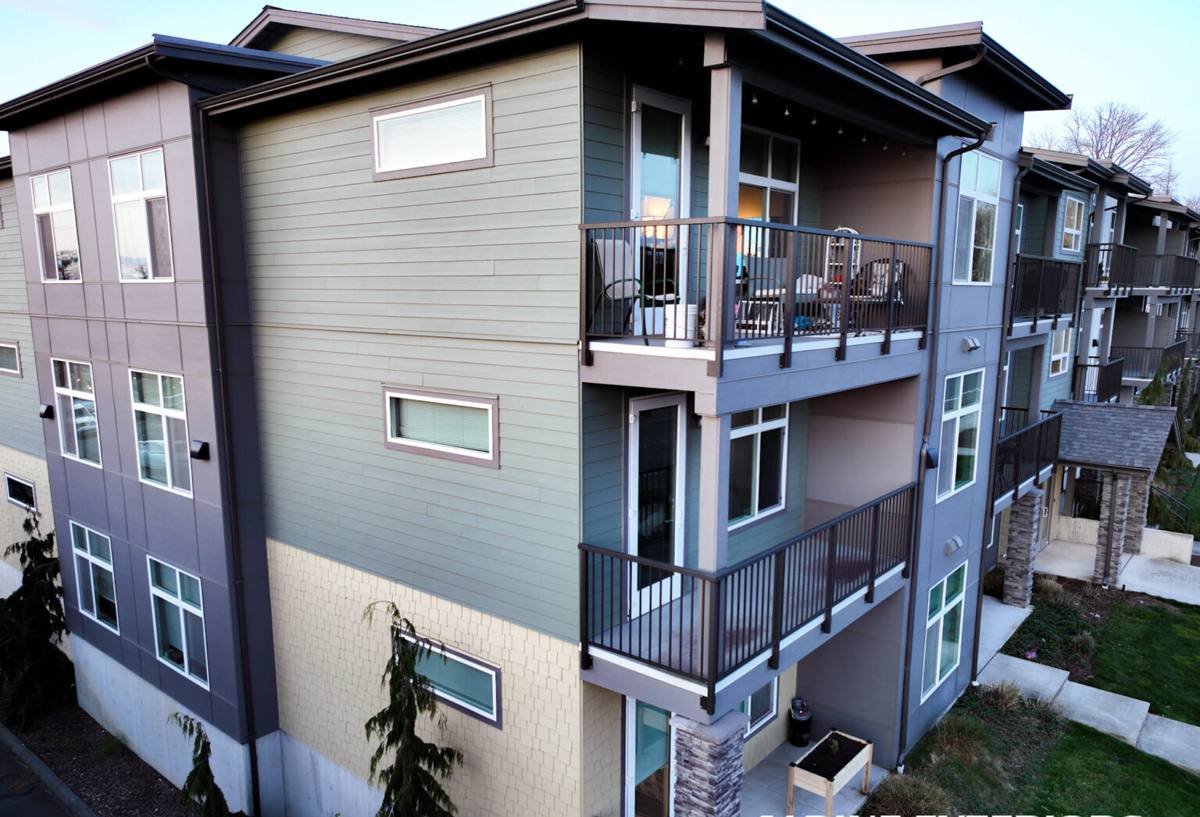
What South Hill's Climate Actually Does to Siding
Moisture that doesn't let up
Whatcom County's wet season isn't just about total rainfall — it's about duration. Siding here can stay damp for days at a stretch, which is a very different stress than a hard rain followed by sun. Wood-based and wood-composite products absorb that lingering moisture at cut edges, seams, and fastener penetrations. Over repeated wet-dry cycles, that absorption is what drives swelling, delamination, and eventually rot, especially at the bottom courses and around window and door trim where water tends to collect.
Moss, algae, and the shade problem
Lots of South Hill lots carry mature tree cover, which is part of what makes the area appealing to live in — but it also means extended shade on large sections of a home's exterior. Shaded, damp siding is exactly where moss and algae take hold. On a painted wood product, that growth traps moisture against the substrate and accelerates paint failure. Fiber cement doesn't stop moss from landing on a wall, but it does not feed on organic growth the way wood-based siding can, and its factory finish holds up far longer under a scrub-and-rinse than field-applied paint does.
Wind-driven rain at seams and penetrations
Storms moving through this part of the county often bring rain at an angle, not straight down. That matters because it pushes water into laps, seams, and anywhere flashing and caulking are doing the work instead of the material itself. A siding job that looks fine in dry weather can still fail here if the water management details — flashing, weather-resistive barrier, joint treatment — weren't done correctly. This is why we treat installation quality as equal in importance to the product itself.
Why We Install James Hardie and Nothing Else
We install James Hardie fiber cement exclusively. We do not install LP SmartSide, vinyl, Cemplank, Allura, primed spruce, or cedar. That is a deliberate professional standard, not a sales preference, and it is worth explaining honestly rather than just asserting it.
- Vinyl is inexpensive and low-maintenance, but it expands and contracts with temperature swings, can crack in impact, and doesn't hold up visually the way a factory-finished fiber cement product does over a 20-30 year span.
- Primed spruce and cedar are genuine, attractive materials, but they are wood — they need repainting on a real cycle, and in a climate with this much sustained moisture, that maintenance burden shows up faster than most homeowners expect.
- LP SmartSide, Cemplank, and Allura are all reasonable products in the right hands. Our reason for standardizing on Hardie specifically is the combination of a non-combustible cement composition, the ColorPlus factory finish (rather than field-applied paint), climate-engineered HZ product lines built for exactly this kind of Pacific Northwest exposure, and a warranty structure that's transferable and well-documented. When we're the crew responsible for what goes on a South Hill wall for the next few decades, we'd rather commit to one system we know inside and out than stock five we know less well.
Hardie's HZ5 product line is engineered specifically for climates like ours — cold, wet winters with real freeze-thaw cycling — as opposed to the HZ10 line built for hot, humid Southeast climates. That distinction matters more than most homeowners realize when a product gets specified for a job.
What Correct Installation Actually Involves
Fiber cement siding is only as good as the installation behind it. A huge share of the "siding problems" we get called out to look at in this area trace back to installation shortcuts, not the material itself.
Water management comes first
Before a single piece of siding goes up, the wall needs a correctly lapped weather-resistive barrier, properly flashed windows and doors, and drainage planes that let any moisture that does get behind the cladding find its way back out. This is the part of the job nobody sees once it's finished, and it's the part that determines whether the siding lasts 10 years or 40.
Fastening and clearances to spec
James Hardie publishes exact fastener spacing, gapping, and ground-clearance requirements for a reason — deviate from them and you compromise the manufacturer's warranty and the material's actual performance. We follow Hardie's installation instructions to the letter, including minimum clearance from grade, decks, and roof lines, all of which matter more in a climate where standing water and splash-back are a regular occurrence.
Joint and seam treatment
Butt joints, corners, and penetrations (vents, hose bibs, light fixtures) are where wind-driven rain finds a way in if they're not treated correctly. We use manufacturer-approved sealants and flashing details at every one of these points rather than relying on caulk alone to do the job.
Our Process for a South Hill Project
| Stage | What Happens |
|---|---|
| Assessment | On-site walk of the home, checking existing siding condition, moisture damage, trim, and trouble spots specific to sun/shade exposure and drainage on the lot |
| Scope and estimate | Written scope covering product line, color, trim details, and a straightforward cost breakdown — no pressure, no rushed decisions |
| Tear-off and prep | Removal of old siding, inspection and repair of sheathing, correct installation of weather-resistive barrier and flashing |
| Siding installation | Hardie panels or lap siding installed to manufacturer fastening, gapping, and clearance specs |
| Trim and detail work | Corners, window and door trim, joint treatment, and caulking at all transition points |
| Final walkthrough | Site cleanup and a walk-through with the homeowner before we consider the job done |
Signs a South Hill Home Needs Siding Attention
Homeowners in this area often wait longer than they should because siding problems are gradual, not sudden. A few things worth checking:
- Persistent moss or algae staining that comes back quickly after cleaning, especially on shaded walls
- Paint that's bubbling, peeling, or chalking faster than it used to
- Soft spots or visible swelling near the bottom courses or around window trim
- Caulk that's cracked or pulling away at seams and corners
- Visible warping or cupping on lap siding boards
- A musty smell near exterior walls, which can point to moisture getting behind the cladding
Why It Matters to Address It Early
None of these signs mean a home needs to be re-sided tomorrow, but each one is a data point about how much longer the current siding has left. In a climate where moisture problems compound rather than stay static, catching them a season or two earlier is usually the difference between a straightforward re-side and dealing with sheathing repair as well.
Cost Factors for a South Hill Fiber Cement Project
Every home is different, so we don't quote broad numbers without seeing the house, but the main variables that move a project's cost are consistent:
| Factor | Why It Matters |
|---|---|
| Home size and wall complexity | More square footage and more corners, gables, and dormers mean more labor and material |
| Existing siding condition | Rot or sheathing damage found during tear-off adds repair scope before new siding goes up |
| Product profile chosen | Lap siding, panel siding, and shingle-style Hardie products carry different material and labor costs |
| Trim and detail work | Extensive trim, window casings, and architectural detail add time beyond flat wall installation |
| Access and site conditions | Steep lots, tree cover, and tight access — all common on South Hill — can affect staging and labor time |
Why a Crew That Already Works South Hill Matters
Siding installation isn't one-size-fits-all across Whatcom County. A crew that regularly works this specific area already understands how the tree cover and terrain here affect drainage and drying time, which walls tend to take the brunt of wind-driven rain, and how the local moisture pattern differs from, say, a more open, wind-exposed part of the county. That's not a marketing point — it's the difference between a generic installation and one that accounts for how this particular neighborhood's weather actually behaves against a house. It also means faster response if a warranty question or a minor issue comes up after the job is done, because we're not driving in from somewhere unfamiliar with the area.
Maintaining Fiber Cement Siding in This Climate
Fiber cement is low-maintenance compared to wood, but "low-maintenance" doesn't mean "no maintenance," especially here:
- Rinse siding periodically to keep moss, algae, and pollen from building up, particularly on shaded walls
- Inspect caulking at joints, trim, and penetrations annually and re-seal as needed
- Keep gutters clear so overflow isn't running down siding walls during heavy rain
- Trim back vegetation and tree limbs that keep sections of the wall shaded and slow to dry
- Watch for any small chips or impact damage near ground level and get them touched up promptly
Done consistently, this kind of upkeep is what lets a correctly installed Hardie system reach the long end of its expected lifespan rather than the short end.
Get a Straightforward Estimate
If you're weighing a siding project on your South Hill home, we're glad to come take a look, walk the exterior with you, and give you an honest read on condition and options — no pressure, no pushy sales pitch. Use the form below to request a free estimate.